Dattenberg Castle
Dattenberg Castle is a significant medieval hill castle located in the municipality of Dattenberg, Germany. Established around 1220 by the lower nobility Lords of Dattenberg, it served as their ancestral seat and a prominent stronghold in the region. The castle's strategic position atop a hill provided natural defensive advantages, which were enhanced by man-made fortifications such as a deep neck ditch carved into the slate rock.
The castle's history reflects the complex feudal relationships and territorial shifts typical of the High Medieval period. Early documentary evidence from the 13th century mentions various members of the von Dattenberg family, confirming the castle's role as a noble residence and military site. Around 1320, ownership transferred to the Archbishopric of Cologne, a powerful ecclesiastical territory, which then granted the castle as a fief to Rollmann von Sinzig in 1331. His descendants adopted the name von Dattenberg, maintaining the familial connection to the castle for several generations.
The medieval architecture and fortifications
Dattenberg Castle exemplifies typical hill castle architecture of the High Medieval era, characterized by a compact layout designed for both defense and habitation. The core of the castle was a circular main stronghold enclosed by a rectangular curtain wall, with a prominent flanking tower positioned at the northeastern corner to provide defensive coverage of the perimeter.
The centerpiece was the bergfried, a tall, round keep that served as a last refuge during attacks and as a symbol of lordly power. The bergfried’s remains today stand approximately 11 meters high with a diameter of about 8.5 meters. Although partly restored, access is limited to viewing from the outside, preserving its rugged medieval character.
Integral to the castle's defense was the neck ditch, a deep trench cut directly into the bedrock, which separated the castle hill from the surrounding landscape. This feature effectively hindered attackers' approach and is a testament to the medieval builders' skill in adapting natural topography for military purposes.
Ownership changes and historical significance
The castle’s ownership history is marked by a series of transfers through sale, inheritance, and feudal grants. After the sale to the Archbishopric of Cologne in the early 14th century, the castle remained under ecclesiastical influence while being managed by noble vassals. The transition to the von Lülsdorf family in the 16th century came through marriage, reflecting common practices of consolidating power and property.
By the early 17th century, the castle had already fallen into disrepair, with records from 1624 describing it as ruined. This decline continued through the 17th century, culminating in the confiscation of the fief after the death of Johann Friedrich Raitz von Frentz zu Gustorf in 1675. The castle ceased to function as a fortified residence and gradually lost its military importance.
19th-century transformations and modern uses
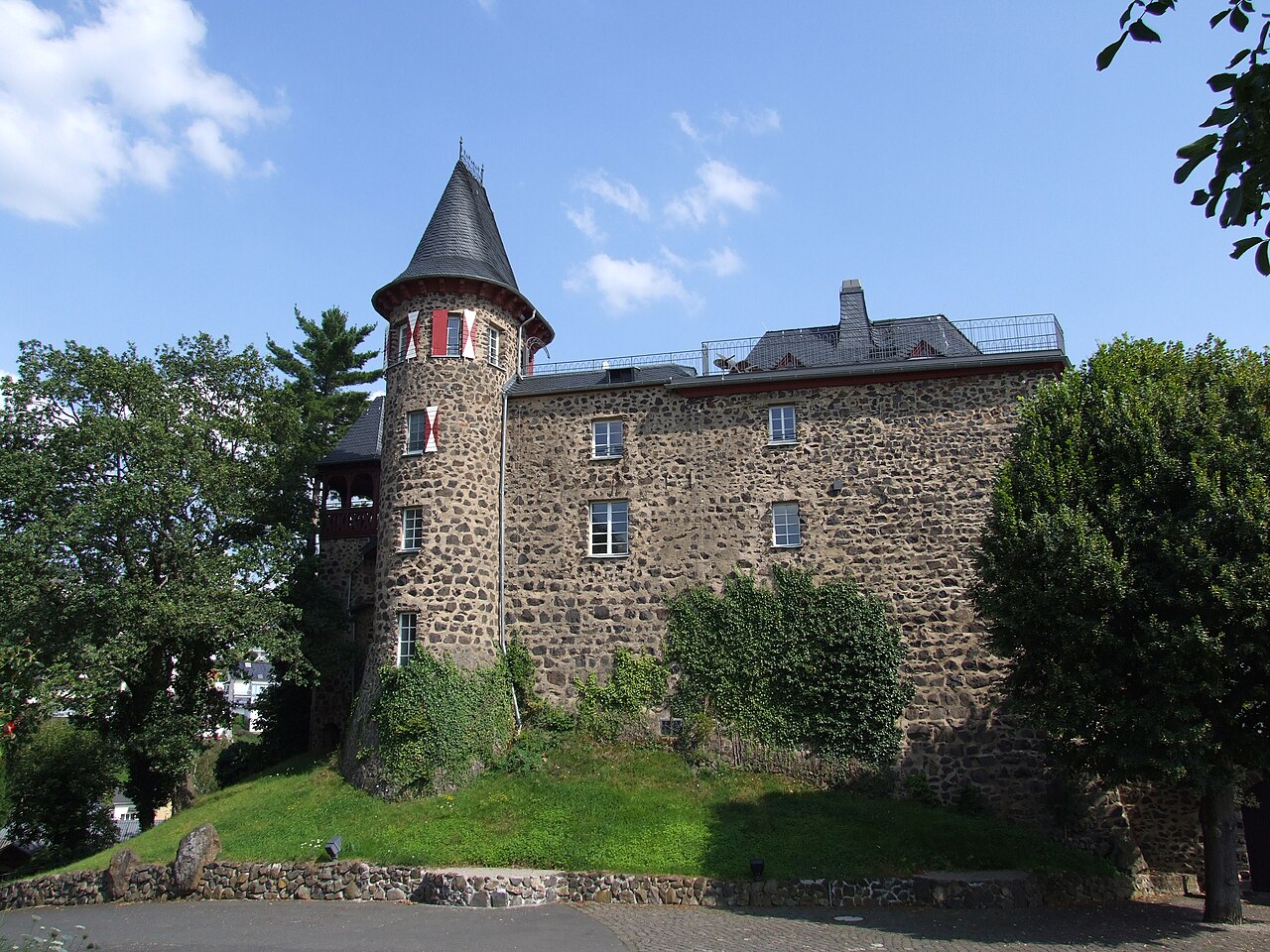
In the 19th century, the site underwent significant changes under private ownership. After being sold by the Prussian state in 1822, it was acquired by Josef Stoppenbach in 1837. Stoppenbach constructed a two-story country house featuring a distinctive tower-like staircase, along with farm buildings, using rubble stone sourced locally. These additions reflected the transition of the castle site from a medieval fortress to a rural estate.
Financial difficulties led to Stoppenbach's bankruptcy in 1848, and the property was auctioned in 1850. Subsequent owners, including Otto von Mengershausen and later architect Adolf Fuchs, further modified the estate. Fuchs transformed the residence into a villa reminiscent of a small castle around 1890 and cultivated vineyards and orchards, integrating agricultural pursuits with the historic site.
20th-century history and preservation
The 20th century brought varied uses for the property. From 1929 to 1938, it was leased to Father Rudolf Schütz for a Catholic lay apostolate school aimed at educating young girls. During World War II, the Nazi regime repurposed the estate as a rural camp, and German soldiers used it as a defensive position until American forces occupied the site.
Post-war, the property was acquired by the District of Cologne in 1949 and used as a rural boarding school until 1996. It returned to private ownership in 2003, preserving its layered history as a site of medieval fortification, noble residence, agricultural estate, and educational institution.
Current condition and visitor experience
Today, Dattenberg Castle stands as a partially restored ruin, with the most striking feature being the remains of the central bergfried. Visitors can view the approximately 11-meter-high stump of this tower, which remains a powerful symbol of the castle's medieval past. The moat and neck ditch carved into the slate rock are visible, illustrating the castle's defensive design.
The original outer bailey and forecourt have been altered by modern construction, but the site retains its historical footprint. The 19th-century country house and farm buildings add to the estate's architectural diversity, showcasing the evolution of the site over centuries.
While the ruins are accessible only from the outside, the site offers valuable insights into medieval castle architecture, feudal history, and the adaptive reuse of historic properties through time. Its location in the scenic region of Dattenberg makes it a point of interest for visitors exploring Germany's rich heritage of hill castles.
Architectural highlights
- Bergfried (keep): Central round tower, 11 meters high, 8.5 meters diameter, partially restored.
- Neck ditch: Deep trench cut into slate rock, key defensive feature.
- Curtain wall: Rectangular enclosure with flanking tower at northeast corner.
- 19th-century country house: Built by Josef Stoppenbach with tower-like staircase and rubble stone construction.
Historical figures associated with the castle
- Wilhelm de Dadenberg: Sold the castle to the Archbishopric of Cologne circa 1320.
- Rollmann von Sinzig: Knight granted the castle as a fief in 1331.
- Albrecht von Lülsdorf: Received possession through marriage in 1572.
- Johann Friedrich Raitz von Frentz zu Gustorf: Last feudal lord before confiscation in 1675.
- Josef Stoppenbach: 19th-century owner who built the country house.
- Adolf Fuchs: Architect who converted the estate into a villa circa 1890.
Visiting information
The castle ruins can be viewed from outside, with no public access to the interior of the bergfried. The site is ideal for history enthusiasts interested in medieval architecture and German noble heritage. Its rural setting offers scenic views and a peaceful atmosphere for exploration.
Frequently asked questions (FAQ)
- When was Dattenberg Castle originally built?
- Dattenberg Castle was originally built around 1220 by the Lords of Dattenberg as their ancestral seat.
- What remains of Dattenberg Castle can visitors see today?
- Visitors can see the approximately 11-meter-high bergfried ruins, the moat carved into the slate rock, and parts of the original defensive walls.
- Is Dattenberg Castle open for interior tours?
- No, the castle ruins, including the bergfried, are only accessible for viewing from the outside and do not offer interior tours.
- What historical events affected Dattenberg Castle during World War II?
- During World War II, German soldiers used the castle grounds as a defensive position until American forces occupied the site.
- Who owns Dattenberg Castle today?
- Dattenberg Castle is currently privately owned since 2003.
- What architectural features characterize Dattenberg Castle?
- Key features include the round bergfried keep, the neck ditch carved into slate rock, a rectangular curtain wall, and a flanking tower at the northeast corner.
Information
Current owner
Private owner
Loading map...
Visitor reviews
No reviews yet. Been here? Write the first review and help other travelers!
Write the first reviewVisited this castle? Share your experience
Your review helps other travelers and adds first-hand knowledge to our encyclopedia.