Schirmeck Castle

Schirmeck Castle in Bas-Rhin, France
Schirmeck, Grand-Est, France
High Medieval (11th–13th c.)
Partially Restored

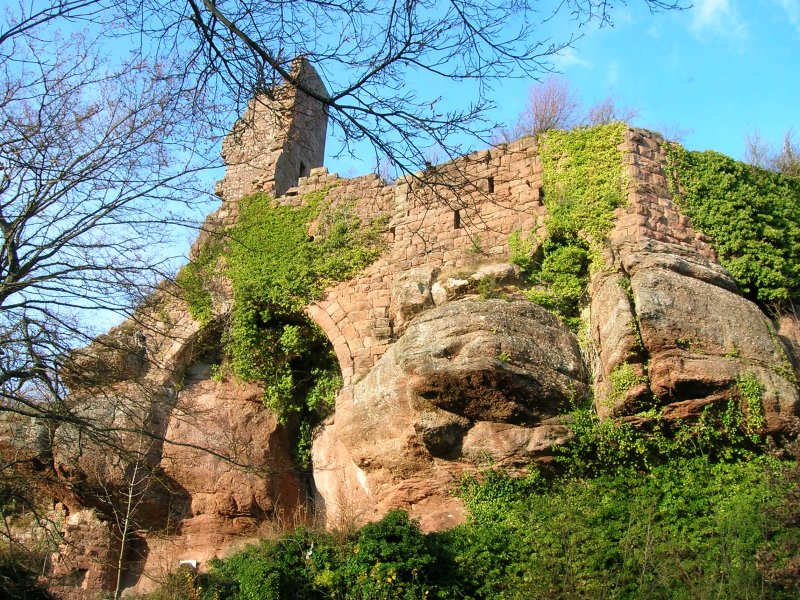
Schirmeck Castle, known locally as Château de Schirmeck, is a historic hill castle perched above the village of Schirmeck in the Bas-Rhin department of France. Constructed in the early 13th century during the High Medieval period, the castle was strategically positioned to oversee and protect the surrounding valley and trade routes.

Medieval origins and strategic importance

Built at the dawn of the 13th century, Schirmeck Castle was part of a network of fortifications typical of the era, designed to assert control over the region and provide defense against incursions. The castle's elevated location on a hill allowed for extensive surveillance of the valley below, a common defensive advantage in High Medieval castle architecture. The original structure likely featured a keep or donjon, surrounded by fortified walls and possibly a small courtyard, although exact details of the initial layout are scarce due to later destruction and rebuilding efforts.

Destruction and decline during the thirty years' war

In 1633, during the Thirty Years' War, the castle suffered significant damage when it was destroyed by Swedish forces. This conflict, which ravaged much of Central Europe, led to the ruin of many medieval fortresses, including Schirmeck. Following its destruction, the castle was abandoned and left in a state of ruin for many decades.

Failed reconstruction attempts

In 1705, the French authorities initiated efforts to rebuild the castle, reflecting its ongoing strategic or symbolic importance. However, these reconstruction efforts were never completed, and the project was eventually abandoned. This left the castle in a partial state of disrepair, accelerating its decline.

Use as a quarry and further deterioration

By the latter half of the 18th century, the local community repurposed the castle ruins as a convenient source of building materials. Stones from the castle were used to construct the tower of the village church, demonstrating how the fortress had shifted from a military stronghold to a resource for local development. Subsequently, villagers also used the ruins as a quarry for their homes, leading to the near-complete disappearance of the original castle fabric.

20th-century reconstruction and modern use

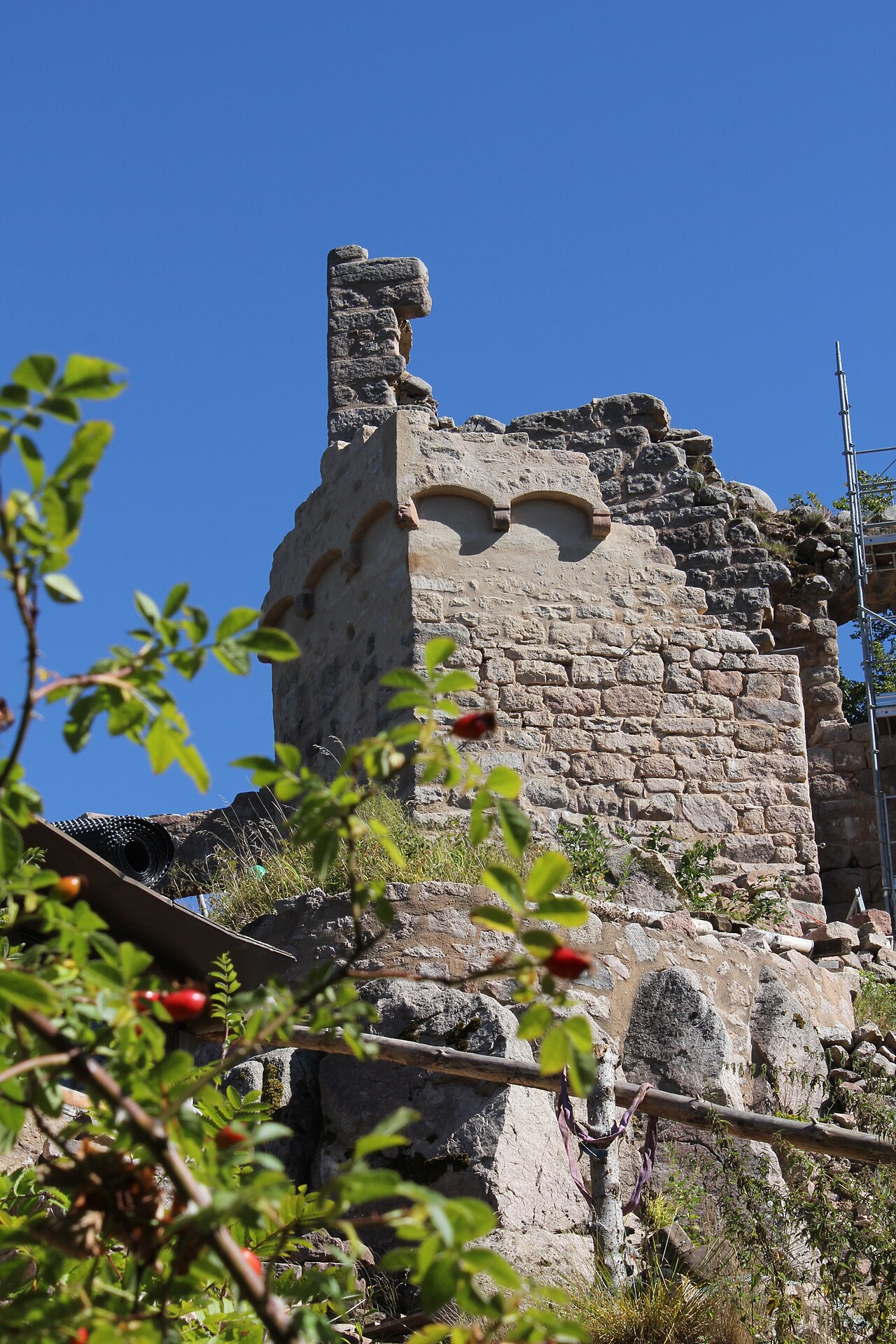
In 1969, the local council undertook the construction of a new structure on the site, intended to evoke the appearance of the original castle. This modern reconstruction, primarily for touristic purposes, included rebuilding the keep, although it is uncertain how closely the design adhered to the original medieval plans. The reconstructed keep housed a small museum dedicated to the castle and local history, which operated until its closure in 2013.

Current condition and visitor experience

Today, Schirmeck Castle remains a partially restored site accessible to the public. Visitors can reach the castle by a short 10-minute hike from the village, enjoying panoramic views over Schirmeck and the surrounding valley. Although the reconstructed keep is currently closed to visitors, the site offers a valuable glimpse into the region's medieval heritage and the castle's historical significance. Despite being a 20th-century remake, the castle continues to hold cultural and historical interest for tourists and locals alike.

Architectural characteristics and legacy

While the original High Medieval architectural details of Schirmeck Castle are largely lost, the site's location and remnants reflect typical features of hill castles from the period. Such castles emphasized natural topography for defense, with stone walls and a central keep dominating the landscape. The castle's history of destruction, partial rebuilding, and reuse of materials illustrates common patterns in the lifecycle of medieval fortifications in Europe.

Schirmeck Castle's story highlights the challenges of preserving medieval architecture amid war, changing political priorities, and local development needs. Its modern reconstruction serves as a reminder of the cultural value attributed to such sites, even when original structures survive only in ruins.

Frequently asked questions (FAQ)

How do I get to Schirmeck Castle?
Schirmeck Castle is located in the Vosges Mountains, easily accessible by car or public transport. If traveling by train, the nearest station is in Schirmeck, from which you can take a short bus ride or walk to the castle.
What is the historical significance of Schirmeck Castle?
Schirmeck Castle dates back to the 13th century and played a crucial role in the defense of the region. It has witnessed various historical events, including conflicts between France and Germany, making it an important site for understanding local history.
When was Schirmeck Castle built?
Construction of Schirmeck Castle began in the early 13th century and was completed in the 14th century. The castle has undergone several renovations and restorations over the centuries, preserving its architectural integrity.
Can I visit Schirmeck Castle year-round?
Yes, Schirmeck Castle is open to visitors year-round, though hours may vary seasonally. It’s recommended to check the official website for the latest information on opening hours and any special events.
Why is Schirmeck Castle a popular tourist attraction?
Schirmeck Castle attracts visitors due to its stunning views of the surrounding Vosges Mountains, rich history, and unique architecture. The site also hosts educational programs and exhibitions that engage visitors of all ages.
Is it possible to take guided tours of the castle?
Yes, guided tours of Schirmeck Castle are available and highly recommended for a deeper understanding of its history and architecture. Tours are typically conducted in multiple languages, ensuring accessibility for international visitors.
What are the ticket prices for Schirmeck Castle?
Ticket prices for Schirmeck Castle are generally affordable, with discounts available for students and seniors. Family packages are also offered, making it a great destination for visitors of all ages.
What is the best time to visit Schirmeck Castle?
The best time to visit Schirmeck Castle is during the spring and early autumn when the weather is mild and the surrounding nature is in full bloom. These seasons also offer a variety of outdoor activities and events in the region.
Are there any nearby attractions to explore?
Yes, there are several attractions near Schirmeck Castle, including the Alsace-Moselle Memorial and beautiful hiking trails in the Vosges Mountains. Visitors can also explore charming local villages that showcase the region's rich culture and history.

Information

Hill Castle

Loading map...

Visitor reviews

No reviews yet. Been here? Write the first review and help other travelers!

Write the first review

Visited this castle? Share your experience

Your review helps other travelers and adds first-hand knowledge to our encyclopedia.

Write a review

(5/5)

0/2000 characters

Your review will be visible after admin approval

Nearby castles

6.3 km

Château de Salm

, France

Château de Salm is a striking example of a medieval hill castle located in the Hauts-de-France region of France. Constructed between 1205 and 1225 under the direction of Henry III, Count of Salm, this fortress was strategically built on a rocky sandstone outcrop rising between 809 and 812 meters above sea level. The castle's location on a natural spur provided significant defensive advantages, making it a formidable stronghold during the High and Late Medieval periods.The castle was originally established by the noble Salm family, who were influential in the region and traced their lineage to the Luxembourg dynasty. Henry III held the role of advocate for the Abbey of Senones, overseeing and protecting the abbey's interests, which included valuable industrial enterprises such as salt extraction and iron forges during the 13th century. This economic activity was closely linked to the castle's function as both a military and administrative center.Throughout the centuries, Château de Salm underwent significant architectural evolution, reflecting changes in military technology and regional power dynamics. In the 14th century, the castle's defenses were enhanced with the addition of towers flanking the original shield wall. Around 1400, major upgrades included the construction of a massive D-shaped shield tower with walls up to three meters thick, designed to withstand cannon fire. This period also saw the addition of a fortified barbican and a new gatehouse, which replaced earlier defensive structures.Architectural features and layoutThe castle extends approximately 120 meters in length and 50 meters in width across several terraces. The core of the fortress is dominated by a robust shield wall facing southwest, which protected the main residential buildings and an exceptional vaulted cistern featuring a rare double-arched ceiling. This cistern was vital for water storage during sieges, demonstrating advanced planning for prolonged defense.Adjacent to the curtain walls on the northwest and northeast sides stood the palas, or palace, notable for its refined architectural decoration, indicative of the noble status of its occupants. The highest point of the castle is marked by the bergfried, a tall keep separated from the main enclosure by two neck ditches, which served as additional defensive trenches.The shield tower constructed in the early 15th century remains partially preserved up to the first-floor level, featuring a large breach likely caused by historical attacks. The castle also includes a postern gate and extensive outer courtyards, or bassecours, dating from the late 14th century, which supported expanded functions beyond pure defense, including economic activities.Historical significance and ownershipChâteau de Salm's history is intertwined with the complex relationships between secular nobility and ecclesiastical authorities. After Henry IV sold the castle to the Bishop of Metz in 1258 due to financial pressures, it was later regained as a hereditary fief, highlighting the turbulent politics of the region. The castle was significant enough to be mentioned by the Lorraine poet and musician Jacques Bretel in 1285, underscoring its cultural as well as strategic importance.In the 14th and 15th centuries, the castle was not only a military fortress but also a hub for industrial production, including metalworking and pottery. The acquisition of the lower Bruche valley by Jean de Salm in 1366 further enhanced the castle's economic and strategic role. However, the castle's fortunes declined in the late 15th century, possibly due to destruction during campaigns involving Duke Charles the Bold of Burgundy.Decline, ruin, and preservation effortsBy the mid-16th century, records consistently describe Château de Salm as a ruin. The site attracted noble visitors in the 18th century, including Prince Constantin Alexander of Salm-Salm and the Prince of Hohenlohe-Schillingsfürst, who left an inscription in 1779. The castle's remains were later exploited as a source of building stone after the French annexation in 1793.During World War I, the elevated ruins served as a strategic observation post for German forces, which led to French artillery bombardment in 1914. The castle was officially recognized as a historic monument on 6 December 1898 by the German imperial authorities. Restoration and archaeological efforts began in the early 21st century, led by the association Veilleurs de Salm, which has uncovered new information about the castle's construction phases and historical use.Architectural remains and archaeological discoveriesThe ruins consist primarily of red sandstone blocks with preserved elements such as the smooth ashlar facing on the shield tower's base and the vaulted cistern chamber. Visible features include doorways, window slits, and 13th-century cruciform arrow slits used by crossbowmen. Evidence also suggests the presence of a chapel within the castle walls, consistent with its role as a noble residence.Archaeological work since 2004 has revealed previously unknown walls and clarified the sequence of construction phases, though the fragmentary state of the ruins means the full layout remains difficult to interpret. The castle's combination of defensive architecture and industrial heritage makes it a unique site for understanding medieval fortifications and economic history in the region.

High Medieval (11th–13th c.)
Details
11.3 km
Guirbaden Castle — France castle

Guirbaden Castle

Mollkirch, France

Guirbaden Castle, also known as Château de Guirbaden, is a monumental medieval fortress ruin located on a mountainous ridge southwest of the village of Mollkirch in the Bas-Rhin department of France. Nestled within the Guirbaden forest in the historical region of Alsace, this castle complex is renowned as the largest castle ruin in Alsace by area and extent. Its strategic position offers commanding views over the Plain of Alsace and the Bruche Valley, underscoring its historical military significance. The castle complex is unique in that it comprises three distinct castles aligned from east to west, each representing different construction phases and architectural styles spanning several centuries. The earliest section, centered around a ruined keep perched on a rocky outcrop at the eastern end, was likely founded in the 10th century by Hugues III of Éguisheim. This initial fortress was primarily intended to protect the property of the nearby Altorf Abbey, a Benedictine monastery closely linked to the regional nobility. The castle is first historically documented in 1137 during the consecration of its chapel located at the western end of the complex. In 1162, the castle suffered destruction when it was burned by Emperor Frederick I Barbarossa as reprisal for the destruction of the castle of Horbourg by Hugues IX, despite an imperial ban. Following this, the castle was rebuilt and significantly expanded, including the addition of a palas (a grand residential hall), forming the middle castle of the complex. The westernmost and youngest part of the complex, known as Nouveau-Guirbaden, was constructed between 1218 and 1225 under the direction of Emperor Frederick II. This section was built around the pre-existing 12th-century chapel and separated from the older castle by a dry moat carved into the rock. It featured its own keep, famously known as the Hunger Tower, which remains standing today. Historical evolution and ownership The castle's ownership history reflects the complex feudal and ecclesiastical politics of medieval Alsace. After the last descendant of the Éguisheim family died, the castle passed to the Bishop of Strasbourg. Subsequent bishops granted the castle as a fief to various noble families, including the Lords of Hohenstein and Rathsamhausen. Notably, in 1226, Emperor Frederick II and his son Henry (VII) transferred their share of the castle to Bishop Berthold I of Strasbourg, who later consolidated full control by purchasing the remaining portions. Guirbaden Castle endured multiple conflicts, including surviving the Peasants’ War of the early 16th century but suffering severe damage during the Thirty Years’ War. In 1633, after two failed assaults, Swedish forces captured and burned the castle. Though repairs were attempted in 1647 by Frederick of Rathsamhausen, the castle was once again engulfed by fire in 1652. Ultimately, French troops demolished the remaining ruins in 1657, leaving the castle in a state of ruin. Architectural features and layout Overall complex and defensive structures Spanning approximately 280 meters in length and 60 meters in width, Guirbaden Castle’s extensive layout is divided into an upper castle (citadel) and a larger lower castle. The citadel is roughly polygonal and encircled by a formidable ring wall made of rusticated ashlar masonry, known in German as buckelquader. The most striking feature of the citadel is its bergfried (a tall defensive tower), constructed atop a base of Buntsandstein sandstone and supported by large relieving arches, demonstrating advanced medieval engineering techniques. The lower castle, about twice the size of the citadel, is internally divided by a transverse wall and includes the palas, a grand residential hall measuring approximately 33 by 11 meters. This hall once featured a deep neck ditch crossed by a bridge leading to the western entrance gate. The palas’s southern gable wall was originally decorated with four window openings framed by columns and topped with a decorative rosette, similar to architectural elements found at Wildenberg Castle. Today, only one of these ornate window arches remains intact. Chapel and religious significance The castle chapel, dedicated to Saint Valentin, is a notable Romanesque structure built alongside the castle’s core expansions in the 12th century. It served as a hermitage until the 19th century and was rebuilt after a fire in 1850. The chapel remains an important pilgrimage site, hosting an annual blessing of animals ceremony on Whit Monday, reflecting its enduring cultural and religious significance. Defensive enhancements and outer wards Throughout the 14th and 15th centuries, the castle’s eastern sector was fortified with additional zwingers (outer wards) and multiple towers to enhance its defensive capabilities. The castle’s main entrance was located on the west and featured a series of five gates, supplemented by an eastern gate equipped with a drawbridge. Defensive adaptations for firearms, including cannon openings, were integrated into the gates, illustrating the castle’s evolution in response to changing military technology. Burgmann settlement and ancillary structures Outside the main castle walls lies the former burgmann settlement, housing for castle officials and retainers, enclosed by walls dating from Frederick II’s rebuilding phase. At the western end of this area stands the Hungerturm or Hunger Tower, a square bergfried that served both defensive and symbolic functions. The surrounding walls vary in height from one to four meters, with many interior walls now obscured by vegetation. Restoration and current status After centuries of neglect, the castle was officially listed as a protected monument in 1898. In the late 1960s, a private entrepreneur acquired the ruins and initiated restoration efforts, although some parts were unfortunately demolished during this process. These works ceased after a few years, leaving the castle in its present partially restored state. Since 2015, the castle has been managed by an association of volunteers dedicated to its preservation and consolidation. The site is currently open to visitors, although certain areas are fenced off for safety reasons due to ongoing structural concerns. Visitors can reach the castle via a scenic 45-minute hike through forest paths, making the journey part of the experience. Guirbaden Castle stands today as a testament to the region’s medieval heritage, showcasing a complex architectural evolution shaped by noble ambitions, ecclesiastical influence, and military necessity. Its extensive ruins offer valuable insights into medieval castle construction, defensive strategies, and feudal history in the Alsace region.

Early Medieval (5th–10th c.)
Details
11.4 km
Kagenfels Castle — France castle

Kagenfels Castle

Ottrott, France

Kagenfels Castle, locally known as Château du Kagenfels, is a remarkable example of a high medieval hill castle nestled in the dense forest of Obernai, in the Bas-Rhin department of France. Situated west of the iconic Mont Sainte-Odile, this castle occupies a strategic rocky outcrop amid the Northern Alsace region, also referred to as the Middle Vosges. Founded in 1262 by Albrecht Kage, a ministerial servant of the Bishop of Strasbourg, the castle was originally constructed to assert episcopal control during a period of regional conflict and feudal tension. The castle's foundation reflects the feudal dynamics of the Holy Roman Empire in the 13th century, with official permission to build granted by King Rudolf I of Habsburg in 1289, solidifying its legal status. Kagenfels was designed as a compact fortress featuring a residential tower and a bergfried (main defensive tower), surrounded by thick curtain walls and a protective moat. The use of local granite stone, with walls approximately 1.5 meters thick, provided formidable defense and durability against attacks. Historical significance and sieges The castle's history is marked by repeated military engagements, particularly in the late 14th and early 15th centuries. It endured at least four major sieges in 1383, 1390, 1397, and 1424. The siege of 1424 was notably successful, led by the combined forces of Wilhelm II von Diest, Bishop of Strasbourg, and Ludwig IV von Lichtenberg. Following this siege, the bishop entrusted the castle to his vassal, Heinrich von Hohenstein, who undertook significant rebuilding efforts to restore and enhance the fortress. Despite these repairs, Kagenfels suffered further damage in 1426 due to an accidental fire, which destroyed several buildings within the complex. This event underscored the challenges of maintaining a medieval fortress in a remote forested location. Heinrich von Hohenstein's restoration included the establishment of a sawmill nearby to ensure a steady supply of timber, highlighting the logistical efforts required for castle upkeep. Ownership transitions and architectural evolution Before 1502, the castle passed into the hands of the Uttenheim zu Ramstein family, who adapted the fortress to accommodate the evolving nature of warfare, particularly the use of artillery. These adaptations included modifications to the walls and defensive structures to withstand cannon fire, reflecting the transition from medieval to early modern military technology. In 1559, ownership transferred to Lux von Viscbock, who expanded the castle's economic facilities by adding buildings intended for agricultural and storage purposes. It was during this period that the castle acquired the name "Kagenfels." Lux von Viscbock later sold the property to the town of Obernai in 1563, marking a shift from noble to municipal control. Decline and rediscovery Kagenfels Castle's active use declined during the Thirty Years' War (1618-1648), a devastating conflict that affected much of Central Europe. By 1664, the castle was described as a ruin, and by 1684 it was recorded as abandoned and reduced to a heap of stones. The castle faded from historical memory until it was rediscovered and identified again in 1828. Since 1999, a dedicated association of volunteers, in collaboration with the local council, has been working to excavate, consolidate, and partially restore the ruins. These efforts have revealed important architectural elements such as the foundations of the residential tower and bergfried, remnants of curtain walls, and traces of the defensive moat. Archaeological excavations have also uncovered numerous stone cannonballs, attesting to the castle's turbulent military history, as well as a stone altar suggesting religious functions within the fortress. Architectural features and the castle landscape The castle's original layout centered on a robust residential tower measuring approximately 13.8 by 15.5 meters, with thick granite walls that provided both defense and habitation. The adjacent bergfried served as the main stronghold and lookout point. Surrounding these structures were fortified curtain walls and a moat, enhancing the castle's defensive capabilities. Kagenfels is part of a unique cluster of medieval castles in the vicinity of Mont Sainte-Odile, including notable sites such as Birkenfels, Dreistein, and Hagelschloss. This dense concentration of fortifications reflects the complex feudal and military landscape of the Northern Alsace region during the Middle Ages. Access and visitor experience Today, Kagenfels Castle is accessible to visitors, though its remote location requires a hike of approximately 45-50 minutes through forest trails. The site is open primarily on Saturdays when volunteers are present to offer guided insights and maintain the ruins. Visitors can explore the evocative remains of the castle, appreciating both its historical significance and the natural beauty of the surrounding forest. The ongoing preservation efforts ensure that Kagenfels remains a valuable cultural heritage site, offering a tangible connection to the medieval history of the Alsace region and the strategic importance of hill castles in feudal Europe.

High Medieval (11th–13th c.)
Details