Kagenfels Castle
Kagenfels Castle, locally known as Château du Kagenfels, is a remarkable example of a high medieval hill castle nestled in the dense forest of Obernai, in the Bas-Rhin department of France. Situated west of the iconic Mont Sainte-Odile, this castle occupies a strategic rocky outcrop amid the Northern Alsace region, also referred to as the Middle Vosges. Founded in 1262 by Albrecht Kage, a ministerial servant of the Bishop of Strasbourg, the castle was originally constructed to assert episcopal control during a period of regional conflict and feudal tension.
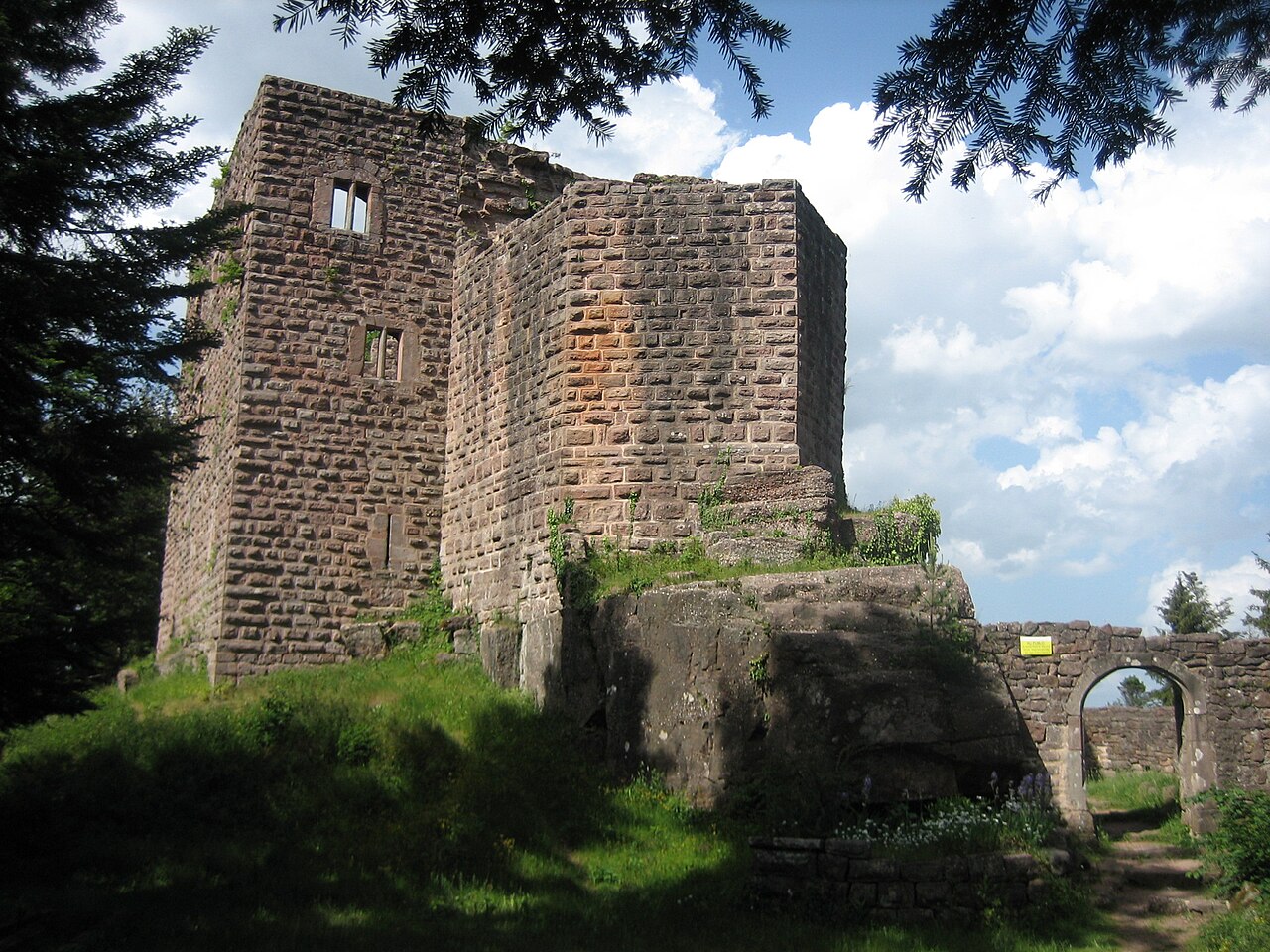
The castle's foundation reflects the feudal dynamics of the Holy Roman Empire in the 13th century, with official permission to build granted by King Rudolf I of Habsburg in 1289, solidifying its legal status. Kagenfels was designed as a compact fortress featuring a residential tower and a bergfried (main defensive tower), surrounded by thick curtain walls and a protective moat. The use of local granite stone, with walls approximately 1.5 meters thick, provided formidable defense and durability against attacks.
Historical significance and sieges
The castle's history is marked by repeated military engagements, particularly in the late 14th and early 15th centuries. It endured at least four major sieges in 1383, 1390, 1397, and 1424. The siege of 1424 was notably successful, led by the combined forces of Wilhelm II von Diest, Bishop of Strasbourg, and Ludwig IV von Lichtenberg. Following this siege, the bishop entrusted the castle to his vassal, Heinrich von Hohenstein, who undertook significant rebuilding efforts to restore and enhance the fortress.
Despite these repairs, Kagenfels suffered further damage in 1426 due to an accidental fire, which destroyed several buildings within the complex. This event underscored the challenges of maintaining a medieval fortress in a remote forested location. Heinrich von Hohenstein's restoration included the establishment of a sawmill nearby to ensure a steady supply of timber, highlighting the logistical efforts required for castle upkeep.
Ownership transitions and architectural evolution
Before 1502, the castle passed into the hands of the Uttenheim zu Ramstein family, who adapted the fortress to accommodate the evolving nature of warfare, particularly the use of artillery. These adaptations included modifications to the walls and defensive structures to withstand cannon fire, reflecting the transition from medieval to early modern military technology.
In 1559, ownership transferred to Lux von Viscbock, who expanded the castle's economic facilities by adding buildings intended for agricultural and storage purposes. It was during this period that the castle acquired the name "Kagenfels." Lux von Viscbock later sold the property to the town of Obernai in 1563, marking a shift from noble to municipal control.
Decline and rediscovery
Kagenfels Castle's active use declined during the Thirty Years' War (1618-1648), a devastating conflict that affected much of Central Europe. By 1664, the castle was described as a ruin, and by 1684 it was recorded as abandoned and reduced to a heap of stones. The castle faded from historical memory until it was rediscovered and identified again in 1828.
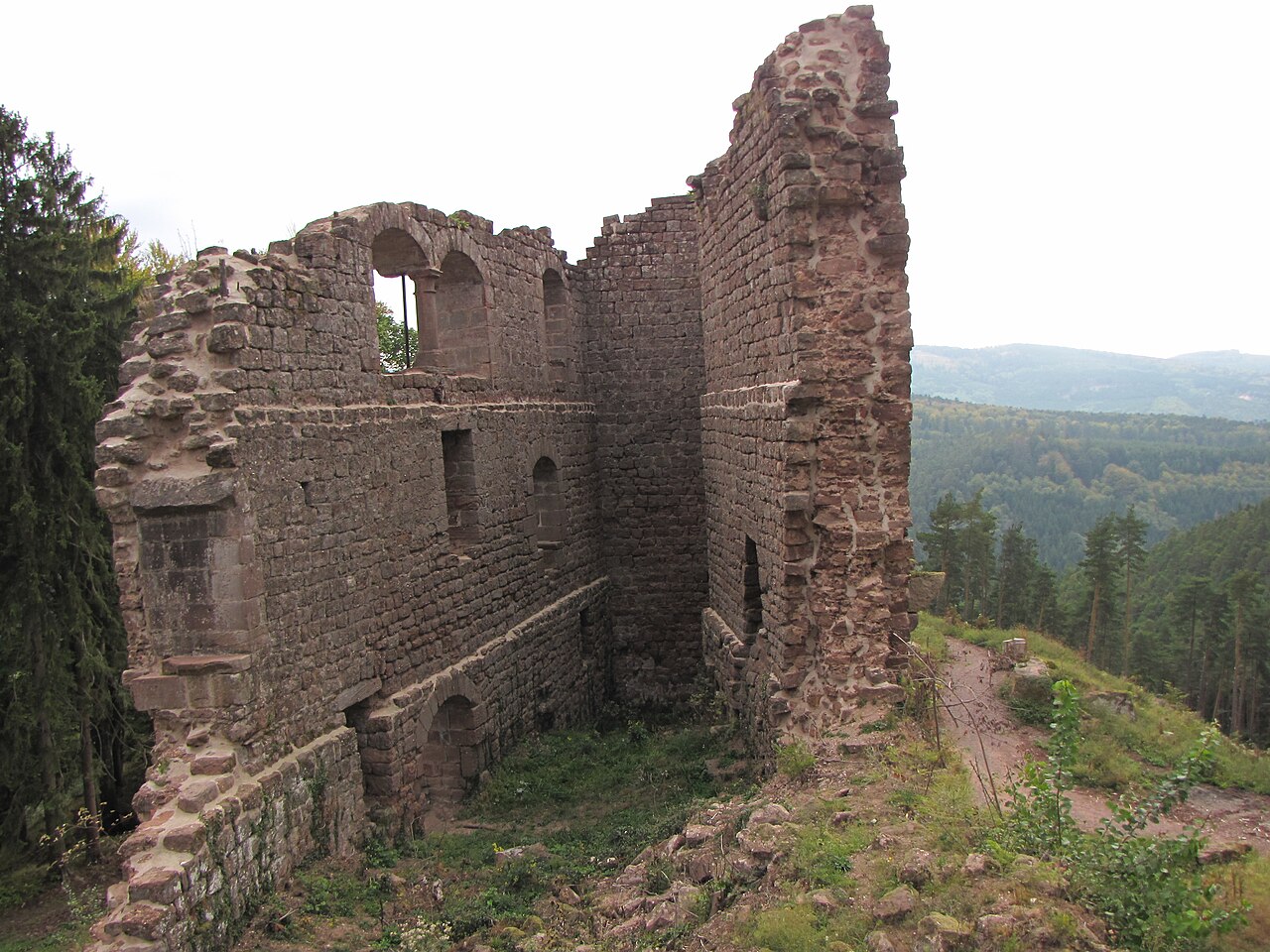
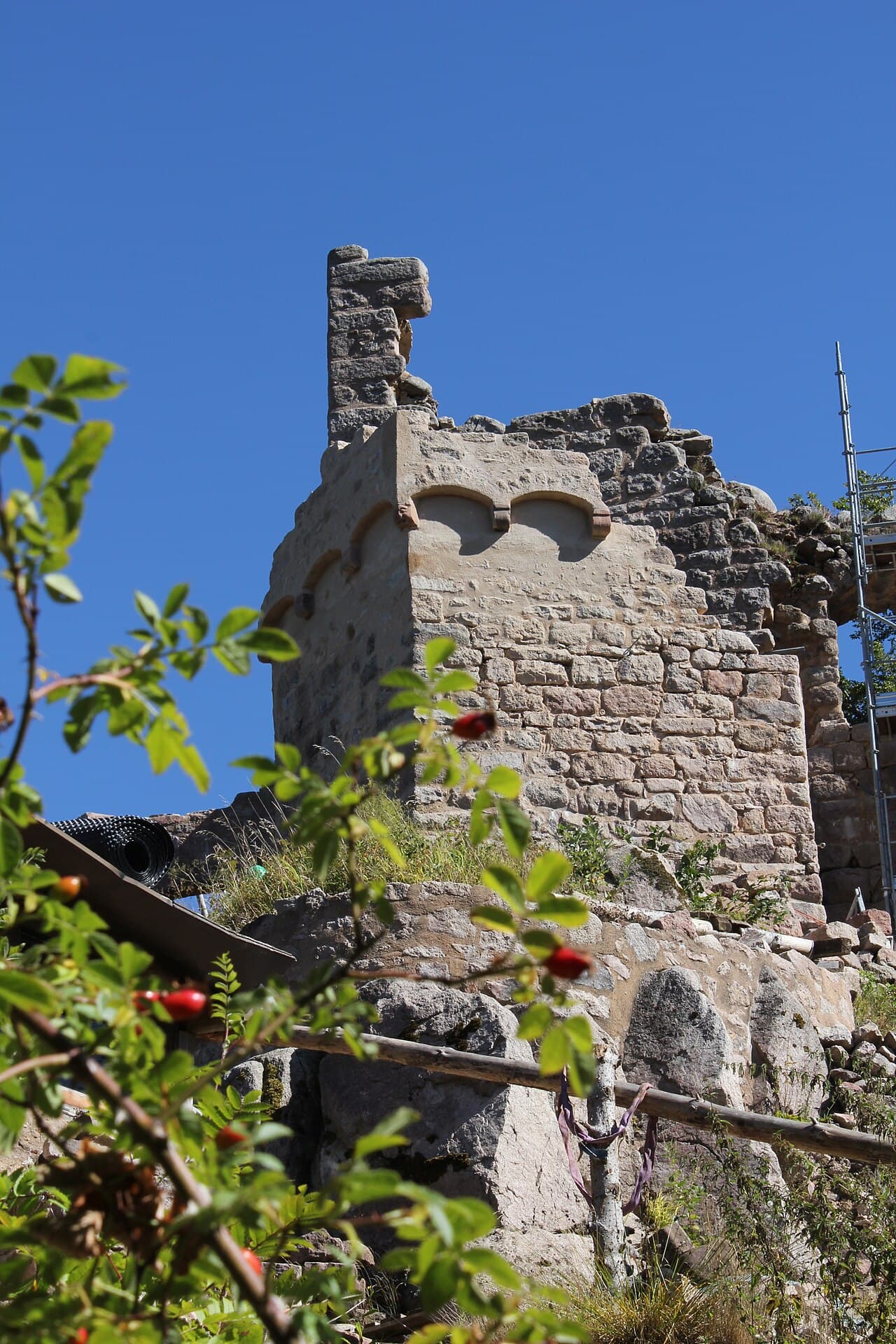
Since 1999, a dedicated association of volunteers, in collaboration with the local council, has been working to excavate, consolidate, and partially restore the ruins. These efforts have revealed important architectural elements such as the foundations of the residential tower and bergfried, remnants of curtain walls, and traces of the defensive moat. Archaeological excavations have also uncovered numerous stone cannonballs, attesting to the castle's turbulent military history, as well as a stone altar suggesting religious functions within the fortress.
Architectural features and the castle landscape
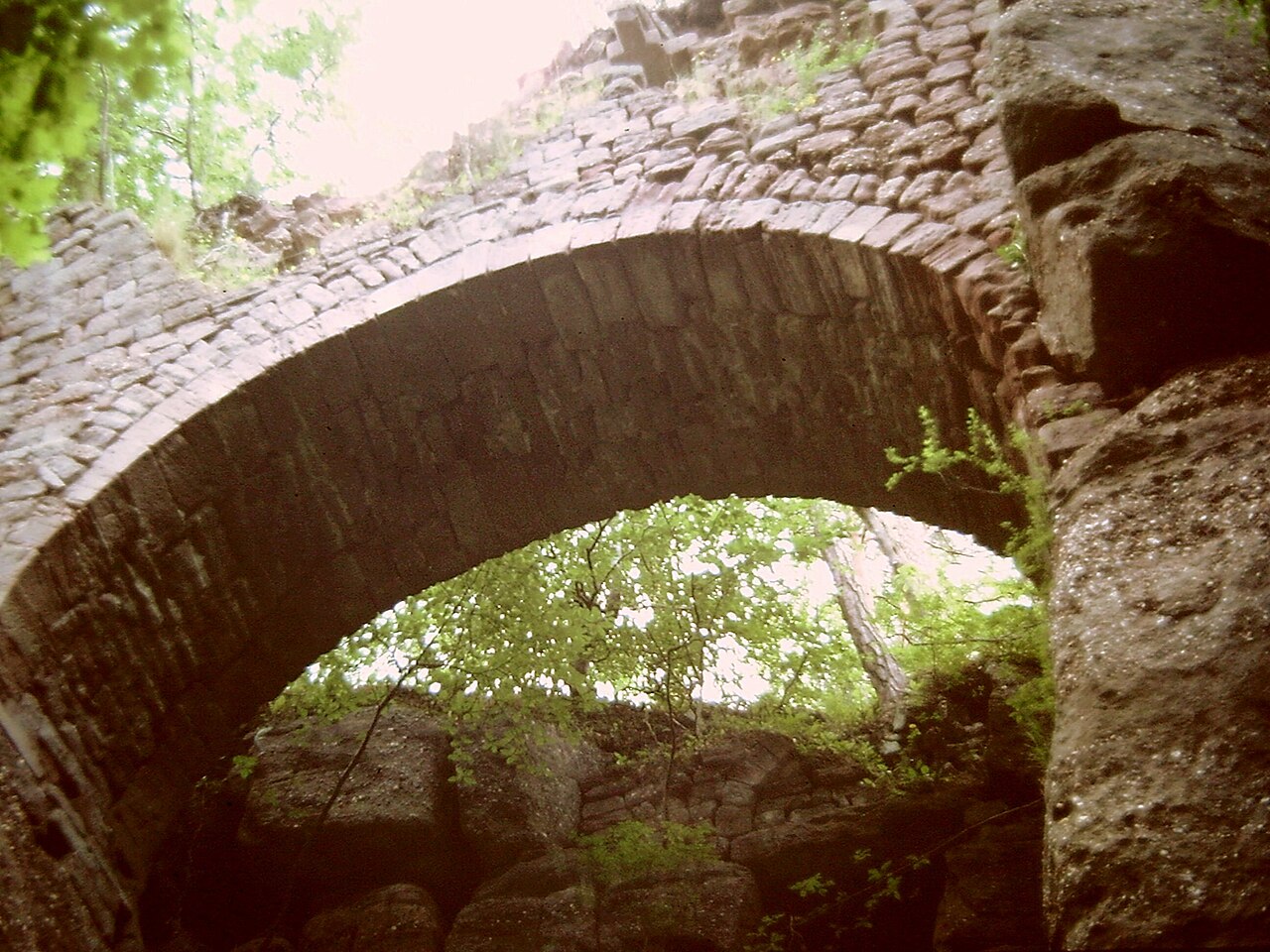
The castle's original layout centered on a robust residential tower measuring approximately 13.8 by 15.5 meters, with thick granite walls that provided both defense and habitation. The adjacent bergfried served as the main stronghold and lookout point. Surrounding these structures were fortified curtain walls and a moat, enhancing the castle's defensive capabilities.
Kagenfels is part of a unique cluster of medieval castles in the vicinity of Mont Sainte-Odile, including notable sites such as Birkenfels, Dreistein, and Hagelschloss. This dense concentration of fortifications reflects the complex feudal and military landscape of the Northern Alsace region during the Middle Ages.
Access and visitor experience
Today, Kagenfels Castle is accessible to visitors, though its remote location requires a hike of approximately 45-50 minutes through forest trails. The site is open primarily on Saturdays when volunteers are present to offer guided insights and maintain the ruins. Visitors can explore the evocative remains of the castle, appreciating both its historical significance and the natural beauty of the surrounding forest.
The ongoing preservation efforts ensure that Kagenfels remains a valuable cultural heritage site, offering a tangible connection to the medieval history of the Alsace region and the strategic importance of hill castles in feudal Europe.
Frequently asked questions (FAQ)
- How do I get to Kagenfels Castle?
- Kagenfels Castle is located in Ottrott, France, easily accessible by car or public transportation. The nearest major city is Strasbourg, which is about 30 kilometers away. From Ottrott, a short hike will lead you to the castle, making it a great destination for outdoor enthusiasts.
- What is the historical significance of Kagenfels Castle?
- Kagenfels Castle dates back to the 12th century and played a crucial role in the defense of the region. It was part of the extensive network of castles in the Alsace region, showcasing medieval architecture and military strategy. Today, it stands as a testament to the rich history and heritage of the area.
- When was Kagenfels Castle built?
- Kagenfels Castle was constructed in the early 12th century, with its origins linked to the noble family of the Kagenfels. Over the centuries, it underwent various modifications and expansions, reflecting the architectural styles of different periods. Its ruins today provide insight into medieval construction techniques.
- Can I enter Kagenfels Castle?
- While Kagenfels Castle is primarily a ruin, visitors can explore the site and enjoy the stunning views of the surrounding landscape. There are no entrance fees, making it a budget-friendly outing. However, visitors should be cautious as some areas may be uneven or unstable.
- Why is Kagenfels Castle a popular tourist attraction?
- Kagenfels Castle attracts visitors for its historical significance, breathtaking views, and unique architecture. The castle's picturesque location amidst the Vosges mountains offers excellent hiking opportunities. Additionally, it serves as a great spot for photography and learning about the region's medieval history.
- Is it possible to visit Kagenfels Castle year-round?
- Yes, Kagenfels Castle is open to visitors year-round. However, the best time to visit is during the spring and fall when the weather is mild and the landscape is particularly beautiful. Winter visits are also possible, but visitors should be prepared for colder conditions and potential snow.
- What are the opening hours for Kagenfels Castle?
- Kagenfels Castle does not have specific opening hours since it is accessible to the public at all times. However, it is advisable to visit during daylight hours to fully enjoy the site and ensure safety while exploring the ruins. Always check local information for any seasonal changes or events.
- Are there any nearby attractions to visit?
- Yes, the area around Kagenfels Castle is rich in attractions. The charming village of Ottrott offers local shops and restaurants, while the nearby Mont Sainte-Odile is a popular pilgrimage site with stunning views. Additionally, the Alsace Wine Route is close by, providing opportunities for wine tasting and exploration.
- What are the ticket prices for Kagenfels Castle?
- There is no admission fee to visit Kagenfels Castle, making it an accessible destination for all visitors. Enjoying the ruins and the scenic views comes at no cost, allowing you to immerse yourself in history without breaking the bank. Special guided tours may have fees, so check in advance if interested.
Photo gallery

Information
Sources & official resources
Verify the information above using these authoritative references.
Loading map...
Visitor reviews
No reviews yet. Been here? Write the first review and help other travelers!
Write the first reviewVisited this castle? Share your experience
Your review helps other travelers and adds first-hand knowledge to our encyclopedia.