Schiedberg Castle
Schiedberg Castle stands as a notable example of an early medieval fortification located in the municipality of Sagogn in the Canton of Graubünden, Switzerland. Recognized as a Swiss heritage site of national significance, the castle's remains provide valuable insight into the defensive architecture and regional history of the 10th century.
Historical context and significance
Constructed in the 10th century, Schiedberg Castle was built during a period of significant political and social transformation in the Alpine region. This era, part of the early medieval period, saw the establishment of numerous fortifications designed to control strategic routes and assert local power. The castle's location in Graubünden, a region characterized by its mountainous terrain and important trade paths, underscores its role in overseeing and protecting these vital corridors.
Throughout the Middle Ages, the castle likely served as a stronghold for local nobility or feudal lords, providing both a defensive refuge and a symbol of authority. Although detailed records of its original occupants and specific historical events are scarce, the castle's enduring ruins reflect its longstanding presence in the region's medieval landscape.
Architectural features and layout
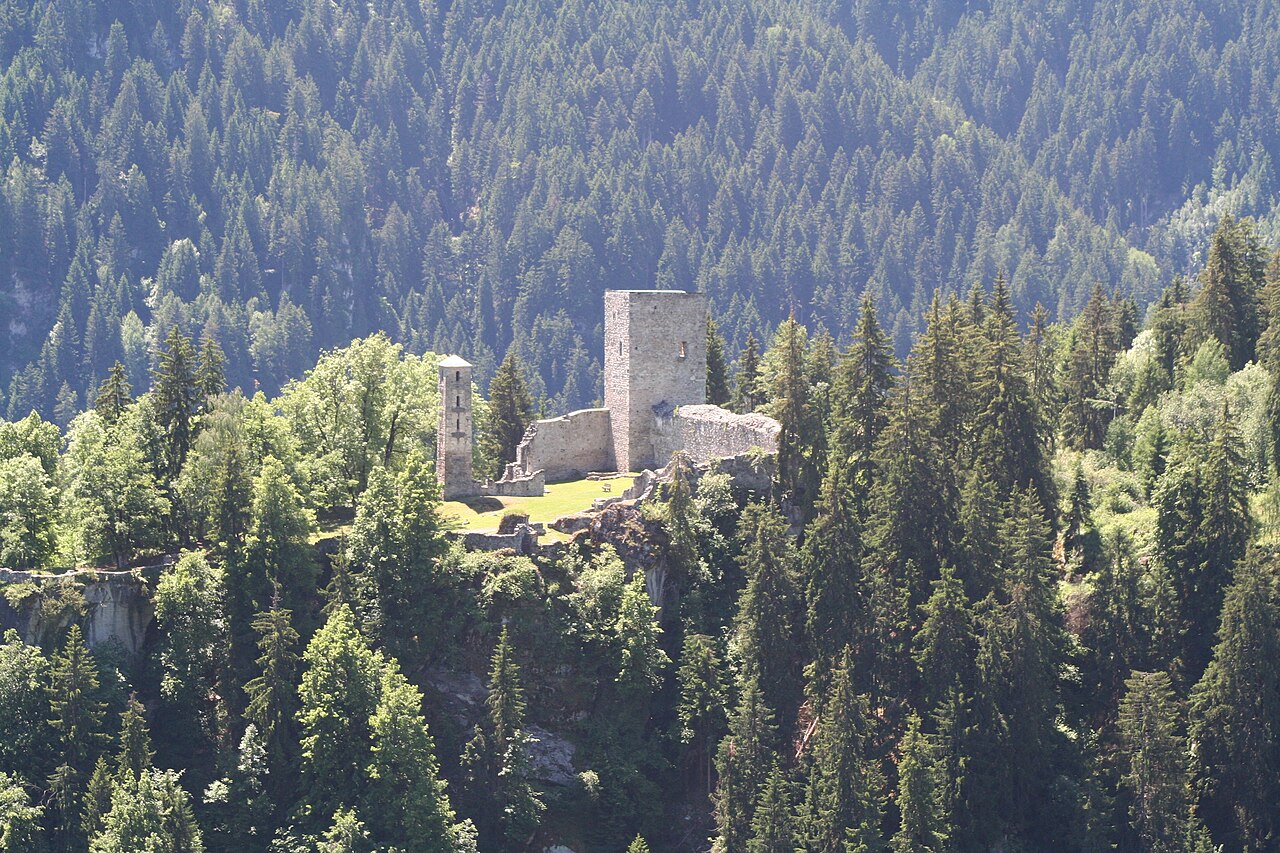
As an archaeological ruin, Schiedberg Castle today presents remnants that suggest a typical early medieval hilltop fortress design. The castle was strategically situated on elevated terrain, which offered natural defensive advantages and a commanding view over the surrounding valley and routes below.
The surviving structures include portions of the stone curtain walls that once enclosed the castle's inner ward, as well as foundations indicating the presence of a keep or donjon, which would have served as the last line of defense and the residence of the lord. The walls were likely reinforced by towers at key points, although only limited traces remain.
The castle's layout would have included essential features such as a courtyard, gatehouse, and possibly a chapel, consistent with contemporaneous fortifications. The use of local stone materials and construction techniques typical of the early medieval period is evident in the masonry that survives.
Preservation and archaeological research
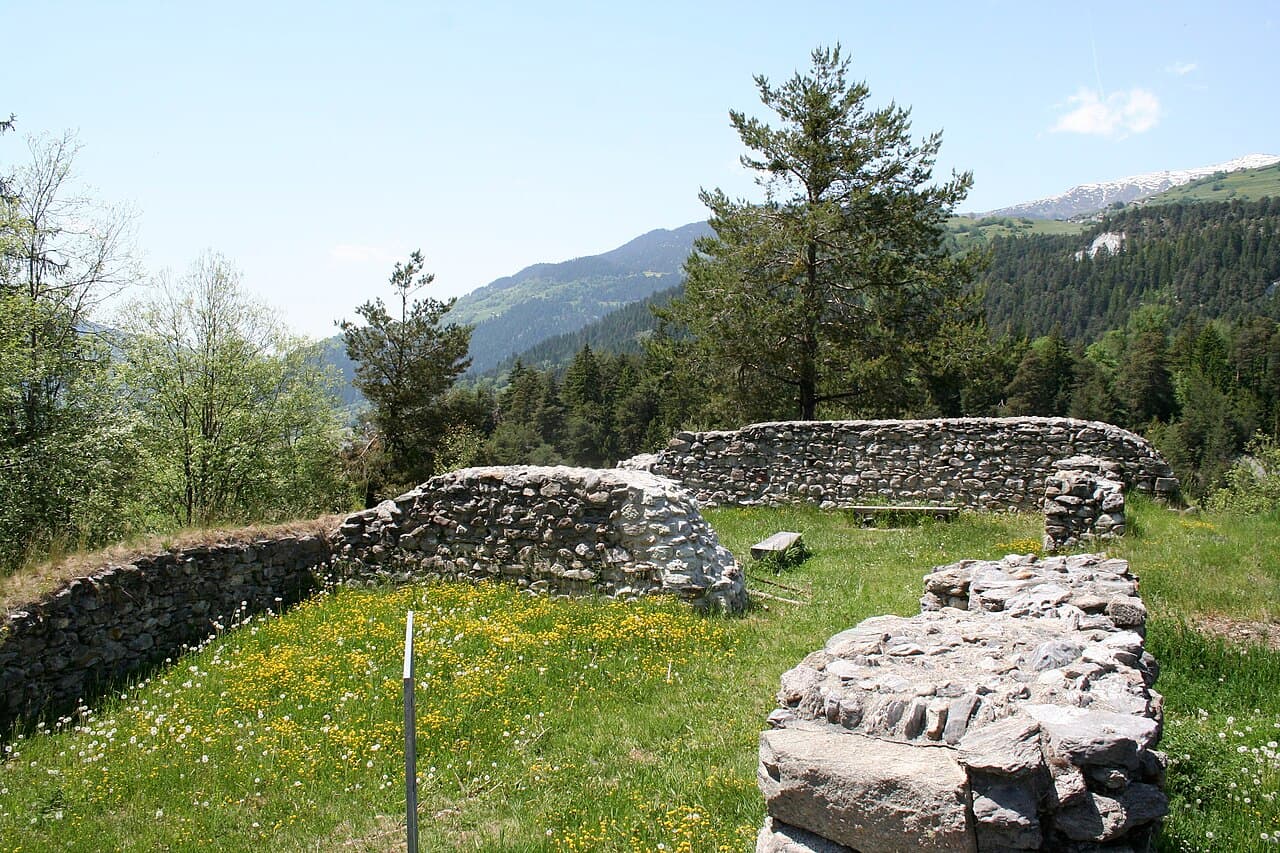
Today, Schiedberg Castle exists as ruins, with much of its original structure lost to time and natural decay. The site has been subject to archaeological investigations aimed at uncovering its historical phases and architectural details. These studies have helped clarify the castle's construction methods and its role within the broader network of medieval fortifications in Graubünden.
Preservation efforts focus on stabilizing the remaining walls and protecting the site from erosion and human impact. As a heritage site, Schiedberg Castle is accessible to visitors interested in medieval history and archaeology, although the lack of extensive standing structures means that much of the experience relies on interpretation and imagination.
Visiting Schiedberg Castle
Located near Sagogn, the castle ruins can be reached by hiking trails that traverse the scenic landscapes of the Graubünden canton. Visitors should be prepared for uneven terrain and limited facilities at the site. The castle's elevated position offers panoramic views of the surrounding mountains and valleys, enriching the visit with natural beauty alongside historical interest.
Information panels at the site provide context about the castle's history and significance, enhancing the educational value of a visit. Due to its status as an archaeological ruin, the site is preserved primarily for its cultural heritage rather than as a fully restored tourist attraction.
Photo gallery

Information
Loading map...
Visitor reviews
No reviews yet. Been here? Write the first review and help other travelers!
Write the first reviewVisited this castle? Share your experience
Your review helps other travelers and adds first-hand knowledge to our encyclopedia.