Jörgenberg Castle — Switzerland castle

Jörgenberg Castle

Jörgenberg Castle in Waltensburg-Vuorz, Switzerland
Waltensburg-Vuorz, Switzerland
Early Medieval (5th–10th c.)
Partially Restored

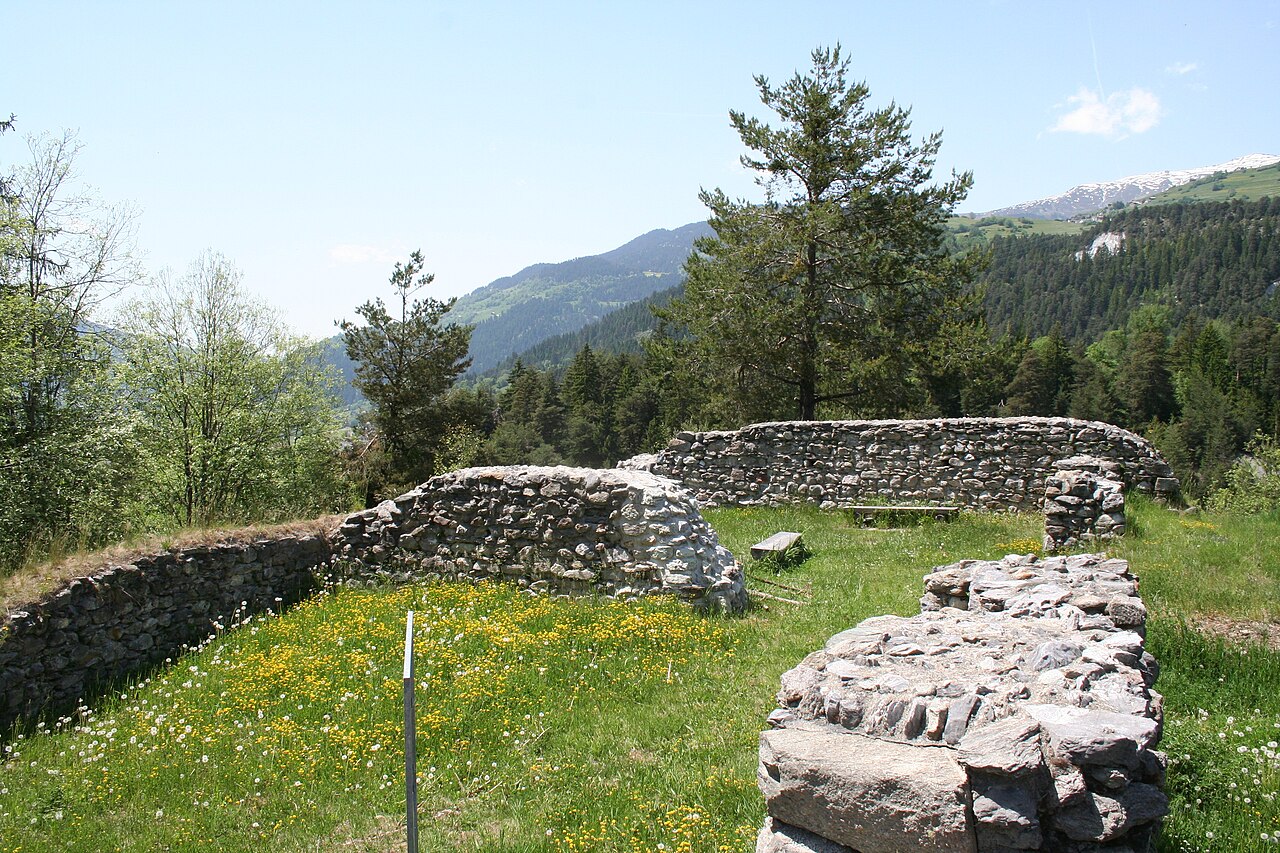
Jörgenberg Castle stands as a remarkable example of early medieval fortifications in the Swiss canton of Graubünden. Perched atop St. George's hill near Waltensburg-Vuorz, this hill castle evolved from a fortified church into a full-fledged feudal stronghold, reflecting centuries of architectural and political transformation. Its origins trace back to the 8th century AD, making it one of the region's oldest known fortified sites.

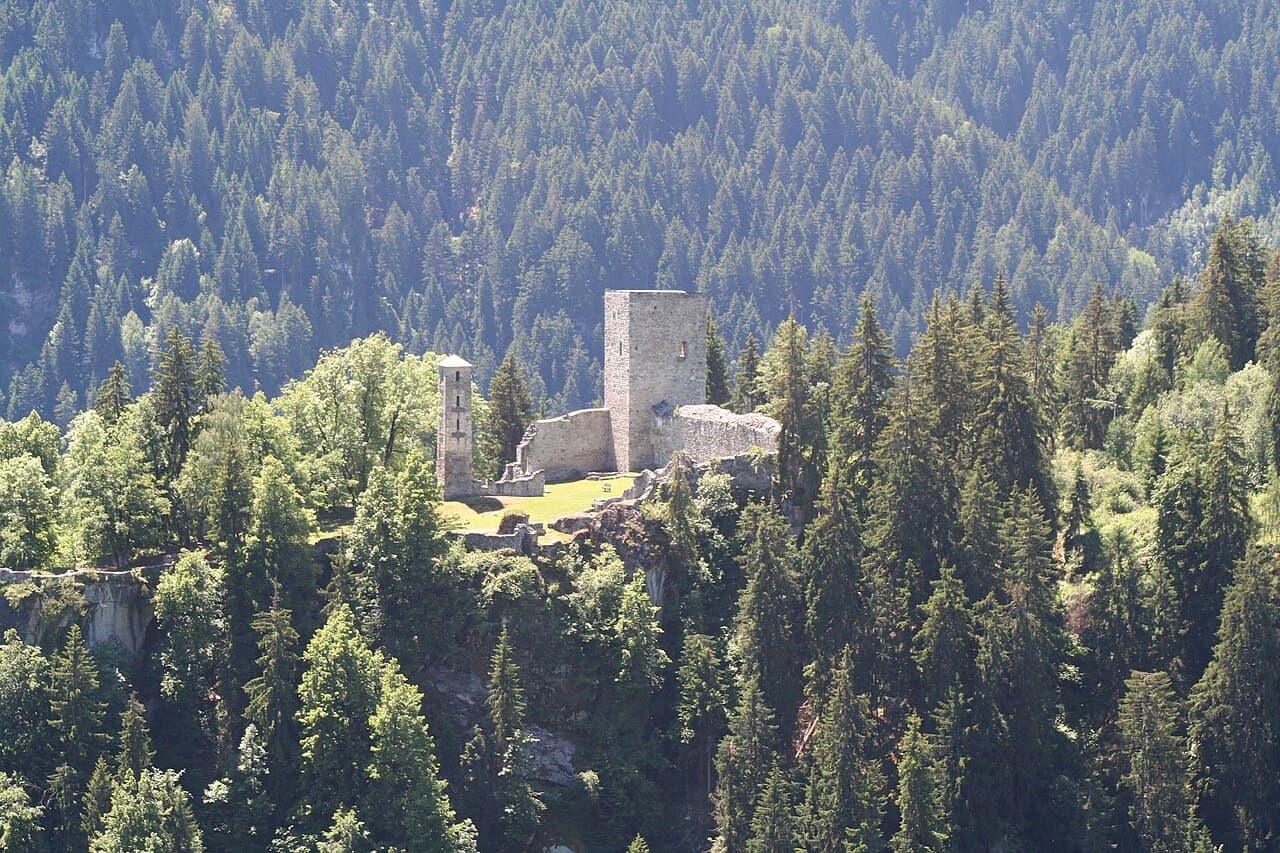
The castle's earliest documented mention appears in the 765 testament of Bishop Tello, where it is described as a castellum on Jörgenberg hill. This term indicates a fortified place, likely centered around the ecclesia sancti Georgii in Castello—the Church of Saint George within the castle walls—recorded in the early 9th century. The presence of a Romanesque bell tower dated by dendrochronology to around 1070 confirms the site's longstanding religious significance. The church originally featured a broad nave, a distinctive horseshoe-shaped apse, and a choir constructed of tuff stone blocks, elements that highlight its architectural heritage from the early medieval period.

The architectural evolution of Jörgenberg Castle

From fortified church to medieval castle

Initially built as a fortified church on lands donated by the Frankish kings, Jörgenberg Castle's structure expanded significantly during the 12th and 13th centuries. The original church walls, mostly from this era, were constructed with durable stone, while the northern wall underwent restoration in the 20th century. The castle's defensive features were enhanced with the construction of a five-story Romanesque main tower (bergfried) around 1265. This tower, nearly square with walls approximately two meters thick, features characteristic round-arch windows in its upper stories and a latrine turret, illustrating medieval considerations for both defense and daily life.

The palas and fortifications

Following a destructive fire in 1351, the castle's owners, the Freiherr von Rhäzüns, undertook significant rebuilding efforts. They added a palas—a great hall used for residential and administrative purposes—on the northwest corner. This building was expanded over time with additional housing and functional outbuildings. The northern side of the plateau was further secured by a ring wall, enclosing the castle's core area and enhancing its defensibility. The entire castle complex occupies a plateau approximately 100 by 70 meters, naturally protected by steep cliffs and a deep ditch on its western approach.

Historical significance and ownership transitions

Medieval feudal control and regional conflicts

During the 14th century, Jörgenberg Castle was held by the Freiherr von Fryberg, vassals to the powerful Vaz family. The castle's strategic importance is underscored by its involvement in regional conflicts, including the 1333 coalition against the Vaz, which resulted in the temporary capture of Jörgenberg and nearby Siat. Following the extinction of the Vaz family line, the Frybergs sold the castle to the Dukes of Austria, who then enfeoffed it back to them, illustrating the complex feudal allegiances of the period.

Rhäzüns and subsequent rulers

After the death of the last Fryberg heir in 1342, control passed to the Counts of Werdenberg, but soon after, the Freiherr von Rhäzüns asserted claims and eventually secured the castle by 1343. The Rhäzüns family merged Jörgenberg with the nearby Herrschaft of Grünenfels, administering the combined territory through appointed vogts for about a century. The castle later transferred to the Counts von Zollern in 1458, whose foreign rule was resisted by local inhabitants, leading to unrest and eventual sale to the Abbot of Disentis Abbey in 1472.

Religious and secular shifts

Under Disentis Abbey's administration, Jörgenberg functioned as an administrative and judicial center, evidenced by the nearby stone gallows pillars used for executions. The Protestant Reformation in 1539 diminished the Abbey's secular power, prompting the sale of the castle to Mathias Rung von Waltersburg. The castle remained in good condition during this transition. By the late 16th century, the Gandreya family took ownership, but by the 17th century, the castle was abandoned and began to deteriorate.

Preservation and archaeological efforts

Ownership conflicts persisted until the 18th century when the municipality acquired the ruins in 1705, and the Abbey relinquished its rights in 1734, retaining only titular lordship. The 20th century saw renewed interest in preserving Jörgenberg Castle. Excavations and reinforcement took place in 1931-32, though early efforts lacked professional archaeological standards. More comprehensive restoration occurred between 1998 and 2001, stabilizing the ruins and enhancing visitor access.

Architectural features and site layout

The castle's defensive structures

Jörgenberg Castle's layout capitalizes on the natural topography of the hill, with steep cliffs providing formidable natural defenses. The man-made fortifications include a massive shield wall on the western side, now largely in ruins, which originally protected the inner castle. The entrance was controlled through an outer gate leading into a zwinger—an enclosed outer ward—before the inner gate, which was further protected by a foreditch.

Residential and functional buildings

The palas served as the residential and administrative heart of the castle, with expansions reflecting the needs of its occupants. Additional buildings, some now reduced to foundations, likely served various support roles such as storage or barns. The courtyard remains mostly open, featuring a rock-cut cistern for water storage, essential for sustaining inhabitants during sieges.

Religious structures and burial grounds

The Church of St. George within the castle walls is notable for its early medieval origins, particularly the horseshoe-shaped apse and the Romanesque bell tower adorned with blind arches. The surrounding cemetery, marked by faint wall traces, contains graves from the early to high Middle Ages, underscoring the site's longstanding religious significance.

Judicial heritage

About 600 meters southwest of the castle lie two restored stone gallows pillars, relics of the castle's role in regional justice and capital punishment under the Abbey's authority. These pillars are a tangible reminder of the castle's function beyond military and residential uses.

Today, Jörgenberg Castle stands as a testament to the layered history of medieval Switzerland, combining religious, military, and administrative roles across centuries. Its well-preserved architectural elements, especially the Romanesque tower and church features, attract historians, archaeologists, and visitors interested in the complex heritage of the region.

Frequently asked questions (FAQ)

How do I get to Jörgenberg Castle?
Jörgenberg Castle is located on St. George's hill near Waltensburg-Vuorz in Graubünden, Switzerland. It is accessible by hiking trails from the village, with well-marked paths leading to the castle ruins.
What is the historical significance of Jörgenberg Castle?
Jörgenberg Castle originated as a fortified church in the 8th century and evolved into a medieval feudal castle. It played a key role in regional power struggles involving the Vaz family, Habsburgs, and Rhäzüns family, serving as an administrative and judicial center.
Can I visit the church ruins and bell tower at the castle?
Yes, visitors can explore the remains of the Church of St. George, including the Romanesque bell tower dated to around 1070. The church ruins and tower are part of the castle site and accessible to the public.
When is the best time to visit Jörgenberg Castle?
The best time to visit Jörgenberg Castle is during late spring to early autumn when hiking trails are clear and weather conditions are favorable for outdoor exploration.
Are there guided tours available at Jörgenberg Castle?
Guided tours may be available through local tourist offices or heritage organizations in Waltensburg-Vuorz. Visitors should check in advance for seasonal availability and booking options.
Is Jörgenberg Castle suitable for families and children?
The castle site involves some uneven terrain and hiking, so it is suitable for families with children who are comfortable with moderate walks. Supervision is advised due to the ruins and natural landscape.

Photo gallery

Jörgenberg Castle
Click to view

Photo by Adrian Michael•CC BY-SA 3.0

1 photo • Click any image to view in full screen

Information

Hill Castle

Current owner

Municipality of Waltensburg-Vuorz

Loading map...

Visitor reviews

No reviews yet. Been here? Write the first review and help other travelers!

Write the first review

Visited this castle? Share your experience

Your review helps other travelers and adds first-hand knowledge to our encyclopedia.
Write a review

(5/5)

0/2000 characters

Your review will be visible after admin approval

Nearby castles

3.1 km
Kropfenstein Castle — Switzerland castle

Kropfenstein Castle

Waltensburg/Vuorz, Switzerland

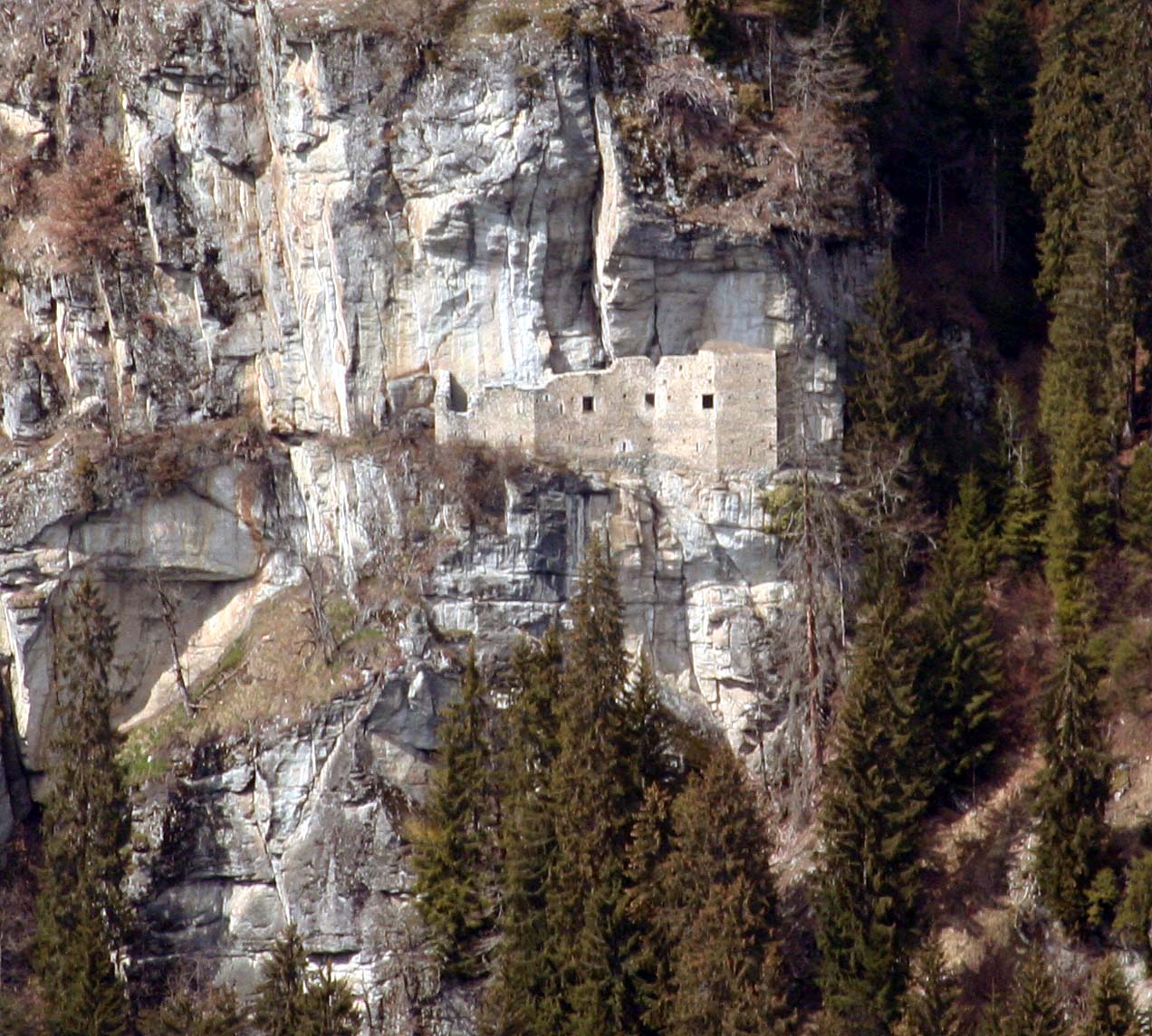
Kropfenstein Castle is a remarkable example of a cave castle located in the municipality of Waltensburg/Vuorz in the Canton of Graubünden, Switzerland. This unique fortress, carved directly into a rock face, represents a distinctive form of medieval fortification known as a rock castle, where natural geological features are integrated into the defensive design. Historical context and construction Constructed in the 14th century during the late medieval period, Kropfenstein Castle served as a strategic stronghold in the region. Its origins are tied to the feudal system prevalent in medieval Switzerland, where local lords fortified natural rock formations to establish defensible residences and control trade routes or local territories. The castle's builders skillfully exploited the natural rock ledges and caves to create living quarters, storage areas, and defensive positions, minimizing the need for extensive masonry. Architectural features and layout The castle is carved into a prominent rock outcrop, with chambers hewn directly from the stone. This includes rock-cut rooms that functioned as living spaces and storage, along with a fortified entrance that controlled access. Unlike traditional castles built entirely with stone blocks, the cave castle's construction relied heavily on the natural rock formations, supplemented by wooden structures that have not survived. The defensive design includes narrow access paths and a commanding view over the surrounding valley, providing early warning of approaching threats. The castle's position on a steep rock face made it difficult to assault, compensating for its relatively small size and limited fortifications. Current condition and heritage significance Today, Kropfenstein Castle remains as ruins, with the rock-cut chambers and some structural remnants visible. It is classified as an archaeological site and is protected as a Swiss heritage site of national significance. The castle's preservation allows visitors and researchers to study this rare example of a cave castle, offering insights into medieval defensive architecture adapted to natural landscapes. Visiting and accessibility The site is accessible by hiking trails from the surrounding area in Waltensburg/Vuorz. Due to its rugged location and fragile remains, visitors are advised to exercise caution and respect preservation guidelines. Interpretive signs provide historical information, enhancing the educational value of a visit to this distinctive medieval fortress. Architectural and cultural importance Kropfenstein Castle stands out among Swiss castles for its integration with natural rock formations, illustrating a unique medieval architectural approach. It exemplifies how geography influenced castle design, especially in mountainous regions like Graubünden. The castle contributes to understanding the diversity of medieval fortifications beyond conventional stone castles, highlighting adaptations to local topography and resource availability.

Late Medieval (14th–15th c.)
Details
9.9 km
Schiedberg Castle — Switzerland castle

Schiedberg Castle

, Switzerland

Schiedberg Castle stands as a notable example of an early medieval fortification located in the municipality of Sagogn in the Canton of Graubünden, Switzerland. Recognized as a Swiss heritage site of national significance, the castle's remains provide valuable insight into the defensive architecture and regional history of the 10th century. Historical context and significance Constructed in the 10th century, Schiedberg Castle was built during a period of significant political and social transformation in the Alpine region. This era, part of the early medieval period, saw the establishment of numerous fortifications designed to control strategic routes and assert local power. The castle's location in Graubünden, a region characterized by its mountainous terrain and important trade paths, underscores its role in overseeing and protecting these vital corridors. Throughout the Middle Ages, the castle likely served as a stronghold for local nobility or feudal lords, providing both a defensive refuge and a symbol of authority. Although detailed records of its original occupants and specific historical events are scarce, the castle's enduring ruins reflect its longstanding presence in the region's medieval landscape. Architectural features and layout As an archaeological ruin, Schiedberg Castle today presents remnants that suggest a typical early medieval hilltop fortress design. The castle was strategically situated on elevated terrain, which offered natural defensive advantages and a commanding view over the surrounding valley and routes below. The surviving structures include portions of the stone curtain walls that once enclosed the castle's inner ward, as well as foundations indicating the presence of a keep or donjon, which would have served as the last line of defense and the residence of the lord. The walls were likely reinforced by towers at key points, although only limited traces remain. The castle's layout would have included essential features such as a courtyard, gatehouse, and possibly a chapel, consistent with contemporaneous fortifications. The use of local stone materials and construction techniques typical of the early medieval period is evident in the masonry that survives. Preservation and archaeological research Today, Schiedberg Castle exists as ruins, with much of its original structure lost to time and natural decay. The site has been subject to archaeological investigations aimed at uncovering its historical phases and architectural details. These studies have helped clarify the castle's construction methods and its role within the broader network of medieval fortifications in Graubünden. Preservation efforts focus on stabilizing the remaining walls and protecting the site from erosion and human impact. As a heritage site, Schiedberg Castle is accessible to visitors interested in medieval history and archaeology, although the lack of extensive standing structures means that much of the experience relies on interpretation and imagination. Visiting Schiedberg Castle Located near Sagogn, the castle ruins can be reached by hiking trails that traverse the scenic landscapes of the Graubünden canton. Visitors should be prepared for uneven terrain and limited facilities at the site. The castle's elevated position offers panoramic views of the surrounding mountains and valleys, enriching the visit with natural beauty alongside historical interest. Information panels at the site provide context about the castle's history and significance, enhancing the educational value of a visit. Due to its status as an archaeological ruin, the site is preserved primarily for its cultural heritage rather than as a fully restored tourist attraction.

Early Medieval (5th–10th c.)
Details
16.6 km

Belmont Castle

Flims, Switzerland

Belmont Castle is a historic hill castle located near Flims in the canton of Graubünden, Switzerland. Constructed in the 10th century, it served as the ancestral seat of the noble Freiherr von Belmont family, a significant power in the region during the Early Medieval period. The castle's strategic position on a rocky spire with sheer cliffs on the north and east sides provided natural defenses, characteristic of hill castles built for both protection and control over surrounding territories. The Belmont family and their influence in Graubünden The first recorded member of the Belmont family was Lutefridus de Belmonte in 1137/39. The family was closely related to other notable Raetian noble houses, including the influential von Vaz family. By the 13th century, the Belmonts had become one of the most powerful families in Graubünden, owning numerous castles and villages throughout the region. Their influence extended into ecclesiastical roles as well; notably, Konrad von Belmont served as the Bishop of Chur from 1273 to 1282. In 1267, Heinrich von Belmont became the first student from Raetia to study at the prestigious University of Bologna, reflecting the family's prominence and commitment to education. Around the year 1200, the Belmont family appears to have shifted their residence to another castle near Castrisch and later to Tuma Casti near Domat/Ems, likely leaving a bailiff or vogt to oversee Belmont Castle. Architectural features and layout of Belmont Castle The castle's construction took advantage of the natural rocky spire, with two semi-circular ring walls encircling the east, north, and northwest sides of the peak. The inner ring wall was built first, followed by the outer wall, creating a layered defense system. These walls connected at least three buildings, with the central and eastern structures probably serving as residential quarters. One notable feature at the heart of the castle is a 5.7-meter-deep cistern, essential for water storage during sieges and dry periods. To the south of the castle lies a smaller rocky peak about 8 meters higher than the main castle, with a flat top measuring roughly 10 by 30 meters. Although no stone ruins have been found on this peak, it is believed to have supported one or more wooden buildings, possibly for lookout or additional defensive purposes. Historical events and decline In 1352, Ulrich Walter von Belmont played a key role in a successful uprising against the Counts of Werdenberg-Heiligenberg. Leading forces allied with the Montalt and Rhäzüns families, they defeated the Werdenberg-Heiligenberg army at Mundaun near Ilanz. In retaliation, the Werdenberg forces burned Ilanz to the ground shortly thereafter. The fate of Belmont Castle during these conflicts is uncertain; it is unclear whether it was attacked and destroyed or bypassed. However, by the late 14th century, the castle had fallen into ruins. Ulrich Walter von Belmont died childless in 1371, and the family's lands were inherited by the Montalt and Sax-Misox families. In 1380, the Sax-Misox family traded the ruins of Belmont Castle, along with other lands, to Brun von Rhäzüns. Following this transaction, the castle remained abandoned and continued to deteriorate. Excavation and preservation efforts Between 1932 and 1936, archaeological excavations and repairs were undertaken to stabilize and preserve the ruins of Belmont Castle. These efforts revealed much about the castle's layout and construction techniques, helping to protect this valuable cultural heritage site. Today, the castle ruins stand as a testament to the region's medieval history and the legacy of the Belmont family. Location and environment Belmont Castle was built near the now vanished Walser village of Fidaz, close to Flims. Its location atop a rocky spire with steep cliffs provided a natural fortress, typical of hill castles designed for defense and surveillance. The surrounding landscape of Graubünden, with its mountainous terrain and strategic valleys, made such castles vital for controlling trade routes and local territories during the medieval period.

Early Medieval (5th–10th c.)
Details