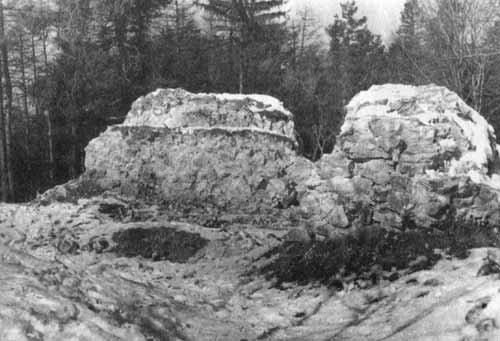
Șcheia Fortress — Romania castle

Șcheia Fortress

Șcheia Fortress: bastioned fortress in Romania

Șcheia Fortress is a notable example of a bastioned fortress located in Romania. Although specific details about its exact city location remain unclear, the fortress represents an important military architectural style that emerged in response to the development of artillery warfare in the early modern period. Bastioned fortresses are characterized by their angular bastions projecting outward from the curtain walls, designed to cover adjacent walls with defensive fire and eliminate blind spots.

Historical context and military significance

The construction of bastioned fortresses like Șcheia Fortress became prominent during the 16th to 18th centuries, a period marked by significant advances in siege artillery. These fortifications were designed to withstand cannon fire and provide overlapping fields of defensive fire, a strategic evolution from medieval castles. Romania, situated at the crossroads of Eastern and Central Europe, saw numerous conflicts and invasions, making such fortifications vital for regional defense.

Architectural features of Șcheia Fortress

The fortress's design includes angular bastions at its corners, which allowed defenders to cover the curtain walls with flanking fire. This design minimized dead zones and improved the fortress's resilience against sieges. The walls were typically thick and low, constructed to absorb and deflect cannonballs rather than the high walls of medieval castles that were vulnerable to artillery.

Bastions and curtain walls

Bastions are the defining feature of the fortress, protruding outward to enable crossfire along the walls. The curtain walls connecting these bastions were reinforced and often surrounded by a ditch or moat to hinder attackers. The fortress likely included ravelins or detached triangular fortifications in front of the main walls to further disrupt enemy advances.

Gateways and defensive structures

The main entrance of the fortress would have been heavily fortified, possibly with a gatehouse and drawbridge over a moat or ditch. Defensive features such as machicolations or firing slits may have been incorporated to allow defenders to repel assaults effectively.

Role in regional defense and historical events

While detailed historical records specific to Șcheia Fortress are limited, bastioned fortresses in Romania were critical in resisting Ottoman advances and other regional conflicts. The fortress would have served as a military stronghold, protecting local populations and controlling strategic routes.

Preservation and current condition

The present condition of Șcheia Fortress is not well documented, but bastioned fortresses in the region often survive as ruins or partially preserved structures. These sites offer valuable insights into early modern military architecture and the historical context of Romanian defense systems.

Architectural legacy and cultural importance

Șcheia Fortress exemplifies the transition from medieval castle design to early modern fortifications shaped by gunpowder weaponry. Its bastioned layout influenced later fortress constructions and remains a subject of study for military historians and architects interested in the evolution of defensive architecture.

Frequently asked questions (FAQ)

How do I get to Șcheia Fortress?
You can reach Șcheia Fortress by car or public transport from the nearby city of Suceava. There are local buses that connect Suceava to Șcheia, making it accessible for visitors. If driving, please note that there is parking available near the fortress.
What is the historical significance of Șcheia Fortress?
Șcheia Fortress dates back to the 14th century and served as a vital defensive structure against invasions in the region. It played a crucial role in the history of Moldavia, particularly during the reign of Stephen the Great. The fortress is an important symbol of medieval architecture and local heritage.
When was Șcheia Fortress built?
The construction of Șcheia Fortress began in the 14th century, with significant modifications made over the years. The fortress was strategically built to protect the region from external threats. Its enduring presence reflects the turbulent history of the area during medieval times.
Can I visit Șcheia Fortress year-round?
Yes, Șcheia Fortress is open to visitors year-round, although hours may vary by season. It's recommended to check the official website or local tourism information for specific opening times. Visiting during the warmer months allows for a more enjoyable exploration of the grounds.
Why is the architecture of Șcheia Fortress unique?
The architecture of Șcheia Fortress showcases a blend of Gothic and Renaissance styles, reflecting the influences of different periods. Its robust stone walls and strategic design highlight its defensive purpose, while also incorporating aesthetic elements typical of its era. The fortress stands as a testament to the engineering skills of its builders.
Is it possible to take guided tours at Șcheia Fortress?
Yes, guided tours are available at Șcheia Fortress, providing visitors with in-depth knowledge about its history and architecture. These tours are led by knowledgeable guides who offer insights into the fortress's significance. It’s a fantastic way to enhance your visit and learn more about the site.
What is the best time to visit Șcheia Fortress?
The best time to visit Șcheia Fortress is during the spring and early autumn months when the weather is mild and pleasant. These seasons also provide beautiful scenery, making your visit more enjoyable. Summer can be busy with tourists, so plan accordingly if you prefer a quieter experience.
Are there any nearby attractions to visit?
Yes, there are several attractions near Șcheia Fortress, including the Suceava Citadel and the Painted Monasteries of Bucovina. These sites offer additional insights into the rich history and culture of the region. A day trip can easily accommodate visits to multiple historical sites in the area.
What are the ticket prices for entering Șcheia Fortress?
Ticket prices for entering Șcheia Fortress are quite reasonable, typically ranging from a few lei for adults to discounts for students and seniors. It's advisable to check the latest prices on the official website or local tourism guides. Entrance fees contribute to the maintenance and preservation of the fortress.
What are the opening hours for Șcheia Fortress?
Șcheia Fortress generally opens to visitors from 9 AM to 6 PM, but hours may vary depending on the season. It’s best to confirm the opening times before your visit to ensure a smooth experience. Special events or holidays may also affect regular hours, so checking in advance is recommended.

Photo gallery

Șcheia Fortress
Click to view

Photo by Cezar Suceveanu•CC BY 3.0

1 photo • Click any image to view in full screen

Information

Bastioned Fortress

Loading map...

Visitor reviews

No reviews yet. Been here? Write the first review and help other travelers!

Write the first review

Visited this castle? Share your experience

Your review helps other travelers and adds first-hand knowledge to our encyclopedia.
Write a review

(5/5)

0/2000 characters

Your review will be visible after admin approval

Nearby castles

2.8 km
Seat Fortress of Suceava — Romania castle

Seat Fortress of Suceava

Suceava, Romania

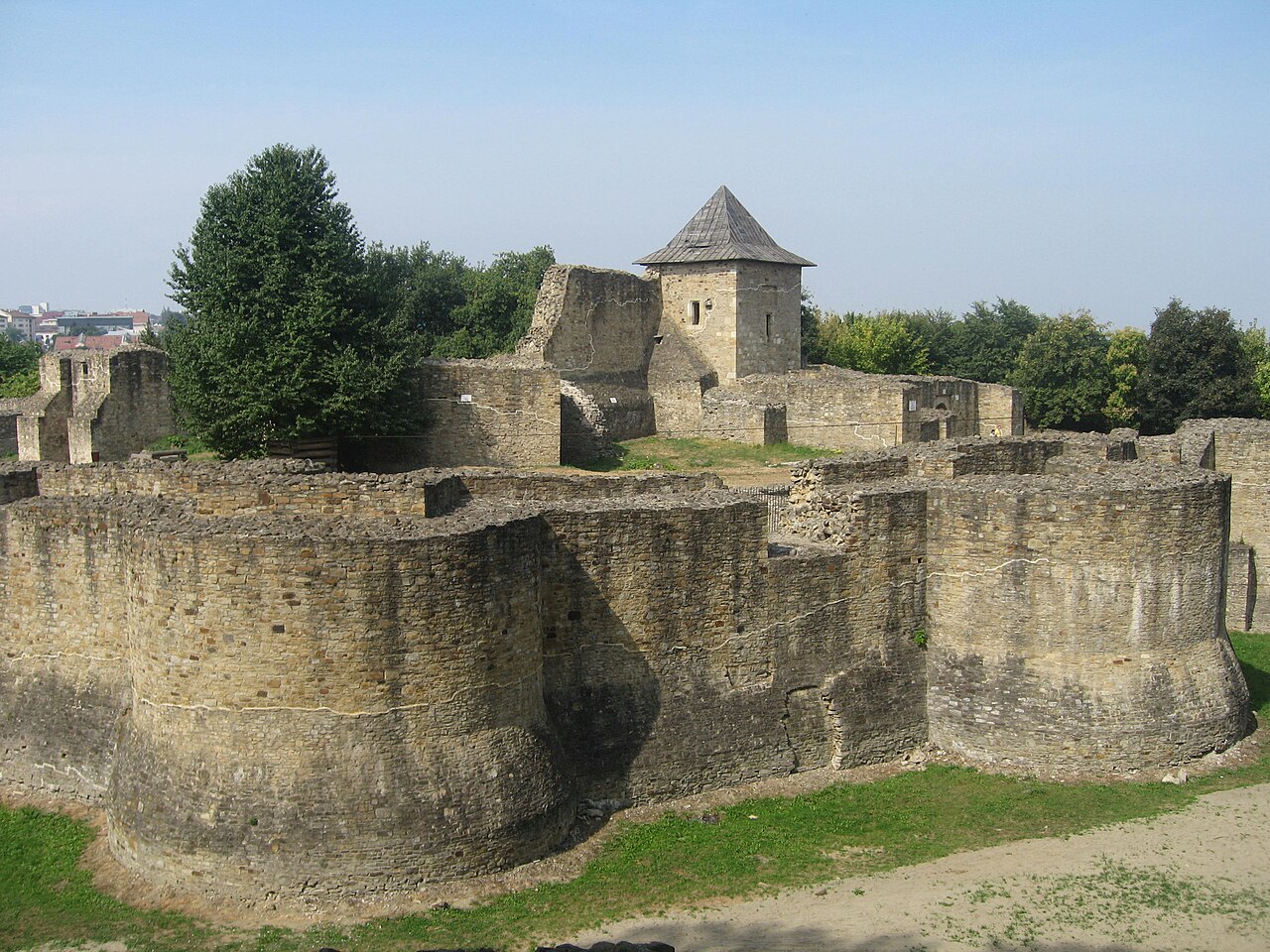
The Medieval Seat Fortress of Suceava (Romanian: Cetatea Medievală de Scaun a Sucevei, German: Sotschen Festung) stands as a significant bastioned fortress in the historic region of Bukovina, northeastern Romania. Located in the county seat town of Suceava, this castle was the principal royal seat for the Princes of Moldavia during the Late Middle Ages. It is one of the most important medieval fortifications in the region, reflecting the military and political power of Moldavia at its height. Historical background and significance The fortress was constructed in the 14th century, with major expansions and fortifications completed in the 15th century under the reign of Stephen the Great (Ștefan cel Mare), one of Moldavia's most renowned rulers. The castle served as a defensive stronghold against invading forces, including the Ottoman Empire, and as the administrative center of the Moldavian principality. It was the residence of Moldavian princes and a symbol of their authority. Throughout its history, the fortress witnessed numerous sieges and battles, reflecting the turbulent political landscape of Eastern Europe during the medieval period. Its strategic location on a hill overlooking the town of Suceava allowed it to control important trade routes and defend the region effectively. Architectural features and fortifications The Seat Fortress of Suceava is a classic example of a bastioned fortress, designed to withstand artillery attacks that became common in the late medieval period. The castle is surrounded by massive stone walls reinforced with corner bastions and curved defensive towers that provided overlapping fields of fire. The walls are punctuated by arrow slits and gunports, reflecting the transition from medieval to early modern military architecture. The fortress includes a moat that encircles the walls, adding an extra layer of defense. The main entrance is protected by a gatehouse with a drawbridge, portcullis, and murder holes, designed to repel attackers. Inside the walls, the castle complex contains residential quarters, a princely chapel, storerooms, and armories. The princely chapel One of the most notable features of the fortress is the princely chapel, which reflects the religious devotion of the Moldavian rulers. The chapel contains frescoes and religious iconography typical of Eastern Orthodox Christian art, emphasizing the cultural identity of the principality. Defensive innovations The fortress's design incorporates defensive innovations Restoration and current status Today, the Seat Fortress of Suceava is a well-preserved historical monument and a popular tourist attraction. It has undergone extensive restoration funded by the European Union's REGIO programme, aimed at preserving its structural integrity and enhancing visitor experience. The castle is officially listed as a historic monument by the Romanian Ministry of Culture, ensuring its protection and maintenance. Visitors can explore the fortress's walls, towers, and interior buildings, gaining insight into medieval Moldavian life and military architecture. The site hosts cultural events and exhibitions that celebrate the region's heritage. Location and accessibility The fortress is situated on a hill in the town of Suceava, offering panoramic views of the surrounding area. Suceava is accessible by road and rail from major Romanian cities, making the castle an accessible destination for both domestic and international tourists. Cultural and heritage importance The Seat Fortress of Suceava represents a crucial chapter in the history of Moldavia and Eastern Europe. It embodies the political power, military strategy, and religious devotion of the Moldavian princes. As a bastioned fortress, it illustrates the evolution of fortification techniques in response to changing warfare technologies. Its preservation allows historians and visitors alike to appreciate the complexity of medieval fortifications and the cultural identity of the region. The fortress remains a symbol of regional pride and historical continuity in Romania.

Late Medieval (14th–15th c.)
Details
76.6 km
Tsetsyno Fortress — Ukraine castle

Tsetsyno Fortress

, Ukraine

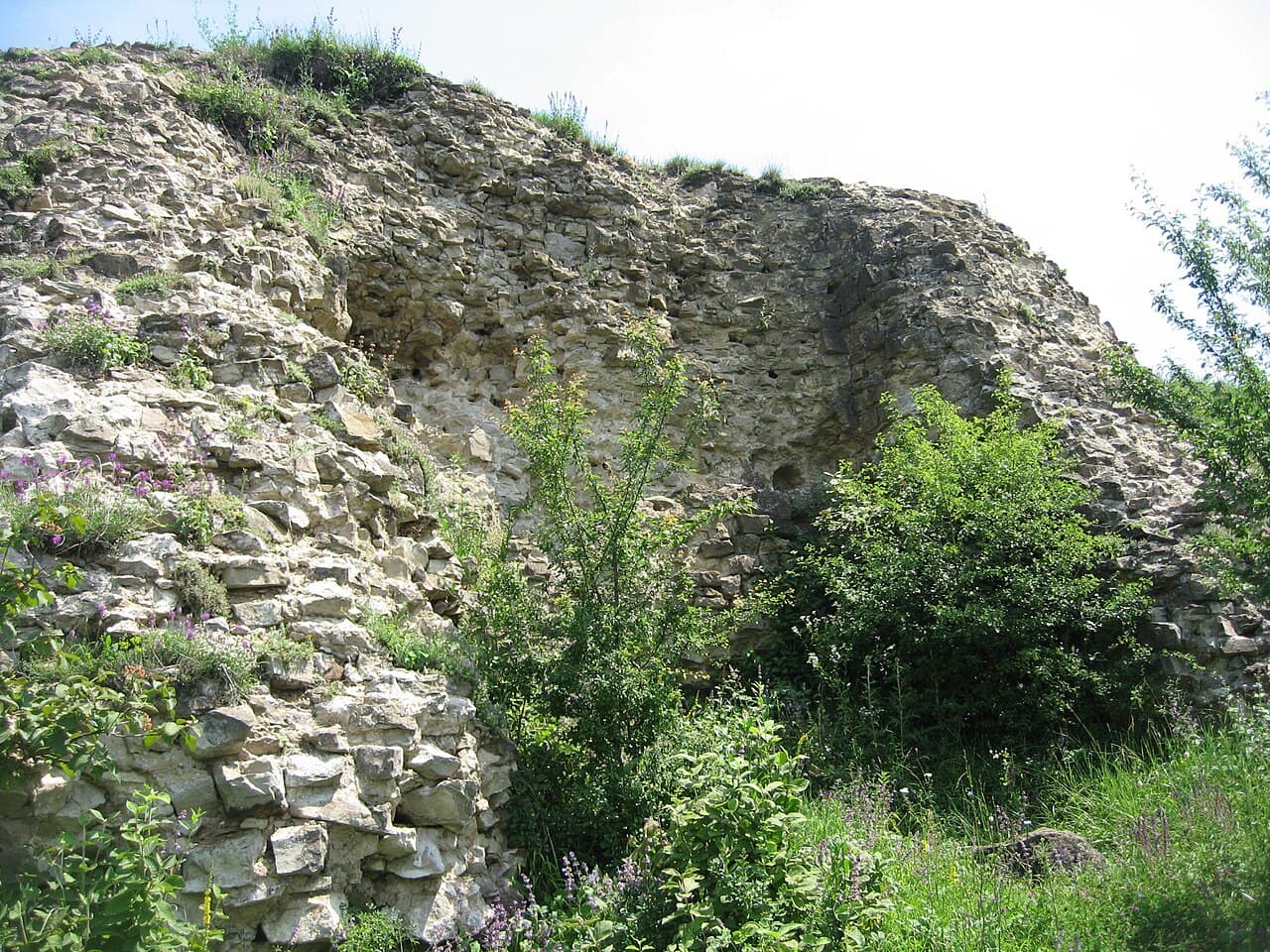
Tsetsyno fortress is a significant late medieval stronghold located in Ukraine, dating back to the 14th century. Though its exact city location remains uncertain, the fortress represents an important example of medieval military architecture in the region. The site today exists as archaeological ruins, offering insight into the defensive strategies and settlement patterns of the period. The historical context of Tsetsyno fortress Constructed during the turbulent 14th century, Tsetsyno fortress was part of a network of fortifications built to protect territories in what is now Ukraine. This period was marked by frequent conflicts involving local principalities, the expansion of the Grand Duchy of Lithuania, and incursions by the Golden Horde. Castles like Tsetsyno played a crucial role in defense and control of trade routes and local populations. Architectural features and layout As a late medieval fortress, Tsetsyno likely featured typical defensive elements of the era, including thick stone walls, battlements, and possibly a moat or natural water defenses. Although much of the structure is now in ruins, archaeological studies have revealed the foundations of walls and towers that suggest a compact fortress designed for both defense and habitation. The fortress would have included a keep or central stronghold, surrounded by curtain walls and possibly outer baileys. Defensive structures The fortress's design would have incorporated towers at strategic points to provide vantage points for archers and lookouts. The walls, constructed from locally sourced stone, were built to withstand sieges and attacks common in the late medieval period. The layout reflects the military architectural trends of Eastern Europe during the 14th century, combining functionality with the need for strong fortifications. Living quarters and internal spaces Within the walls, the fortress likely contained residential buildings, storage facilities, and possibly a chapel. These spaces would have supported a garrison and the local lord's household. The presence of a courtyard would have allowed for movement of troops and storage of supplies. Archaeological significance and current condition Today, Tsetsyno fortress stands as an archaeological site with much of its original structure in ruins. Excavations have helped uncover the layout and construction techniques used, providing valuable information about medieval fortifications in Ukraine. The site offers a tangible connection to the region's past and the complex history of medieval Eastern Europe. Visiting Tsetsyno fortress While the fortress is in a ruined state, it attracts historians, archaeologists, and visitors interested in medieval architecture and history. The site is typically accessible for exploration, though facilities may be limited due to its archaeological nature. Visitors should prepare for uneven terrain and bring suitable footwear. Preservation efforts and cultural importance Efforts to preserve Tsetsyno fortress focus on protecting the remaining structures from further decay and promoting awareness of its historical value. The fortress contributes to understanding the defensive networks that shaped the political landscape of medieval Ukraine. It remains a symbol of the region's resilience and strategic importance during the late medieval period. Challenges in preservation Preserving ruins like Tsetsyno is challenging due to natural erosion, vegetation growth, and limited funding. Archaeologists work carefully to document and stabilize the site to ensure its survival for future study and education. Frequently asked questions about Tsetsyno fortress What is the historical significance of Tsetsyno fortress? Tsetsyno fortress served as a defensive stronghold in the 14th century, protecting local territories and trade routes during a period of regional conflict. Can visitors explore the fortress ruins? Yes, the site is accessible to visitors, though it remains an archaeological ruin with limited facilities and requires caution when exploring. What architectural style characterizes Tsetsyno fortress? The fortress reflects late medieval military architecture typical of Eastern Europe, featuring stone walls and defensive towers. When was the fortress built? The fortress dates back to the 14th century, a time of significant fortification construction in the region. Is there any ongoing preservation work? Preservation efforts focus on stabilizing the ruins and preventing further deterioration to maintain the site's historical integrity.

Late Medieval (14th–15th c.)
Details
97.6 km
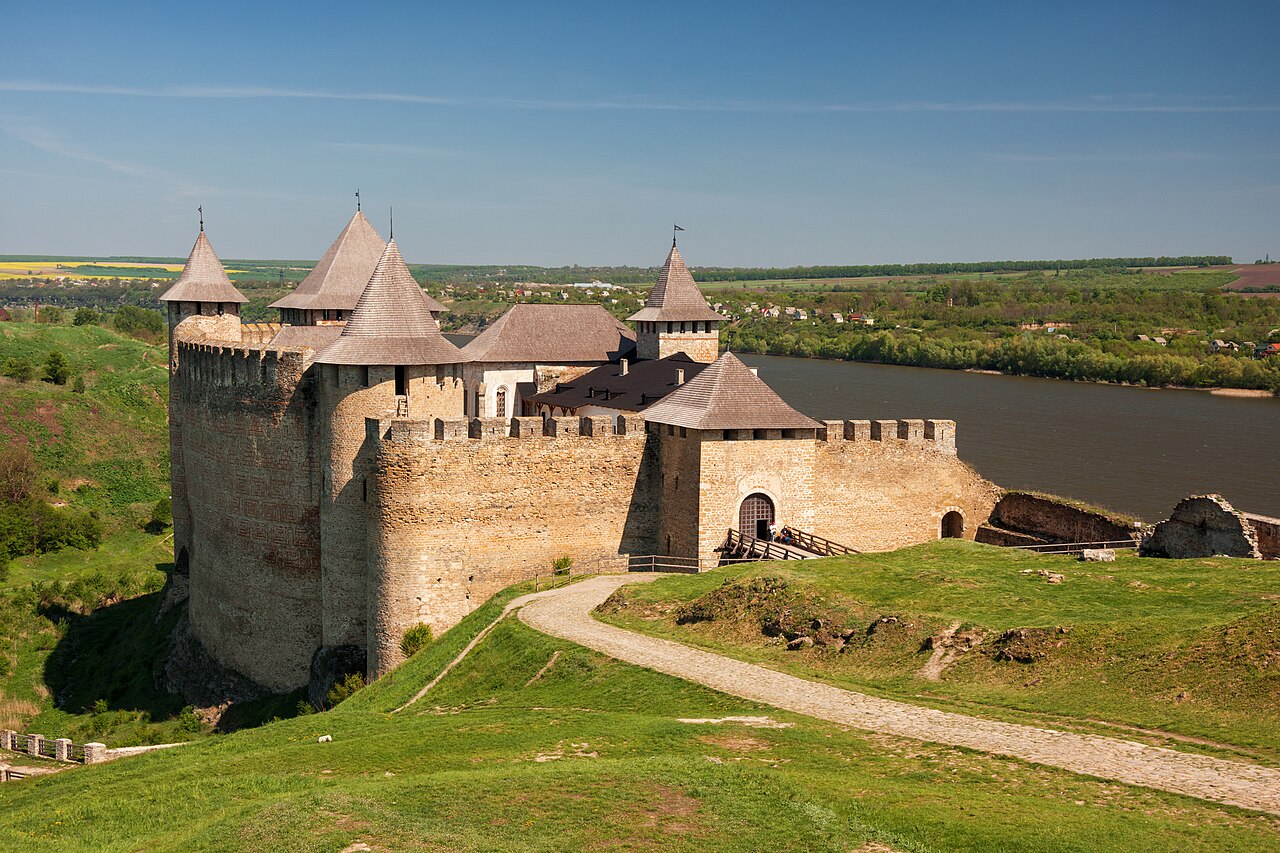
Chotyn Castle — Ukraine castle

Chotyn Castle

Khotyn, Ukraine

Chotyn Castle, located on a commanding rocky hill overlooking the right bank of the Dniester River in Ukraine's Chernivetska oblast, stands as one of the most impressive and well-preserved medieval fortresses in Eastern Europe. Its strategic location made it a vital defensive and economic stronghold for centuries, witnessing numerous historic battles and political shifts. Today, it attracts thousands of visitors annually, drawn by its formidable architecture, rich history, and cinematic fame. The fortress’s origins trace back to the early medieval period, with archaeological evidence indicating initial wooden fortifications built by East Slavic tribes in the 8th or 9th century. These early defenses evolved into stone walls by the late 12th or early 13th century, marking the transition from a simple settlement to a significant military and administrative center. The fortress’s medieval core, covering approximately 2 hectares, was expanded over time to more than 16 hectares, reflecting its growing importance. During the 14th century, when Khotyn was part of the Moldavian Principality, the stone fortress seen today began to take shape. Under the reign of Alexander the Good (1400–1432), the fortress underwent significant expansion. His successor, Stephen the Great, further reinforced the defenses in the 15th century, constructing thick walls up to 40 meters high and five meters thick, multiple towers, and dividing the interior into distinct military and ruling areas. Stephen personally oversaw these enhancements, which solidified the fortress’s reputation for impregnability. Architectural features and defensive structures The fortress’s walls are built from roughly cut quarry stones arranged in even layers, accented by distinctive bands of red bricks forming geometric patterns. The oldest surviving stone fortifications date from the 13th century and include walls approximately six meters thick, surrounded by a triangular moat. These early walls were incorporated into later constructions, preserving a tangible link to the fortress’s medieval origins. The interior is divided into two main sections: the princely court and the military courtyard. The princely court housed the ruler’s palace and administrative buildings, while the military courtyard contained barracks and storage facilities. Deep cellars beneath these courtyards were used for storing provisions during sieges. The fortress features five main towers with shingled roofs, including two round towers and a rectangular gate tower on the south side, built under Stephen the Great’s direction. The gate tower is accessible via a wooden bridge resting on pilings. Two additional rectangular towers are older, with the northernmost likely serving as the original donjon or main keep. The tallest towers reach about 25 meters in height, and the walls vary in thickness, with the western walls being the thickest and the river-facing walls designed with fewer openings but equipped with arrow slits. The new fortress and ottoman modifications In the early 18th century, under Ottoman control, the fortress was extensively modernized with the addition of a "New Fortress" bastion system. This outer ring of fortifications included earthen ramparts, artillery bastions shaped to withstand cannon fire, and broad moats reinforced with finely dressed stone. The new defenses comprised three gate towers and six artillery bastions, transforming the fortress into a bastioned fortress capable of supporting a large garrison. Within this enclosure are the ruins of a Turkish mosque, identifiable by the foundations of its minaret, as well as remnants of a Turkish bath introduced by the Ottoman borsholder who resided there with his harem. Historical significance and key events Khotyn Fortress has been a focal point of regional power struggles for centuries. Its strategic position on the border of the Moldavian Principality made it a coveted prize for various empires, including the Kingdom of Poland, the Ottoman Empire, and the Russian Empire. The fortress famously resisted multiple Ottoman sieges, including the notable 1476 attack by Sultan Mehmed II. One of the most dramatic events in the fortress’s history was the 1621 Battle of Khotyn, where the combined forces of the Polish-Lithuanian Commonwealth and the Zaporozhian Cossacks under Hetman Petro Sagaydachny successfully repelled the Ottoman army. This victory prevented further Ottoman expansion into Eastern Europe and led to a peace treaty that stabilized the region for several decades. Throughout the 18th century, the fortress changed hands multiple times, with the Ottomans recapturing and strengthening it before it was eventually incorporated into the Russian Empire following the Russo-Turkish War of 1806-1812. The Russians established a garrison and constructed the Church of Alexander Nevsky within the fortress, which remains in good condition and is still active today. Cultural heritage and preservation Since 1963, Khotyn Fortress has been protected as an architectural monument, and in 2000 it was designated a state historical-architectural reserve. This status ensures the preservation of its extensive fortifications, towers, palaces, and other structures, allowing visitors to explore a site rich in history and architectural innovation. Archaeological excavations have revealed layers of history beneath the fortress, including remnants of earlier wooden fortifications and a wealth of artifacts such as coins and building materials. These findings provide valuable insights into the fortress’s development from a Slavic settlement to a medieval stronghold and beyond. Today, the fortress is a popular tourist destination, known not only for its historical and architectural significance but also for its appearances in numerous films. Its imposing walls, towers, and scenic location on the Dniester River make it a compelling site for both history enthusiasts and casual visitors alike. Notable architectural elements The two-story princely palace with decorative brickwork and extensive cellars The chapel dedicated to the Dormition of the Mother of God, featuring Gothic design and 16th-century frescoes The well in the military courtyard that historically supplied water during sieges Five main towers, including the original donjon and gate towers with defensive wooden bridges Remnants of the Ottoman-era Turkish mosque and bathhouse Visitor experience and significance Visitors to Chotyn Castle can explore a vast complex that vividly illustrates the evolution of military architecture from the early medieval period through the Ottoman era. The fortress’s well-preserved walls and towers offer panoramic views of the Dniester River valley, enhancing its appeal as a cultural landmark. Guided tours often highlight the castle’s role in key historical events, including the 1621 battle and its strategic importance in Eastern European history. Overall, Chotyn Castle remains a testament to the region’s turbulent history and architectural ingenuity, embodying centuries of cultural exchange, military innovation, and political power struggles.

High Medieval (11th–13th c.)
Details