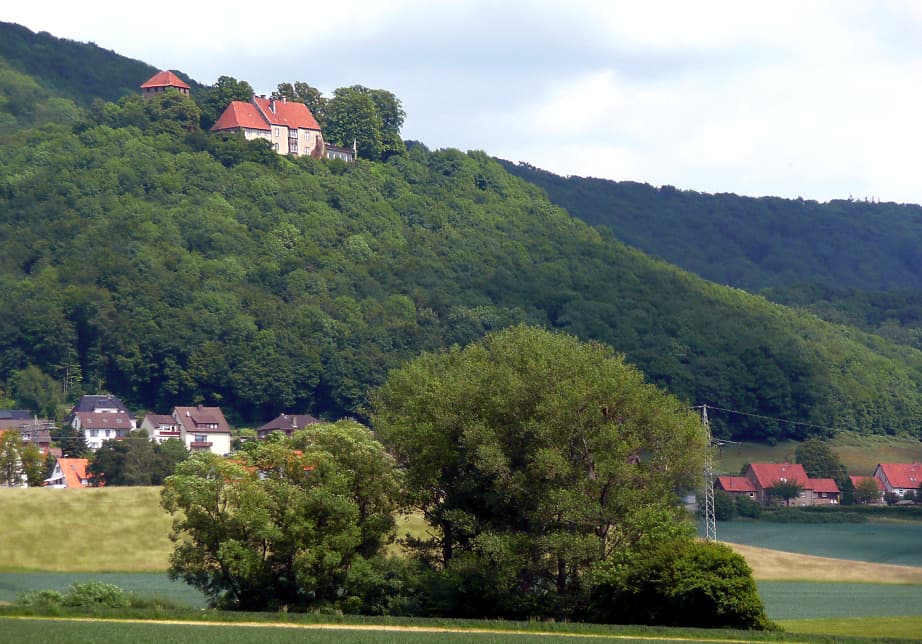
Schaumburg Castle, Lower Saxony
Schaumburg Castle (Burg Schaumburg) is a prominent hill castle located in the town of Rinteln in the district of Schaumburg, Lower Saxony, Germany. This castle has a rich history tied closely to the former ruling family of Schaumburg-Lippe, who still own the property today. Its position atop a hill provides strategic views over the surrounding countryside, a characteristic feature of many medieval fortifications designed for defense and territorial control.
Historical background and significance
The origins of Schaumburg Castle date back to the early medieval period, with the first documented mentions appearing in the 12th century. The castle was initially constructed as a defensive stronghold to oversee and protect the region, which was of considerable strategic importance due to its location near trade routes and political borders. Over the centuries, the castle evolved from a purely military fortress to a noble residence, reflecting the changing needs and tastes of its owners.
Throughout its history, Schaumburg Castle played a significant role in regional power struggles, especially during the High and Late Medieval periods. It served as the seat of the Counts of Schaumburg and later the Princes of Schaumburg-Lippe, who used it as a symbol of their authority and governance. The castle witnessed various sieges and conflicts but remained a key administrative and military center in the region.
Architectural features and style
The castle exhibits architectural elements typical of hill castles built during the medieval period. Its layout includes a fortified keep or donjon, defensive curtain walls, and multiple towers that provided vantage points for surveillance and defense. The main gate is fortified with a gatehouse and portcullis, designed to repel attackers and control access.
Over the centuries, Schaumburg Castle underwent several renovations and expansions, incorporating styles from the Romanesque through to the Gothic periods. The castle's chapel and residential wings display Gothic architectural details such as pointed arches and ribbed vaults. Later modifications introduced Renaissance elements, reflecting the castle's transition from fortress to residence.
Fortifications and defensive structures
The castle's defenses include thick stone walls, battlements, and a moat that historically surrounded parts of the complex. The strategic hilltop location enhanced its natural defenses, making it difficult for enemies to approach unnoticed. Defensive towers were equipped with arrow slits and machicolations, allowing defenders to repel assaults effectively.
The castle's role in cultural heritage
Schaumburg Castle remains an important cultural landmark in Lower Saxony. It is a symbol of the region's medieval heritage and the legacy of the Schaumburg-Lippe dynasty. The castle is occasionally open to the public for guided tours, showcasing its historical interiors, including the great hall, armory, and private chambers.
Today, the castle also hosts cultural events and exhibitions that highlight its historical significance and architectural beauty. Its preservation is overseen by the family and local heritage organizations, ensuring that Schaumburg Castle continues to be a site of historical education and tourism.
Visiting information and accessibility
Visitors to Schaumburg Castle can explore its well-preserved medieval architecture and enjoy panoramic views from the battlements. The castle is accessible from the town of Rinteln, with parking available nearby. Guided tours provide insights into the castle's history, architecture, and the lives of its former inhabitants.
The castle grounds include walking paths and gardens, offering a pleasant setting for visitors interested in history, architecture, and nature. Seasonal events and exhibitions add to the visitor experience, making Schaumburg Castle a noteworthy destination in Lower Saxony.
Frequently asked questions (FAQ)
- What is the historical significance of Schaumburg Castle?
- Schaumburg Castle, located in Lower Saxony, holds a rich history dating back to the 11th century. It was originally built as a stronghold and has played a significant role in regional politics and military history throughout the centuries.
- When was Schaumburg Castle built?
- The construction of Schaumburg Castle began in the 11th century, with major expansions and renovations occurring in the following centuries. Its architectural evolution reflects the changing styles and needs of the time, making it a fascinating site for history enthusiasts.
- Can I visit Schaumburg Castle?
- Yes, Schaumburg Castle is open to the public. Visitors can explore the castle grounds, learn about its history, and enjoy breathtaking views of the surrounding landscape.
- What are the opening hours of Schaumburg Castle?
- Schaumburg Castle is typically open to visitors from 10 AM to 6 PM during the summer months and from 10 AM to 4 PM in the winter. It's advisable to check the official website for any seasonal changes or special event hours.
- Is it possible to take guided tours of the castle?
- Yes, guided tours are available at Schaumburg Castle, providing visitors with in-depth insights into its history and architecture. These tours are often conducted by knowledgeable guides who can answer questions and share fascinating stories about the castle.
- What are the ticket prices for visiting Schaumburg Castle?
- Ticket prices for Schaumburg Castle are generally reasonable, with discounts available for students and seniors. Children under a certain age may enter for free, but it's best to check the official site for the most current pricing information.
- When is the best time to visit Schaumburg Castle?
- The best time to visit Schaumburg Castle is during the spring or early autumn when the weather is mild and the surrounding gardens are in full bloom. Visiting during these seasons also allows for a more comfortable experience exploring the outdoors.
- What nearby attractions can I visit while at Schaumburg Castle?
- While visiting Schaumburg Castle, you can also explore the charming town of Rinteln, which offers historical buildings, local shops, and inviting cafes. Additionally, the scenic Weser River and various hiking trails nearby provide opportunities for outdoor activities.
- Is Schaumburg Castle accessible for visitors with disabilities?
- Yes, Schaumburg Castle strives to be accessible for all visitors. There are provisions in place to assist those with mobility challenges, but it's recommended to check ahead for specific accessibility options and any potential limitations.
Photo gallery

Photo by Axel Hindemith•Public domain
Information
Loading map...
Visitor reviews
No reviews yet. Been here? Write the first review and help other travelers!
Write the first reviewVisited this castle? Share your experience
Your review helps other travelers and adds first-hand knowledge to our encyclopedia.



