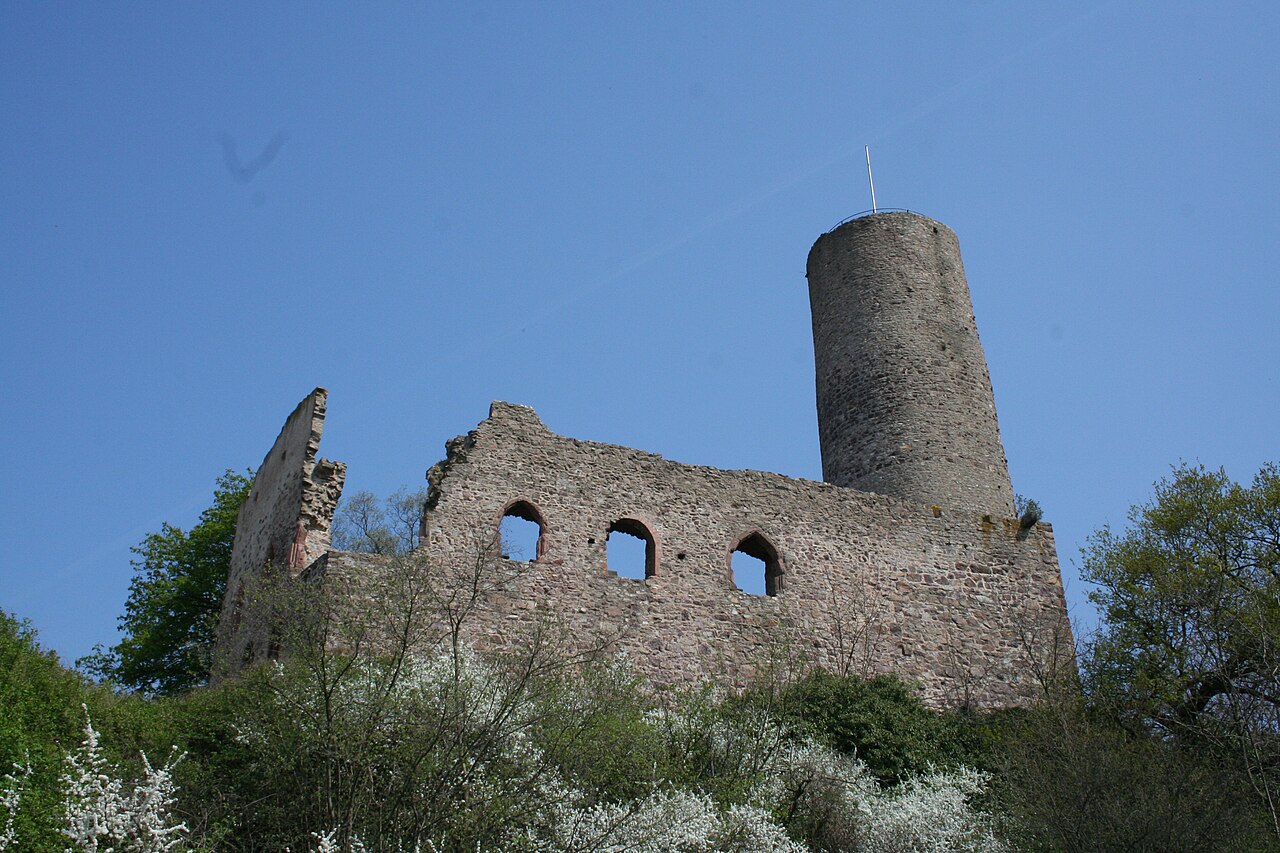
Schauenburg Castle Ruins
Schauenburg Castle was constructed in the first half of the 12th century by the noble family known as the Edelfreien of Schauenburg. This high medieval fortress was strategically positioned near the town of Dossenheim in what is now Germany, serving both as a residence and a defensive stronghold during a period marked by feudal conflicts and territorial disputes.
Early history and founding family
The Edelfreien of Schauenburg, a family of free nobles, established the castle as a symbol of their power and influence. Despite their prominence, the family line became extinct by the late 13th century, which led to changes in the castle’s ownership and function. The early construction likely focused on a robust stone keep and a curtain wall to protect the inner ward, typical of high medieval castle architecture.
Architectural features and expansions
Although the original builders were no longer present, the castle continued to be of strategic importance. In the mid-14th century, significant expansions and renovations were undertaken. These likely included strengthening the existing fortifications and possibly enlarging the living quarters to accommodate new occupants or garrisons. The surviving curtain wall and keep are key remnants from these phases, showcasing the medieval defensive design with thick stone walls and narrow windows for archers.
The keep and curtain wall
The keep served as the last line of defense and the residence of the lord or castellan. Its construction emphasized verticality and defensibility, with limited entrances and elevated positions. The curtain wall enclosed the castle’s inner buildings and courtyard, providing a formidable barrier against attackers. These structures were built using locally sourced stone and demonstrate the masonry skills of the period.
Siege and destruction in 1460
In 1460, during the Baden-Palatinate War, Schauenburg Castle was besieged for five days by forces led by Friedrich I, Elector Palatine. The siege ended with the castle being razed, a common fate for fortifications caught in regional conflicts during the late medieval period. The destruction marked the end of Schauenburg Castle as a functional military stronghold.
Current condition and historical significance
Today, Schauenburg Castle stands as ruins, with the curtain wall and keep partially preserved. These ruins offer valuable insights into high medieval fortification techniques and the feudal history of the region. The site attracts historians, archaeologists, and visitors interested in medieval architecture and the turbulent history of southwestern Germany.
Visiting Schauenburg Castle ruins
The castle ruins are accessible to the public and provide a scenic view of the surrounding landscape. Visitors can explore the remaining structures and imagine the castle’s former grandeur. The site is an important cultural landmark in Dossenheim and contributes to the understanding of medieval castle construction and regional history.
Frequently asked questions (FAQ)
- What is the historical significance of Schauenburg Castle Ruins?
- Schauenburg Castle, dating back to the 13th century, played a crucial role in the defense of the region. It was a stronghold for the local nobility and offers insights into medieval architecture and feudal life in Germany.
- When was Schauenburg Castle built?
- Construction of Schauenburg Castle began in the early 1200s, making it one of the notable medieval castles in the area. It underwent various modifications over the centuries until it fell into ruin in the 17th century.
- Can I visit Schauenburg Castle Ruins?
- Yes, Schauenburg Castle Ruins are open to visitors year-round. You can explore the remains of the castle and enjoy the panoramic views of the surrounding landscape.
- What are the opening hours for Schauenburg Castle Ruins?
- The ruins are accessible at all times, allowing visitors to explore at their convenience. However, it's advisable to visit during daylight hours for a safer and more enjoyable experience.
- Is it possible to access Schauenburg Castle by public transport?
- Yes, Schauenburg Castle is accessible by public transport. Visitors can take a local bus or train to Dossenheim and then enjoy a short hike to reach the castle ruins.
- When is the best time to visit Schauenburg Castle?
- The best time to visit is during the spring and early autumn months when the weather is mild and the surrounding nature is at its most beautiful. These seasons provide ideal conditions for hiking and exploring the ruins.
- Are there nearby attractions to visit along with Schauenburg Castle?
- Yes, visitors can explore the charming town of Dossenheim and nearby Heidelberg, known for its historic university and picturesque old town. The scenic hiking trails around the area also offer great opportunities for outdoor activities.
- What are the ticket prices for visiting Schauenburg Castle?
- There is no entrance fee to visit Schauenburg Castle Ruins, making it an excellent option for budget-conscious travelers. However, donations are appreciated to help with the maintenance of the site.
Information
Loading map...
Visitor reviews
No reviews yet. Been here? Write the first review and help other travelers!
Write the first reviewVisited this castle? Share your experience
Your review helps other travelers and adds first-hand knowledge to our encyclopedia.