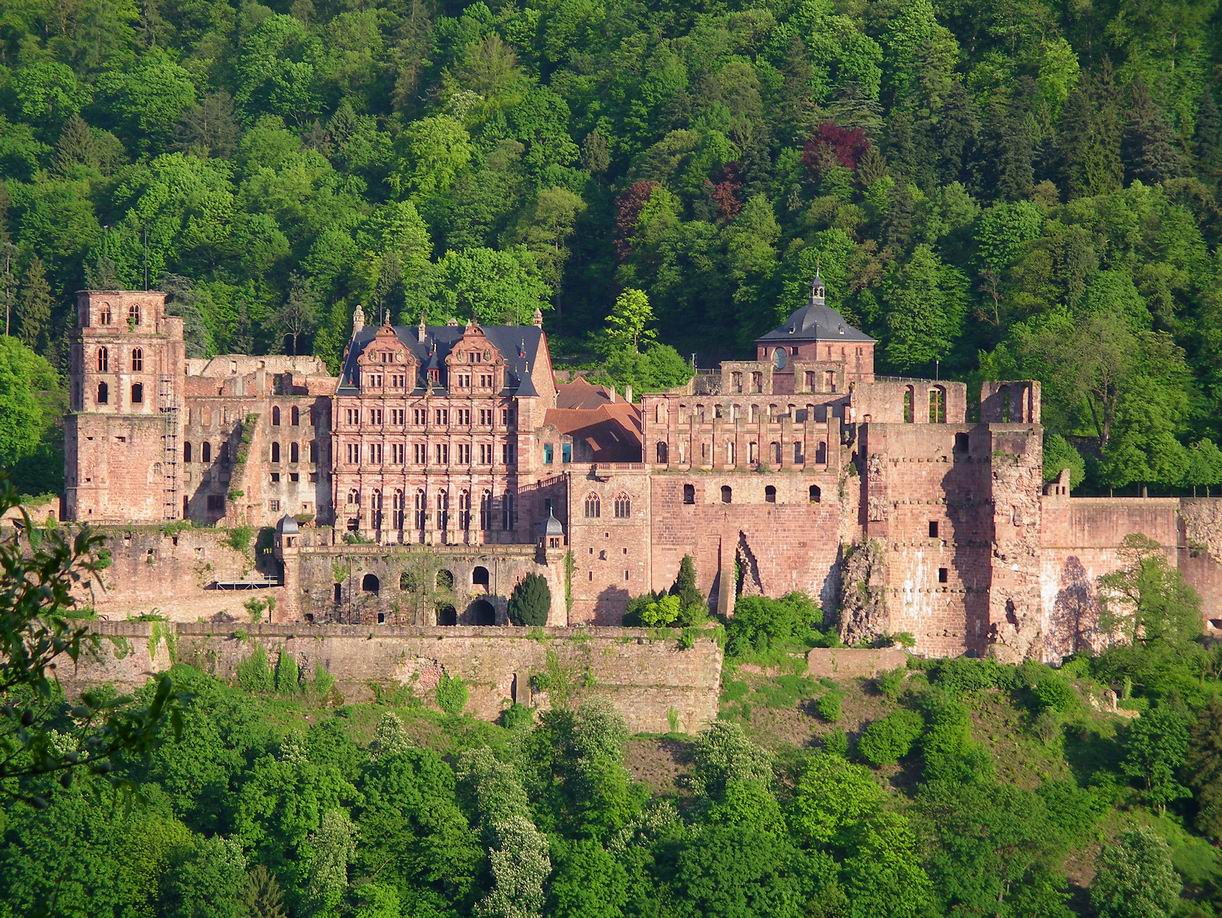
Neuburg Abbey
Neuburg Abbey, located near Heidelberg in Germany, is a historic monastic complex with origins dating back to the high medieval period. Founded in 1130 by Anshelm, a monk from the Benedictine Lorsch Abbey, Neuburg began as a priory under Lorsch's authority. Despite its auspicious beginnings, the priory struggled to thrive in its early decades.
In 1195, under the direction of Conrad of Hohenstaufen, Count Palatine of the Rhine, Neuburg was converted into a nunnery and elevated to the status of an abbey. However, this change did not immediately improve its fortunes. The abbey faced continued challenges until the suppression of Lorsch Abbey in 1232, when Neuburg came under the jurisdiction of the Bishop of Mainz and subsequently the Bishop of Worms. The latter was a proponent of the Cistercian reforms, which brought new spiritual and financial vitality to Neuburg.
With assistance from the nearby Schönau Abbey, a Cistercian monastery, Neuburg was reformed as a Cistercian nunnery. This affiliation initiated a period of significant growth and construction during the 14th century, marked by lively building activity that enhanced the abbey's architectural and cultural stature. The Cistercian influence is evident in the austere yet functional design elements typical of the order, emphasizing simplicity and harmony with the surrounding landscape.
Despite this resurgence, Neuburg experienced another decline, leading to a reversion to the Benedictine observance in 1462, instigated by Frederick I, Elector Palatine. The abbey's religious community was suppressed during the Reformation in 1562, and the property subsequently became the possession of the Electors Palatine. In the following century, the site served various functions, including as a Frauenstift in the 1660s and 1670s, a collegiate institution for unmarried noblewomen. This period was short-lived but left a lasting legacy in the name "Stift Neuburg," by which the site is still commonly known.
Jesuit period and architectural transformation
In 1706, Johann Wilhelm II, Elector Palatine, granted the premises to the Jesuits of Heidelberg. The Jesuits undertook substantial construction, shaping much of the current visible architecture. Their buildings reflect the Baroque architectural style, characterized by grandeur, dynamic forms, and decorative richness, which marked a significant departure from the earlier medieval austerity.
The Jesuit presence lasted until their suppression in 1773, after which the abbey reverted to the Elector's control. By 1799, the property was mortgaged to Heidelberg University and later passed into private ownership in 1804. In 1825, it became the residence of Johann Friedrich Heinrich Schlosser, a notable figure connected to the poet Goethe, and subsequently passed to the von Bernus family.
20th-century revival and modern status
In 1926, Neuburg was reacquired for the Benedictine order by the poet and mystic Alexander von Bernus. The community was resettled by monks from Beuron Archabbey and elevated to abbey status in 1928. The early years of the new foundation were challenging, with the first abbot, Adalbert von Neipperg, resigning in 1934. The abbey was then overseen by an administrative board.
During World War II, the abbey avoided dissolution by serving as a refuge for displaced elderly from the Ruhrgebiet, preserving its monastic presence. Post-war development accelerated under the second abbot, Dr. Albert Ohlmeyer, who led restoration and expansion efforts culminating in the dedication of the restored church in 1960. Following his death in 1976, leadership passed to Dom Maurus Berve and later to the current abbot, Dom Franziskus Heereman, from the Trappist Mariawald Abbey.
Architectural features and layout
Neuburg Abbey's architecture embodies a blend of high medieval monastic structures and Baroque renovations from the Jesuit period. The site includes a church with restored interiors, monastic living quarters, and ancillary buildings arranged around courtyards typical of Benedictine and Cistercian monasteries. The 14th-century building activity introduced Gothic elements, visible in window tracery and vaulting, while the Jesuit constructions added ornate facades and grand halls.
The abbey's location near Heidelberg places it within a region rich in medieval religious architecture, contributing to its historical significance. Its survival through religious reforms, wars, and secularization reflects the adaptability and enduring cultural importance of monastic institutions in Germany.
Significance in monastic reform movements
Neuburg Abbey's history reflects broader religious trends, including the transition from Benedictine to Cistercian observance and back, illustrating the impact of reform movements on monastic life. The Cistercian emphasis on austerity and economic self-sufficiency contrasted with later Baroque embellishments introduced by the Jesuits, highlighting shifts in spiritual and architectural priorities over centuries.
Current status and cultural heritage
Today, Neuburg Abbey remains an active Benedictine community and a site of historical and architectural interest. Its well-preserved structures and layered history attract visitors interested in medieval monasticism, Baroque architecture, and the complex religious history of the Rhineland. The abbey also serves as a cultural landmark within Heidelberg's rich heritage landscape.
Frequently asked questions (FAQ)
- What is the historical significance of Neuburg Abbey?
- Neuburg Abbey, located in Heidelberg, Germany, was founded in the early 16th century and is a remarkable example of Renaissance architecture. It played a significant role in the cultural and religious development of the region, serving as a residence for the clergy and a center for education and art.
- When was Neuburg Abbey built?
- Construction of Neuburg Abbey began in 1540 and was completed in 1560. The abbey reflects the architectural styles of the Renaissance period, showcasing intricate details and beautiful frescoes that tell the story of its rich history.
- Can I visit Neuburg Abbey?
- Yes, Neuburg Abbey is open to visitors year-round, allowing you to explore its stunning architecture and learn about its history. Guided tours are available, providing deeper insights into the abbey's past and its significance in the region.
- What are the opening hours for Neuburg Abbey?
- Neuburg Abbey is typically open from 10 AM to 5 PM, but hours may vary depending on the season or special events. It is advisable to check the official website for the most current opening times before your visit.
- Is it possible to access Neuburg Abbey with mobility aids?
- Yes, Neuburg Abbey is committed to accessibility and provides facilities for visitors with mobility aids. However, some parts of the abbey may have limited access due to historical preservation, so it's best to inquire in advance for specific accommodations.
- What is the best time to visit Neuburg Abbey?
- The best time to visit Neuburg Abbey is during the spring and early autumn when the weather is pleasant and the gardens are in full bloom. Additionally, the abbey hosts various cultural events and exhibitions during these seasons, enhancing your experience.
- Are there any nearby attractions to see while visiting Neuburg Abbey?
- Yes, visitors can explore several nearby attractions, including the picturesque Heidelberg Castle and the scenic Neckar River. The beautiful old town of Heidelberg, with its charming streets and vibrant atmosphere, is also just a short distance away.
- What are the ticket prices for visiting Neuburg Abbey?
- Ticket prices for Neuburg Abbey are generally affordable, with discounts available for students and seniors. Children under a certain age may enter for free; however, it's best to check the official website for the latest pricing and any special offers.
Information
Website
Visit websiteSources & official resources
Verify the information above using these authoritative references.
Loading map...
Visitor reviews
No reviews yet. Been here? Write the first review and help other travelers!
Write the first reviewVisited this castle? Share your experience
Your review helps other travelers and adds first-hand knowledge to our encyclopedia.