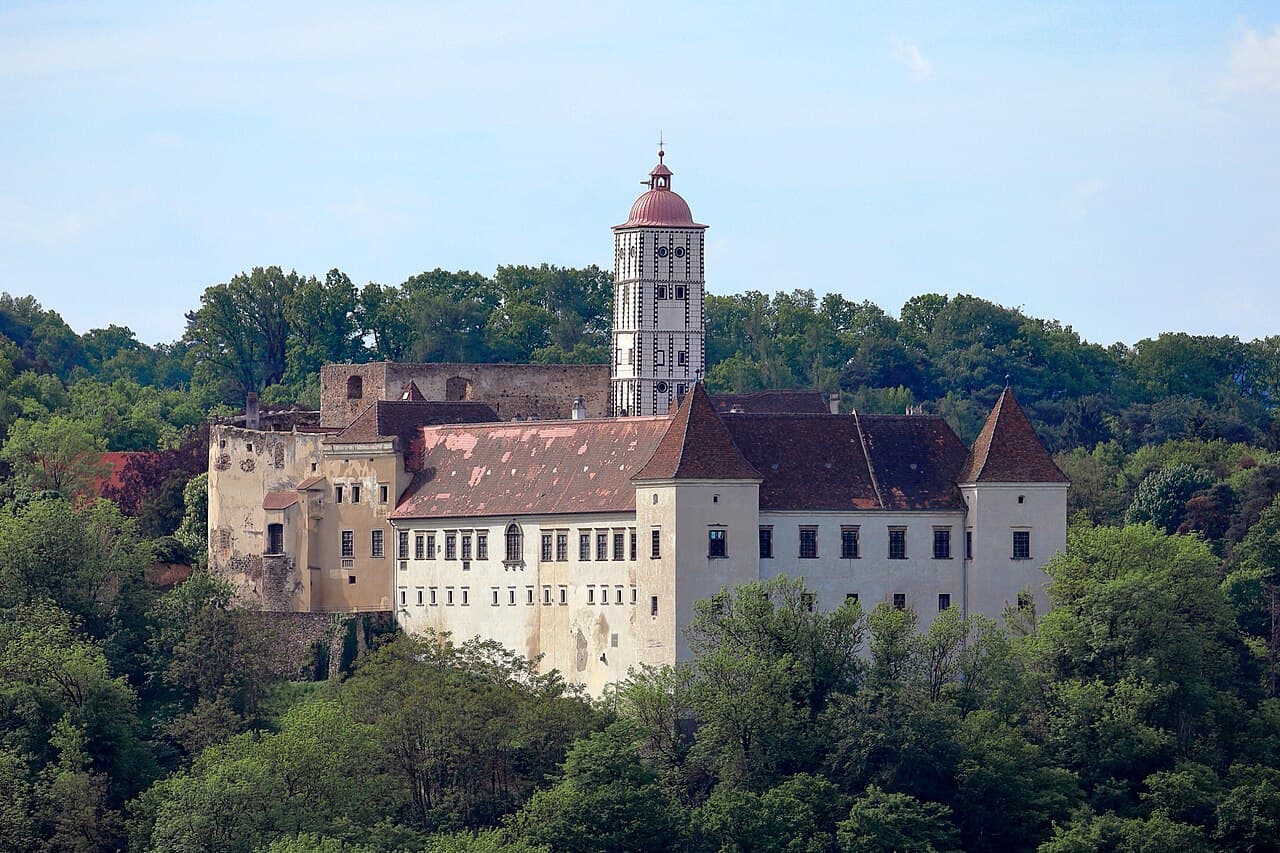
Schallaburg
Schallaburg Castle is a remarkable historical fortress located in Lower Austria, renowned for its transformation from a medieval stronghold into a splendid example of Renaissance architecture. Originally constructed in the 15th century, the castle has witnessed centuries of significant cultural, religious, and political changes that have shaped its unique character.
The castle first came under the ownership of the Von Losenstein family in 1456, marking the beginning of a pivotal era. During the 16th century, under the direction of Hans Wilhelm von Losenstein, Schallaburg underwent extensive renovations that introduced the elegant and harmonious elements of the Renaissance style. This transformation included architectural enhancements that blended the castle's defensive features with the aesthetic ideals of the period, reflecting the cultural shift from medieval fortification to Renaissance residence.
Architectural evolution and Renaissance transformation
The original structure of Schallaburg Castle was typical of Late Medieval fortifications, featuring thick defensive walls, battlements, and strategic towers designed for protection and surveillance. The castle's layout included a fortified courtyard, a gatehouse, and residential quarters that catered to the needs of its noble occupants.
The Renaissance renovation led by Hans Wilhelm von Losenstein was notable for its emphasis on symmetry, proportion, and decorative detail. The castle's facades were enhanced with ornate windows, arcades, and sculptural elements that exemplify the Renaissance aesthetic. Inside, the castle was adapted to provide more comfortable living spaces, including grand halls and private chambers adorned with period-appropriate decoration.
The church of Loosdorf and Lutheran heritage
Alongside the castle renovations, Hans Wilhelm von Losenstein also rebuilt the nearby church of Loosdorf in the Renaissance style, establishing it as a Lutheran church. This was a significant religious development during a time of intense confessional conflict in Europe. The church served as a spiritual center for the local Protestant community.
Additionally, the castle complex became a hub of education when Hans Wilhelm founded a Lutheran grammar school that welcomed youths from both noble and non-noble backgrounds. This initiative highlights the castle's role not only as a military and residential site but also as a center of cultural and intellectual life in the region.
Religious and political upheavals
The early 17th century brought significant changes to Schallaburg Castle and its associated institutions. In 1627, Emperor Ferdinand II, seeking to restore Catholic dominance in Lower Austria during the Counter-Reformation, issued a law that led to the closure of the Lutheran church and school at Schallaburg. This marked the end of the castle's brief period as a Protestant center and reflected the broader religious conflicts of the era.
Following these events, the castle passed through various owners over the centuries, reflecting the shifting political and social landscape of Austria. Despite these changes, Schallaburg remained a private property until the mid-20th century.
Modern history and preservation
In the aftermath of World War II, Schallaburg Castle was confiscated by the Russian forces in 1945. A decade later, in 1955, the castle was transferred to the ownership of the newly established Republic of Austria. Since then, it has been preserved and maintained as a significant cultural monument.
Today, Schallaburg Castle is recognized for its exemplary Renaissance architecture and its role in the historical narrative of Austria. It serves as a museum and cultural venue, hosting exhibitions that celebrate its architectural heritage and the rich history of the region. The castle's well-preserved structures, including its fortified walls, elegant courtyards, and artistic details, continue to attract scholars, tourists, and architecture enthusiasts alike.
Architectural highlights and features
The castle complex includes several notable architectural elements that illustrate its evolution from a medieval fortress to a Renaissance residence. Visitors can explore the inner courtyard surrounded by arcaded galleries, which exemplify the Renaissance emphasis on open, harmonious spaces.
The gatehouse remains a prominent defensive feature, showcasing the castle's original military function. The walls and towers, though adapted over time, retain aspects of their medieval construction, providing insight into the defensive strategies of the period.
Inside the castle, the grand halls and chambers feature decorative frescoes, intricate woodwork, and period furnishings that reflect the lifestyle of the noble family. The blend of functional fortification with refined residential spaces makes Schallaburg a unique example of transitional castle architecture.
Cultural significance and tourism
Schallaburg Castle is not only an architectural treasure but also a cultural landmark. It hosts annual exhibitions that explore themes ranging from art and history to nature and folklore, making it a vibrant center for cultural engagement in Lower Austria.
Its accessibility and well-maintained facilities make it a popular destination for visitors interested in medieval and Renaissance history, architecture, and the complex religious history of the region. The castle's picturesque setting and historical ambiance provide an immersive experience that connects visitors with Austria's rich past.
Frequently asked questions (FAQ)
- What is the historical significance of Schallaburg?
- Schallaburg is a remarkable example of medieval architecture in Austria, dating back to the 11th century. It served as a residence for various noble families and played a vital role in the region's history, particularly during the Middle Ages.
- When was Schallaburg built?
- The construction of Schallaburg began in the 11th century, with significant modifications and expansions occurring over the centuries. The castle showcases a blend of architectural styles, reflecting its long and varied history.
- Can I visit Schallaburg year-round?
- Yes, Schallaburg is open to visitors throughout the year, although specific areas may have seasonal closures. It is advisable to check the official website for the latest information on opening times and any special events.
- What are the opening hours of Schallaburg?
- Schallaburg typically opens at 9 AM and closes at 5 PM, but hours may vary depending on the season or special events. Always check the castle's official website for the most accurate and up-to-date information.
- Is it possible to tour the castle with a guide?
- Yes, guided tours are available at Schallaburg, providing a deeper understanding of its rich history and architecture. These tours are led by knowledgeable guides who can share fascinating insights and stories about the castle.
- What are the ticket prices for visiting Schallaburg?
- Ticket prices for Schallaburg vary based on age and type of tour, with discounts often available for students and seniors. It's best to visit the official website for detailed pricing and any available promotions.
- When is the best time to visit Schallaburg?
- The best time to visit Schallaburg is during the spring and early autumn when the weather is mild and pleasant. Additionally, the surrounding gardens are particularly beautiful during these seasons, enhancing your overall experience.
- Are there any nearby attractions to visit while at Schallaburg?
- Yes, the area around Schallaburg is rich in attractions, including the historic town of Melk and the stunning Wachau Valley. Both locations offer scenic views, charming architecture, and opportunities for outdoor activities.
- How do I get to Schallaburg?
- Schallaburg is easily accessible by car and public transport. If you're traveling by train, the nearest station is in Melk, and from there, you can take a bus or taxi to the castle.
- Is Schallaburg accessible for visitors with disabilities?
- Yes, Schallaburg is committed to providing accessibility for all visitors. The castle has facilities and pathways designed to accommodate those with mobility challenges, ensuring everyone can enjoy this historic site.
Photo gallery

Information
Website
Visit websiteSources & official resources
Verify the information above using these authoritative references.
Loading map...
Visitor reviews
No reviews yet. Been here? Write the first review and help other travelers!
Write the first reviewVisited this castle? Share your experience
Your review helps other travelers and adds first-hand knowledge to our encyclopedia.



