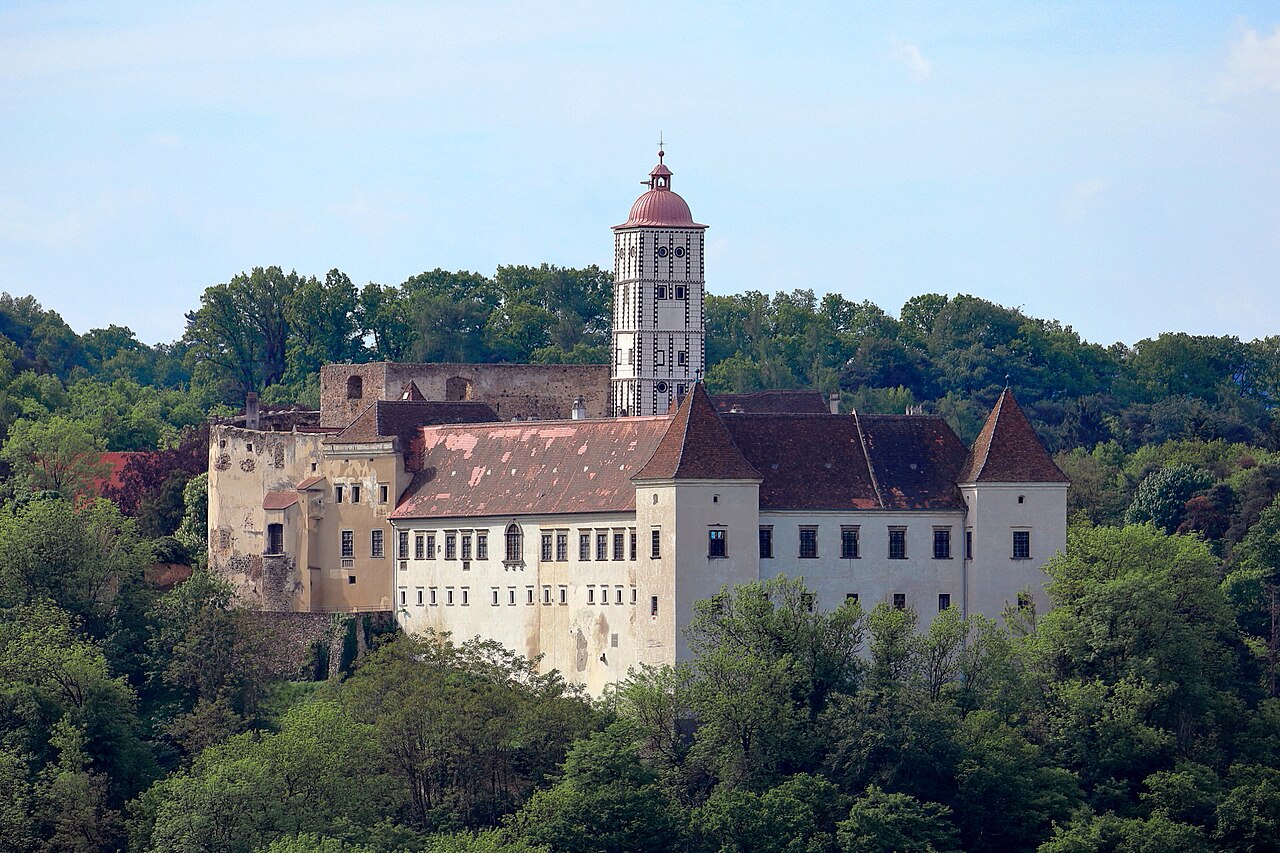
Schallaburg Castle
Schallaburg Castle, located just 5 kilometers from Melk in the picturesque Mostviertel district of Lower Austria, stands as one of the most exquisite examples of Renaissance architecture north of the Alps. Its unique blend of styles and rich history make it a cultural landmark and a favorite destination for lovers of art and history.
The castle’s origins trace back to the Middle Ages, with remnants of its Romanesque living quarters and a Gothic chapel still preserved within the complex. This layering of architectural periods reflects the castle’s evolution from a medieval stronghold to a Renaissance manor. The transformation was largely shaped by the Losensteiner dynasty in the mid-16th century, who around 1540 initiated the construction of the central part of the castle in the German Renaissance style. This period marked the castle’s most significant development, giving it the elegant appearance it retains today.
Architectural evolution and Renaissance transformation
The castle’s Renaissance makeover culminated in 1572, when the Losensteiner family completed the manor inspired by the Italian palazzi. This influence is evident in the castle’s harmonious proportions and the sophisticated design of its arcaded courtyard. The courtyard is a spacious, idyllic space featuring wide external staircases that gracefully ascend to the upper floors, symbolizing the wealth and cultured tastes of its owners.
One of the castle’s most remarkable features is the two-storey arcade yard adorned with terracotta sculptures. These decorations include a rich mosaic of mythological figures, gods, masks, humans, and animals, showcasing the Renaissance fascination with classical mythology and allegory. Among these sculptures, the legendary Hundefräulein stands out—a mythical figure with a human body and a dog’s head, adding a unique and whimsical character to the castle’s artistic heritage.
Distinctive elements and cultural significance
At the castle’s entrance, visitors are greeted by two imposing smoke-spewing dragons, each measuring about 30 meters long and 6 meters high. These dragons are not only symbolic guardians but also serve as a playful attraction, especially for children who delight in sliding down from their mouths. This blend of grandeur and whimsy reflects the castle’s role as both a fortress and a residence designed for enjoyment and display.
The castle’s grounds include culturally rich Mannerist gardens featuring roses, ornamental trees, bushes, and herbs. These gardens are complemented by two Renaissance apple orchards, which enhance the estate’s historical authenticity and charm. The landscaping embodies Renaissance ideals of harmony between architecture and nature, creating a serene environment that complements the castle’s artistic and architectural splendor.
Historical context and ownership
The Losensteiner family, prominent nobles in the region, played a pivotal role in shaping Schallaburg Castle’s Renaissance identity. Their investment in the castle reflected their rising status and cultural aspirations during the 16th century. The castle’s strategic location in Lower Austria also contributed to its historical importance, serving as a symbol of power and refinement in the region.
Today, Schallaburg Castle is well preserved and maintained as a cultural heritage site. It attracts numerous visitors annually who come to admire its architectural beauty, artistic treasures, and the idyllic landscape surrounding it. The castle hosts various cultural events, exhibitions, and festivals that celebrate its rich history and Renaissance legacy.
Architectural features in detail
The Romanesque and Gothic elements
Despite its Renaissance prominence, the castle retains significant elements from earlier periods. The Romanesque living quarters offer insight into the castle’s medieval origins with their sturdy stone construction and functional design. The Gothic chapel within the complex features pointed arches and ribbed vaults typical of the style, serving as a spiritual center for the castle’s inhabitants.
The Renaissance arcaded courtyard
The heart of Schallaburg Castle is its two-storey arcaded courtyard, a masterpiece of Renaissance architecture. The arcades are supported by elegant columns, and the upper level is accessible via the broad cantilevered staircases. The terracotta decorations are exceptional examples of Renaissance artistry, combining both decorative and symbolic elements that reflect humanist ideals.
Defensive and residential aspects
While the castle was transformed into a Renaissance manor, it still retains features typical of a fortified residence, including thick walls and strategic positioning. However, the emphasis shifted from military defense to comfort and representation, highlighting the changing role of castles in the 16th century.
Visiting Schallaburg Castle today
Visitors to Schallaburg Castle can explore its richly decorated interiors, stroll through the terraced gardens, and enjoy panoramic views of the surrounding Mostviertel landscape. The castle’s exhibitions often focus on Renaissance art, history, and culture, making it an educational destination as well as a visual delight.
The combination of historical architecture, artistic treasures, and landscaped gardens ensures that Schallaburg Castle remains a significant cultural landmark in Austria. Its preservation and ongoing cultural activities continue to celebrate the legacy of the Renaissance and the noble families who shaped its history.
Frequently asked questions (FAQ)
- When was Schallaburg Castle built and by whom?
- Schallaburg Castle's central Renaissance structure was built around 1540 by the Losensteiner dynasty, incorporating earlier medieval elements.
- What architectural styles are present at Schallaburg Castle?
- The castle features a combination of Romanesque, Gothic, and Renaissance architectural styles, with a notable two-storey arcaded courtyard decorated in Renaissance terracotta.
- What are the unique features of Schallaburg Castle?
- Unique features include the two-storey arcade with terracotta sculptures, the Gothic chapel, Romanesque living quarters, and the large smoke-spewing dragon sculptures at the entrance.
- Is Schallaburg Castle suitable for family visits?
- Yes, the castle's dragons at the entrance provide a fun attraction for children, and the spacious courtyard and gardens are family-friendly.
- What can visitors expect to see in the castle gardens?
- Visitors can enjoy the Mannerist gardens with roses, ornamental trees, herbs, and two Renaissance apple orchards, reflecting the castle's historical landscaping.
Information
Loading map...
Visitor reviews
No reviews yet. Been here? Write the first review and help other travelers!
Write the first reviewVisited this castle? Share your experience
Your review helps other travelers and adds first-hand knowledge to our encyclopedia.