Schaesberg Castle
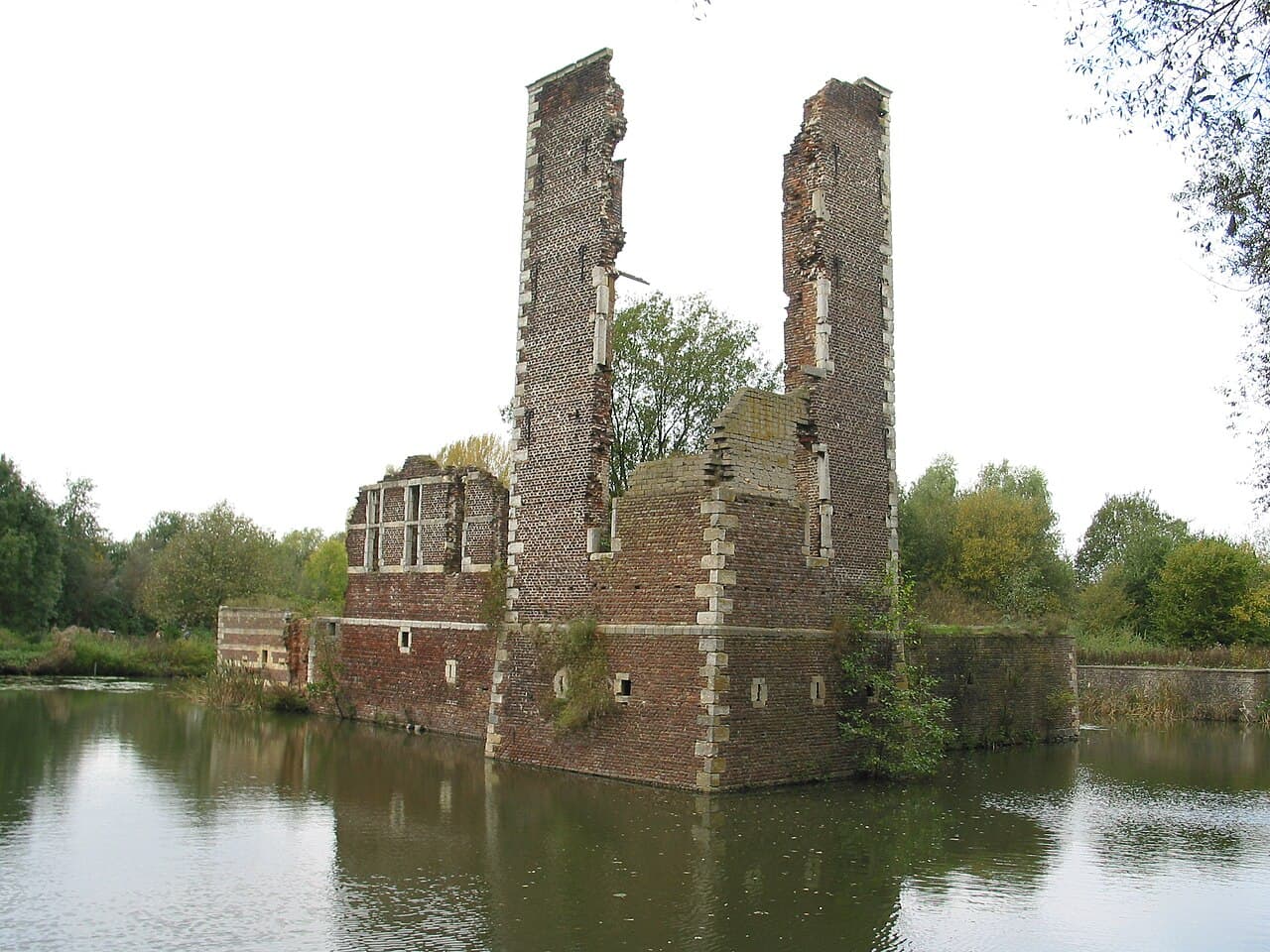
Schaesberg Castle, locally known as Slot Schaesberg, is located northwest of the town of Schaesberg in the province of Limburg, Netherlands. The castle stands as a significant historical site with origins tracing back to the early 15th century. It was originally constructed in 1411 by Willem II van Reetersbeek on a moated site, a common defensive feature in medieval castle architecture. The remains today primarily consist of the walls of a corner tower, adjacent residential building ruins, and collapsed cellars.
Medieval origins and renaissance transformation
The earliest foundations of Schaesberg Castle date to the early 15th century. Around 1411, the initial fortification was established, reflecting typical medieval defensive architecture with moats and stone walls. In 1571, Johan van Schaesberg undertook a significant reconstruction, transforming the medieval fortress into a renaissance castle. This phase introduced two brick residential wings and a keep, emphasizing both defense and residential comfort. The castle retained its moat, which was integral to its defense system.
17th-century expansion and architectural layout
In 1650, under Johan Frederik van Schaesberg, the castle underwent further expansion. Two additional residential wings and a square tower were added, resulting in a square layout centered around a courtyard. This architectural arrangement was typical of the period, combining fortified elements with a more palatial residential design. A large bailey was also constructed, serving as an outer ward that enclosed auxiliary buildings and stables.
Decline and ruin through the centuries
By 1733, Schaesberg Castle ceased to be permanently inhabited, leading to gradual neglect and deterioration. While the main castle building fell into decay due to poor maintenance, the bailey remained in good condition for a longer period, functioning as a farmstead. However, during and after World War II, the bailey also suffered significant decay. The castle's structural integrity was further compromised by extensive mining activities in the surrounding area, which caused subsidence and damage.
20th-century collapse and conservation efforts
In 1965, a partial collapse of the castle ruins occurred, followed by a destructive fire. To prevent further structural failures, several unstable walls were deliberately demolished. The bailey was demolished after a permit was issued in 1968, removing the last major ancillary structure. In 1977, the remaining ruins were consolidated to stabilize the site and preserve what was left of the castle's historic fabric.
Present condition and future restoration plans
Currently, the ruins of Schaesberg Castle are classified as archaeological ruins and are accessible to visitors for a small fee. Plans are underway to fully rebuild the castle to its historical specifications, though the existing ruins still offer a compelling glimpse into its layered history. The site’s moated remains and surviving walls provide valuable insight into the castle’s evolution from a medieval fortress to a renaissance residence and later expansions.
Architectural significance and heritage value
Schaesberg Castle exemplifies the transition from medieval defensive architecture to renaissance residential design in the Netherlands. Its moat, corner towers, and residential wings reflect changing architectural styles and functions over several centuries. The castle's layered history, marked by construction phases in the 15th, 16th, and 17th centuries, makes it an important cultural heritage site in Limburg. Despite its current ruined state, Schaesberg Castle remains a key monument for understanding regional castle architecture and aristocratic life in the Netherlands.
Visiting schaesberg castle
Visitors to Schaesberg Castle can explore the ruins and appreciate the remnants of its defensive and residential structures. The site offers a unique opportunity to observe the castle’s architectural evolution and the effects of centuries of neglect and restoration. The surrounding landscape of Limburg adds to the historical ambiance, making it a noteworthy destination for enthusiasts of medieval and renaissance architecture.
Frequently asked questions (FAQ)
- What is the historical significance of Schaesberg Castle?
- Schaesberg Castle, originally built in the 13th century, is a remarkable example of medieval architecture in the Netherlands. It served as a noble residence and played a significant role in the region's history, reflecting the feudal system and the power of local lords during its time.
- When was Schaesberg Castle built?
- The construction of Schaesberg Castle began in the early 1200s, making it one of the oldest castles in the area. Over the centuries, it has undergone various renovations and restorations, contributing to its unique architectural features.
- Can I visit Schaesberg Castle, and what are the opening hours?
- Yes, Schaesberg Castle is open to the public for visits. The castle typically welcomes visitors from Wednesday to Sunday, with specific opening hours that can vary seasonally, so it's best to check their official website for the most current information.
- Is it possible to access Schaesberg Castle with mobility challenges?
- While Schaesberg Castle is an ancient structure with some accessibility limitations, efforts have been made to accommodate visitors with mobility challenges. It's recommended to contact the castle administration in advance to ensure a comfortable visit.
- What are the ticket prices for visiting Schaesberg Castle?
- Ticket prices for Schaesberg Castle are generally affordable, with discounts available for children, students, and seniors. Additionally, group rates may apply, so it's advisable to check the castle's official site for the latest pricing and any special promotions.
- When is the best time to visit Schaesberg Castle?
- The best time to visit Schaesberg Castle is during the spring and early autumn months when the weather is mild and the surrounding gardens are in full bloom. These seasons also tend to have fewer crowds, allowing for a more enjoyable experience.
- What nearby attractions can I explore when visiting Schaesberg Castle?
- While visiting Schaesberg Castle, you can also explore the charming village of Schaesberg and the beautiful nature reserves nearby. Additionally, the city of Heerlen is just a short drive away, offering more cultural and historical sites to discover.
Photo gallery

Information
Address
Slot Schaesberg-Laan 100, Netherlands
Loading map...
Visitor reviews
No reviews yet. Been here? Write the first review and help other travelers!
Write the first reviewVisited this castle? Share your experience
Your review helps other travelers and adds first-hand knowledge to our encyclopedia.