Ter Worm Castle
Ter Worm Castle stands as a remarkable example of a moated hill castle with origins tracing back to the 14th century in Heerlen, Limburg, Netherlands. This historic castle has witnessed centuries of noble ownership, architectural transformations, and cultural evolution, culminating in its current role as a hotel and restaurant. The castle's enduring legacy is deeply intertwined with the region's medieval and early modern history, making it a significant heritage site.
Medieval origins and noble ownership
The earliest records of Ter Worm Castle date to 1476 when it was documented as a fortified water castle under the ownership of the Lord of Strijthagen. Originally known as Van Geitsbach tot der Worm, the castle was strategically situated on the eastern bank of the Geleenbeek river, occupying nearly the entire width of the valley floor. Its initial design featured a square building layout fortified by a moat and external walls, characteristic of late medieval defensive architecture.
In 1498, ownership passed to Diederick van Pallandt, the sheriff of Heerlen. By 1542, the castle was under the possession of the Van Hallen family but suffered destruction by fire in 1550. The subsequent reconstruction was undertaken by the Van Wijlre family, who rebuilt the castle in brick while preserving its original style. To harmonize the differing materials, the building was painted white, masking the contrast between local marlstone and brickwork.
Architectural evolution in the 17th and 18th centuries
The 17th century brought significant modifications, including the transformation of the castle's oldest tower from a round to an octagonal shape. This corner tower, dating back to the 15th century, remains a prominent architectural feature at the junction of the castle's two wings. The castle was extended in 1650, particularly the southern part, which was built on the site of the former courtyard.
Ownership transitioned to the Van der Heyden-Belderbusch family in 1738, who undertook restorative works and enhancements. In 1767, Count Maximilian van der Heyden-Belderbusch restored the castle and designed the surrounding gardens in the French rococo style. These gardens, reconstructed in modern times based on archaeological research, feature traditional plantings such as roses, lavender, boxwood, and espaliered fruit trees, reflecting the elegance of 18th-century landscaping.
Structural details and materials
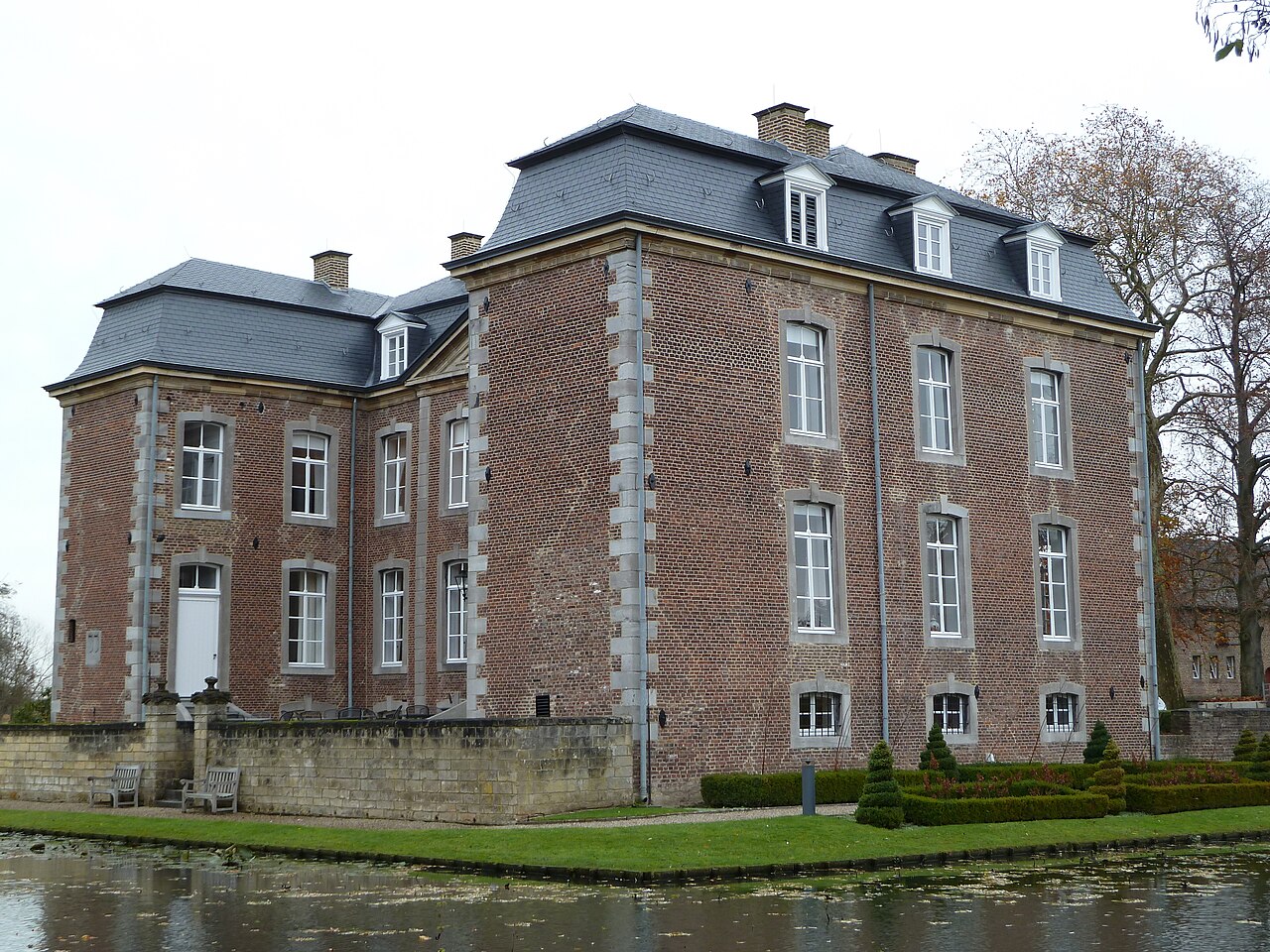
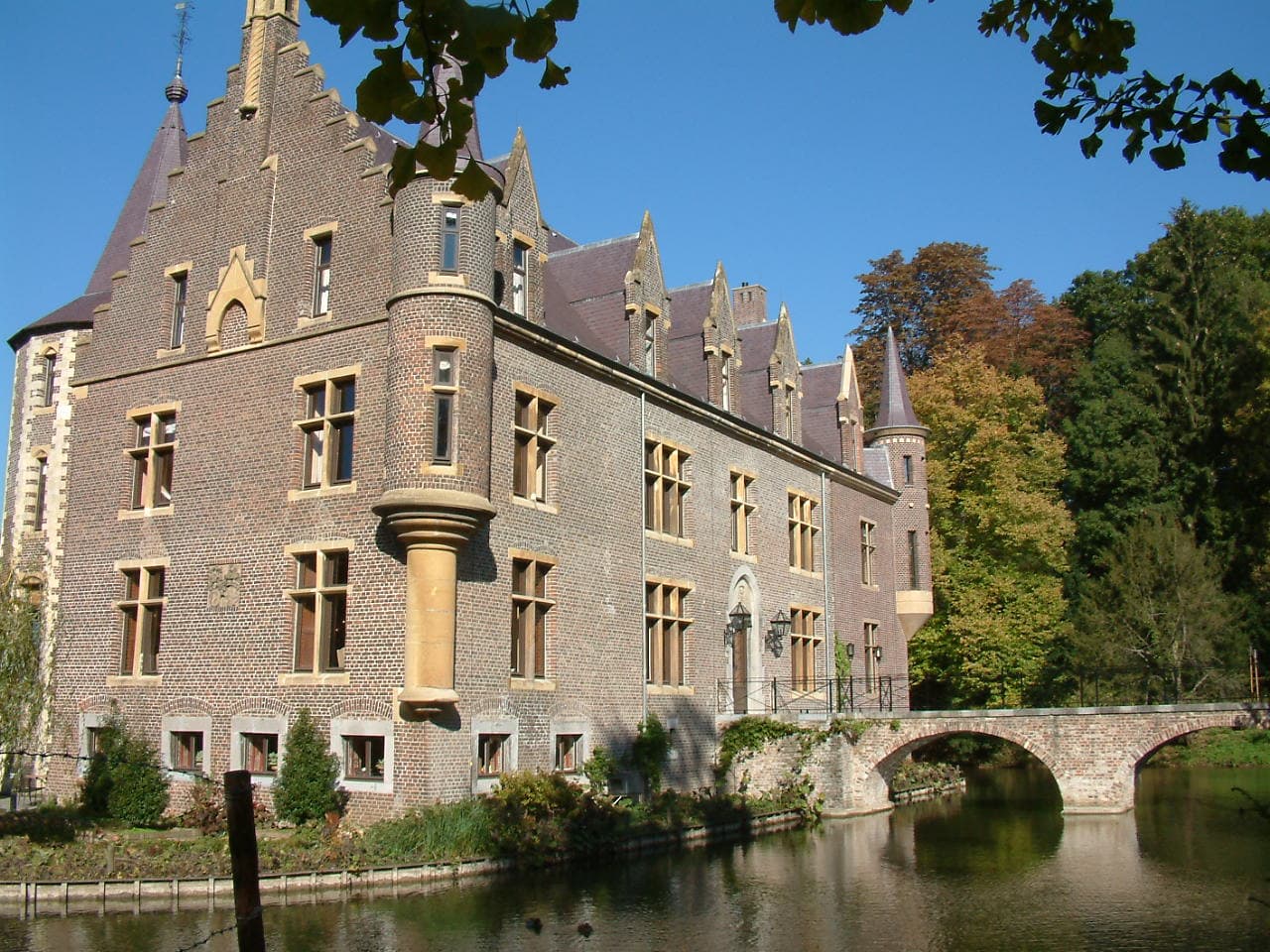
The castle's current T-shaped floor plan comprises two wings surrounded by a moat, preserving its identity as a water castle. It is constructed primarily from Kunradersteen (a local marlstone) and brick, with the brick portions painted white to unify the facade's appearance. Both wings feature gable roofs connected to stepped and bell-shaped gables, typical of the period's architectural style.
Access to the castle is granted via a marlstone arch bridge dating from 1843, leading to the main entrance. The castle also includes several small corner turrets known as arkeltorentjes and a rear arch bridge providing entry to the gardens. The outer bailey features a U-shaped lower courtyard with a two-story gatehouse dated 1670, notable for its bluestone drawbridge front and slate pyramid roof.
19th and 20th-century transformations
In 1840, the estate passed to Antoinette Freiin von Böselager and her husband, Baron Otto Napoleon de Loë-d’Imstenraedt. Their family expanded the estate by acquiring neighboring farms, enhancing the castle's prominence in the region. The late 19th century saw a significant neo-Gothic remodeling in 1891 under Baron François de Loë, following plans by architect Lambert de Fisenne. This renovation endowed the castle with stylistic elements characteristic of the neo-Gothic movement, contributing to its present-day appearance.
Throughout much of the 20th century, the castle and its estate were owned by the Oranje-Nassau coal mine. During this period, the castle housed mine supervisors, artists, a forester, and a swimming instructor. A large outdoor swimming pool on the grounds served as a community hub where many locals learned to swim. Following the mine's closure, plans to develop a major amusement park on the estate were abandoned after widespread public protest in 1983.
By the late 20th century, the castle had fallen into disrepair until its acquisition and restoration by the Van der Valk hotel chain between 1997 and 1999. Today, it operates as a hotel and restaurant, blending historic charm with modern hospitality.
Cultural significance and public access
Ter Worm Castle's gardens are a popular venue for weddings and public enjoyment, offering free admission to visitors. The garden reconstruction, based on the original 1787 French rococo layout by Count Vincent van der Heyden-Belderbusch, preserves the historical landscaping tradition with authentic plantings and garden structures.
The castle's location near Heerlen and its preserved architectural features make it a notable destination for those interested in medieval and neo-Gothic architecture, noble heritage, and Dutch cultural history. The presence of former coal mine tunnels beneath the estate adds an industrial heritage layer, reflecting the region's diverse historical narrative.
Architectural highlights to explore
- The 15th-century corner tower, transformed into an octagonal shape in the 17th century
- The marlstone arch bridge from 1843 leading to the main entrance
- The two-story gatehouse with a bluestone drawbridge front and slate pyramid roof
- The T-shaped layout with two wings and surrounding moat
- The reconstructed French rococo gardens with period-appropriate plantings
Ter Worm Castle remains a testament to the layered history of Limburg's noble estates, architectural evolution from medieval fortification to neo-Gothic residence, and adaptive reuse in the modern era. Its preservation and continued use enrich the cultural landscape of the Netherlands and provide an immersive experience for visitors and guests.
Frequently asked questions (FAQ)
- How do I get to Ter Worm Castle?
- Ter Worm Castle is located in Heerlen, Netherlands, easily accessible by car or public transport. If you're driving, there is parking available nearby. For public transport, check local bus and train schedules for the best routes to reach the castle.
- What is the historical significance of Ter Worm Castle?
- Ter Worm Castle dates back to the 14th century and played a crucial role in the region's history as a noble residence. It has witnessed various historical events and changes in ownership, reflecting the feudal system of the time. Today, it stands as a testament to medieval architecture and history.
- When was Ter Worm Castle built?
- Ter Worm Castle was originally constructed in the 14th century, with its first documented mention in 1363. The castle has undergone several renovations and restorations over the centuries, maintaining its historical integrity while adapting to modern needs.
- Can I visit Ter Worm Castle?
- Yes, Ter Worm Castle is open to visitors, offering guided tours to explore its rich history and beautiful architecture. It's advisable to check the castle's official website for the latest visitor information and any special events that may be taking place during your visit.
- Why is Ter Worm Castle considered an architectural gem?
- Ter Worm Castle is celebrated for its well-preserved medieval architecture, including its impressive towers and surrounding gardens. The blend of Gothic and Renaissance styles showcases the craftsmanship of the era. Its picturesque setting adds to its charm, making it a favorite among architecture enthusiasts.
- Is it possible to host events at Ter Worm Castle?
- Yes, Ter Worm Castle offers facilities for various events such as weddings, corporate gatherings, and private parties. The unique historical ambiance provides a stunning backdrop for any occasion. For more details, it’s best to contact the castle management directly to discuss options and availability.
- What are the opening hours for Ter Worm Castle?
- Ter Worm Castle typically opens to visitors from Tuesday to Sunday, with specific hours varying seasonally. It is closed on Mondays, so plan your visit accordingly. Always check the castle’s official website for any updates or changes to the schedule before your visit.
- What are the ticket prices for visiting Ter Worm Castle?
- Ticket prices for Ter Worm Castle are generally affordable, with reduced rates for children, students, and seniors. Family tickets may also be available for a better value. For the most accurate pricing information, check the official website prior to your visit.
- What are some nearby attractions to visit while in Heerlen?
- While visiting Ter Worm Castle, you can also explore other nearby attractions such as the Thermen Museum and the historical center of Heerlen. The region is known for its beautiful parks and walking trails, offering plenty of opportunities to enjoy the local scenery. Make a day of it by combining castle visits with cultural experiences in the area.
Photo gallery

Information
Website
Visit websiteSources & official resources
Verify the information above using these authoritative references.
Loading map...
Visitor reviews
No reviews yet. Been here? Write the first review and help other travelers!
Write the first reviewVisited this castle? Share your experience
Your review helps other travelers and adds first-hand knowledge to our encyclopedia.