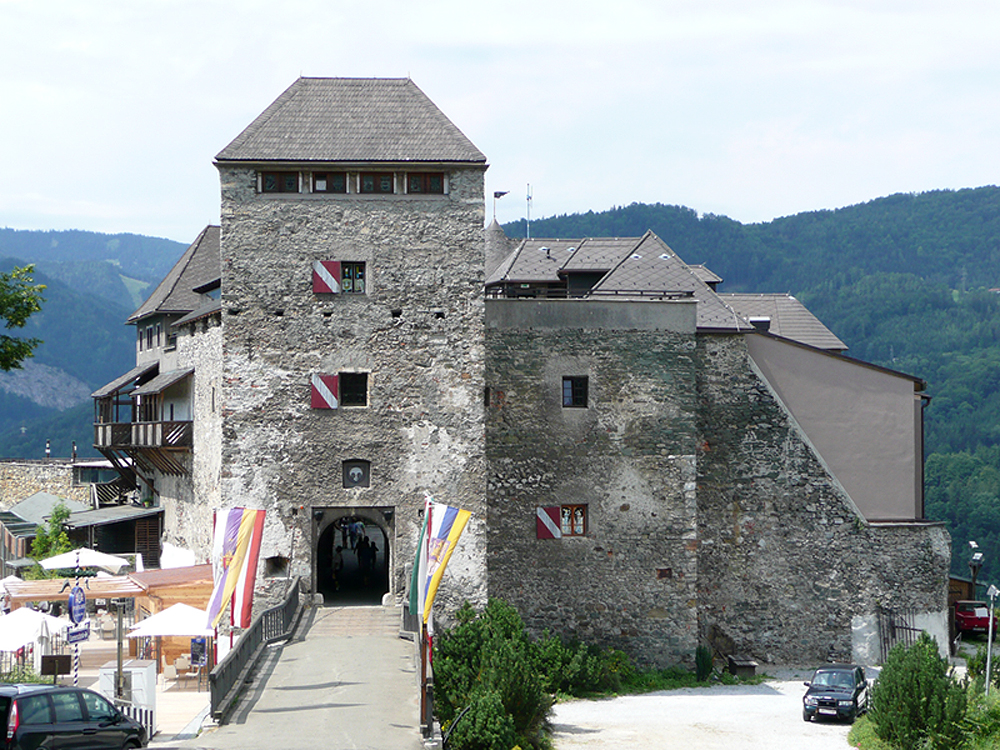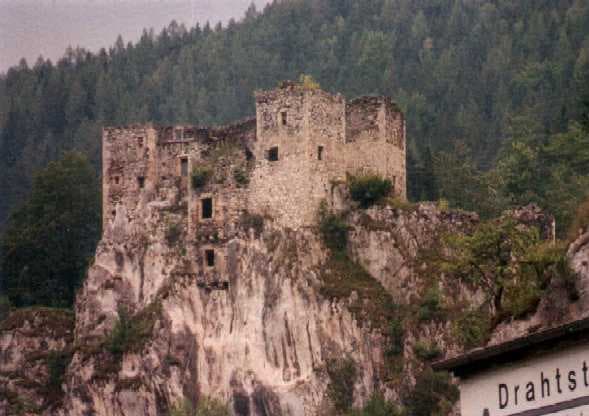
Schachenstein Castle Ruins
Schachenstein Castle, located in the municipality of Thörl in Styria, Austria, stands as the last hill castle constructed in the region of Styria. Built in 1464 by Abbot John II Schachner of Lambrecht, it was intended primarily as a summer residence and lordly manor for the abbots of St. Lambrecht's Abbey. The castle's strategic position atop rocky terrain some 640 meters above sea level on the southern spur of the Schöckelberg provided commanding views and natural defenses. This location was carefully chosen to oversee and control the constricted road from Einodgräben to Mariazell, which was a vital route in the region.
Historical significance and purpose
Schachenstein Castle was not built as a military fortress in the traditional sense but rather as a fortified residence for the abbots, reflecting its role as a lordly manor. Unlike many castles of the period, it did not have a permanent garrison of subjects serving under castle captains. Its primary function was residential and administrative, serving as a summer retreat for the abbots and a symbol of their authority.
Despite periods of regional unrest, including the Baumkircher feud and Turkish raids during the late medieval period, the castle was never besieged. This indicates its role was more protective and symbolic rather than a frontline military stronghold. The castle also served to seal off the Mariazell road and protect the population of the Aflenz valley, an area under the care of the abbey. It provided a refuge for locals during invasions by Turkish and Hungarian forces, highlighting its strategic importance beyond mere residence.
Architectural features and expansions
Originally constructed in the late medieval period, the castle underwent significant expansions in 1630 and again in 1740. These extensions likely adapted the structure to changing residential needs and defensive requirements. The castle was a typical hill castle, utilizing the natural rocky outcrop for defense, with walls and fortifications designed to make use of the terrain.
The site included a fortified gateway that controlled access along the road, an essential feature for overseeing traffic and securing the area. The castle's layout would have included residential quarters, administrative spaces, and defensive structures such as battlements and towers, though much of this is now in ruins.
Decline and current state
From the end of the 18th century, Schachenstein Castle gradually lost its significance. Changes in political and military circumstances, as well as shifts in residential preferences, led to its abandonment. Over time, the castle fell into disrepair and is now classified as ruins. Despite this, the remains still provide valuable insights into late medieval castle construction and the lifestyle of ecclesiastical lords in the region.
Today, the ruins of Schachenstein Castle are an important archaeological site that attracts visitors interested in medieval history and architecture. The site's elevated position offers impressive views of the surrounding landscape, including the village below and the nearby Thörlbach stream.
Location and access
The ruins are situated just above the village of Thörl, north of Bruck an der Mur in Styria. The castle's location on the southern spur of the Schöckelberg makes it accessible via hiking trails that follow the historical road from Einodgräben to Mariazell. The natural setting and historical context make it a notable destination for visitors exploring the medieval heritage of Austria.
Preservation and archaeological interest
As an archaeological ruins site, Schachenstein Castle has been subject to studies that aim to uncover more about its construction phases and historical role. While much of the castle is in ruins, efforts to preserve the remaining structures help maintain its cultural significance. Interpretive signage and guided tours may be available to enhance visitor understanding of the site's history and architecture.
Architectural style and classification
The castle's construction reflects the late medieval architectural style typical of hill castles in the region. Its design prioritized defensive capabilities adapted to its rocky hilltop setting, combined with residential comfort suitable for the abbots' use. The lack of a permanent military garrison distinguishes it from more purely military castles of the era.
Frequently asked questions (FAQ)
- How do I get to Schachenstein Castle Ruins?
- Schachenstein Castle Ruins is located in Thörl, Austria, and can be reached by car or public transportation. If you're driving, there are designated parking areas nearby. For those using public transport, check local bus services that connect to Thörl, followed by a short hike to the castle site.
- What is the historical significance of Schachenstein Castle Ruins?
- Schachenstein Castle Ruins dates back to the 13th century and served as a strategic fortification in the region. It played a vital role in the defense against invasions and has witnessed numerous historical events throughout its existence. Today, it stands as a testament to the medieval architecture and history of the area.
- When was Schachenstein Castle built?
- Schachenstein Castle was constructed in the early 1200s, primarily to protect trade routes and local settlements. Over the centuries, it underwent various modifications and expansions, reflecting changes in architectural styles and defensive needs. Although now in ruins, its remnants still showcase the impressive craftsmanship of its time.
- Can I visit Schachenstein Castle Ruins year-round?
- Yes, Schachenstein Castle Ruins are accessible to visitors year-round. However, during winter months, the path to the ruins may be more challenging due to snow and ice. It's advisable to check weather conditions before planning your visit to ensure a safe experience.
- Why is Schachenstein Castle Ruins a popular tourist destination?
- Schachenstein Castle Ruins is popular for its stunning views of the surrounding landscape and its fascinating historical background. Visitors appreciate the blend of nature and history, making it an ideal spot for hiking and exploration. Additionally, the ruins provide a unique glimpse into Austria's medieval past.
- Is it possible to enter the ruins of Schachenstein Castle?
- While visitors can explore the grounds around Schachenstein Castle Ruins, entry into the actual ruins is limited due to safety concerns. The site is not fully restored, so caution is advised when navigating the area. However, the surrounding paths offer great views and photo opportunities.
- What are the opening hours for Schachenstein Castle Ruins?
- Schachenstein Castle Ruins are open for visitors 24 hours a day, allowing for flexible access. However, it is recommended to visit during daylight hours to fully appreciate the site and its surroundings. Always check local guidelines for any seasonal variations in access.
- Are there any nearby attractions to visit?
- Yes, the area surrounding Schachenstein Castle Ruins is rich in natural beauty and historical sites. Nearby attractions include charming villages, hiking trails, and other historic castles in the region. It's a great opportunity to explore more of Austria's scenic landscapes and cultural heritage.
- What are the ticket prices for visiting Schachenstein Castle Ruins?
- Visiting Schachenstein Castle Ruins is free of charge, making it an accessible destination for all. However, visitors may want to consider local guided tours that might have a fee, providing additional insights into the history and architecture of the ruins. Always check for any special events that might have associated costs.
Photo gallery

Photo by Dramburg at German Wikipedia•Public domain
Information
Loading map...
Visitor reviews
No reviews yet. Been here? Write the first review and help other travelers!
Write the first reviewVisited this castle? Share your experience
Your review helps other travelers and adds first-hand knowledge to our encyclopedia.