Saxon Castle
Saxon Castle stands as a significant medieval fortress located in the municipality of Saxon in the Canton of Valais, Switzerland. Constructed primarily in the late 13th century, this hill castle was strategically positioned on a natural elevation approximately 663 meters above sea level, commanding extensive views over the surrounding landscape. Its location and design reflect the military and administrative priorities of the County of Savoy, which controlled the region during the medieval period.
The castle's origins can be traced back to an earlier fortification documented by 1266, owned by the powerful Savoy dynasty. Around 1279 or 1280, under the direction of Philip I of Savoy, construction began on the castle that replaced the earlier structure. This development coincided with the establishment of the bailiff’s office at Saxon-Sembrancher by Peter II of Savoy in 1263, highlighting the castle's role as an administrative center. The bailiff governed the surrounding territory and was responsible for defending Savoyard interests against rival powers such as the Bishop of Sion.
Historical significance and political context
During the High and Late Medieval periods, Saxon Castle played a pivotal role in regional power dynamics. Initially serving as a fortified residence and administrative hub, its military importance evolved over time. By the 14th century, the castle transitioned from an active defensive stronghold to a signaling point, using fire signals to communicate with nearby fortresses like La Bâtiaz and Saillon. This shift reflects changes in military technology and regional alliances.
The original bailiffship was held by members of the local de Saxon family until their extinction around the mid-1300s. Subsequently, the castle and its fiefdom passed through various noble hands but remained under Savoyard control. The castle's fate was sealed during the Burgundian Wars in 1475 when, following the Savoy defeat at the Battle of the Planta, forces aligned with the Bishop of Sion and the Upper Valais region attacked and burned Saxon Castle. This devastating assault led to the castle's abandonment and its incorporation into the Vogtei of Saint-Maurice, marking the end of its military and administrative functions.
Architectural features and layout
Upper castle and donjon
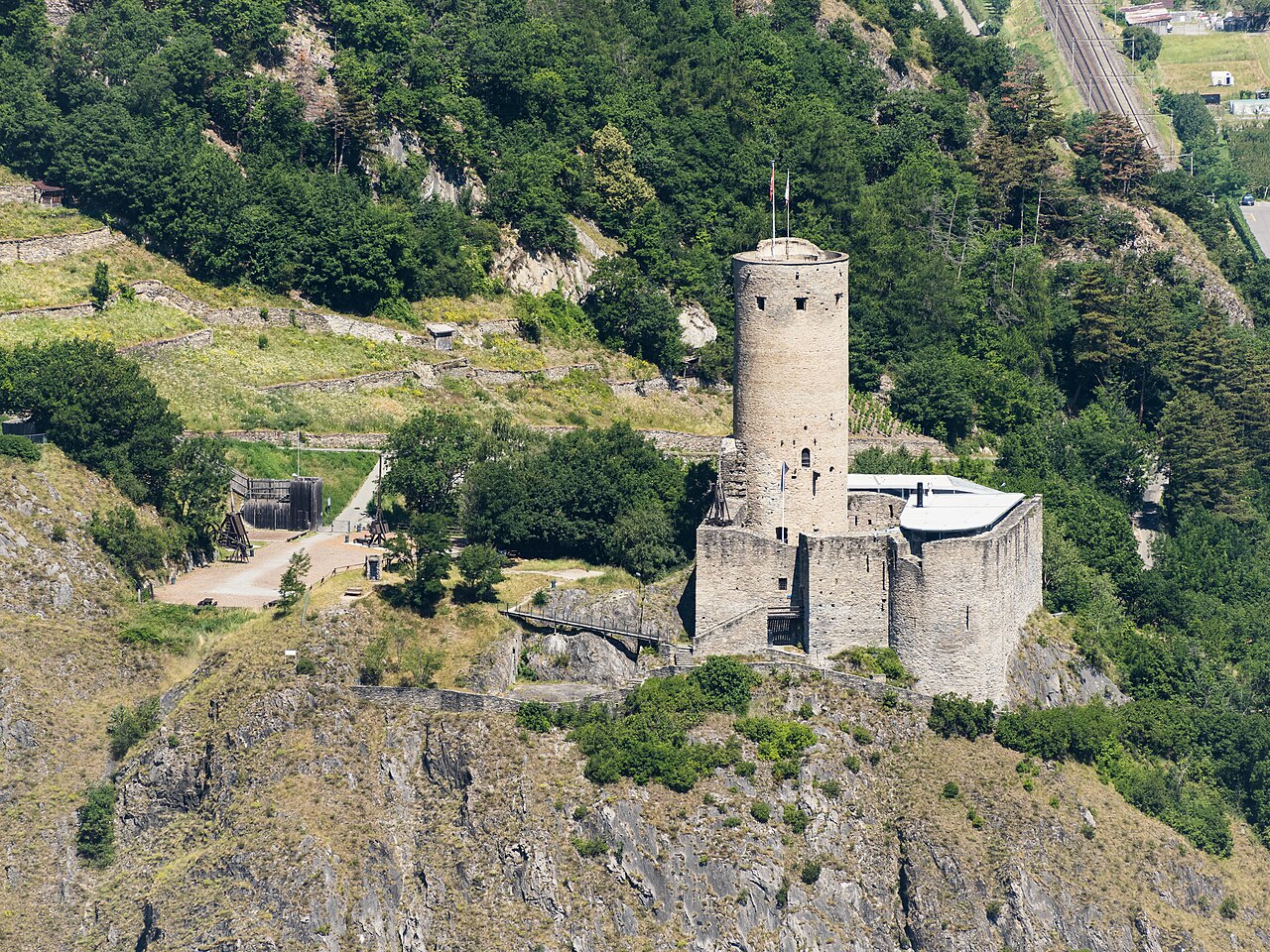
The castle complex is divided into two main sections: the upper castle and the lower castle. The upper castle is dominated by a large, circular stone donjon or keep, which originally rose to five stories. The entrance to the donjon is located on the northeast side, approximately ten meters above ground level, a defensive feature designed to impede attackers. Inside the tower, notable architectural details include a projecting garderobe on the third floor and a fireplace on the fourth floor, indicating the tower's residential and defensive functions.
The top level of the donjon was likely crowned with a conical wooden roof and surrounded by wooden hoardings—projecting galleries that allowed defenders to observe and repel attackers. Although the original battlements and roof structures have not survived, the stone core of the tower remains a prominent feature of the ruins.
Defensive structures
Surrounding the donjon was a zwinger, an enclosed killing ground designed to trap and expose attackers who breached the outer walls. The northern side of the upper castle featured a large rectangular gatehouse serving as the main entrance, while a residential building was situated on the southern side within the fortified enclosure. The defensive walls and fortifications were constructed primarily of stone and completed after 1285, reflecting the military architectural style of the late 13th century.
Lower castle and chapel
The lower castle enclosed a fortified settlement protected by its own walls and gatehouse. Within this area stood a Romanesque chapel with a 12th-century nave, making it one of the oldest surviving structures in the Canton of Valais. This chapel predates the main castle construction and was restored in the mid-20th century, serving as a testament to the site's long history.
Additional features of the lower castle include evidence of a cistern used for collecting rainwater, demonstrating the castle's capacity to sustain its inhabitants during sieges or periods of isolation. The preservation of the chapel contrasts with the ruins of the other buildings, highlighting its cultural and historical significance.
Preservation and current condition
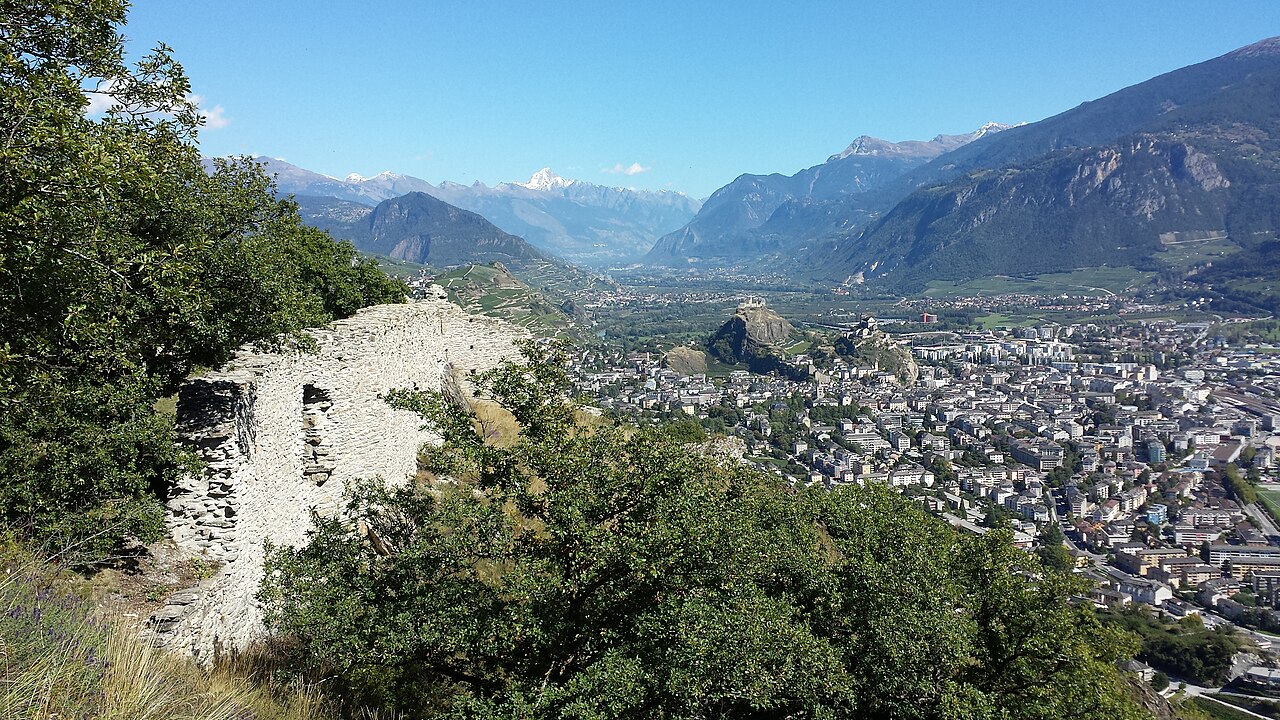
Today, Saxon Castle remains largely in ruins, with the donjon and the chapel as the most prominent and well-preserved elements. The ruins provide valuable insights into medieval military architecture and the complex political history of the Valais region. The site is accessible to visitors interested in exploring the remnants of Savoyard power and medieval fortification techniques.
The castle's elevated position and surviving structures continue to attract historians, architects, and tourists alike, offering a tangible connection to Switzerland's medieval past. Its combination of administrative, military, and religious functions encapsulates the multifaceted role of castles in medieval European society.
Frequently asked questions (FAQ)
- How do I get to Saxon Castle?
- Saxon Castle is located in the municipality of Saxon in the Canton of Valais, Switzerland. It is accessible by local roads and hiking trails from the town center, making it suitable for visitors on foot or by car.
- What is the historical significance of Saxon Castle?
- Saxon Castle was a key administrative and military stronghold for the County of Savoy during the 13th and 14th centuries. It played an important role in regional defense and communication before being destroyed in the Burgundian Wars in 1475.
- Can I visit the chapel at Saxon Castle?
- Yes, the Romanesque chapel dating back to the 12th century has been restored and is one of the best-preserved structures on the site. Visitors can explore the chapel and learn about its architectural and historical importance.
- When was Saxon Castle built?
- The current castle was constructed around 1279-1280 under Philip I of Savoy, replacing an earlier fortification recorded in 1266.
- Is Saxon Castle suitable for families and children?
- The site is open to visitors of all ages, but due to the ruins and uneven terrain, supervision is recommended for children. The castle offers educational opportunities about medieval history and architecture.
Information
Sources & official resources
Verify the information above using these authoritative references.
Loading map...
Visitor reviews
No reviews yet. Been here? Write the first review and help other travelers!
Write the first reviewVisited this castle? Share your experience
Your review helps other travelers and adds first-hand knowledge to our encyclopedia.