Montorge castle ruin — Switzerland castle

Montorge castle ruin

Montorge castle ruin in Switzerland
High Medieval (11th–13th c.)
Ruins

Montorge castle ruin is a significant high medieval archaeological site located in Switzerland. Dating back to the 13th century, this castle represents the remnants of a once strategic fortification that played a role in the regional power dynamics of the period. Although now in a state of ruins, the site offers valuable insights into medieval military architecture and the historical landscape of the region.

Historical context and significance

The 13th century was a period marked by the construction of numerous castles across Europe, reflecting the need for territorial control and defense during the high medieval era. Montorge castle was part of this widespread trend, serving as a fortified residence and defensive stronghold. It likely belonged to a local noble family or a regional lord who sought to assert authority and protect their lands.

The castle's location in Switzerland places it within a complex network of medieval fortifications that were crucial in controlling trade routes and local populations. Montorge castle would have been strategically positioned to oversee surrounding territories and provide a defensive advantage against potential invaders or rival factions.

Architectural features and layout

As an archaeological ruin, Montorge castle's surviving structures primarily consist of foundational remains and fragments of walls. Typical of high medieval castles, it would have featured a combination of defensive elements such as curtain walls, a gatehouse, and possibly a keep or tower. The castle's design would have been influenced by the architectural styles prevalent in the 13th century, emphasizing functionality and defense.

Excavations and surveys of the site have revealed traces of stone masonry and layout indicative of a compact fortified complex. The remains suggest a modest-sized castle, built to serve both residential and military purposes. Defensive features might have included battlements and arrow slits, although much of these details are lost due to the ruinous condition.

Current condition and preservation

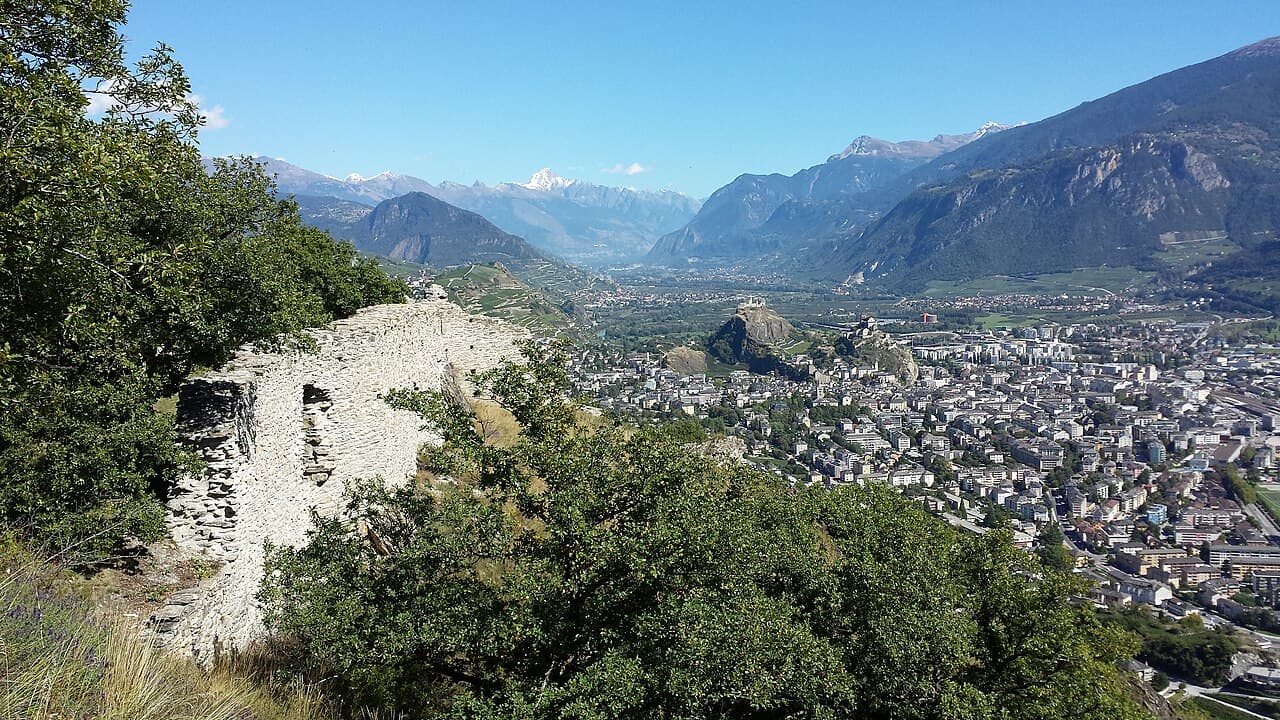
Today, Montorge castle stands as a ruin, with only partial walls and foundational elements visible. The site is classified as an archaeological ruin, reflecting its value for historical and architectural research rather than as a tourist attraction with extensive standing structures.

Efforts to preserve the remains focus on protecting the site from further deterioration and facilitating archaeological study. Visitors to the area can observe the ruins and gain an understanding of medieval fortification techniques, although access may be limited by the site's condition and conservation measures.

Visiting Montorge castle ruin

While Montorge castle ruin does not feature extensive visitor facilities or restored buildings, it offers a glimpse into medieval history for those interested in archaeology and castle architecture. The site is accessible for walking and exploration, often appealing to hikers and history enthusiasts exploring the Swiss countryside.

Visitors are encouraged to respect the fragile nature of the ruins and adhere to any guidelines set by local authorities to ensure the site's preservation. The castle's location within Switzerland makes it a part of the country's rich medieval heritage, contributing to the broader understanding of regional history.

Frequently asked questions (FAQ)

What is the historical significance of Montorge castle ruin?
Montorge castle ruin is a remarkable remnant of medieval architecture that dates back to the 13th century. It played a crucial role in the regional defense system and served as a stronghold for local nobility, reflecting the strategic importance of its location in Switzerland.
When was Montorge castle ruin built?
The construction of Montorge castle began in the 13th century, with various modifications made over the years. Its ruins today showcase the architectural styles of the medieval period and the castle's evolution over time.
Can I visit Montorge castle ruin?
Yes, Montorge castle ruin is open to visitors, allowing you to explore its ancient walls and enjoy panoramic views of the surrounding landscape. It's advisable to check local guidelines or restrictions before planning your visit.
What are the opening hours for Montorge castle ruin?
Montorge castle ruin is typically open year-round, but specific hours may vary by season. It's best to confirm the current opening hours on the official tourism website or at local visitor centers to ensure a smooth visit.
Is it possible to access Montorge castle ruin with public transportation?
Yes, public transportation is available to reach the vicinity of Montorge castle ruin. Visitors can use local trains or buses to get close to the site, followed by a short hike to the castle for a scenic experience.
When is the best time to visit Montorge castle ruin?
The best time to visit Montorge castle ruin is during the late spring and early autumn months when the weather is mild and the views are particularly stunning. This period also sees fewer tourists, allowing for a more enjoyable experience.
What are some nearby attractions to Montorge castle ruin?
Nearby attractions include the picturesque town of Montorge and several hiking trails that offer breathtaking views of the Swiss Alps. Additionally, visitors can explore other historical sites in the region, enriching their experience.
Are there any ticket prices for visiting Montorge castle ruin?
Visiting Montorge castle ruin is typically free, making it accessible for everyone. However, some guided tours or special events may have associated fees, so checking in advance is recommended.

Photo gallery

Montorge castle ruin
Click to view

Photo by vaquins•CC BY-SA 3.0

1 photo • Click any image to view in full screen

Information

Archaeological Site / Ruins

Loading map...

Visitor reviews

No reviews yet. Been here? Write the first review and help other travelers!

Write the first review

Visited this castle? Share your experience

Your review helps other travelers and adds first-hand knowledge to our encyclopedia.

Write a review

(5/5)

0/2000 characters

Your review will be visible after admin approval

Nearby castles

1.9 km

Valere Basilica

Sion, Switzerland

The Valere Basilica, also known as Valere Castle, is a remarkable fortified church located in the historic city of Sion, Switzerland. Perched prominently on a hill, it faces the Castle of Tourbillon, which sits on the opposite hill, creating a striking visual and historical relationship between these two medieval fortifications. Both sites are recognized as Swiss heritage sites of national significance, underscoring their cultural and architectural importance in Swiss history. Architectural significance of valere basilica The basilica is an outstanding example of high medieval fortified ecclesiastical architecture. Its strategic hilltop location provided both spiritual prominence and defensive advantage during the 13th century, the period when much of the current structure was built. The combination of religious function and military fortification is a distinctive feature of the basilica, reflecting the turbulent times in which it was constructed. The basilica's most famous architectural and historical treasure is its medieval pipe organ, located on the west side of the church. Believed to have been built around 1435, this organ is one of the oldest functioning organs in the world. Its pipes are uniquely arranged to form a rough outline of a church, with the larger pipes representing two towers and the smaller ones forming a triangular roof. This artistic design not only serves an aesthetic purpose but also symbolizes the church itself. The organ was likely brought to Valere Basilica by Guillaume de Rarogne, who later became the bishop of Sion. While the organ was modified in the 18th century to accommodate Baroque music styles, it has otherwise remained largely unchanged, preserving its original medieval character and sound. This makes it an invaluable artifact for both music historians and visitors interested in medieval craftsmanship. Historical context and relationship with tourbillon castle The Castle of Tourbillon, located on the hill opposite Valere Basilica, complements the basilica's defensive and historical narrative. Tourbillon Castle is surrounded by a ring wall that follows the natural contours of the hill's spire, demonstrating medieval military architectural adaptation to the landscape. Constructed in the 13th century, Tourbillon Castle served as a stronghold and residence for the bishops of Sion, much like Valere Basilica's dual role as a religious and defensive structure. Unfortunately, Tourbillon Castle was severely damaged by a fire in 1788, which left it in ruins. Despite this, significant elements such as the rectangular keep, a slender watch tower at the corner, and many interior walls remain standing, offering valuable insights into medieval castle construction. Visitors to Tourbillon Castle must ascend steep stairs that wind around the hill, a journey that reflects the castle's commanding position and strategic importance in the region. The ruins provide a tangible connection to the medieval past and are an integral part of Sion's cultural landscape. Cultural heritage and visitor experience Both Valere Basilica and Tourbillon Castle are integral to understanding the medieval history of Sion and the surrounding Valais region. Their preservation as national heritage sites ensures that their architectural and historical values are protected for future generations. Visitors to Valere Basilica can explore not only the fortified church itself but also experience the unique sound and craftsmanship of its ancient organ. The basilica's position offers panoramic views of Sion and the Rhône Valley, enhancing the visitor experience with breathtaking scenery alongside historical exploration. Tourbillon Castle, despite its ruined state, remains a popular destination for those interested in medieval military architecture and history. The climb to the castle is rewarded with expansive views and a sense of connection to the past, making it a must-visit for history enthusiasts and tourists alike. Architectural features and preservation The fortifications of Valere Basilica include robust walls and defensive elements typical of high medieval hill castles. The basilica's construction integrates religious architectural features with military necessities, such as battlements and fortified gates, which were essential for protection during periods of conflict. Tourbillon Castle's surviving structures, including its keep and watch tower, exemplify medieval defensive architecture adapted to the rocky hilltop terrain. The ring wall's irregular shape follows the natural rock spire, showcasing medieval builders' skill in harmonizing construction with the landscape. Preservation efforts have maintained the basilica in a well-preserved state, allowing visitors to appreciate both its architectural beauty and historical significance. Tourbillon Castle, while classified as ruins, is stabilized to prevent further deterioration and to facilitate safe public access.

High Medieval (11th–13th c.)
Details
2.1 km

Majorie Castle

Sion, Switzerland

Majorie Castle in Sion, Switzerland, stands as a remarkable example of a late medieval hill castle with a rich history intertwined with the ecclesiastical and political power of the region. Originally constructed in the 13th century, the castle evolved significantly over the centuries, serving as the principal residence of the Prince-bishops of Sion from 1373 onward. Its elevated position on a hill provided strategic advantages for defense and governance, making it a focal point of authority in the canton of Valais. The castle's origins trace back to the early mentions of the Vidomnat structure in 1179 and the Majorie tower in 1221, also known as the Tour de Sion. The presence of St Michel’s Chapel within the tower highlights the castle's religious significance alongside its defensive role. The acquisition by Bishop Guichard Tavelli in 1373 marked a turning point, as Majorie Castle became the main episcopal residence, preferred over the less accessible Tourbillon Castle. The castle's layout reflects its dual function as a residence and administrative center, with the Majorie tower likely serving as a reception and ceremonial space, while the bishop's living quarters, now lost, were situated nearby. Architectural features and layout The castle complex is dominated by two principal structures: the imposing Majorie tower and the Vidomnat complex. The Majorie tower, a tall and fortified structure, is surrounded by terraced walls that enhanced its defensive capabilities. Its design suggests a focus on formal and official functions rather than residential comfort, emphasizing the castle's role as a seat of power. Below and to the west lies the Vidomnat complex, consisting of two square towers originally built separately but later connected. Each tower rises three stories, reflecting architectural adaptations to meet evolving defensive and residential needs. This combination of structures illustrates the castle's layered development and its importance as a fortified episcopal seat. The Grange-à-l’Évêque, formerly the castle stables, is another significant building within the site. Recently repurposed to house the Valais Nature Museum, it represents the castle's transition from a medieval fortress to a modern cultural institution. Historical significance and events Majorie Castle's history is marked by its role as the residence and administrative hub for the Prince-bishops of Sion. The castle's strategic and political importance grew after its acquisition in 1373, serving as the center of ecclesiastical and secular power in the region. It was favored over the nearby Tourbillon Castle due to its accessibility and suitability for governance. The castle suffered two major fires, in 1529 and 1788, which caused significant damage. The first fire led to reconstruction efforts under Bishop Adrian I of Riedmatten in 1536, restoring the castle's functionality. The second fire destroyed the diocesan archives and left the castle largely unchanged afterward, as the bishops moved their residence closer to the Sion Cathedral in the early 19th century. Following the bishops' departure around 1839–1840, the State of Valais took ownership and converted the castle into military barracks. This shift marked the beginning of the castle's transformation from a religious and political center to a site of civic and cultural importance. Modern use and preservation Since the mid-20th century, Majorie Castle has been repurposed as a cultural venue. In 1947, it became home to the Valais Museum of Fine Arts, showcasing the region's artistic heritage. The adaptation of the Grange-à-l’Évêque to house the Valais Nature Museum in 2013 further expanded the site's cultural offerings. Despite the damage from historical fires, the castle's key structures, including the Majorie tower and Vidomnat complex, have been preserved. The site remains a testament to the architectural and historical legacy of the Prince-bishops of Sion and continues to attract visitors interested in medieval architecture, ecclesiastical history, and regional culture. Architectural style and construction period Majorie Castle exemplifies late medieval architecture with its robust defensive features and ecclesiastical influences. The castle's construction spans from the 12th to the 14th centuries, with significant modifications in the 16th and 17th centuries following fire damage. Its style is primarily functional, emphasizing fortification and administrative utility rather than ornate decoration, consistent with the needs of a hill castle serving as a bishop's stronghold. Visitor information and cultural significance Today, Majorie Castle stands as a prominent cultural landmark in Sion. Visitors can explore the preserved medieval structures and enjoy exhibitions at the Valais Museum of Fine Arts and the Valais Nature Museum. The castle's location offers panoramic views of the city and surrounding landscape, enhancing its appeal as a tourist destination. The castle's layered history, from its medieval origins through its ecclesiastical prominence to its modern cultural role, makes it a valuable site for understanding the region's heritage. Its preservation and adaptive reuse demonstrate the importance of maintaining historical monuments within contemporary society.

Late Medieval (14th–15th c.)
Details
2.3 km
Valère Castle — Switzerland castle

Valère Castle

Sion, Switzerland

Valère Castle is a remarkable historic site perched atop a steep, rocky hill overlooking the old town of Sion, Switzerland. This hill castle is renowned for its unique combination of religious, military, and cultural significance, anchored by a well-preserved Romanesque basilica that dates back to the 11th and 12th centuries. The castle's hill has been a focal point of human activity since prehistoric times, with archaeological finds revealing Neolithic artifacts such as pottery shards and bracelet fragments dating to around 5000 BCE. Although the site likely served strategic or religious purposes during the Roman era, no surviving architectural remains from that period have been confirmed. Early history and construction The first documented mention of a Christian church at Valère dates to the year 1049. Construction of the stone basilica began between approximately 1100 and 1130, reflecting the Romanesque architectural style prevalent in medieval Europe. The basilica was built with a three-nave layout and later evolved into a cruciform plan during the 12th and 13th centuries. This development included the addition of defensive features such as fortified walls topped with battlements, underscoring the site's dual function as both a religious sanctuary and a fortified refuge. Religious and political significance Valère Castle served as the home of the cathedral chapter of Sion, a powerful ecclesiastical institution that wielded both spiritual and temporal authority. From the late 10th century onward, the Prince-Bishops of Sion governed the region from this site, making it a center of regional governance and religious influence. The castle's fortified church symbolized this blend of sacred and secular power, standing as a bastion of the Prince-Bishops' dominion. Architectural features and artistic treasures The castle's centerpiece is the three-nave Romanesque basilica with a cruciform ground plan inspired by the design of Lausanne Cathedral. The basilica includes a prominent northern tower rising above the adjacent north chapel, with polygonal window vaults adorning the semicircular apse at the eastern end. The fortified stone walls surrounding the church, complete with battlements, give it the appearance of a fortress designed for defense against potential attacks. Interior decorations and sculptures Inside the basilica, visitors can admire a Gothic marble statue of the Madonna and Child placed above the main altar, dating from the 15th century. The choir walls are richly decorated with vibrant murals depicting apostles, prophets, and saints associated with local religious traditions. These artworks, created around 1435, contribute to the basilica's spiritual ambiance and highlight the artistic heritage of the region. The historic pipe organ One of Valère's most extraordinary features is its pipe organ, constructed between 1430 and 1435. It is among the oldest playable organs in the world and is located on the west wall of the basilica. The organ has a keyboard spanning four octaves with 45 keys, a one-octave pedalboard, and eight stops controlling different sound registers. Architecturally, the pipes are arranged to resemble a church façade with two towers and a triangular roof. Some of the original wooden pipes from the 14th century survive, and the organ underwent expansions in 1687 and restorations in the 20th century, including significant work in 1954 and 2004. Its tuning is approximately 450 Hz, slightly higher than modern pitch standards, which makes it unique but less compatible with contemporary instruments. Later history and preservation efforts Valère Castle's importance declined after the French Revolutionary Wars in 1798, when French troops invaded the region. Religious activities shifted primarily to the nearby Notre-Dame de Sion, leading to reduced maintenance of the site. Despite this, the castle was never completely abandoned, retaining its cultural and historical significance. Modern restoration and museum use Restoration efforts began in 1987, supported by the canton of Valais, focusing on preserving the basilica's stained glass windows and painted panels created by the artist Peter Maggenberg in the early 15th century. Specialists from the Basel Art Museum carried out the restoration, which was completed by 2016. During a visit in 1987, Pope John Paul II elevated the church to the status of a minor basilica, recognizing its religious and cultural importance. The former chapter house, located north of the basilica and dating from around 1300, now houses the Valais History Museum. This museum showcases exhibits related to the region's history and the castle's role within it. Renovation work on the museum began in 2008 to improve visitor facilities and preserve the historic structures. Natural and cultural heritage significance The hill on which Valère Castle stands is protected not only for its architectural and historical value but also for its natural environment. The area supports numerous rare plant and animal species, contributing to its designation as a site of national heritage importance since 1977. A marked visitor route guides guests through the castle grounds and the former chapter house, offering an immersive experience of the site's multifaceted heritage. Valère Castle remains a striking example of medieval Romanesque architecture combined with fortified ecclesiastical design. Its rich history, artistic treasures, and remarkable preservation make it a significant cultural landmark in Switzerland and a popular destination for visitors interested in medieval history, architecture, and sacred art.

High Medieval (11th–13th c.)
Details