Fort de Dailly
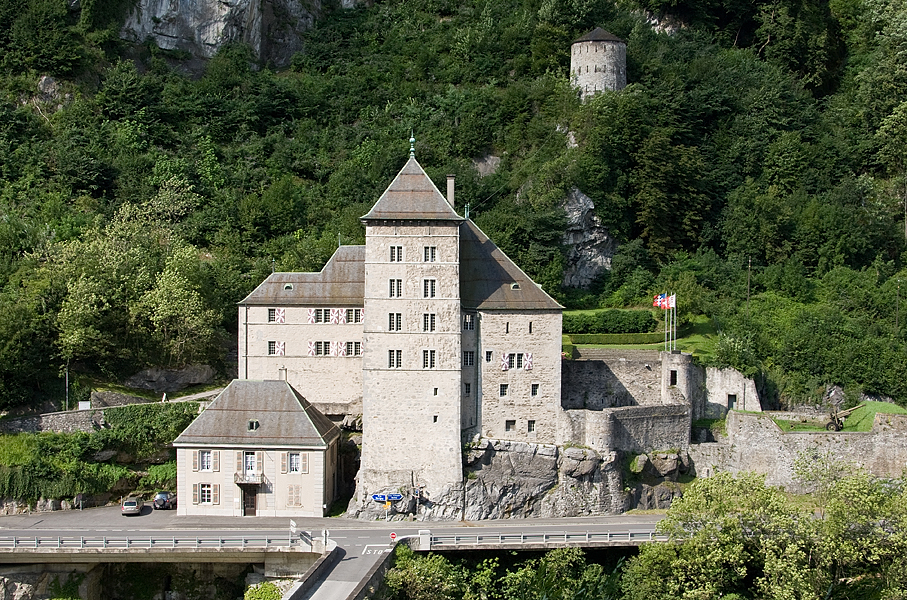
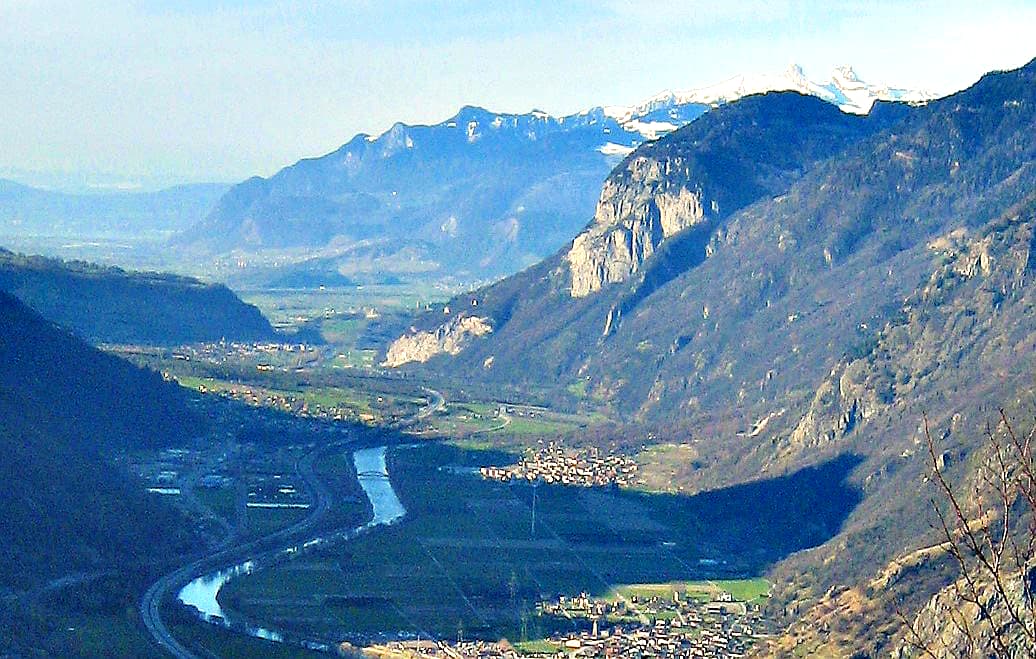
The Fort de Dailly stands as the largest and most formidable component of Fortress Saint-Maurice, one of the three principal fortified regions within the National Redoubt of Switzerland. Constructed primarily underground, this bastioned fortress was carved into the Massif de Dailly east of Saint-Maurice, beginning in 1892. Its strategic location high above the Saint-Maurice valley allowed it to command a sweeping view and control of the valley stretching from Chillon to Martigny, making it a critical military installation for Swiss defense.
Strategic importance and location
Fort de Dailly, together with the nearby Fort de Savatan, forms a fortress complex encased within solid rock, designed to provide a robust defense of the Saint-Maurice valley. This valley is a vital corridor through the Alps, and controlling it was essential for Switzerland's national defense strategy. The fort's elevated position allowed for long-range artillery coverage, securing the approaches and deterring potential invasions.
Construction and architectural design
Construction of Fort de Dailly began in 1892, with the fort becoming operational by 1894. The design reflects the military engineering principles of the late 19th century, focusing on subterranean fortifications to maximize protection against artillery fire and aerial attacks. The fortress was built deep into the mountain, with extensive tunnels, galleries, and chambers carved out of the rock. This subterranean design provided natural protection and concealed the fort's artillery and personnel from enemy observation and bombardment.
Bastioned fortress characteristics
As a bastioned fortress, Fort de Dailly incorporates multiple defensive features such as thick reinforced concrete walls, armored gun turrets, and strategically placed bastions that allow overlapping fields of fire. The fort's artillery was positioned to cover all approaches to the valley, with gun turrets capable of rotating to engage targets at long distances. The internal layout included ammunition magazines, barracks, command posts, and support facilities, all designed to sustain prolonged defense operations.
Armament and upgrades
Throughout its operational life, Fort de Dailly underwent numerous upgrades to its artillery and defensive systems. Initially equipped with conventional artillery pieces, the fort was continuously modernized to keep pace with evolving military technology. A significant event occurred in 1946 when a series of three ammunition magazine explosions caused extensive damage. Following this incident, the fort was repaired and enhanced with the installation of two fully automatic 150 mm gun turrets, each capable of firing shells up to 24 kilometers (15 miles). These turrets represented a significant advancement in firepower and automation, reinforcing the fort's role as a key defensive stronghold.
Operational history and decommissioning
Fort de Dailly remained a central element of Swiss military defense throughout the 20th century, particularly during periods of heightened European conflict. Its position within Fortress Saint-Maurice made it a linchpin in Switzerland's strategy to defend its territory by controlling critical alpine passes. However, with changes in military strategy and the reduced emphasis on fixed fortifications, the Swiss Armed Forces reassessed their defensive needs in the late 20th century.
Starting in 1995, the fort was progressively decommissioned, reflecting the broader shift away from static defense installations. By the end of 2003, Fort de Dailly was fully closed, marking the end of its active military role. Today, it remains a significant historical and architectural monument, illustrating the evolution of military fortifications from the late 19th century through the Cold War era.
Architectural and historical significance
Fort de Dailly exemplifies the transition from traditional fortress design to modern subterranean military architecture. Its extensive underground galleries and heavily fortified gun turrets highlight the adaptation to new forms of warfare, including protection against aerial bombardment and long-range artillery. The fort's integration into the National Redoubt system underscores its importance in Swiss national defense planning.
As the largest fortress in the Saint-Maurice complex, Fort de Dailly serves as a key example of modern military engineering and the strategic use of natural geography for defense purposes. Its preservation offers valuable insights into the technological and tactical advancements of the 19th and 20th centuries.
Visiting Fort de Dailly
While the fort is no longer in active military use, it holds interest for historians, military enthusiasts, and tourists fascinated by fortress architecture and Swiss military history. Access to the fort is limited due to its subterranean nature and preservation status, but guided tours and special events occasionally provide opportunities to explore parts of the complex. Visitors can appreciate the scale of the underground construction and the formidable defensive capabilities that once protected the region.
Frequently asked questions (FAQ)
- How do I visit Fort de Dailly?
- Fort de Dailly is not regularly open to the public, but guided tours are occasionally available through special arrangements or military heritage events. Visitors should check with local tourism offices in Saint-Maurice for current access opportunities.
- What is the historical significance of Fort de Dailly?
- Fort de Dailly was a key part of the National Redoubt, Switzerland's defensive strategy to protect against invasion by controlling the Saint-Maurice valley. It represents advanced military engineering of the late 19th and 20th centuries.
- When was Fort de Dailly built and operational?
- Construction began in 1892, and the fort became operational by 1894. It was continuously upgraded throughout the 20th century until its closure in 2003.
- Can I explore the underground tunnels of Fort de Dailly?
- Access to the underground tunnels is restricted for safety and preservation reasons. Special guided tours may allow limited exploration, but most areas remain closed to the general public.
- Why was Fort de Dailly closed?
- The fort was closed due to changes in Swiss military defense strategy, which moved away from fixed fortifications toward more mobile forces. The closure process began in 1995 and was completed by 2003.
Photo gallery

Information
Current owner
Swiss Armed Forces
Loading map...
Visitor reviews
No reviews yet. Been here? Write the first review and help other travelers!
Write the first reviewVisited this castle? Share your experience
Your review helps other travelers and adds first-hand knowledge to our encyclopedia.