La Bâtiaz Castle
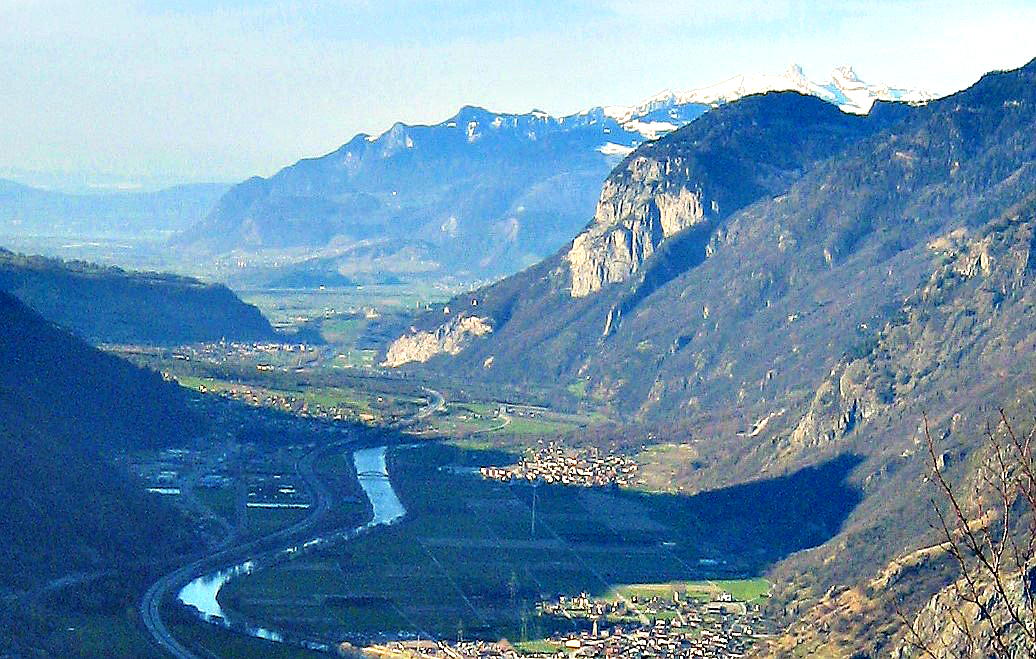
La Bâtiaz Castle stands as a remarkable example of high medieval military architecture in the heart of Martigny, Switzerland. Constructed in 1260, this hilltop fortress served as a strategic stronghold overseeing the vital alpine passage of the Great St. Bernard route. Its commanding position allowed control over trade and military movements through the Rhône Valley, making it a coveted asset for regional powers during the Middle Ages.
The castle's history is deeply intertwined with the shifting political and religious dynamics of the region. Initially built under the direction of Landrit de Mont, the bishop of Sion, it replaced an earlier fortification known as La Crête. The name "La Bâtiaz" derives from the term "bastida," indicating its role as a fortified structure. Throughout its history, control of the castle oscillated between the House of Savoy and the Bishops of Sion, reflecting the broader contest for dominance in the Valais region.
Historical significance and political struggles
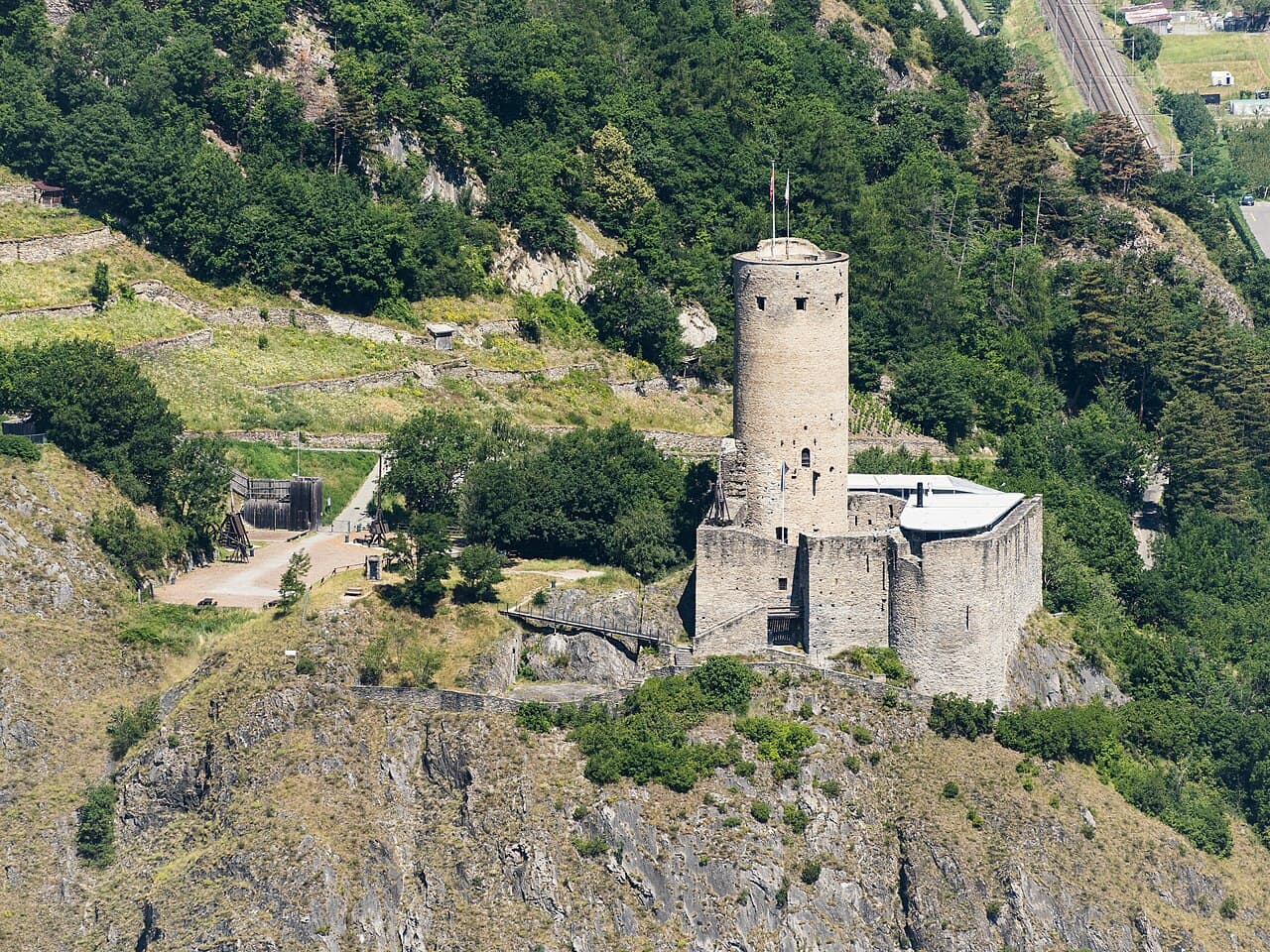
During the mid-13th century, Count Peter II of Savoy launched a campaign against the episcopal authority, successfully capturing La Bâtiaz along with La Crête. Between 1260 and 1268, he commissioned the construction of the castle's most prominent feature, a large round tower that still dominates the ruins today. This tower exemplifies the military architectural advancements of the period, designed both for defense and as a symbol of power.
The castle later reverted to the control of the bishopric, which undertook further fortifications to strengthen its defenses. In the 14th century, the region experienced territorial divisions, with Savoy extending its influence over Lower Valais, while Upper Valais remained under episcopal jurisdiction. The castle's strategic importance was highlighted during the Burgundian Wars in the late 15th century when local Valaisan forces allied with the Swiss Confederation to resist Savoyard troops. La Bâtiaz was captured during this conflict but sustained damage.
The castle's decline culminated in the early 16th century amid a power struggle between notable figures Georges Supersaxo and Matthieu Schiner. In 1518, Supersaxo's forces deliberately set fire to La Bâtiaz, resulting in its destruction. Unlike many castles of the era, it was never rebuilt, leaving the ruins as a testament to its turbulent past.
Architectural features and military technology
Situated on a hilltop, La Bâtiaz Castle exemplifies the medieval fortress design optimized for surveillance and defense. The primary construction material is stone masonry typical of the 13th century, showcasing robust walls and defensive structures. The large round tower built during Savoy's occupation remains largely intact, having undergone restoration in 1980, and offers panoramic views of the surrounding vineyards and the Rhône Valley.
One of the castle's unique architectural elements is its garderobes (medieval toilets), whose design has been linked to the renowned architect James of Saint George. This connection is significant as James of Saint George later became famous for his work on castles in Wales, now recognized as UNESCO World Heritage sites.
The castle grounds also feature the remains of fortifications and a notable collection of medieval siege engines. Six reconstructed machines are displayed, including a wheeled mangonel built by local quarry workers, a standard mangonel, a couillard, a bricole, a trebuchet, and a bombarde—an early form of cannon. These exhibits provide valuable insight into the offensive and defensive capabilities of medieval castles and enrich visitors' understanding of siege warfare techniques.
Cultural heritage and modern use
Despite its ruinous state, La Bâtiaz Castle has been preserved as a cultural monument of national importance in Switzerland. Restoration efforts have stabilized the ruins, allowing the castle to remain a prominent historical site. Visitors can explore the surviving walls, ascend the round tower for sweeping views, and engage with the castle's medieval ambiance.
The castle also hosts a collection of medieval torture instruments, enhancing its historical narrative and attracting enthusiasts of medieval history. During the summer season, the castle's medieval tavern, À la Part des Anges, offers a menu inspired by medieval flavors, providing a unique gastronomic experience that complements the site's historical atmosphere.
La Bâtiaz Castle's location amidst vineyards and overlooking the Rhône Valley makes it not only a fortress of historical and architectural significance but also a scenic destination. Its enduring presence offers visitors a tangible connection to the complex history of power, religion, and warfare in the Valais region.
Visitor experience and accessibility
Visitors to La Bâtiaz Castle can enjoy panoramic views from the restored round tower, which serves as a vantage point over the surrounding landscape. The site is accessible via a hilltop path and includes informative displays about the castle's history and military technology. The presence of the medieval tavern enhances the visitor experience by providing themed dining options during the warmer months.
The castle's combination of historical ruins, architectural features, and cultural activities makes it a compelling destination for tourists interested in medieval history, architecture, and Swiss heritage.
Frequently asked questions (FAQ)
- How do I get to La Bâtiaz Castle in Martigny?
- La Bâtiaz Castle is located on a hilltop in Martigny, accessible by a walking path from the town center. The hike is moderate and offers scenic views of the Rhône Valley.
- What is the historical significance of La Bâtiaz Castle?
- La Bâtiaz Castle was built in 1260 to control the Great St. Bernard alpine route and was a contested stronghold between the House of Savoy and the Bishops of Sion.
- Can visitors climb the round tower at La Bâtiaz Castle?
- Yes, the large round tower has been restored and is open to visitors who can climb to the top for panoramic views of the surrounding vineyards and Rhône Valley.
- Are there any medieval exhibits at La Bâtiaz Castle?
- The castle hosts a collection of medieval torture instruments and displays six reconstructed siege engines, providing insight into medieval warfare and daily life.
- When is the best time to visit La Bâtiaz Castle?
- The best time to visit is during the summer season when the medieval tavern À la Part des Anges is open, offering a unique dining experience with medieval-inspired dishes.
Photo gallery

Information
Sources & official resources
Verify the information above using these authoritative references.
Loading map...
Visitor reviews
No reviews yet. Been here? Write the first review and help other travelers!
Write the first reviewVisited this castle? Share your experience
Your review helps other travelers and adds first-hand knowledge to our encyclopedia.