Sax Castle
Sax Castle is a remarkable example of a hill castle with origins dating back to the 10th century during the Early Medieval period. Situated atop a narrow, elongated hill overlooking the town of Sax in Spain, this fortress offers commanding views of the surrounding landscape, a strategic advantage that has defined its military importance throughout history. The castle's foundation and early construction are attributed to Moorish builders, reflecting Islamic architectural and defensive techniques prevalent during the 10th to 12th centuries.
The castle's historical significance is closely tied to the complex medieval power struggles in the Iberian Peninsula. Initially a Muslim stronghold, it formed part of a defensive network controlling the Vinalopó valley, alongside other fortresses such as Villena and Biar. Its position allowed it to dominate the surrounding area and protect key routes. In 1239, after an unsuccessful siege by Ramón Folch, Viscount of Cardona, the fortress was captured by knights of the Order of Calatrava, marking its transition into Christian hands. Subsequently, Sax Castle was ceded to the Crown of Castile under the Treaty of Almizra, illustrating the shifting territorial boundaries between the Christian kingdoms of Aragon and Castile.
Historical context and military significance
Moorish origins and early medieval role
The castle was constructed during the Andalusian period, likely under the Almohad dynasty in the 12th century, although archaeological evidence indicates that the site had been occupied since earlier times, including Iberian and Roman settlements. The fortress was part of a critical defensive line that secured Muslim territories in southeastern Spain. Its design incorporated typical Islamic military architecture, including thick stone walls, battlements, and strategically placed towers.
Christian conquest and feudal integration
Following its capture in 1239, Sax Castle was integrated into the Christian realm, becoming part of the Lordship of Villena, a feudal jurisdiction that played a significant role in the politics of the region. The castle's ownership passed to Alfonso X of Castile as part of territorial agreements. Later, in the late 15th century, the Catholic Monarchs brought the fortress under direct royal control, reflecting its continued strategic importance.
Early modern period and later history
During the War of Spanish Succession in the early 18th century, Sax Castle's garrison supported Philip of Anjou but retreated when faced with the siege by Archduke Charles's forces. In the 18th century, the castle was governed by appointed nobles such as the Duke of Arcos and the Duke of Maqueda, indicating its maintained administrative role. Since 1980, the castle has been under municipal ownership and has undergone careful restoration to preserve its historical fabric.
Architectural features and layout
Strategic hilltop location
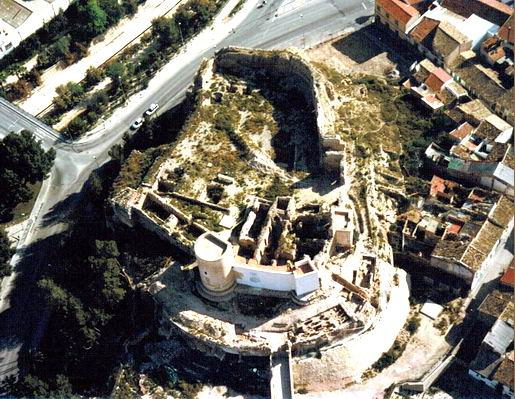
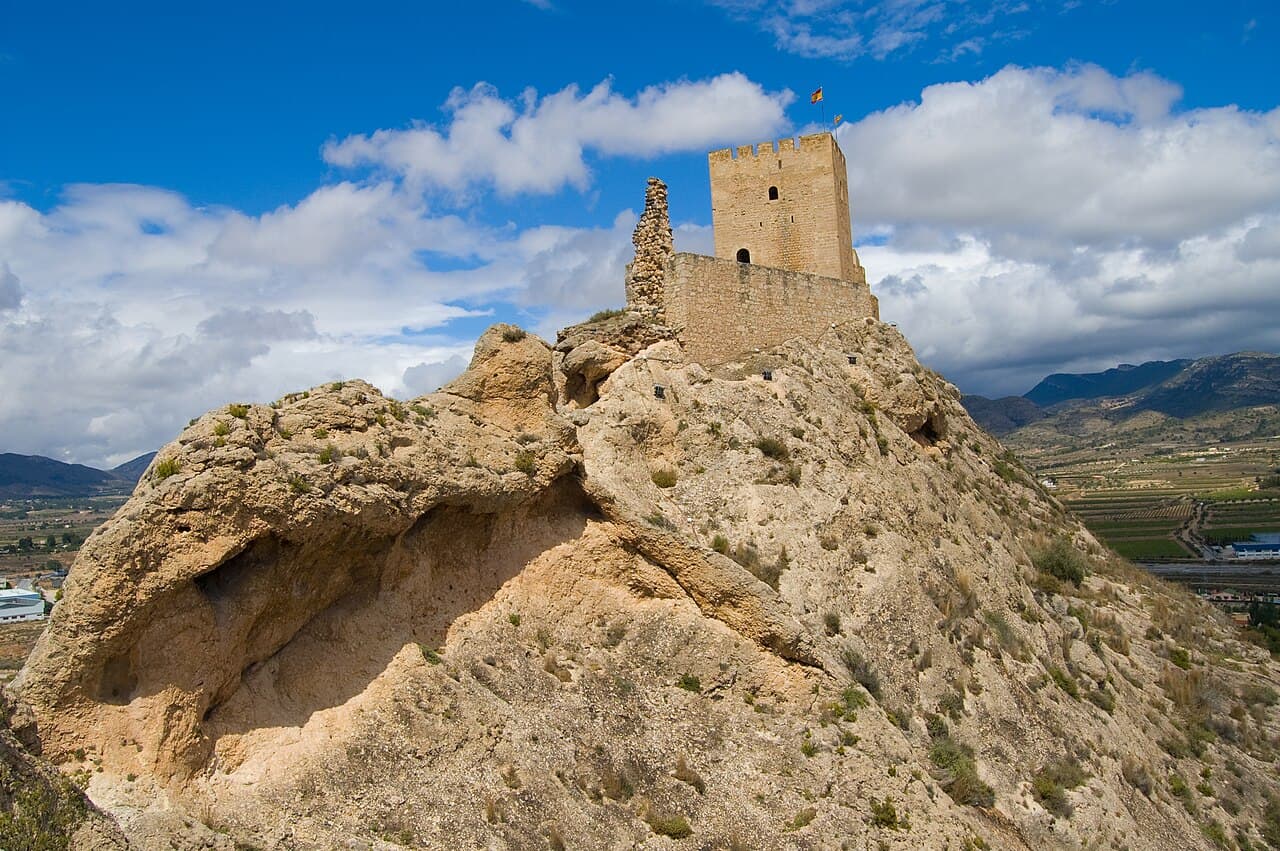
The castle occupies the summit of a naturally defensible hill, with steep slopes protecting its western flank. Access is mainly from the northwest, where defensive works including a barbican and bastion protect the approach. The elongated layout follows the hill's ridge, creating two main fortified sections connected by defensive walls.
The keep and bastion tower
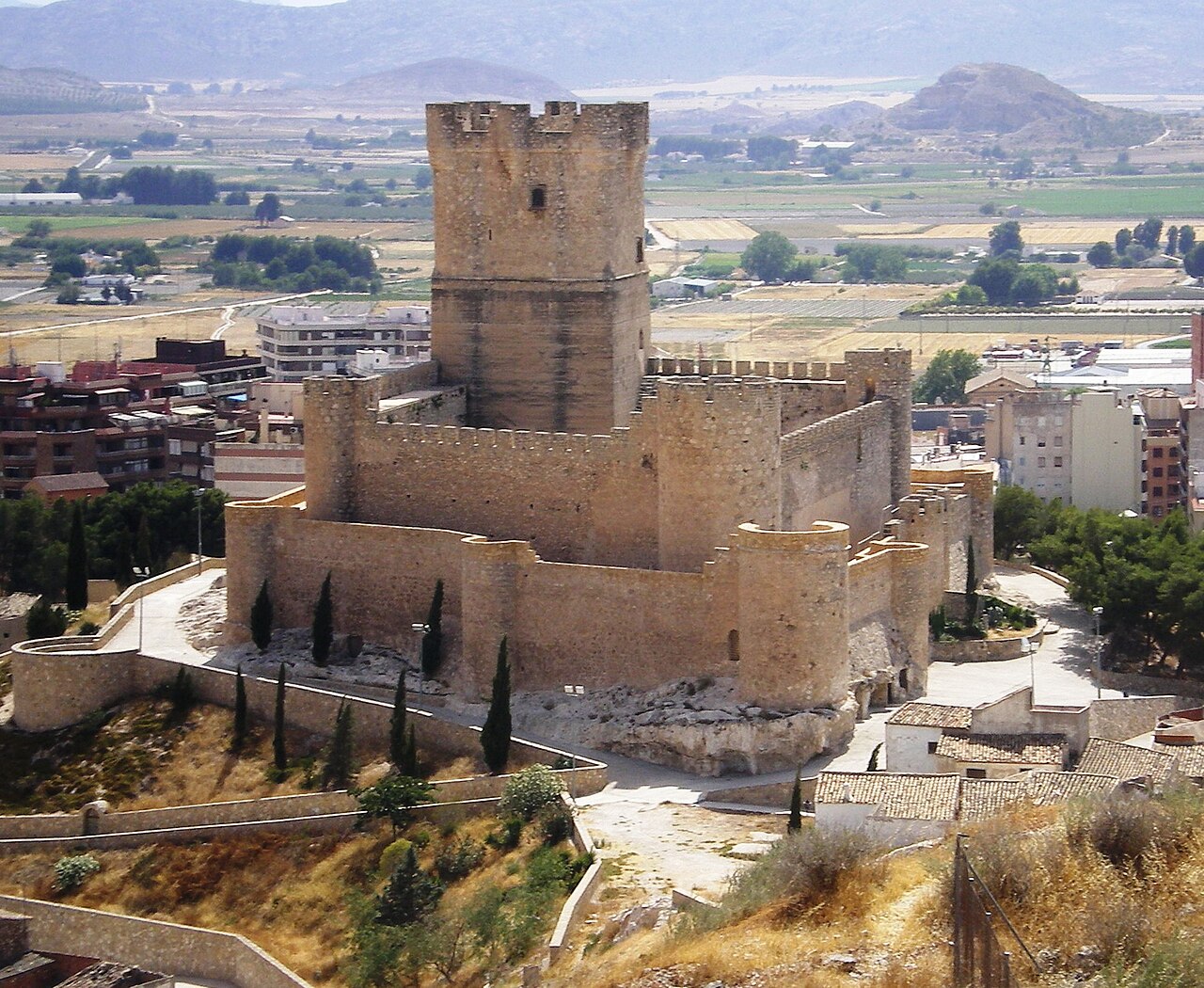
The most prominent structure is the rectangular keep, built over a natural rocky cavity more than fifteen meters deep. Its walls are exceptionally thick, up to two meters, and constructed from finely cut ashlar stone blocks. Internally, the keep is divided into three floors connected by a staircase embedded into the walls. Architectural elements such as stepped pointed arches and pointed barrel vaults support the ceilings, typical of medieval Islamic architecture. The keep features arrow slits on the upper floors, allowing defenders to monitor and repel attackers. Historically, access to the keep was via a now-lost drawbridge, emphasizing its defensive design. Adjacent to the keep is a large aljibe, a cistern used for storing water, crucial for withstanding sieges.
At the opposite end of the castle stands a square bastion tower with thick walls and a vaulted chamber. Its foundations potentially date back to the Roman period, indicating the site's long-term strategic use. This tower complements the keep by securing the other end of the fortress.
Walls, battlements, and defensive works
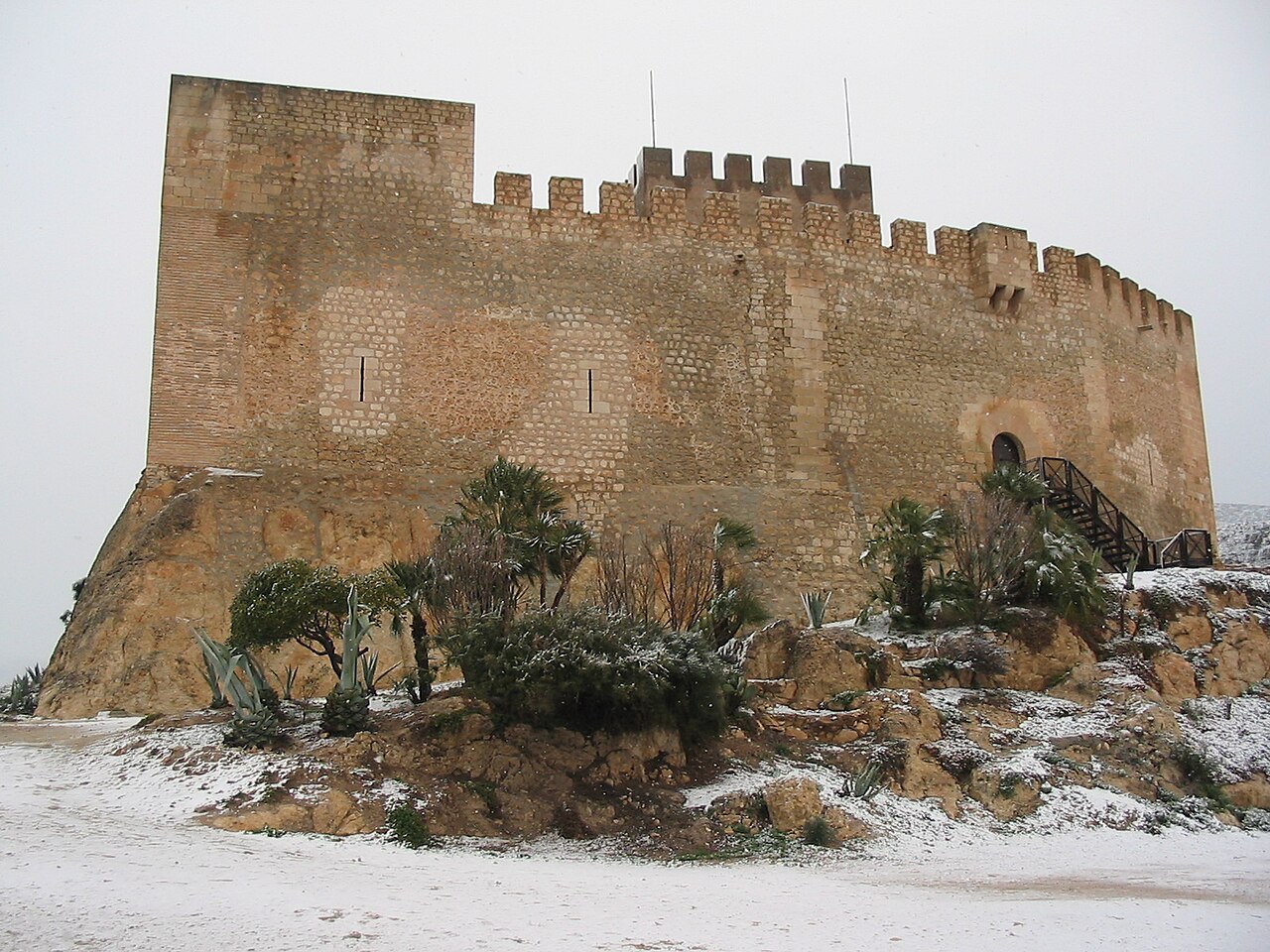
The connecting walls between the towers are topped with battlements featuring merlons, providing cover for defenders. The main entrance is fortified with a bastion and protected by additional hillside defenses. The castle's defensive design reflects a blend of Islamic and Christian medieval military architecture, adapted over centuries to meet evolving threats.
Preservation and modern access
Today, Sax Castle is well preserved and has undergone restoration efforts to maintain its structural integrity and historical character. Modern stairs have been added on the rugged hill side to facilitate visitor access without compromising the original architecture. The castle stands as a testament to the layered history of southeastern Spain, showcasing influences from Roman, Islamic, and Christian periods.
Visitors can explore the fortress's courtyards, towers, and walls, experiencing firsthand the architectural ingenuity and strategic importance of this hilltop stronghold. The castle's commanding position continues to dominate the city of Sax, linking the present with a rich medieval past.
Frequently asked questions (FAQ)
- When was Sax Castle originally built?
- Sax Castle was originally constructed in the 10th century during the Early Medieval period, with significant Moorish influence.
- What architectural features characterize Sax Castle?
- Sax Castle features a rectangular keep with thick ashlar stone walls, vaulted ceilings with pointed arches, battlements with merlons, and a large water cistern called an aljibe.
- Can visitors access the interior of Sax Castle?
- Yes, the castle is well preserved and accessible to visitors, with modern stairs added to facilitate safe access without damaging historical structures.
- What historical events is Sax Castle known for?
- Sax Castle played a significant role during the Christian reconquest, changing hands in 1239, and was involved in the War of Spanish Succession in the 18th century.
- Why is Sax Castle considered strategically important?
- Its hilltop location provides commanding views of the surrounding valley, making it a key defensive stronghold controlling important routes in southeastern Spain.
Photo gallery

Information
Current owner
Municipality
Loading map...
Visitor reviews
No reviews yet. Been here? Write the first review and help other travelers!
Write the first reviewVisited this castle? Share your experience
Your review helps other travelers and adds first-hand knowledge to our encyclopedia.