Atalaya Castle
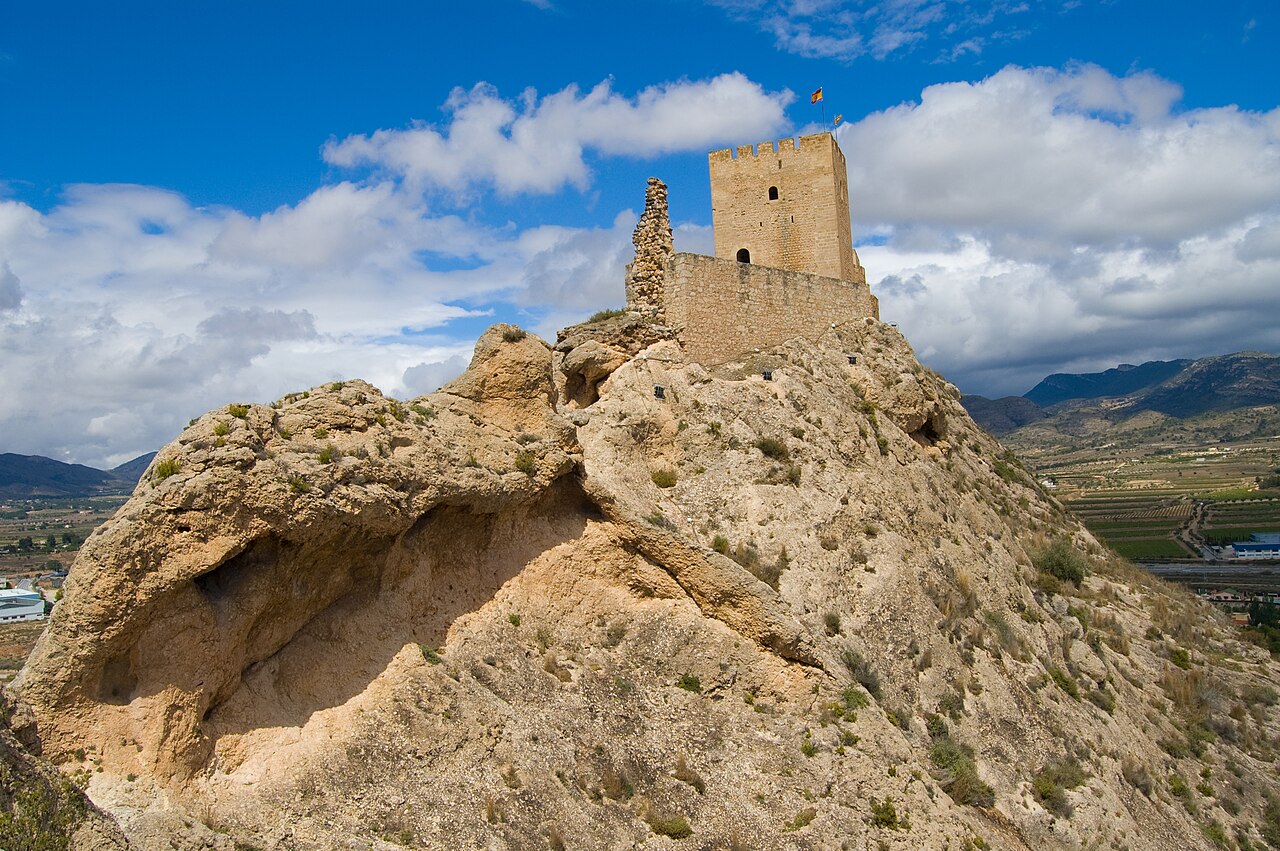
Atalaya Castle, also known as Castillo de la Atalaya or Castillo de Villena, is a remarkable hilltop fortress located in the town of Villena, within the province of Alicante, Spain. This high medieval castle stands prominently on a spur of the Sierra de la Villa mountains, commanding strategic views over the historic borderlands between the Kingdoms of Castile and Aragon. Its commanding position made it a key military stronghold during the turbulent period of the Reconquista, reflecting a complex history of Muslim and Christian control.
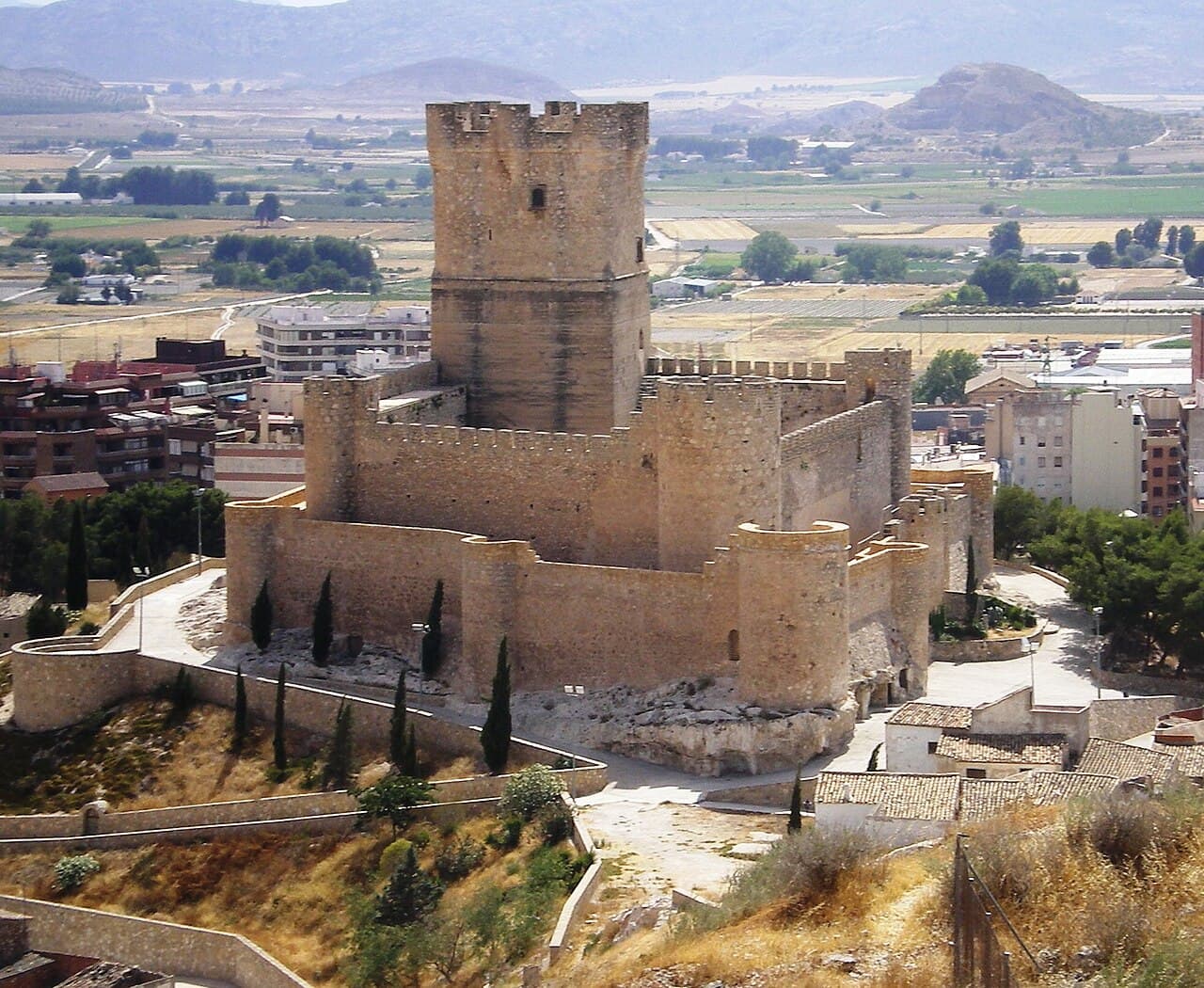
The castle was first documented in 1172 in Arab sources, indicating its construction by Muslim forces no later than the late 12th century. While there has been speculation about a preceding Roman fortification on the site, no archaeological evidence supports this claim. The original fortress was built using the rammed earth (tapial) technique characteristic of Almohad architecture, with its lower keep walls dating from this period. The castle’s design includes a concentric layout with an inner and outer curtain wall, polygonal towers, and a prominent quadrangular keep that showcases multiple construction phases.
Historical significance and ownership
During the early 13th century, Atalaya Castle was a vital Muslim stronghold on the northern frontier of the Islamic emirate in Iberia. It withstood three sieges by James I of Aragon before finally falling in 1240. The conquest was led by forces including the Order of Calatrava knights and Almogávar mercenaries. Following the Treaty of Almizra (1244), the castle was ceded to the Kingdom of Castile.
The castle was initially granted to the Order of Calatrava by Ferdinand III of Castile but soon passed to his son, Infante Manuel of Castile, who became Lord of Villena. His son, Juan Manuel, Prince of Villena, was a notable medieval writer who resided in the castle and produced much of his literary work there. The lordship was elevated to a march in the late 14th century by Henry II of Castile.
In the 15th century, ownership passed to the Pacheco family, notably Juan Pacheco, the second Marquis of Villena. He transformed the fortress into a castle-palace, adding a second curtain wall, covering the existing walls, and raising the keep by adding third and fourth floors with ashlar masonry. The castle ceased to be a noble residence after the 1476 rebellion by Villena’s citizens, who, supported by the Catholic Monarchs, sacked the fortress due to political conflicts involving Diego López Pacheco.
Architectural features and construction phases
Almohad origins and rammed earth construction
The castle’s most ancient sections, particularly the lower parts of the keep, date from the 12th century Almohad period. These were constructed using rammed earth (tapial), a technique involving compressed earth stabilized by lime or other binders. The walls were finished with plaster designed to imitate stone blocks, a common decorative feature in Muslim military architecture of the era.
The ground floor of the keep forms a square chamber approximately 7 by 7 meters, with walls averaging 3.5 meters thick. It is covered by an Almohad ribbed vault made of brick, featuring eight intersecting horseshoe arches arranged in an eight-pointed star pattern. This vault is among the oldest brick vaults in Spain and the Maghreb region. The second floor also contains a complex ribbed vault with eleven intersecting ribs, demonstrating advanced medieval engineering.
15th-century christian modifications
During the mid-15th century, Juan Pacheco undertook significant renovations, adding the upper two floors of the keep and constructing a second curtain wall around the castle. These additions used ashlar masonry and included typical rectangular merlons on the battlements. The third floor features a restored wooden ceiling, while the fourth floor retains its original brick barrel vault roof and lowered arch windows for natural light.
The keep’s summit is crowned by small overhanging turrets in the Luso-Castilian style, providing strategic vantage points over the surrounding landscape. The castle’s outer walls include a chemin-de-ronde walkway connecting all towers and the keep, allowing defenders to move efficiently during combat.
Sieges, battles, and military history
Atalaya Castle witnessed numerous military events throughout its history. It resisted three sieges by James I of Aragon before its capture in 1240. In the early 1260s, during Moorish uprisings, the castle briefly returned to Muslim control until suppressed by the Aragonese Crown.
During the Revolt of the Brotherhoods (1519–1523), the castle served as a refuge for Viceroy Diego Hurtado de Mendoza, who used it as a base to restore royal authority in Valencia. In the War of the Spanish Succession (1701–1713), fifty Bourbon loyalist troops defended the castle during an eight-day siege by Austrian forces, earning it the honorary title "Fidelísima" alongside "Muy Noble" and "Muy Leal".
In the Peninsular War, the castle was partially destroyed by French forces under Marshal Louis-Gabriel Suchet. The roofs of the keep, including the Almohad vaults, were damaged, leading to the fortress’s abandonment and gradual ruin. Stones from the castle were repurposed locally, further contributing to its decay.
Restoration and current status
Restoration efforts began in 1958 under the direction of José María Soler García, who led archaeological excavations and conservation work. These projects uncovered historical materials now displayed in Villena’s archaeological museum and restored key architectural features such as the keep’s roofs, turrets, and courtyard walls.
Further restorations took place in the late 20th and early 21st centuries, including the repair of the Almohad vaults in 2000, although modern plastering has obscured some original rib details. The castle is protected as a Bien de Interés Cultural and was declared a Historic-Artistic Monument in 1931. Today, Atalaya Castle is well preserved and open to visitors for a fee, serving as a cultural landmark and the focal point of Villena's annual Moros y Cristianos festival.
Visitors can explore the castle’s concentric walls, polygonal towers, and the imposing keep, gaining insight into centuries of military architecture and the region’s complex history of Muslim-Christian interaction. The castle’s elevated position offers spectacular views of the surrounding landscape, making it a must-visit heritage site in Alicante.
Frequently asked questions (FAQ)
- How do I get to Atalaya Castle?
- Atalaya Castle is located in Villena, Spain, and can be easily accessed by car or public transport. If you are traveling by train, the Villena train station is nearby, and local buses can take you to the castle.
- What is the historical significance of Atalaya Castle?
- Atalaya Castle, built in the 15th century, played a crucial role in the defense of the region during the Reconquista. It is a testament to the military architecture of its time and has served various purposes throughout its history, including a royal residence.
- When was Atalaya Castle built?
- Construction of Atalaya Castle began in the late 15th century, around 1480, and it was completed shortly thereafter. The castle's strategic location made it a key fortification in the region during its early years.
- Can I take guided tours of Atalaya Castle?
- Yes, guided tours are available at Atalaya Castle, providing visitors with in-depth knowledge about its history and architecture. It's recommended to check the official website or visitor center for tour schedules and availability.
- Why is Atalaya Castle considered an architectural gem?
- Atalaya Castle is renowned for its impressive blend of Gothic and Mudejar architectural styles, featuring intricate stonework and stunning views of the surrounding landscape. Its well-preserved structures and unique design make it a significant example of medieval military architecture.
- Is it possible to visit Atalaya Castle year-round?
- Yes, Atalaya Castle is open to visitors throughout the year, although specific opening hours may vary by season. It's advisable to check the official website for the most up-to-date information on visiting times before you plan your trip.
- What are the ticket prices for visiting Atalaya Castle?
- Ticket prices for Atalaya Castle are generally affordable, with discounts available for students and seniors. Family tickets may also be offered, so be sure to check for any special promotions or group rates.
- What is the best time to visit Atalaya Castle?
- The best time to visit Atalaya Castle is during the spring and fall months when the weather is mild, making for a pleasant experience. Summer can be quite hot, while winter may bring cooler temperatures, so plan your visit accordingly.
- Are there any nearby attractions to explore after visiting Atalaya Castle?
- Yes, after exploring Atalaya Castle, you can visit nearby attractions such as the archaeological museum of Villena and the historic town center. There are also several hiking trails in the area that offer beautiful views of the landscape.
Photo gallery

Information
Website
Visit websiteSources & official resources
Verify the information above using these authoritative references.
Loading map...
Visitor reviews
No reviews yet. Been here? Write the first review and help other travelers!
Write the first reviewVisited this castle? Share your experience
Your review helps other travelers and adds first-hand knowledge to our encyclopedia.