Savoia Castle stands as a remarkable example of early 20th-century aristocratic architecture nestled in the alpine environment of Gressoney-Saint-Jean, Italy. Constructed between 1899 and 1904, it served as the cherished summer residence of Queen Margherita of Savoy, widow of King Umberto I. This castle reflects the tastes and lifestyle of the Italian royal family during a period of transition from the 19th into the 20th century, combining historical reverence with modern innovations of its time.
The castle's location at an altitude of approximately 1,440 meters on the hillside of Colle Ranzola offers commanding views of the Monte Rosa massif and the Lyskamm glacier, emphasizing its strategic and scenic significance. The choice of site was driven by Queen Margherita's desire for a personal retreat that combined natural beauty with royal dignity. The castle's construction utilized local grey stone quarried from Gressoney, Gaby, and Vert, grounding the building harmoniously within its environment.
Architectural design and features
The design of Savoia Castle was entrusted to the architect Emilio Stramucci, renowned for his work on significant royal residences such as the Royal Palace of Turin and the Quirinale Palace in Rome. Stramucci's vision for the castle embraced an eclectic architectural style, blending elements from various traditions to create a residence that was both grand and functional.
Structure and layout
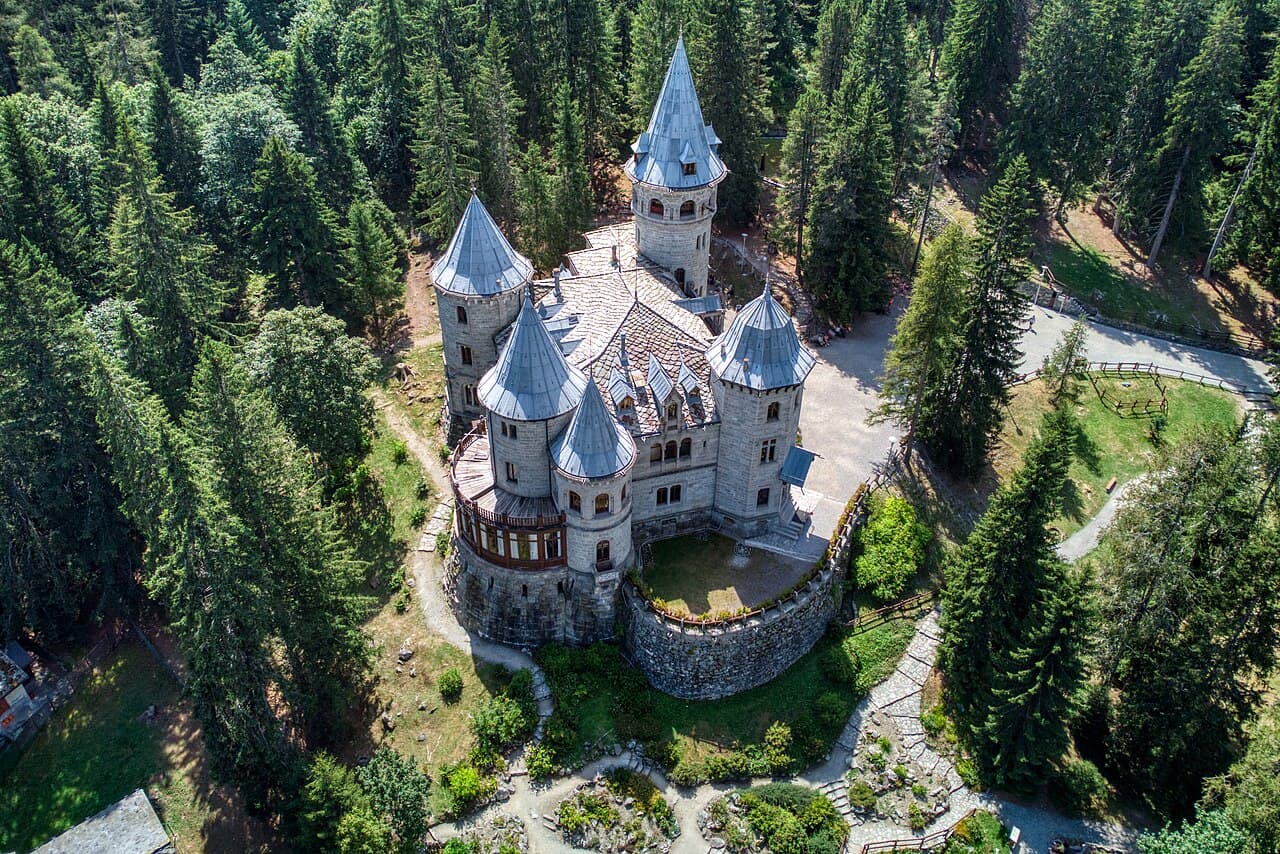
The castle is a three-story hill castle featuring a rectangular floor plan punctuated by an array of window types, including biforas and triforas, which are characteristic of Gothic architecture. These windows, with their multiple openings separated by columns or mullions, contribute to the castle's austere yet elegant facade. The building is distinguished by five towers of varying heights, including an octagonal tower and a central tower crowned by a covered terrace with a spire and dormer windows. This terrace historically served as a lookout point manned by royal carabinieri, underscoring the castle's dual role as a residence and a symbol of authority.
Interior spaces and decoration
The interior of Savoia Castle is richly appointed, reflecting the refined tastes of the Italian monarchy. The ground floor hosts a variety of important rooms including a dining hall, billiard room, multiple lounges, a large semicircular veranda, and an honor hall featuring a striking semicircular double-ramp oak staircase. The woodwork throughout the castle was crafted by Michele Dellera, a Turin-based woodcarver renowned for his intricate panels and coffered ceilings adorned with floral motifs and symbols associated with the House of Savoy and Queen Margherita herself.
Complementing the woodwork are murals and textile designs by Carlo Cussetti, an artist who supplied works for the Royal Household. The main floor contains private apartments designated for Queen Margherita, King Victor Emmanuel III, Queen Elena of Montenegro, Prince Umberto II, and Marchioness Paola Pes di Villamarina, a close confidante of the queen mother. The second floor accommodates guest rooms and provides access to the central tower's covered terrace, while the basement served practical functions such as a cellar.
Innovative features
A particularly unique feature of Savoia Castle is the deliberate separation of the kitchens from the main building, a request made by Queen Margherita to preserve the tranquility of the residence. The kitchens are housed in a separate building approximately 30 meters away, connected to the castle by an underground tunnel equipped with Decauville narrow-gauge rails. This system allowed food to be transported in sealed electric carts directly to an internal elevator, which then lifted meals to the dining room. This innovative solution ensured privacy and comfort, minimizing noise and disturbance within the royal quarters.
Historical context and royal significance
The origins of Savoia Castle are closely tied to Queen Margherita's personal preferences and her desire for a residence that reflected her status and love of the alpine landscape. Before the castle's construction, she frequently stayed at Villa Margherita, owned by Baron Beck-Peccoz, starting in 1889. However, seeking a more commanding and private residence, she commissioned the new castle on Colle Ranzola despite initial opposition from King Umberto I, who preferred the nearby Sarre Castle for hunting.
Tragically, King Umberto I was assassinated in 1900, before the castle's completion in 1904. As queen mother, Margherita used the castle extensively for summers until 1925, making it a cultural hub that hosted prominent figures such as the poet Giosuè Carducci and members of the royal family including her grandson Prince Umberto II. The castle thus became a symbol of continuity and royal presence in the region during a period marked by significant political and social changes in Italy.
After Queen Margherita's death in 1926, the castle was closed for several years. In 1936, it was acquired by industrialist Ettore Moretti from Milan, who preserved the property with respect to its historical character. Eventually, the estate passed to the autonomous region of Valle d’Aosta in 1981, ensuring its preservation and public accessibility.
Surroundings and ancillary buildings
Savoia Castle is surrounded by a large park that includes a small pine forest and a distinctive rock garden featuring alpine botanical species, emphasizing the connection between the castle and its natural environment. Additional structures on the estate include Villa Belvedere, which historically housed guests, caretakers, servants, and royal carabinieri, and the Romitaggio Carducci, a retreat named after the poet who frequented the castle.
The castle’s hillside setting not only offers spectacular panoramic views but also situates it within a landscape that is both rugged and serene, embodying the royal family's appreciation for nature and privacy. Today, Savoia Castle remains a well-preserved monument reflecting the architectural, cultural, and historical heritage of the House of Savoy and the Italian monarchy’s alpine legacy.
Frequently asked questions (FAQ)
- How do I get to Savoia Castle?
- Savoia Castle is located in Gressoney-Saint-Jean, Italy, and can be accessed by car or public transportation. If you are driving, there is parking available nearby. For those using public transport, local buses connect the castle with major towns in the region.
- What is the historical significance of Savoia Castle?
- Savoia Castle, built in the late 19th century, served as a royal residence for the House of Savoy. It reflects the architectural style and cultural influences of the era, making it a significant landmark in Italian history. The castle is also a testament to the royal family's connection to the Aosta Valley and its natural beauty.
- When was Savoia Castle constructed?
- Construction of Savoia Castle began in 1899 and was completed in 1904. It was commissioned by Queen Margaret of Savoy, who sought a summer residence in the picturesque Alps. The castle’s design incorporates elements of neo-Gothic and Alpine architecture, showcasing the romantic style of the period.
- Can I visit Savoia Castle year-round?
- Yes, Savoia Castle is open to visitors throughout the year, although opening hours may vary by season. It is advisable to check the official website for the most current visiting hours and any seasonal events. Guided tours are available to enhance your experience and provide deeper insights into the castle's history.
- Why is Savoia Castle a popular tourist attraction?
- Savoia Castle is popular for its stunning architecture, rich history, and breathtaking mountain views. Visitors are drawn to the castle's beauty and the chance to learn about the royal heritage of the House of Savoy. Additionally, the surrounding area offers numerous outdoor activities, making it an ideal destination for nature lovers.
- Is it possible to take guided tours of the castle?
- Yes, guided tours of Savoia Castle are available, providing guests with an in-depth look at its history and architecture. These tours often include access to various rooms and exhibits within the castle. It is recommended to book your tour in advance, especially during peak tourist seasons.
- What are the ticket prices for Savoia Castle?
- Ticket prices for Savoia Castle vary depending on age and whether you choose a guided tour. Generally, adult tickets are reasonably priced, while discounts are available for children and seniors. It’s best to check the official website for the latest ticket information and any special offers.
- What is the best time to visit Savoia Castle?
- The best time to visit Savoia Castle is during the spring and summer months when the weather is pleasant, and the surrounding gardens are in full bloom. However, autumn also offers beautiful foliage and fewer crowds. Winter visits can be enchanting, but be prepared for colder temperatures and possible snow.
- Are there any nearby attractions to explore?
- Yes, the area surrounding Savoia Castle boasts several attractions, including hiking trails, ski resorts, and charming villages. The picturesque town of Gressoney-Saint-Jean itself offers a rich cultural experience with local shops and restaurants. Additionally, the nearby Monte Rosa massif provides stunning views and outdoor activities year-round.
Photo gallery

Information
Website
Visit websiteSources & official resources
Verify the information above using these authoritative references.
Loading map...
Visitor reviews
No reviews yet. Been here? Write the first review and help other travelers!
Write the first reviewVisited this castle? Share your experience
Your review helps other travelers and adds first-hand knowledge to our encyclopedia.