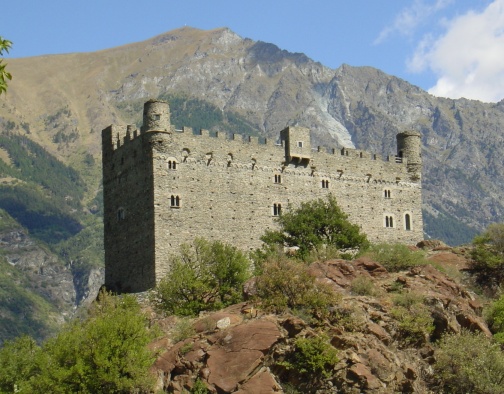
Chenal Castle is a ruined hill castle located in the hamlet of Chenal within the municipality of Montjovet, in the Aosta Valley region of Italy. Constructed probably in the 13th century, this fortress played a significant role in the medieval feudal landscape of the western Alps. The castle's strategic position atop a steep rocky outcrop provided commanding views over the valley, enabling control of key routes and communication with nearby fortifications such as Saint-Germain Castle.
Construction and architectural features
The castle was built with a broadly rectangular floor plan, typical of many high medieval fortifications in the region. Its walls were primarily constructed from local stone materials, notably serpentinite, a greenish rock abundant in the area but prone to flaking and structural weakness. To reinforce critical structural points such as corners and entrance arches, builders incorporated large blocks of Mont Blanc granite. These granite blocks, often left roughly shaped or in a natural state, were transported to the site as glacier-carried erratic boulders, providing necessary strength to the fortress.
One of the most prominent surviving elements is the remains of a square tower measuring approximately six to seven meters on each side. This tower served as a watchtower overlooking the valley below, a vital route for regional access and defense. The external walls, though damaged, still trace the original layout, allowing insight into the castle's overall size and defensive design. Within the enclosure, traces of ancillary buildings suggest the castle functioned as a self-sustaining military post, with facilities for the lords of Chenal to manage their estate and control movement through the valley.
Historical context and ownership
The castle was initially constructed by the lords of Chenal, a noble family native to the area, reflecting the feudal structures of the high medieval period. In 1261, ownership transferred to the influential Challant family through the marriage of Alexia, the last lord of Chenal's sole daughter, to Ébal I (Ebalo I) of Challant. This alliance strengthened control over the passes between Chenal and Montjovet castles, consolidating regional power.
Throughout the medieval period, Chenal Castle served as a military checkpoint and strategic outpost. Its position allowed for effective surveillance and defense of the valley routes. In 1438, the castle was sold by Count François de Challant to Amadeus VII of Savoy, marking a shift in regional control to the powerful House of Savoy, which was expanding its territories in the western Alps.
Archaeological significance and later history
The area surrounding Chenal Castle is rich in archaeological remains, including prehistoric petroglyphs and cup-marked stones, as well as probable medieval crosses. These findings indicate the long-term strategic and cultural importance of the site beyond its medieval military function.
After centuries of abandonment, the castle fell into ruin and eventually became state property. Today, the remains offer valuable insight into medieval military architecture and feudal dynamics in the Aosta Valley.
Preservation and current condition
Chenal Castle is currently in a state of ruins, with only partial walls and the square tower remaining visible. The use of serpentinite in construction has contributed to the gradual deterioration, as the rock tends to flake under weight and weathering. However, the presence of Mont Blanc granite blocks at key structural points has helped preserve some elements.
The castle's location on a steep rocky outcrop continues to emphasize its defensive advantages, offering panoramic views of the valley and maintaining its historical silhouette within the landscape.
Architectural and historical significance
Chenal Castle exemplifies the high medieval military architecture of the Aosta Valley, illustrating the use of local materials adapted to challenging terrain. Its association with the lords of Chenal and the Challant family connects it to important regional noble lineages and feudal politics. The castle's role as a strategic checkpoint highlights the military and administrative control exercised over alpine passes during the medieval period.
Though now a ruin, Chenal Castle remains a significant cultural landmark, reflecting the complex history of territorial control, marriage alliances, and defense strategies in the western Alps.
Frequently asked questions (FAQ)
- How do I get to Chenal Castle?
- Chenal Castle is located in Montjovet, Italy, easily accessible by car or public transport. The nearest train station is in Aosta, from which you can take a bus or taxi to the castle.
- What is the historical significance of Chenal Castle?
- Chenal Castle dates back to the 13th century and played a crucial role in the defense of the region during the Middle Ages. Its strategic location allowed it to oversee important trade routes, making it a vital stronghold in the area.
- When was Chenal Castle built?
- Construction of Chenal Castle began in the early 1200s, with various additions and renovations occurring over the centuries. The castle reflects the architectural styles of its time, showcasing the evolution of medieval fortifications in the region.
- Can I visit Chenal Castle year-round?
- Yes, Chenal Castle is open to visitors throughout the year, but it's recommended to check for any seasonal closures or special events. The best time to visit is in spring and fall when the weather is pleasant and the surrounding nature is at its most beautiful.
- Why is Chenal Castle a popular tourist attraction?
- Chenal Castle attracts visitors due to its rich history, stunning architecture, and breathtaking views of the surrounding mountains. It offers a unique glimpse into the medieval past and is a perfect destination for history enthusiasts and nature lovers alike.
- Is it possible to take guided tours of Chenal Castle?
- Yes, guided tours are available and highly recommended to fully appreciate the castle's history and architecture. Knowledgeable guides provide in-depth insights into the castle's past and its significance in the region.
- What are the ticket prices for Chenal Castle?
- Ticket prices for Chenal Castle are quite reasonable, with discounts available for students and seniors. It's best to check the official website for the most current pricing and any special offers.
- What are the opening hours for Chenal Castle?
- Chenal Castle typically opens at 10 AM and closes at 6 PM, but hours may vary seasonally. Always check the castle's official website or contact them directly for the most accurate information before your visit.
- Are there any nearby attractions to Chenal Castle?
- Yes, there are several nearby attractions including the picturesque village of Montjovet and other historical sites like the Fort Bard. The scenic surroundings also offer opportunities for hiking and exploring the beautiful Aosta Valley.
Information
Loading map...
Visitor reviews
No reviews yet. Been here? Write the first review and help other travelers!
Write the first reviewVisited this castle? Share your experience
Your review helps other travelers and adds first-hand knowledge to our encyclopedia.