Sauchie Tower
Sauchie Tower stands as a significant example of a 15th-century Scottish fortified residence located near Alloa, Scotland. Built by the influential Schaw family, the tower reflects the architectural and social ambitions of Scottish nobility during the Late Medieval period. Its history intertwines with notable historical figures and events, including royal visits and political appointments, marking it as a site of enduring heritage within Scotland.
The origins of Sauchie Tower trace back to the early 15th century when the estate passed into the hands of Sir James Schaw of Greenock through marriage to Mary de Annand, heiress of the Sauchie lands. The land itself had royal provenance, having been granted to the Annand family in 1321 by King Robert the Bruce. Following this acquisition, Sir James Schaw initiated the construction of the tower, originally known as Devon Tower, to serve as a fortified family stronghold and symbol of their rising prominence in Scottish society.
Architectural features and layout
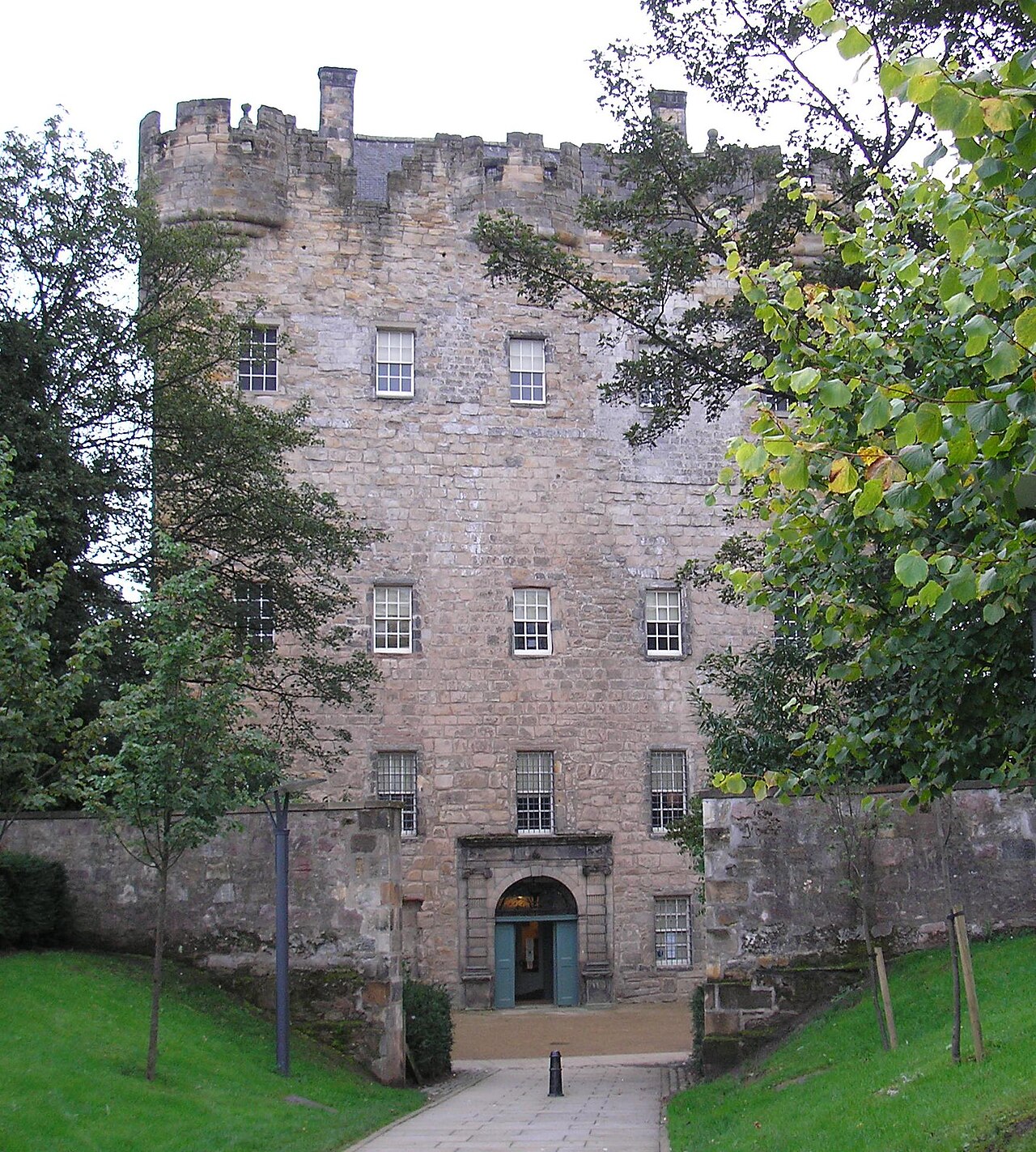
Sauchie Tower is built on an almost square footprint measuring approximately 11.5 by 10.3 metres (38 by 34 feet). The structure rises to four storeys, crowned by a parapet walk supported by corbels and featuring rounded bartizan turrets at each corner, which provided defensive vantage points. The distinctive hexagonal cap-house on the northwest corner with its pyramidal roof encloses the main spiral staircase, a typical feature in Scottish tower houses facilitating vertical circulation within a compact footprint.
Constructed from reddish sandstone ashlar blocks, the tower's walls are notably thick, varying from 1.6 to 2 metres in most areas, with the western wall thickening to about 3 metres to enhance defense. The substantial wall thickness was essential for withstanding attacks and supporting the heavy stone structure above.
The interior originally included a vaulted basement housing a well, ensuring a reliable water supply during sieges. The main hall was located on the first floor, a common medieval design separating the living quarters from the ground-level defensive spaces. Opposite the entrance, a guard chamber was positioned to monitor and protect the doorway. The tower's design reflects the dual role of such structures as both residences and fortifications.
Defensive systems and surrounding estate
The tower was originally surrounded by a moat and defensive walls, with a drawbridge controlling access across the water, enhancing its security. Archaeological excavations have revealed evidence of a second line of defensive walls beyond the initial enclosure, indicating a complex fortification system that included outbuildings, though only fragments of these survive.
Over time, the estate evolved to include additional buildings such as a house built within the courtyard around 1631 by Alexander Schaw and a nearby residence known as Schawpark, constructed around 1700. These structures illustrate the transition from purely defensive architecture to more domestic and agricultural uses.
By the 18th and 19th centuries, sheds and animal shelters appeared near the tower, reflecting the estate's shift towards agricultural functions. The surrounding lands also saw industrial activity, including coal mining in the 1930s, which led to the demolition of some estate buildings like Old Sauchie House.
Historical significance and royal connections
The Schaw family’s prominence is highlighted by the appointment of Sir James Schaw’s son as Governor of Stirling Castle by 1460, placing the family within Scotland’s political and military elite. The tower’s importance is further underscored by a visit from Mary, Queen of Scots in May 1565, demonstrating its status as a noble residence of note during the 16th century.
Throughout the early modern period, the estate remained a key family residence, witnessing expansions and adaptations that reflect changing architectural tastes and social needs.
Decline, ruin, and preservation efforts
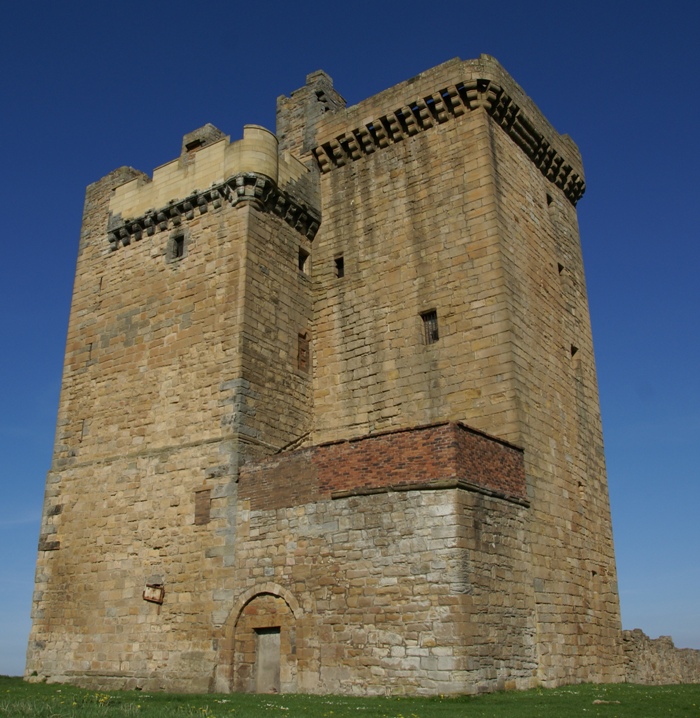
In the mid-18th century, around the 1750s, a fire is believed to have gutted Sauchie Tower, ending its use as a residence. The 19th century saw the loss of the roof and corner turrets, reducing the tower to a ruin. Despite this, the core structure remains largely intact compared to other regional towers such as Clackmannan Tower.
Archaeological investigations in the 1980s and early 2000s have provided valuable insights into the tower’s original layout and defensive features. These efforts have been supported by groups like the Friends of Sauchie Tower, established in 2002, which have worked to clear the site, conduct research, and raise public awareness.
The tower is now protected as a Scheduled Ancient Monument since 1933 and is under the care of the Clackmannanshire Heritage Trust. Although restoration has been proposed, the tower remains a preserved ruin, offering a tangible connection to Scotland’s medieval architectural and social history.
Comparative significance and legacy
Compared to other Scottish tower houses, Sauchie Tower is notable for its relatively well-preserved fabric and its combination of defensive and residential features. The thick walls, bartizans, and cap-house staircase exemplify typical Late Medieval Scottish tower house architecture. Its association with the Schaw family and royal figures adds to its historical importance.
Today, the tower serves as a cultural landmark within Clackmannanshire, attracting interest from historians, archaeologists, and visitors interested in Scotland’s medieval heritage. Its story reflects broader themes of feudal power, architectural evolution, and the challenges of preserving historic structures in changing economic and social contexts.
Frequently asked questions (FAQ)
- How do I get to Sauchie Tower?
- Sauchie Tower is located in the United Kingdom, and is easily accessible by car or public transport. If you're coming by car, you can find parking nearby, and there are bus services that connect to local towns and cities.
- What is the historical significance of Sauchie Tower?
- Sauchie Tower dates back to the 15th century and is a remarkable example of Scottish tower house architecture. It served as a stronghold for the local aristocracy and has witnessed significant historical events in the region.
- When was Sauchie Tower built?
- Construction of Sauchie Tower began in the late 1400s, making it a prominent structure during the medieval period. Its design reflects the defensive needs of the time, showcasing the architectural styles prevalent in Scotland during that era.
- Can I enter Sauchie Tower?
- Yes, visitors are welcome to explore Sauchie Tower during its opening hours. Guided tours are often available, providing insights into the tower's history and architecture.
- Why is Sauchie Tower a popular destination for tourists?
- Sauchie Tower is popular for its rich history and stunning architecture, drawing visitors interested in Scotland's medieval past. Additionally, the picturesque surroundings enhance its appeal, making it a great spot for photography and exploration.
- Is it possible to visit Sauchie Tower year-round?
- Sauchie Tower typically has seasonal opening hours, so it's best to check in advance for availability. The castle is most enjoyable during the spring and summer months when the weather is pleasant.
- What are the ticket prices for visiting Sauchie Tower?
- Ticket prices for Sauchie Tower are generally affordable, with discounts available for children and seniors. Check the official website or visitor center for the most up-to-date pricing information.
- What are the opening hours for Sauchie Tower?
- Opening hours for Sauchie Tower vary by season, usually operating from late morning until late afternoon. It's advisable to confirm the hours before your visit to ensure you have enough time to explore.
- What are some nearby attractions to Sauchie Tower?
- Near Sauchie Tower, visitors can explore other historical sites, beautiful parks, and local museums. The surrounding area offers a variety of outdoor activities and scenic walks, perfect for those looking to experience the natural beauty of Scotland.
Information
Loading map...
Visitor reviews
No reviews yet. Been here? Write the first review and help other travelers!
Write the first reviewVisited this castle? Share your experience
Your review helps other travelers and adds first-hand knowledge to our encyclopedia.