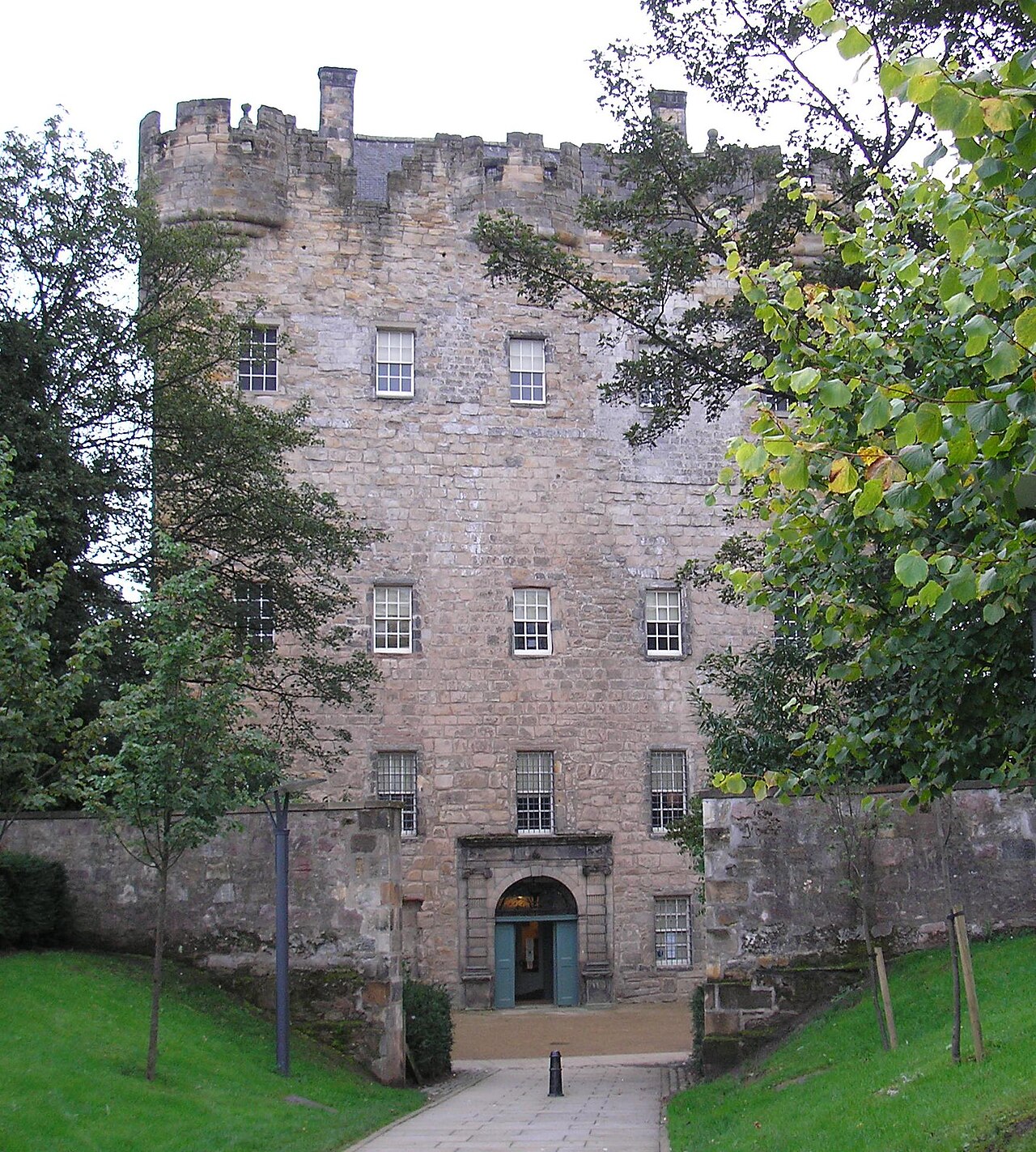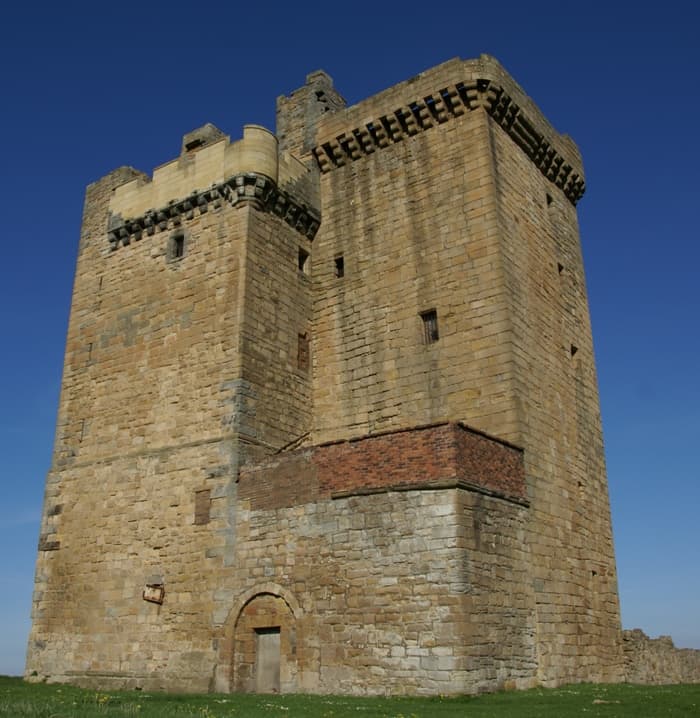
Clackmannan Tower
Clackmannan Tower is a significant medieval hill castle located in the town of Clackmannan, Scotland. Perched prominently on King's Seat Hill, it overlooks the scenic Forth valley, commanding strategic views that underscore its historical military and residential importance. The castle's origins trace back to the 13th century, initially serving as a royal hunting lodge for Scottish monarchs, including David II. This early function reflects the site's longstanding association with Scottish royalty and aristocracy.
The castle's evolution from a modest hunting lodge to a substantial fortified residence exemplifies the architectural and social developments of medieval Scotland. Around 1365, a relative of the famous Robert the Bruce, also named Robert Bruce, constructed the first stone tower house on the estate. This initial building was a simple two-story structure accessed by an external staircase, a common defensive feature of tower houses designed to protect inhabitants from attack.
Architectural development through the centuries
14th and 15th centuries: expansion and fortification
During the 14th century, the original tower was expanded significantly. In the 15th century, the main keep was raised by two additional floors, enhancing its vertical dominance and defensive capabilities. At the same time, a new south wing was added, rising to five stories and creating the castle's distinctive L-shaped layout. This wing included important domestic spaces such as a kitchen on the first floor and a private chamber with a finely crafted fireplace and a built-in lavabo for washing, which drained externally—a rare feature indicating advanced domestic planning.
16th and 17th centuries: defensive enhancements and changes in access
The 16th century saw further residential expansion with the addition of a large gabled house southwest of the tower, broadening the living quarters. In the 17th century, the castle's defensive features were notably enhanced. The main entrance was relocated from the first floor to ground level on the south wing, featuring a wide, imposing doorway topped with a triangular gable. A broad, straight staircase was installed, leading to a corridor that likely served as a guardroom mezzanine. This period also introduced a curtain wall, a drawbridge, and a moat approximately two meters wide and one meter deep, reflecting ongoing concerns about security in a turbulent era.
Structural features and defensive architecture
The castle's core is a five-story tower house built mainly of rubble stone with finely cut ashlar blocks, standing about 24 meters tall. The original keep measures roughly 7 by 5.5 meters internally, with thick walls nearly two meters wide, providing formidable defense and structural support. The parapet is crowned with defensive corbels and machicolations, openings through which defenders could drop projectiles or boiling substances on attackers below. The south wing's defensive features are more roughly constructed but include important domestic and protective elements.
The castle's slate roof, a modern addition, helps protect the structure from weathering. The 17th-century entrance and stairway between the tower and south wing serve both functional and defensive purposes. The rooftop terrace above the south wing's lower part offers vantage points for observation and defense.
Historical significance and ownership
Clackmannan Tower remained in the hands of the Bruce family until 1796. It was abandoned in 1791 after the death of Lady Catherine Bruce, who is remembered for knighting the famed Scottish poet Robert Burns during his 1787 visit. The nearby gabled house was demolished by 1815, with its stones repurposed for local construction, including a parish church.
In the 20th century, mining activities in the region caused structural damage, including partial collapse of the eastern wall. Since the 1950s, the castle has been preserved and managed by Historic Environment Scotland. However, public access to the interior is currently restricted due to safety concerns.
Preservation and current condition
Despite damage from mining subsidence, much of the main structure survives, including the distinctive L-shaped footprint formed by the rectangular keep and south wing. The surrounding curtain wall, moat, and drawbridge remnants highlight the castle's layered defensive history. Preservation efforts have stabilized the building, but parts such as the east wall have suffered partial collapse.
Clackmannan Tower stands as a testament to Scotland's medieval architectural heritage and the evolving needs of its inhabitants through centuries of social and political change. Its commanding position and complex structural history make it an important cultural landmark in the region.
Frequently asked questions (FAQ)
- What is Clackmannan Tower known for?
- Clackmannan Tower, a historic structure in Scotland, is renowned for its impressive medieval architecture and its role in Scottish history. It dates back to the 14th century and is one of the oldest surviving tower houses in the country, offering insights into the feudal era.
- When was Clackmannan Tower built?
- Clackmannan Tower was constructed in the early 14th century, specifically around the year 1400. It served as a residence for the local nobility and has witnessed significant historical events over the centuries.
- How do I visit Clackmannan Tower?
- Visitors can access Clackmannan Tower by following local signs leading to the site. It is recommended to check the opening hours in advance, as the tower may have specific visiting times or be subject to guided tours.
- What are the opening hours for Clackmannan Tower?
- The opening hours for Clackmannan Tower can vary seasonally, so it's best to consult the official website or local tourist information for the most accurate details. Typically, the tower is open during daylight hours, particularly in the warmer months.
- Is there an entrance fee to visit Clackmannan Tower?
- There is usually no entrance fee to visit Clackmannan Tower, as it is often part of public heritage sites. However, donations are appreciated to help with the maintenance and preservation of the site.
- Can I take photographs inside Clackmannan Tower?
- Yes, visitors are generally allowed to take photographs inside and outside of Clackmannan Tower, as long as it is for personal use. However, it's always good to check for any specific restrictions upon your arrival.
- What is the best time to visit Clackmannan Tower?
- The best time to visit Clackmannan Tower is during the spring and summer months when the weather is more favorable, and the surrounding gardens are in full bloom. Additionally, this period often features more guided tours and events.
- Are there any nearby attractions to Clackmannan Tower?
- Yes, Clackmannan Tower is near several attractions, including the historic town of Clackmannan itself and the beautiful Ochil Hills. Visitors can also explore local parks and walking trails that offer scenic views of the area.
- Is Clackmannan Tower accessible for individuals with mobility challenges?
- Clackmannan Tower may have limited accessibility due to its historical nature and the structure's original design. It's advisable to contact the site in advance to inquire about specific accommodations for visitors with mobility challenges.
Photo gallery

Information
Website
Visit websiteSources & official resources
Verify the information above using these authoritative references.
Loading map...
Visitor reviews
No reviews yet. Been here? Write the first review and help other travelers!
Write the first reviewVisited this castle? Share your experience
Your review helps other travelers and adds first-hand knowledge to our encyclopedia.