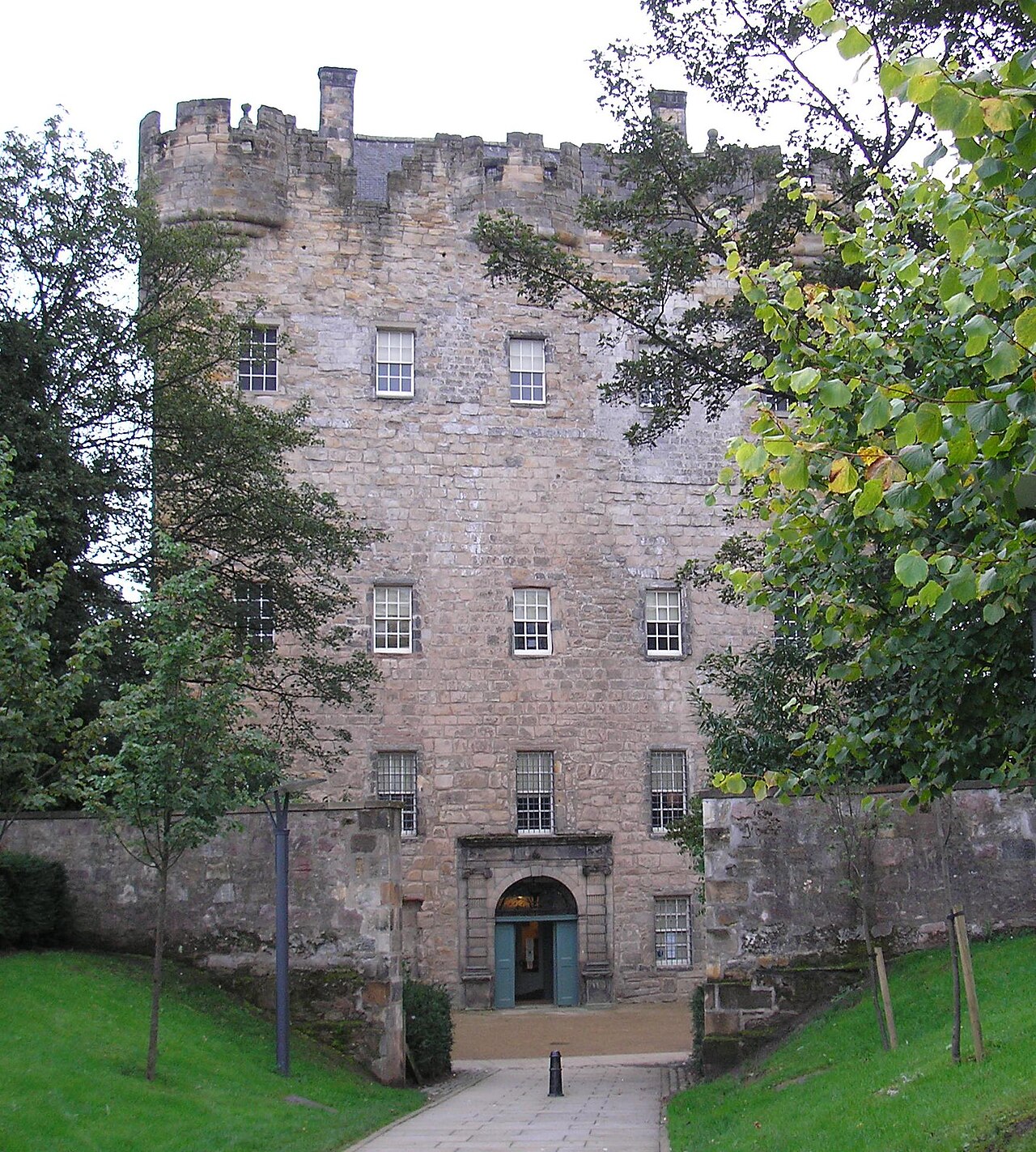
Menstrie Castle
Menstrie Castle is a historically significant Renaissance manor house located in Menstrie, Scotland. Built around 1560 by the Alexander family, a branch of the Clan MacAlister, the castle originally began as a small L-plan tower house. Over time, it was expanded in the 17th century into a U-plan house, with a section of curtain wall enclosing a courtyard, reflecting architectural adaptations typical of Scottish manor houses evolving from defensive structures to more comfortable residences.
Architectural evolution and features
The initial construction of Menstrie Castle as a three-storey tower house exemplifies the transitional architecture of the Scottish Renaissance period, combining elements of fortification with domestic comfort. The castle's L-plan design was a common defensive layout, providing flanking fire along the walls. The 17th-century extension into a U-plan layout created additional living space and introduced a courtyard, which was enclosed by a curtain wall, enhancing privacy and security.
Though originally fortified, the castle's later modifications reflect a shift from military defense to residential use, typical of the period's architectural trends. The castle’s restoration in the mid-20th century preserved many of these features, maintaining the integrity of its Renaissance character while adapting it for modern use.
Historical significance and notable figures
Menstrie Castle is best known as the birthplace of Sir William Alexander (c.1577–1644), a prominent Scottish poet, statesman, and colonial promoter. Alexander rose to prominence in the court of James VI of Scotland, eventually joining the Privy Council of Scotland in 1615 and becoming Principal Secretary of State in 1626. In 1633, he was ennobled as the Earl of Stirling.
His most notable historical role was as the appointed governor of Nova Scotia in 1621, a vast territory in North America that included present-day Canadian provinces of Nova Scotia and New Brunswick, as well as the Gaspé Peninsula. To encourage colonization, Alexander devised the Baronetage of Nova Scotia in 1624, a scheme selling baronetcies to fund settlers. Despite its ambition, the project was financially unsuccessful, and Nova Scotia was returned to French control in 1632.
Alexander died bankrupt in London in 1644, but his legacy remains intertwined with early Scottish colonial efforts and the history of Nova Scotia.
Menstrie Castle during the Wars of the Three Kingdoms
The castle suffered damage during the turbulent period of the English Civil War and the associated conflicts in Scotland known as the Wars of the Three Kingdoms. In 1645, it was burned by the Royalist forces under James Graham, 1st Marquess of Montrose. Following this, the property was sold in 1648 to James Holborne of Menstrie, a major general in the Scottish army with a complex military career during the wars.
Opposite the castle once stood Windsor House, a now-demolished secondary laird's residence. A heraldic stone panel from Windsor House, bearing the motto DECUS MEUM VIRTUS, was preserved and incorporated into the gable end of a later residential building on the site.
Later ownership and decline
In 1719, much of the Menstrie estate was sold, though the Holborne family retained the smaller house, likely as a dower house. The castle itself was acquired by George Abercromby of Tullibody in 1719, whose family held the estate until 1924. The Abercromby family included Ralph Abercromby, a major British military figure born at Menstrie Castle in 1734.
By the mid-18th century, the family moved to Tullibody House, leaving Menstrie Castle empty. This led to gradual deterioration, with the building falling into disrepair by the early 20th century.
Restoration and modern use
After World War II, the castle was in a state of significant decay. The Scottish actor and conservationist Moultrie Kelsall spearheaded a campaign to secure funding and protection for the castle’s restoration. The project was undertaken by Clackmannanshire County Council under the supervision of county architect William Higgins Henry (1905–1984).
The restoration, completed by 1964, won a Scottish Civic Trust award in 1962 for its sensitive approach to preserving the castle’s historical fabric. The building was converted into four residential flats, and new housing was constructed in the adjacent courtyard area.
Today, two rooms within Menstrie Castle host an exhibition that commemorates the historical links between Menstrie, William Alexander, and Nova Scotia. One of these rooms displays the arms of all the Baronets of Nova Scotia. The exhibition is managed by the Menstrie Community Council, providing educational insight into the castle’s colonial connections and local heritage.
Architectural and cultural heritage
Menstrie Castle’s architecture reflects the transitional period of Scottish Renaissance manor houses, combining defensive features with residential comfort. Its three-storey structure, curtain walls, and courtyard layout are characteristic of the era’s evolving castle design.
As a site linked to significant historical figures and events, the castle holds cultural importance in Scotland’s heritage. The association with early colonial ventures in North America adds an international dimension to its historical relevance.
The castle’s preservation and adaptive reuse demonstrate successful heritage conservation, balancing historical integrity with contemporary needs.
Frequently asked questions (FAQ)
- What is Menstrie Castle known for?
- Menstrie Castle is renowned for its impressive architecture and historical significance as a 16th-century tower house. It serves as a prominent example of the fortified structures that once dotted the Scottish landscape, reflecting the region's turbulent past and noble heritage.
- When was Menstrie Castle built?
- Menstrie Castle was constructed in the late 16th century, specifically around 1565. It was built by the noble family of the Clarks and has since become an important part of the local history and culture.
- Can I visit Menstrie Castle?
- Yes, Menstrie Castle is open to visitors, offering guided tours that delve into its rich history and architectural details. It’s advisable to check the official website for specific visiting hours and any special events that may be taking place.
- What are the opening hours for Menstrie Castle?
- Menstrie Castle typically opens to the public from 10 AM to 5 PM during the summer months. However, hours may vary seasonally, so it's recommended to verify current opening times before planning your visit.
- Is Menstrie Castle accessible for individuals with mobility challenges?
- Menstrie Castle has limited accessibility due to its historical structure and the nature of its architecture. Visitors with mobility challenges are encouraged to contact the castle management in advance to discuss specific accommodations.
- What is the best time to visit Menstrie Castle?
- The best time to visit Menstrie Castle is during the late spring and summer months when the weather is milder, and the gardens are in full bloom. Additionally, many events and activities are hosted during this time, enhancing the visitor experience.
- Are there any nearby attractions to explore?
- Yes, nearby attractions include the scenic Ochil Hills and the historic town of Alloa, which features several charming sites to explore. Visitors can also enjoy walking trails and local eateries that provide a taste of Scottish culture.
- How much do tickets cost for Menstrie Castle?
- Ticket prices for Menstrie Castle vary depending on the type of tour and any special exhibitions. Generally, adult tickets are affordable, with discounts available for students and seniors; check the official website for detailed pricing information.
Information
Loading map...
Visitor reviews
No reviews yet. Been here? Write the first review and help other travelers!
Write the first reviewVisited this castle? Share your experience
Your review helps other travelers and adds first-hand knowledge to our encyclopedia.