Satlel Castle
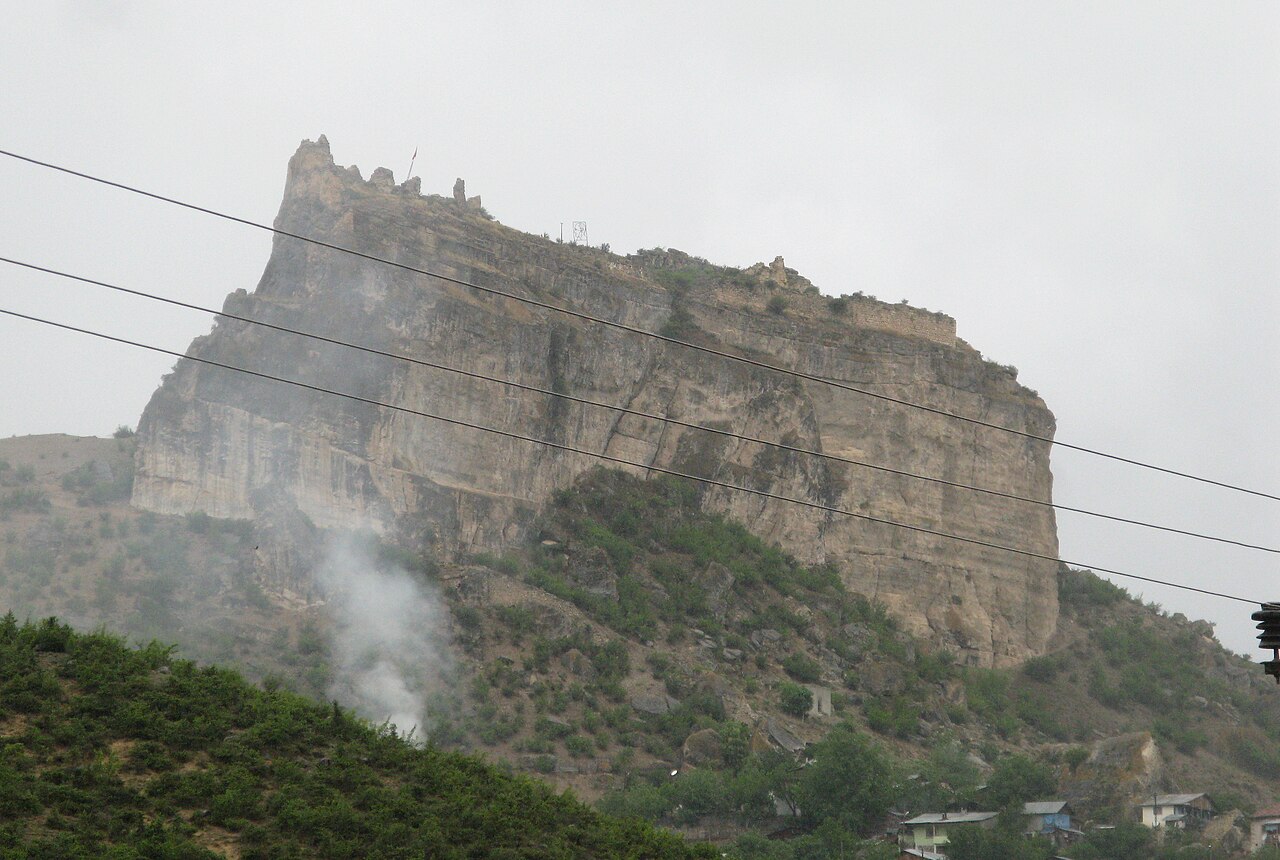
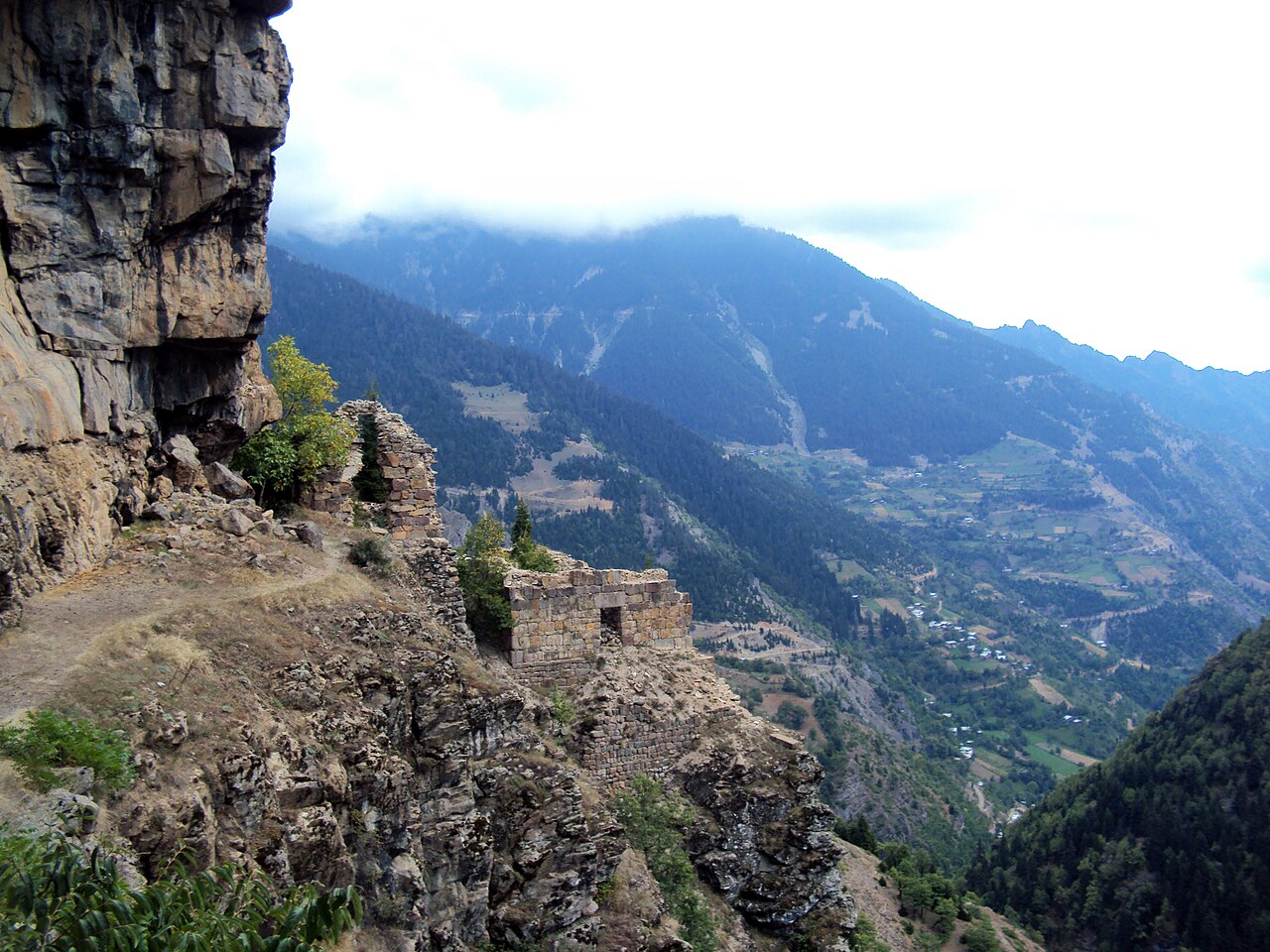
Satlel Castle, also known locally as Satlel Kalesi or Şavşat Kalesi, is a remarkable medieval fortress perched on a hill near the town of Şavşat in the Artvin province of northeastern Turkey. This hill castle commands strategic views over the confluence of the Mere and Shavsheti rivers, highlighting its historical role as a defensive stronghold controlling important regional routes. The castle's origins trace back to the early medieval period, with its construction attributed to the Georgian Bagratid dynasty in the 9th century. Its architectural features and rubble masonry construction closely resemble other fortifications in the region built by the Georgian civilization, underscoring its cultural and historical significance within the Kingdom of Georgia's sphere of influence.
Historical context and strategic importance
The earliest documented mention of Satlel Castle appears in the year 1028, recorded by the Georgian chronicler Sumbat Davitisdze. He credits the construction of the fortress to Saba Mtbevari, who organized local defenders to resist an incursion by the Byzantine general Parkimanos. This early history highlights the castle's initial function as a vital military bastion during regional conflicts between Georgian and Byzantine forces. Satlel Castle was strategically positioned to oversee and control key routes connecting the Shavsheti region with the adjacent Klarjeti area and the Adjara valley, making it a critical asset for military and administrative control in the Caucasus frontier.
Throughout its history, Satlel Castle witnessed shifting political dominions. In the 12th century, it came under the control of the Seljuk Atabegs, regional governors appointed by the Seljuk Empire. This period saw the castle's adaptation to new administrative and military needs. Subsequently, the fortress was integrated into the Ottoman frontier defenses, serving as a base for local Georgian beys—regional leaders who maintained a degree of autonomy under Ottoman suzerainty. The castle remained in use until the early 19th century, after which it fell into neglect following the Russian occupation of the region in 1878.
Architectural features and layout
Satlel Castle is built predominantly from local stone bound with a traditional mortar known as kiri, carefully following the natural contours of the roughly triangular rocky hill on which it stands. The fortress covers approximately 4,000 square meters, offering commanding views of the surrounding valleys and river junction.
The most prominent architectural feature is a tall, trapezoidal-shaped tower on the western side, rising to a height of 19 meters with six floors. This tower’s semicircular interior design was specifically intended for extensive surveillance of the nearby landscape and the castle grounds, playing a crucial role in the fortress’s defense. This unique trapezoidal form distinguishes it from typical medieval towers in the region.
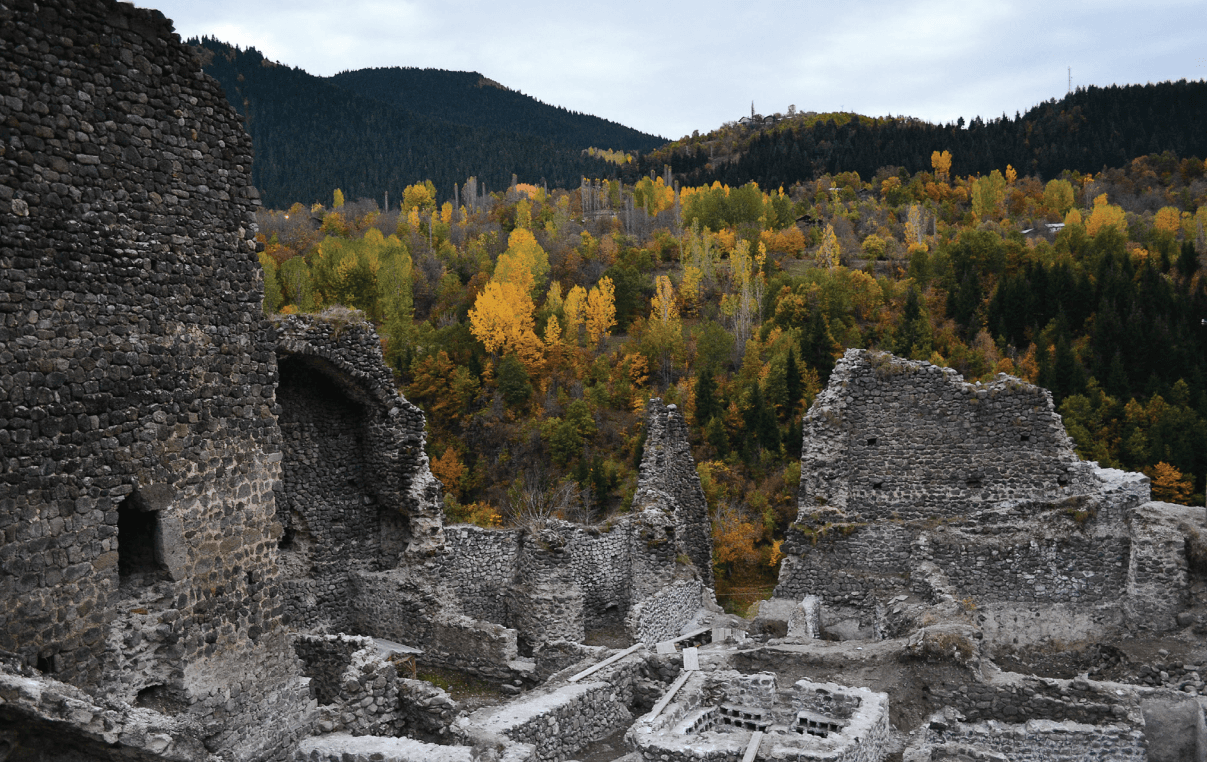
Much of the surrounding defensive walls remain intact, including sections that once housed dungeons, attesting to the fortress’s role in security and military detention. Within the castle complex, the remains of a church on the northern side reflect the religious dimension of the site, indicating that it was not only a military fortress but also a center for spiritual life.
Additional structures within the fortress include what is believed to have been a bey’s mansion, a grand hall for official gatherings, a wine cellar, and a warehouse for pharmaceuticals. These buildings reveal the multifunctional nature of the castle, serving military, residential, and administrative purposes across different historical periods. Architectural elements show a blend of styles, with some features dating to the late medieval period (14th–15th centuries) and others reflecting Ottoman or Seljuk modifications.
Archaeological discoveries and preservation
Recent archaeological excavations at Satlel Castle have unearthed a variety of artifacts that provide insight into its long history of occupation. Among the finds are gold coins from the reign of Suleiman the Magnificent, cannonballs, and ceramic vessels, which attest to the castle’s active use during the early modern period. These discoveries enrich the understanding of the site’s military and economic significance during Ottoman times.
Although the castle suffered stone removal and quarrying in the 19th century following the Russian occupation, many structural elements remain preserved in situ. The castle’s condition today is considered partially preserved, with ongoing archaeological work revealing further details about its complex history. Visitors to Satlel Castle can observe exposed storage jars and architectural details uncovered during recent digs, offering a tangible connection to the site’s multifaceted past.
Visiting satlel castle
Satlel Castle is freely accessible to the public, inviting visitors to explore its historic walls and towers. The castle’s elevated position provides spectacular views of the surrounding Artvin landscape, making it a rewarding destination for history enthusiasts and tourists alike. Although the site is not extensively developed for tourism, the presence of ongoing archaeological work adds an element of discovery and educational interest.
Visitors are encouraged to appreciate the castle’s layered history, from its Georgian origins through Seljuk and Ottoman periods, reflected in its diverse architectural features and artifacts. The castle’s location near Şavşat town makes it convenient for travelers exploring the cultural heritage of northeastern Turkey.
Frequently asked questions (FAQ)
- How do I get to Satlel Castle?
- Satlel Castle is located in Şavşat, Turkey, and can be reached by car or public transport from nearby cities. The closest major city is Artvin, from where you can take a bus or a taxi to Şavşat. Once in Şavşat, local signs will guide you to the castle.
- What is the historical significance of Satlel Castle?
- Satlel Castle dates back to the Byzantine period and has a rich history as a defensive stronghold in the region. It played a crucial role in protecting the area from invasions and served as a residence for various local rulers. The castle's architecture reflects the strategic military designs of its time.
- When was Satlel Castle built?
- The exact date of construction for Satlel Castle is not definitively recorded, but it is believed to have been built in the 9th century during the Byzantine era. Over the centuries, it has undergone various modifications and restorations, preserving its historical essence.
- Can I visit Satlel Castle year-round?
- Yes, Satlel Castle is open to visitors throughout the year. However, it is advisable to check local weather conditions and accessibility, especially during the winter months when snowfall may hinder access. The best visiting experience is typically during the spring and autumn when the weather is mild.
- Why is Satlel Castle a popular tourist attraction?
- Satlel Castle attracts visitors due to its stunning views of the surrounding landscape and its unique historical architecture. It offers a glimpse into the region's past and is an ideal spot for photography and exploration. Additionally, its location near other attractions makes it a great stop on a travel itinerary.
- Is it possible to enter the castle?
- Yes, visitors are allowed to enter the castle grounds. While some areas may be restricted for safety reasons, exploring the castle's exterior and enjoying the panoramic views is highly encouraged. Guided tours may also be available to enhance your experience.
- What are the opening hours for Satlel Castle?
- Satlel Castle is generally open to visitors from 9 AM to 7 PM during the summer months and shorter hours in the winter. It is recommended to check local listings or contact the tourism office for the most current opening hours before your visit.
- Are there any nearby attractions to visit?
- Yes, there are several nearby attractions, including the picturesque Şavşat Lake and the ancient village of Şavşat. The region is known for its beautiful natural landscapes, hiking trails, and cultural heritage sites, making it a perfect destination for outdoor enthusiasts and history buffs alike.
- What are the ticket prices for Satlel Castle?
- Entry to Satlel Castle is typically free, but there may be a small fee for guided tours or special events. It is advisable to check with local tourism information for any updates on fees or special offers before your visit.
Photo gallery

Information
Loading map...
Visitor reviews
No reviews yet. Been here? Write the first review and help other travelers!
Write the first reviewVisited this castle? Share your experience
Your review helps other travelers and adds first-hand knowledge to our encyclopedia.