Sasso Corbaro
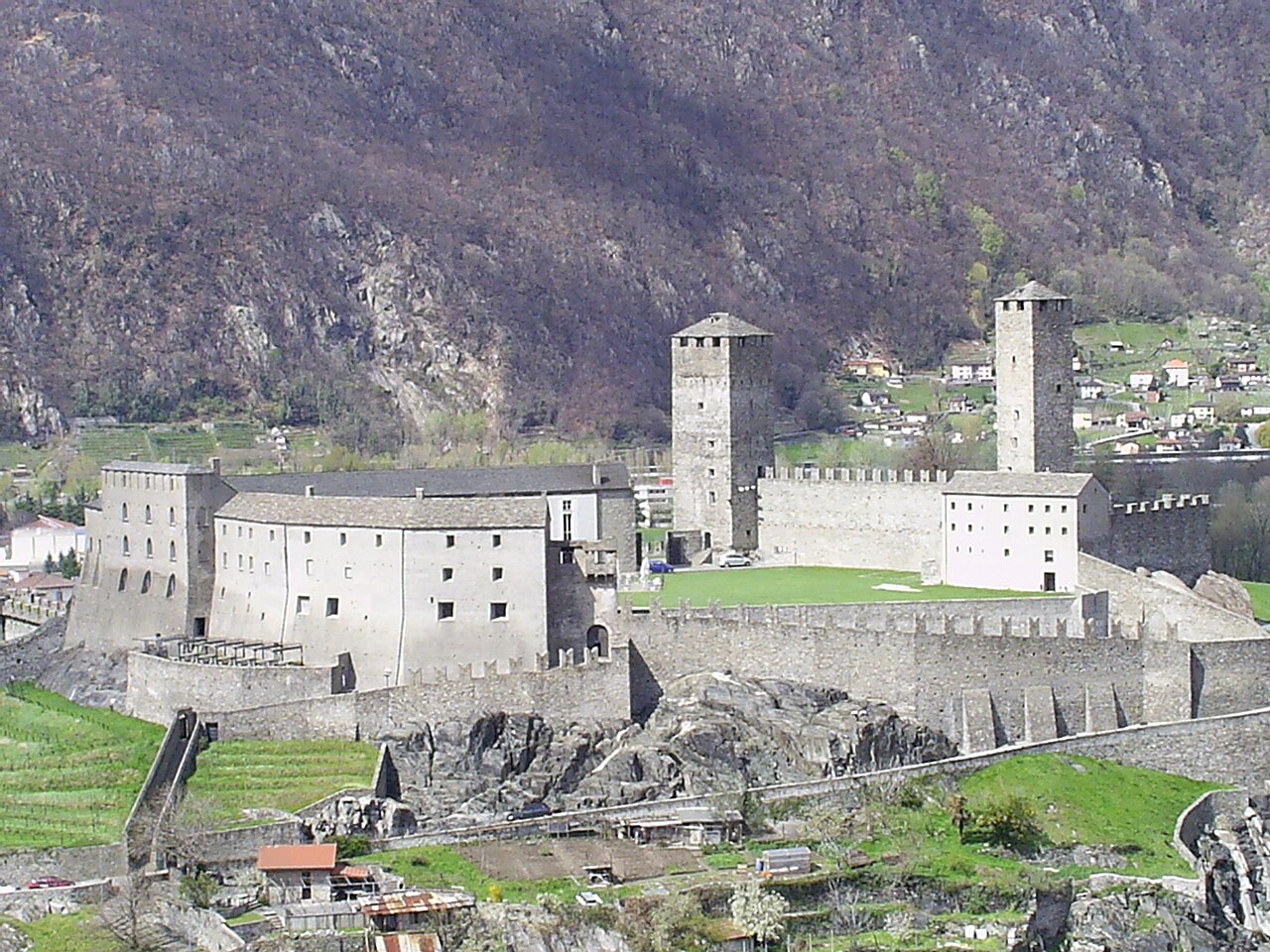
Sasso Corbaro Castle stands prominently on a rocky hill about 230 meters above the plain of Bellinzona in the Swiss canton of Ticino. This late medieval fortress was constructed in 1478-1479 by the Duchy of Milan to close a strategic gap in the defenses of the Ticino Valley following the Battle of Giornico. It exemplifies the military architecture of the period with its geometric simplicity and robust defensive elements.
Historical background and strategic importance
The castle’s origins are closely linked to the turbulent political and military struggles of the late 15th century in northern Italy and southern Switzerland. After the Duchy of Milan suffered a defeat at Giornico in 1478 against the Swiss Confederates, Ludovico il Moro, Duke of Milan, commissioned the construction of Sasso Corbaro to strengthen the defensive line along the Ticino River. The fortress was designed to guard the southeastern approaches to Bellinzona and to secure the valley corridor, a vital route between the Italian peninsula and the Swiss plateau.
The initial construction was overseen by the Florentine engineer Benedetto Ferrini, who died of plague in October 1479 before completion. Local architect Ghiringhelli took over and completed the work swiftly, finishing the castle in just over six months. The castle replaced an older tower already present on the site and was part of a broader system of fortifications in Bellinzona, which includes the nearby Castelgrande and Montebello Castle.
Ownership changed hands several times: after 1506, the castle came under the control of the Swiss canton of Nidwalden and was known as Unterwalden Castle. Later, during the 19th century, it was also referred to as Saint Barbara’s Castle. The fortress fell into neglect after the political upheavals of the late 18th century and was abandoned during the Helvetic Republic period. It was sold into private hands in 1870 and converted into a summer residence by local families before returning to state ownership in 1919. Since then, significant restoration efforts have preserved its structure and historical character.
Architectural features and layout
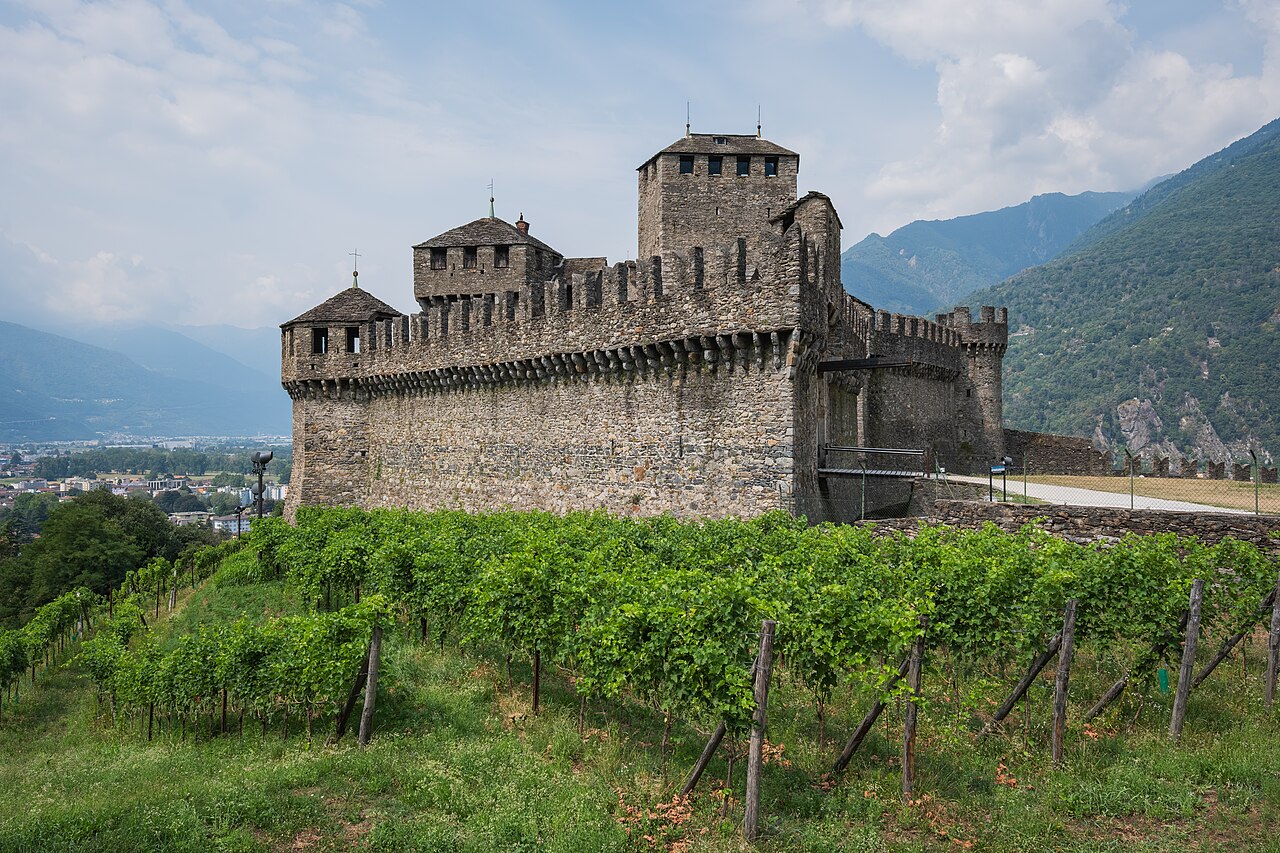
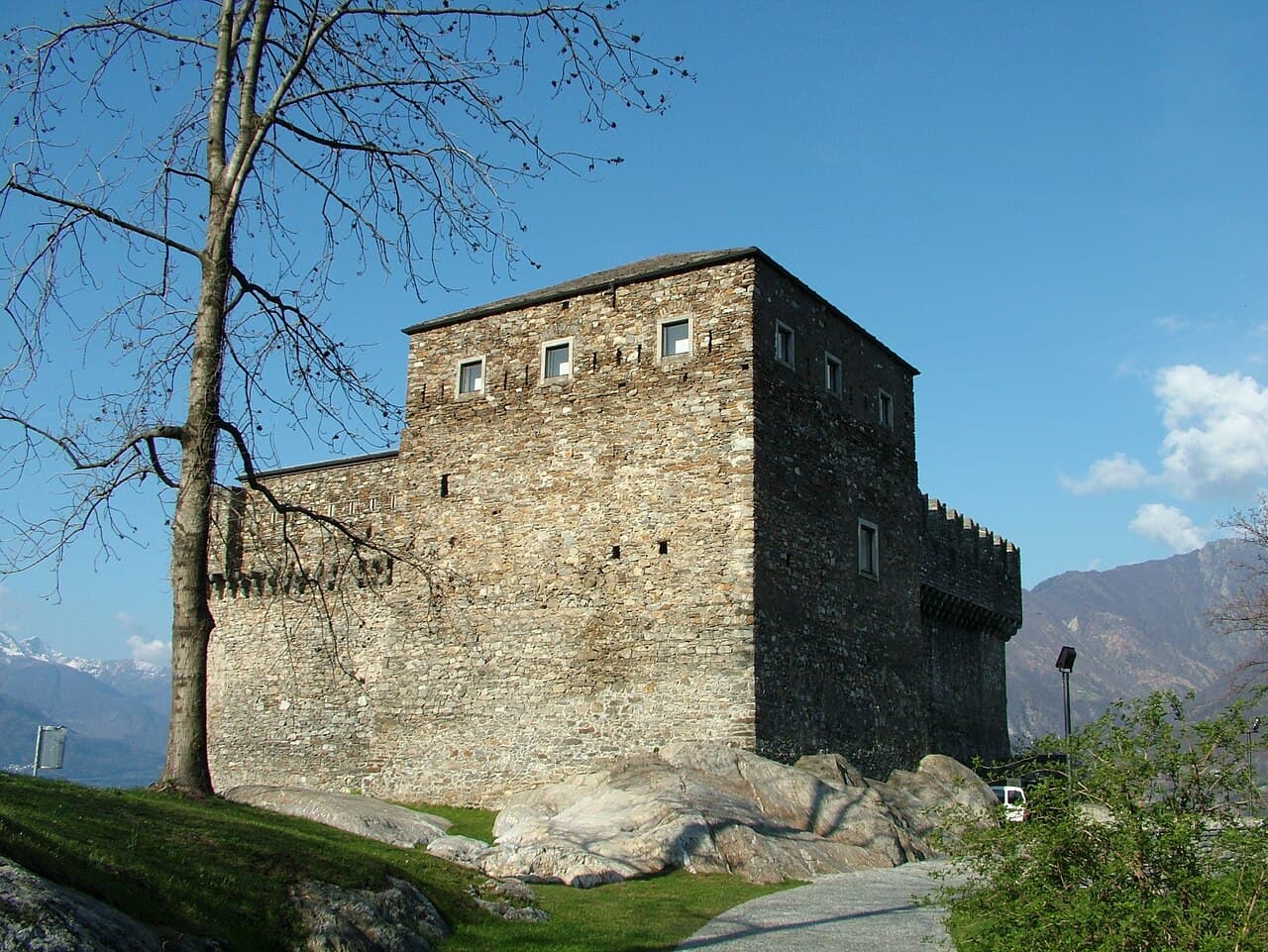
Sasso Corbaro Castle is a classic example of a hill castle or spur fortress, built on a projecting rocky ridge to maximize natural defense. The castle’s footprint is a nearly perfect square, approximately 25 by 25 meters, with two prominent square towers at the northeast and southwest corners. The main tower on the northeast corner rises to about 14 meters and originally served as a keep and living quarters.
The fortress walls are formidable, with the eastern wall measuring about 1.8 meters thick and the other walls approximately 1 meter thick. These walls are topped with machicolations—openings through which defenders could drop projectiles or boiling substances on attackers—and swallowtail merlons, a distinctive battlement style providing enhanced protection and visibility.
The entrance is located on the western wall, featuring remains of a portcullis and locking mechanisms that controlled access to the inner courtyard. Inside, the courtyard is enclosed by high walls and contains residential buildings with gabled roofs along the southern and western sides, reflecting the living quarters of the castle’s inhabitants. The eastern side houses the castle chapel, underscoring the integration of religious functions within the fortress.
Additional defensive elements include a zwinger—a narrow enclosed area between outer and inner walls designed to trap attackers—and ancillary buildings to the south and west, which likely served logistical and support roles.
Sala emma poglia
A highlight of the castle’s interior is the Sala Emma Poglia, a richly decorated 17th-century hall paneled entirely in walnut wood with Baroque motifs. Originally built for the Emma family in Olivone in the Blenio Valley, the room was acquired by the Canton of Ticino in 1944 and moved first to Castelgrande Castle, then to Sasso Corbaro in 1989. The hall features a soapstone stove emblazoned with the Emma family crest, including an eagle and a lion rampant, which served as a heating source. Today, the Sala Emma Poglia is a key attraction within the castle museum.
Damage, decline, and restoration
Throughout the 16th and 17th centuries, the castle suffered several damaging fires caused by lightning strikes, which contributed to its gradual deterioration. By the early 20th century, the fortress was in a state of disrepair and at risk of ruin. Restoration efforts began after the Canton of Ticino reacquired the property in 1919, with major conservation work carried out in 1933-34 to stabilize the structure and rebuild key features such as the ravelin, entrance doors, and the chapel.
Further restorations in the late 20th century focused on preserving the castle’s historical integrity while adapting it for public access. Today, Sasso Corbaro is well-preserved and open to visitors from March to November. It includes a museum space hosting temporary exhibits alongside the permanent display of the Sala Emma Poglia.
Location and visitor experience
The castle is located about 600 meters southeast of Bellinzona’s historic center, accessible by well-maintained paths from Montebello Castle and the Via Ospedale. The route passes alongside the Dragonato creek and beneath the church of Our Lady of the Snows, offering a scenic approach.
Visitors to Sasso Corbaro Castle enjoy spectacular panoramic views extending northward to the Riviera valley and the town of Claro, and southward across the basin of Lake Maggiore into Italian territory. The combination of its commanding position, architectural features, and cultural heritage makes it a significant landmark within the Bellinzona fortification complex, which is recognized as a UNESCO World Heritage site.
The castle also features a restaurant, enhancing the visitor experience by providing refreshments in a historic setting. Opening hours typically run from April to October, with the museum accessible from March to November, allowing ample opportunity for exploration and appreciation of this remarkable fortress.
Frequently asked questions (FAQ)
- How do I get to Sasso Corbaro castle from Bellinzona?
- Sasso Corbaro castle is located about 600 meters southeast of Bellinzona’s historic center. You can reach it by following well-maintained paths from Montebello Castle or Via Ospedale, passing alongside the Dragonato creek and beneath the church of Our Lady of the Snows.
- What is the historical significance of Sasso Corbaro castle?
- Sasso Corbaro castle was built in 1478-1479 by the Duchy of Milan after the Battle of Giornico to close a strategic gap in the Ticino Valley defenses. It played a key role in securing the valley corridor between Italy and Switzerland during the late medieval period.
- Can I visit the Sala Emma Poglia inside the castle?
- Yes, the Sala Emma Poglia is a 17th-century walnut-paneled hall located in the northeast tower of Sasso Corbaro castle. It is open to visitors as part of the castle museum and showcases Baroque woodwork and the Emma family crest on a soapstone stove.
- When is the best time to visit Sasso Corbaro castle?
- The castle museum is open from March to November, with the best weather and access typically from April to October. Visiting during these months allows you to enjoy the castle’s panoramic views and explore the surrounding trails comfortably.
- Is there an entrance fee to visit Sasso Corbaro castle?
- Yes, there is an entrance fee of €5 for adults and €3 for children to visit the castle and its museum, including the Sala Emma Poglia.
Photo gallery

Information
Opening hours
March to November, daily
Ticket prices
€5 adult, €3 child
Current owner
Canton of Ticino
Website
Visit websiteSources & official resources
Verify the information above using these authoritative references.
Loading map...
Visitor reviews
No reviews yet. Been here? Write the first review and help other travelers!
Write the first reviewVisited this castle? Share your experience
Your review helps other travelers and adds first-hand knowledge to our encyclopedia.