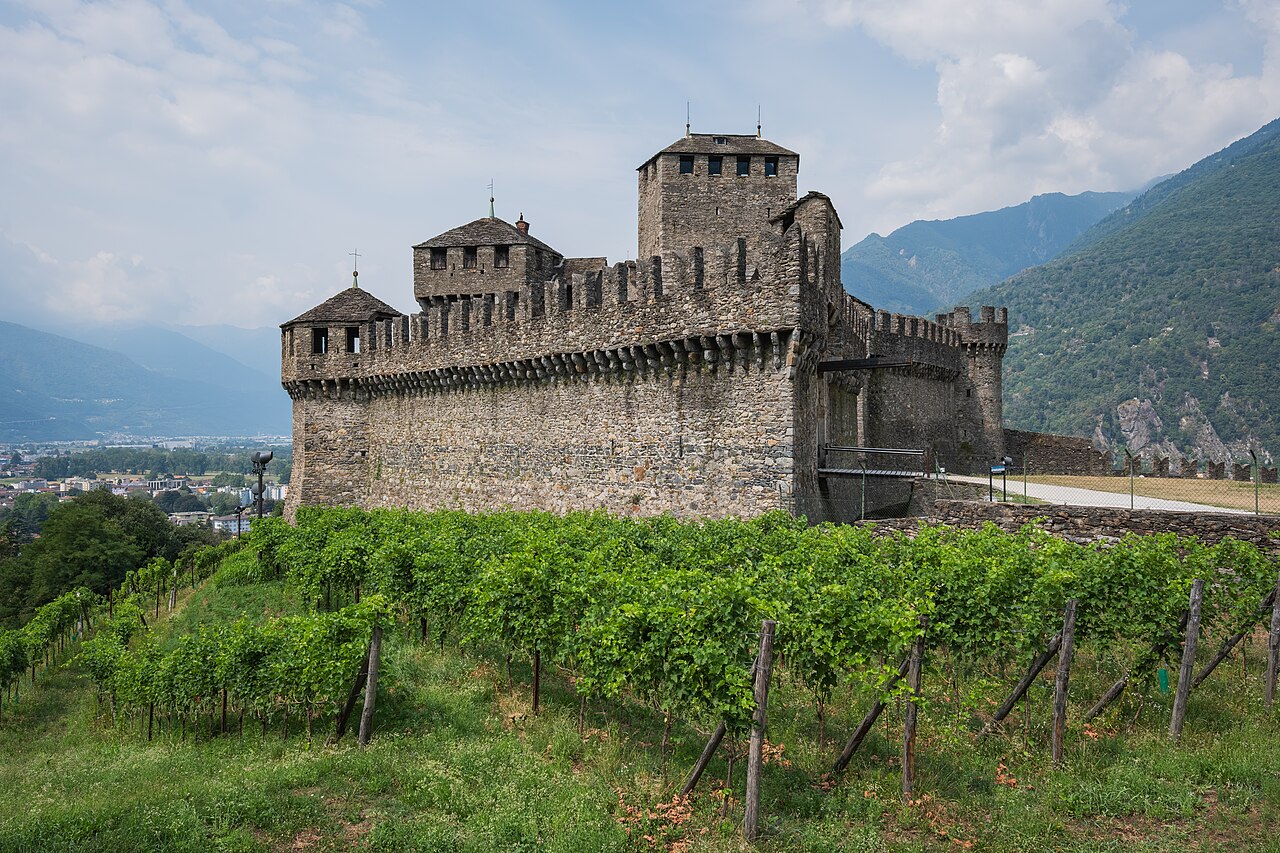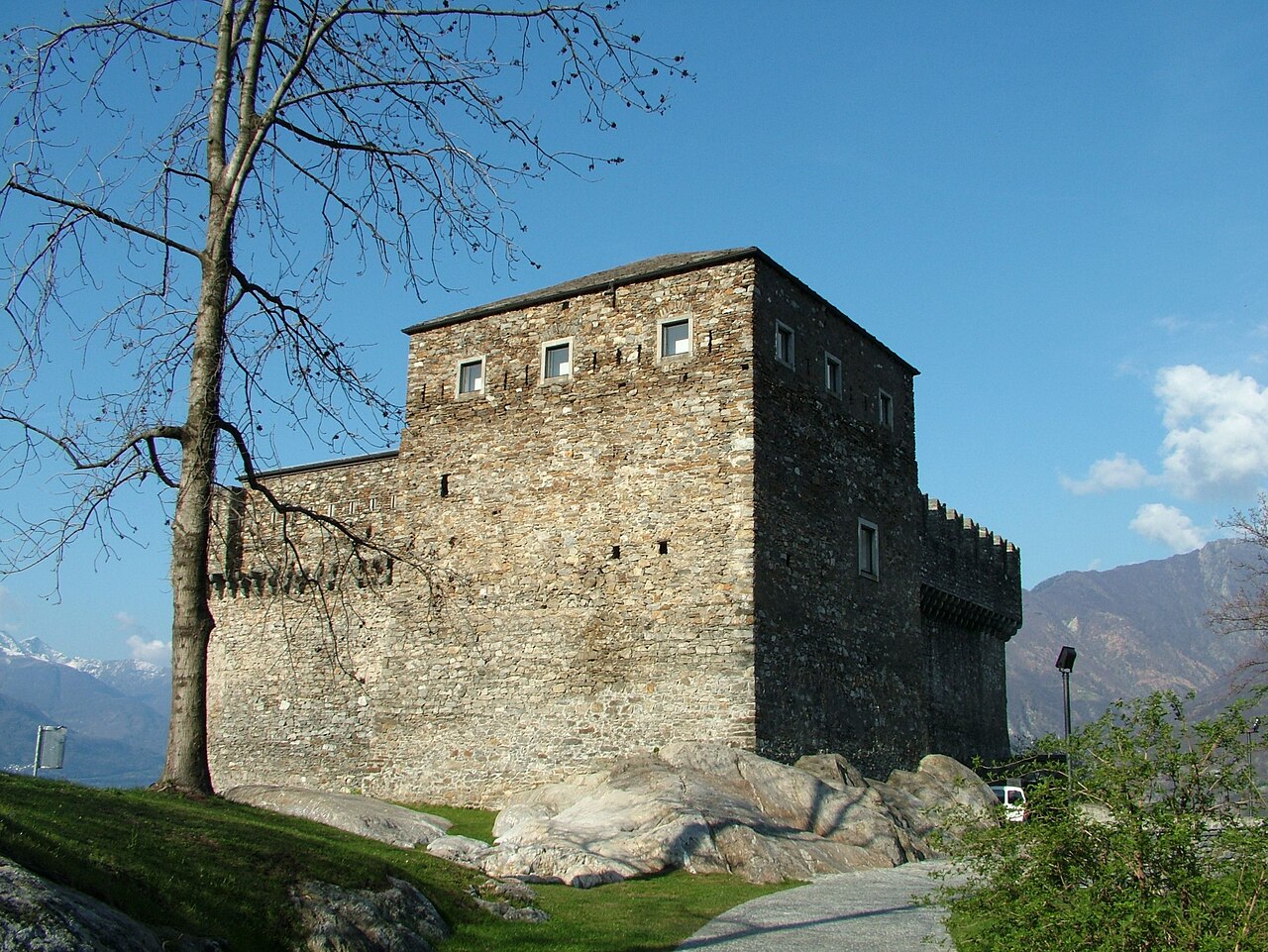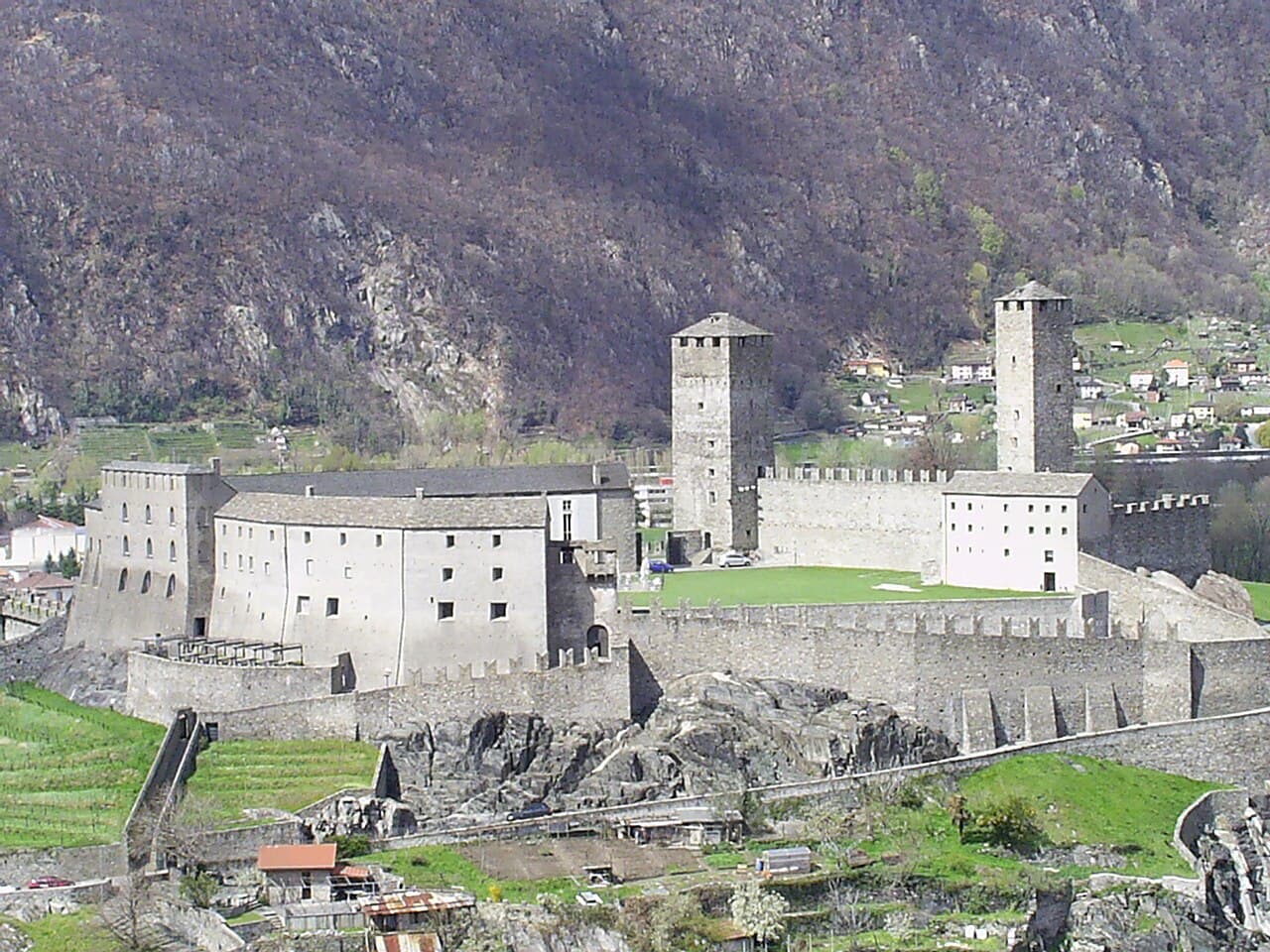
Castelgrande Castle
Castelgrande castle stands as a monumental hill fortress in Bellinzona, Switzerland, embodying a rich history of strategic military importance and architectural evolution spanning over two millennia. Its origins trace back to at least the late 1st century BC, when the site was first fortified under the Roman Empire, serving as a critical northern defensive outpost during the reign of Emperor Augustus. This early fortification laid the foundation for a complex that would evolve continuously through the High Middle Ages and beyond, reflecting the shifting tides of regional power and military technology.
The castle's location atop a rocky hill, approximately 150 by 200 meters in size, with a near-vertical northern cliff and steep southern slopes, has dictated its defensive layout. The natural contours have been meticulously followed by successive builders, resulting in a fortress that harmonizes with its terrain. While the original Roman fortifications are no longer visible, their foundations were integrated into the medieval structure, which predominantly dates from the 13th to 15th centuries.
Historical evolution and strategic significance
Roman origins and early medieval transitions
The earliest fortifications on the Castelgrande hill were established in the late 1st century BC as part of the Roman Empire's efforts to secure the northern boundaries of Italy. The site was rebuilt and expanded in the 4th century AD amid increasing pressures on the empire’s frontiers. Following the collapse of the Western Roman Empire, the castle passed through the control of several powers including the Ostrogoths, Byzantines, Longobards, and Franks. By the 11th century, it was under the authority of the Holy Roman Empire and the Bishop of Como, highlighting its continued strategic relevance.
Medieval conflicts and fortification enhancements
During the Middle Ages, Castelgrande was a focal point in regional conflicts, resisting invasions from Alemannic and Frankish forces. It played a notable role during the Investiture Controversy and the Guelph-Ghibelline conflicts that embroiled northern Italy. Control of the castle was contested particularly between the cities of Milan and Como.
In the 14th and 15th centuries, the Dukes of Milan—first the Visconti and later the Sforza families—undertook extensive expansions and fortifications. They raised and extended the walls, added towers, and connected the western walls to the city fortifications. These enhancements were strategic responses to the growing threats from Swiss forces and other regional powers.
Early modern period and swiss confederation era
In 1499, the castle was briefly occupied by French troops but was reclaimed by local forces in 1500. Subsequently, Bellinzona joined the Swiss Confederation and was jointly governed by the cantons of Uri, Schwyz, and Unterwalden until the late 18th century. During this period, Castelgrande's military importance waned, and it gradually transitioned to other uses.
Architectural features and castle layout
Topography and fortification design
The fortress is perched on a hill with a commanding view of the surrounding Alpine foothills. The nearly vertical north cliff and steep southern slopes dictated a defensive design that maximized natural barriers. The castle's fortifications closely follow the hill's contours, creating a series of defensive walls and baileys that utilize the terrain to their advantage.
The baileys and central structures
The castle's interior is predominantly open, divided into three large baileys separated by walls radiating from the central Terre Nera tower, built in the 14th century. These baileys historically housed numerous buildings, as evidenced by archaeological findings and medieval records, but many were demolished by the Dukes of Milan to create open space for troop accommodation.
The tallest tower, the Torre Bianca or White Tower, dates from the 13th century and stands at the heart of the castle's keep. Surrounding it is the palace of the Bishop of Como, with masonry possibly dating back to the 10th or 11th century. This palace underscores the castle's dual role as both a military stronghold and an administrative center.
Additional buildings and archaeological remains
The South Wing, marking the southern boundary, was constructed in two phases during the 13th and 15th centuries atop earlier foundations. Adjacent to it is a 19th-century arsenal building, fully renovated in the 20th century and repurposed as a restaurant today.
Archaeological excavations have uncovered foundations of two chapels within the southern bailey and the ruins of a church, possibly dedicated to the Madonna, in the western bailey. The northern bailey once contained buildings now destroyed, and the steep northern cliff was not fortified with a defensive wall until the 14th or 15th century.
Modern restoration and cultural significance
Restoration efforts and museum development
After a period of decline and repurposing as an arsenal and prison during the 19th century, restoration began around 1900. Major renovations from 1953 to 1992, led by architect Aurelio Galfetti, transformed parts of Castelgrande into public museums and parks. These efforts preserved the castle's historical integrity while adapting it for contemporary cultural use.
The South Wing museum presents artifacts spanning over 6,500 years of human presence on the hill, from the Neolithic era through the 20th century. Exhibits include decorated ceilings salvaged from historic buildings and a collection from Bellinzona's former mint, highlighting the castle's layered history.
Unesco world heritage status
In 2000, Castelgrande, along with the nearby Montebello and Sasso Corbaro castles and the city walls of Bellinzona, was designated a UNESCO World Heritage Site. This recognition underscores the castles' exceptional medieval fortifications and their importance in European military architecture and history.
Visiting castelgrande today
Visitors can access Castelgrande via an elevator from the base of the hill or by ascending steep streets that pass through the historic city walls. The castle offers panoramic views of Bellinzona and the surrounding Alpine foothills, making it a popular destination for history enthusiasts and tourists alike.
The site combines well-preserved medieval architecture with modern amenities, including a restaurant housed in the renovated arsenal building. The museum and open courtyards provide an immersive experience into the castle's extensive history and architectural evolution.
Frequently asked questions (FAQ)
- How do I get to Castelgrande castle in Bellinzona?
- Castelgrande castle is accessible via an elevator from the base of the hill or by steep streets passing through Bellinzona's historic city walls. The elevator offers a convenient route for visitors with limited mobility.
- What is the historical significance of Castelgrande castle?
- Castelgrande castle has been a strategic military fortress since Roman times, playing a key role in regional conflicts throughout the Middle Ages and serving as a symbol of Bellinzona's defense.
- When was Castelgrande castle built?
- The current visible structures of Castelgrande castle mainly date from the 13th to 15th centuries, built upon Roman foundations dating back to the 1st century BC.
- Can I visit museums inside Castelgrande castle?
- Yes, the South Wing of Castelgrande houses a museum featuring artifacts spanning over 6,500 years, including items from the Neolithic period to the 20th century, as well as exhibits from Bellinzona's former mint.
- Is there an entrance fee to visit Castelgrande castle?
- Admission to Castelgrande castle and its museum is free, making it accessible to all visitors interested in exploring its rich history and architecture.
- What architectural styles are represented in Castelgrande castle?
- Castelgrande castle showcases primarily <strong>High Medieval</strong> military architecture with elements from Roman foundations, medieval fortifications, and later renovations from the 19th and 20th centuries.
- What are the best times to visit Castelgrande castle?
- Castelgrande castle is open daily from 9:00 to 18:00, making spring through early autumn ideal for visiting to enjoy pleasant weather and panoramic views of Bellinzona and the Alps.
Photo gallery

Photo by Aliman5040•Public domain
Information
Opening hours
9:00-18:00, daily
Ticket prices
Free
Current owner
Municipality of Bellinzona
Website
Visit websiteSources & official resources
Verify the information above using these authoritative references.
Loading map...
Visitor reviews
No reviews yet. Been here? Write the first review and help other travelers!
Write the first reviewVisited this castle? Share your experience
Your review helps other travelers and adds first-hand knowledge to our encyclopedia.