Castle of Montebello
Montebello Castle stands as a prominent medieval fortress located to the east of the town center of Bellinzona, the capital of the Swiss canton of Ticino. Constructed before 1313 for the pro-Imperial Rusca family, the castle played a significant role in the turbulent power struggles of the region during the Late Medieval period. Following the Visconti victory and occupation of the nearby Castelgrande, the Rusca family took possession of Montebello, which later passed into the hands of the Visconti by the end of the 14th century. Between 1462 and 1490, the castle underwent extensive renovations and expansions, shaping it into the structure largely recognizable today. However, by the 19th century, the castle had fallen into disrepair before restoration efforts began in 1903.
Architectural design and fortifications
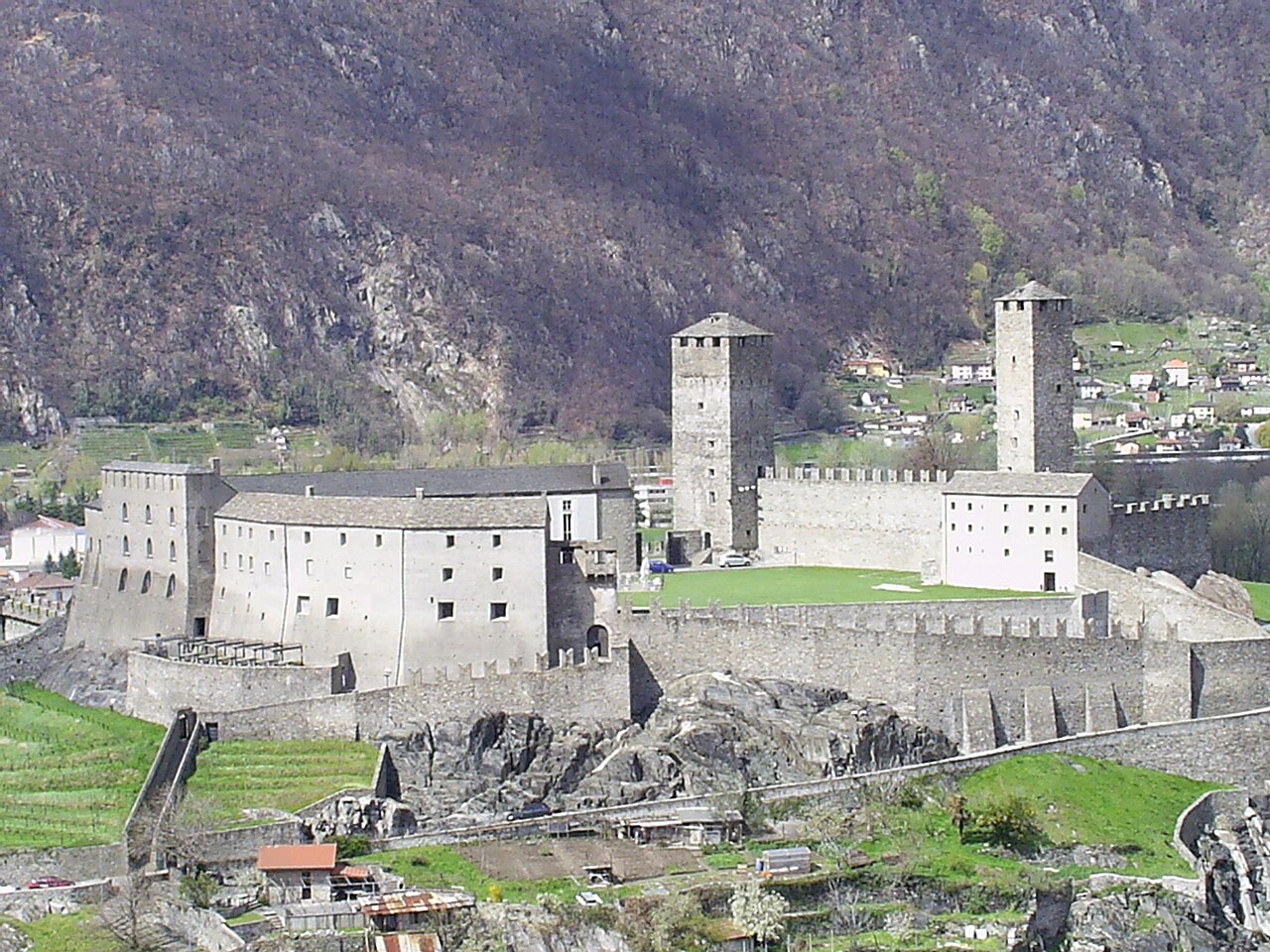
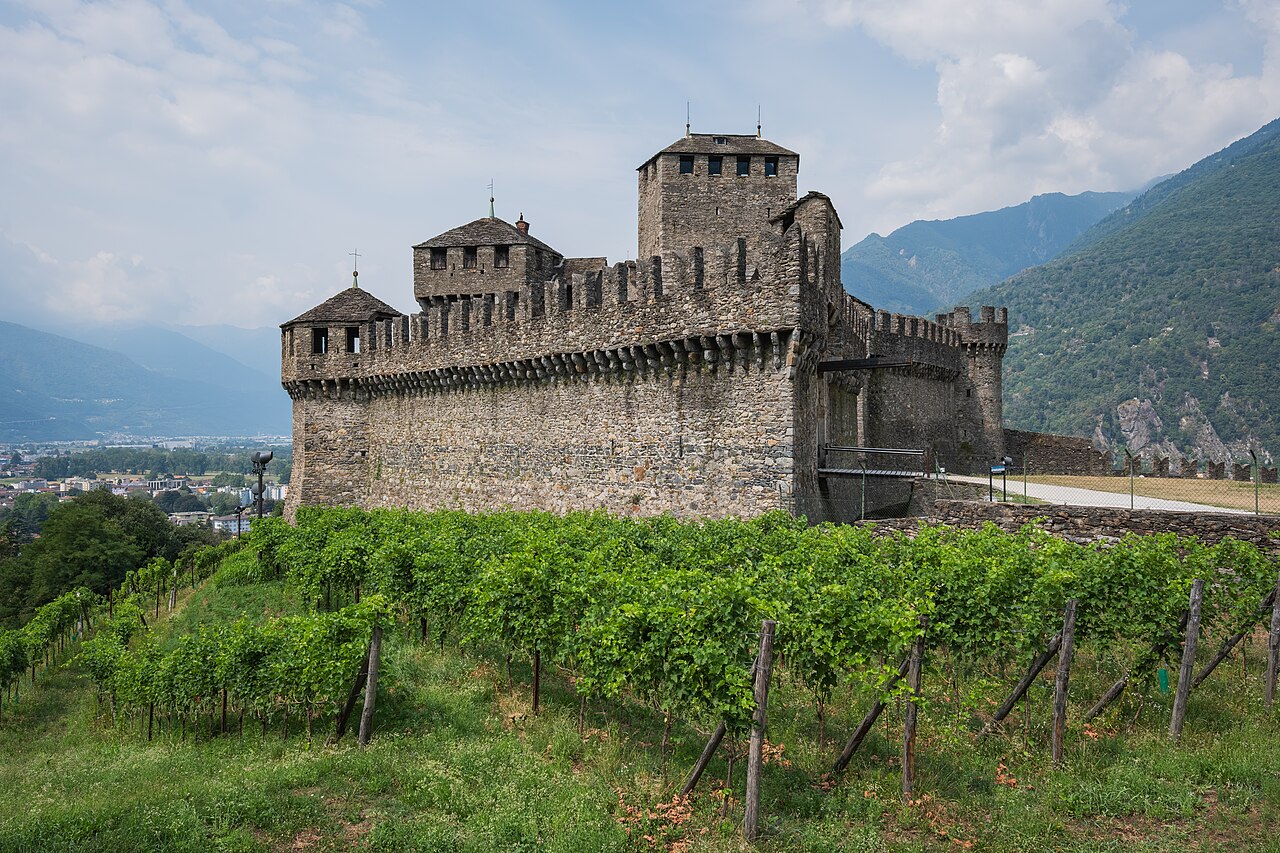
Unlike Castelgrande, which benefits from natural rocky defenses, Montebello Castle is not naturally protected by terrain features. Instead, it is surrounded by deep moats that served as crucial defensive elements protecting the castle walls. The overall layout of the complex is rhomboid in shape, strategically connected to the city walls on both the south and north sides, integrating the castle into the broader defensive network of Bellinzona.
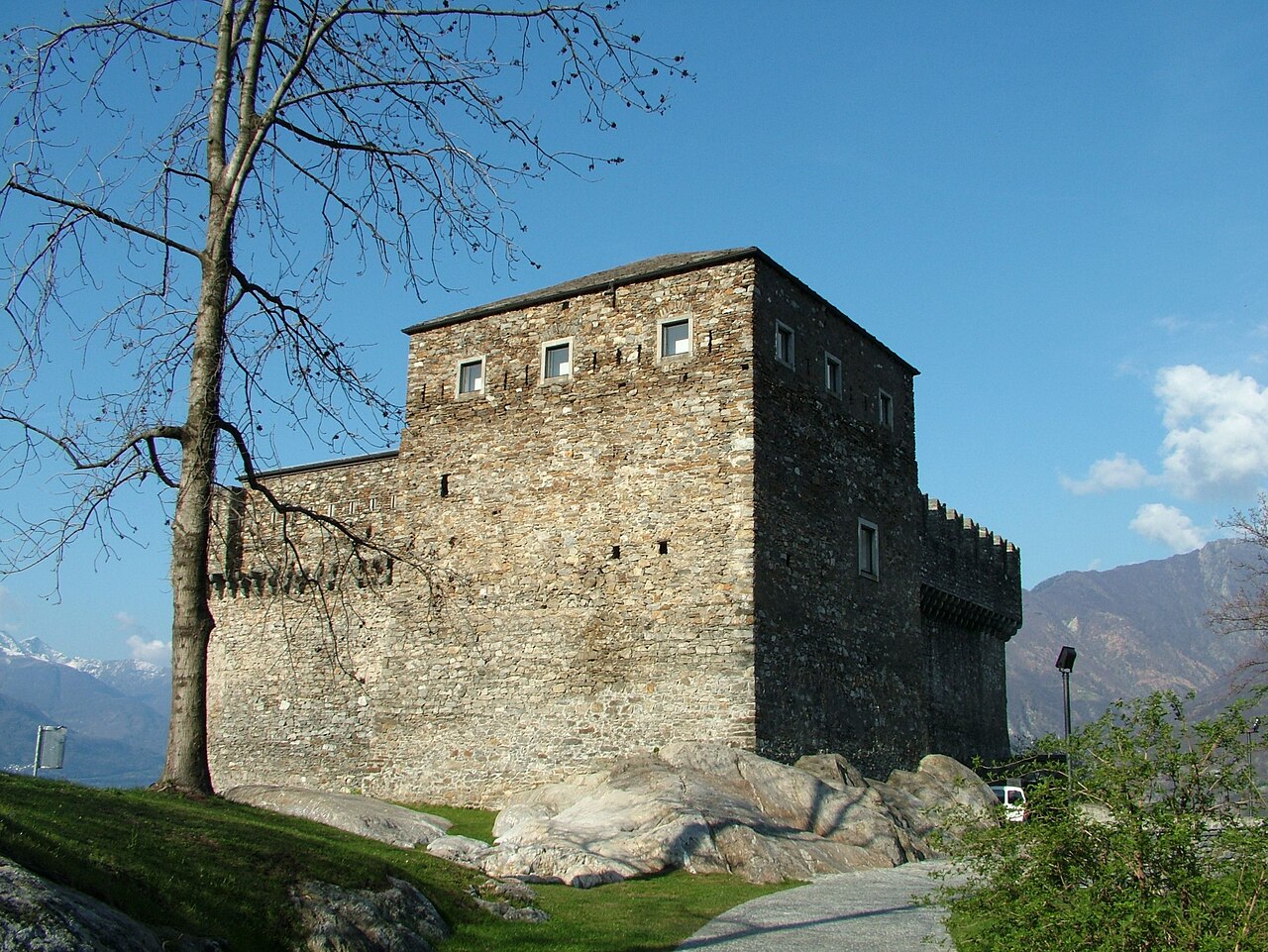
The castle's architecture clearly exhibits its phased development. At its core lies the original central keep, a fortified tower typical of medieval castles. This keep is encircled by the 14th-century curtain walls, which were later encompassed by the more extensive 15th-century walls added during the castle's expansion. These successive layers of fortification illustrate the evolution of military architecture responding to changing warfare technologies and political needs.
Historical context and significance
The site of Bellinzona has been of strategic importance since antiquity. While Montebello Castle itself dates from the Late Medieval period, the nearby Castelgrande has been fortified since at least the late 1st century BC. For centuries, Castelgrande was the primary stronghold protecting Bellinzona until the development of additional fortifications like Montebello and Sasso Corbaro in the medieval era.
Montebello was initially known as the "Old Castle" during the 14th and 15th centuries, later referred to as "Un Castle" after 1506, and eventually as "Saint Michael's Castle" from 1818 onwards. These name changes reflect the castle's evolving role and cultural significance over time.
The castles of bellinzona: a fortified ensemble
The Castles of Bellinzona represent a remarkable ensemble of medieval fortifications that includes Castelgrande, Montebello, and Sasso Corbaro. Situated on the Alpine foothills, these castles, along with their extensive fortified walls, form a defensive system that historically controlled the vital Alpine passes and protected the town.
Castelgrande occupies a commanding position on a rocky peak overlooking the valley, with walls that connect it to Montebello to the east. Sasso Corbaro, the highest of the three castles, is located on an isolated rocky promontory southeast of the others, completing the defensive triangle around Bellinzona.
Since 2000, the Castles of Bellinzona and their defensive walls have been recognized as a UNESCO World Heritage Site, highlighting their outstanding cultural and historical value as well-preserved examples of medieval military architecture.
Visitor experience and museum
Visitors to Montebello Castle can access the site via an elevator from the foot of the rock or by ascending steep, narrow streets from the city center through the historic city walls. This accessibility allows exploration of the castle grounds and its architectural features, including the moats, walls, and towers.
The south wing of the castle houses a museum that offers an extensive exhibition covering 6500 years of human presence on the hill. The museum's displays span from the Neolithic village period through to the 20th century, providing rich archaeological and historical context that enhances understanding of the castle's long-term significance within the region.
Architectural features in detail
The central keep and curtain walls
The central keep of Montebello Castle serves as the oldest surviving structure within the complex, reflecting the defensive priorities of the early 14th century. This keep was the last refuge during sieges and housed the lord's living quarters. Surrounding the keep are the 14th-century curtain walls, which were designed to provide a first line of defense against attackers. These walls feature battlements and arrow slits, typical of medieval military architecture.
15th-century expansions
During the renovations between 1462 and 1490, the castle was significantly expanded with the construction of new outer walls. These 15th-century fortifications were built to adapt to the evolving nature of warfare, including the increasing use of artillery. The new walls are thicker and incorporate bastions and reinforced gates, enhancing the castle's defensive capabilities.
Moats and defensive integration
The deep moats surrounding Montebello Castle are a distinctive defensive feature compensating for the lack of natural rocky protection. These water-filled ditches created a formidable obstacle for any assaulting force, making direct attacks on the walls more difficult and protecting the castle's vulnerable approaches. The moats also visually emphasize the castle's imposing presence in the landscape.
Cultural heritage and preservation
Montebello Castle's restoration beginning in 1903 marked a renewed interest in preserving the medieval heritage of Bellinzona. Today, the castle is well-preserved and maintained as part of the region's cultural patrimony. It serves not only as a tourist attraction but also as a symbol of the complex history of Ticino and its strategic importance in Alpine defense.
The castle's inclusion in the UNESCO World Heritage designation alongside Castelgrande and Sasso Corbaro underscores its significance and ensures ongoing conservation efforts. Visitors can appreciate the castle's layered history, architectural evolution, and its role within the broader defensive network that shaped the region's medieval landscape.
Frequently asked questions (FAQ)
- What is the historical significance of the Castle of Montebello?
- The Castle of Montebello, built in the 13th century, is a UNESCO World Heritage site that represents the architectural and military history of the region. It played a crucial role in the defense of Bellinzona and has been well-preserved, offering visitors a glimpse into medieval life.
- When was the Castle of Montebello constructed?
- Construction of the Castle of Montebello began in the late 13th century, around 1250. It was completed in the early 14th century, reflecting the strategic importance of the location in controlling trade routes through the Alps.
- Is it possible to visit the Castle of Montebello?
- Yes, the Castle of Montebello is open to visitors year-round, allowing you to explore its impressive towers and panoramic views of Bellinzona. Guided tours are available to enhance your experience and provide deeper insights into its history and architecture.
- What are the opening hours for the Castle of Montebello?
- The Castle of Montebello typically opens at 9 AM and closes at 6 PM during the summer months, while winter hours may vary. It's recommended to check the official website for the most current opening times before your visit.
- Can I purchase tickets online for the Castle of Montebello?
- Yes, tickets for the Castle of Montebello can be purchased online through the official website, which can save you time and ensure entry. On-site ticket purchases are also available, but online booking is recommended during peak tourist seasons.
- What is the best time to visit the Castle of Montebello?
- The best time to visit the Castle of Montebello is during the spring and early fall when the weather is mild and the surrounding landscapes are beautiful. Summer can be busy with tourists, so visiting during weekdays may provide a more peaceful experience.
- How accessible is the Castle of Montebello?
- The Castle of Montebello has pathways that can be navigated by visitors with limited mobility, though some steep areas may present challenges. It is advisable to check accessibility options in advance and plan your visit accordingly.
- What nearby attractions are there to explore?
- While visiting the Castle of Montebello, you can also explore other nearby attractions such as the Castelgrande and Montebello Castle, both part of the historical fortifications of Bellinzona. The charming old town of Bellinzona is also worth a stroll, offering shops, cafes, and stunning architecture.
- What are the ticket prices for the Castle of Montebello?
- Ticket prices for the Castle of Montebello are generally affordable, with discounts available for children, students, and seniors. Family tickets may also be offered, making it an accessible option for visitors of all ages.
Information
Website
Visit websiteSources & official resources
Verify the information above using these authoritative references.
Loading map...
Visitor reviews
No reviews yet. Been here? Write the first review and help other travelers!
Write the first reviewVisited this castle? Share your experience
Your review helps other travelers and adds first-hand knowledge to our encyclopedia.