
Sasayama Castle
Sasayama Castle stands as a significant hill castle in Sasayama, Japan, embodying the strategic military and political ambitions of the early Edo period. Constructed in 1609 under the directive of Tokugawa Ieyasu, the castle was designed by the renowned castle architect Todo Takatora. It was built rapidly within a year, reflecting the urgency of fortifying the region to secure the approaches to the vital Osaka Castle and to exert control over the western lords. This castle is a prime example of early 17th-century Japanese castle construction, blending functional military architecture with the political symbolism of the Tokugawa shogunate's authority.
Historical context and strategic purpose
The site of Sasayama Castle was chosen deliberately following the fall of Yagami Castle, which had been the stronghold of the Hatano clan ruling the Tanba area. Yagami Castle was captured by Akechi Mitsuhide in 1579, marking a period of conflict and shifting power balances. By 1608, Tokugawa Ieyasu's son, Matsudaira Yasushige, was installed as lord of Yagami Castle. However, as part of a broader strategy to consolidate power and secure the western approaches to Osaka, Ieyasu ordered the dismantling of Yagami Castle and the construction of Sasayama Castle on nearby Mt. Takashiro.
The castle's primary role was to serve as a military stronghold to monitor and control the western daimyos (lords) and to protect the crucial roads leading to Osaka, a political and economic hub. This strategic positioning made Sasayama Castle a key element in the Tokugawa shogunate's efforts to stabilize and govern Japan during the early Edo period.
Architectural features and design
Sasayama Castle is noted for its sturdy stone walls and imposing presence dominating the surrounding plains. Although the main keep (tenshu) was never constructed, the castle's defensive architecture was robust, emphasizing practical military strength over ornamental grandeur. The absence of a keep highlights the Edo period's shift in castle function from purely military fortresses to symbols of political power and administrative centers.
One of the castle's distinctive features is its umadashi-style gates, located at the northeast and southwest of the main compounds. These gates served as fortified defensive outworks, designed to protect the castle's entrances and create killing zones against attackers. The umadashi is a characteristic feature of Japanese castle defense, consisting of a semicircular or rectangular enclosure in front of the main gate, allowing defenders to repel sieges effectively.
The castle walls bear the marks, or kokuin, of the various lords who contributed to the castle's construction. This reflects the collaborative nature of the project, known as one of the tenkabushin castles—large-scale construction projects commissioned by the Edo Bakufu, involving multiple feudal lords working together under the shogunate's authority.
Castle layout and grounds
The castle is built on Mt. Takashiro, providing a natural elevation advantage typical of hill castles. The layout includes multiple baileys fortified with thick stone walls and moats, designed to maximize defensive capabilities. The castle town of Sasayama developed around the castle, featuring a samurai district with preserved residences such as the Ama Residence, which is open to the public and offers insight into the lifestyle of the Edo-period samurai class.
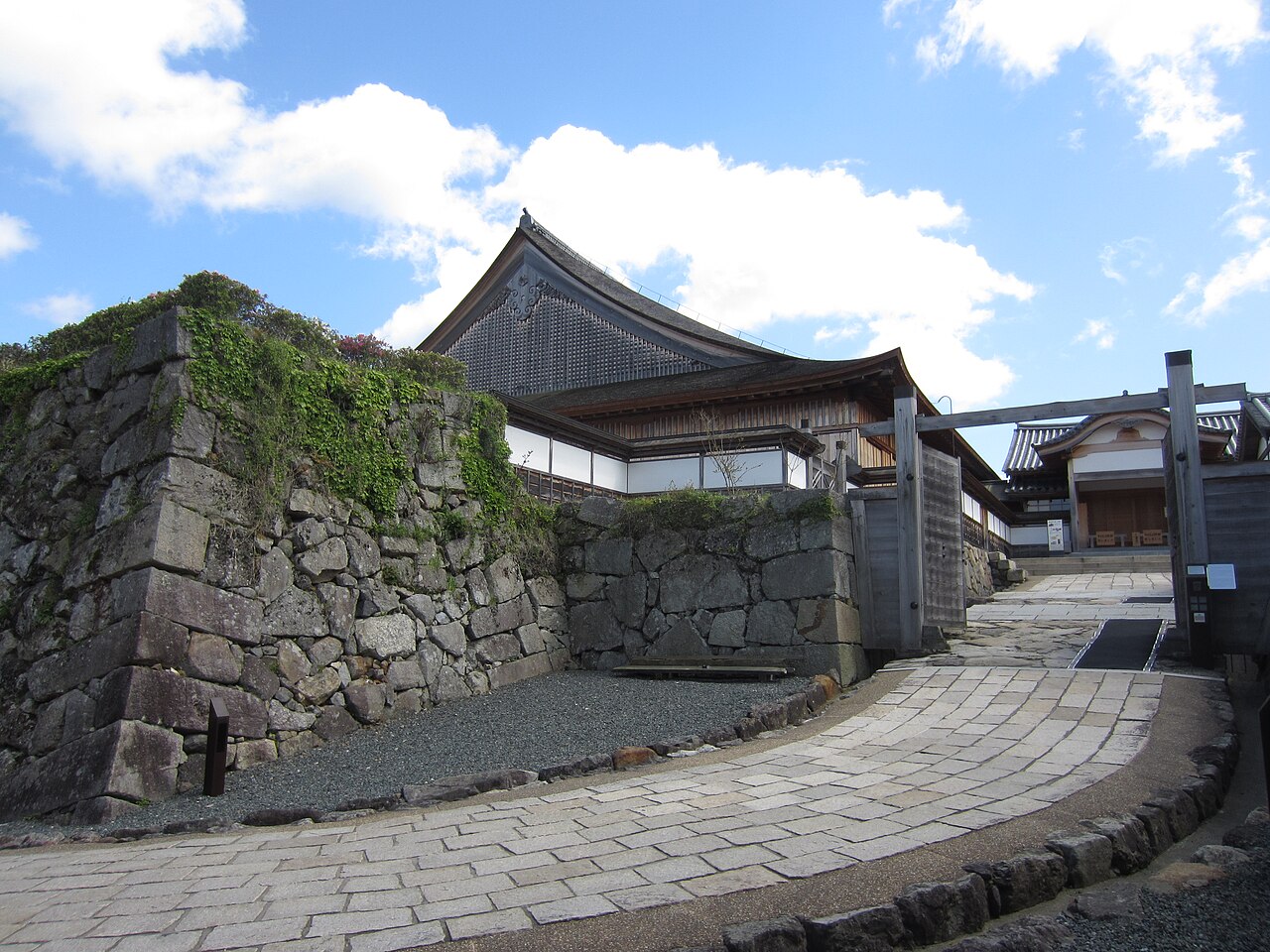
Photo by Baku13 • CC BY-SA 3.0
Preservation and cultural significance
While the original palace structures of Sasayama Castle were destroyed by fire in 1944, they were meticulously rebuilt between 1996 and 2000. The reconstruction was guided by original photographs and architectural references from the Ninomaru Palace at Nijo Castle, ensuring historical accuracy and authenticity. This restoration effort has helped preserve the castle's cultural heritage and allows visitors to experience the architectural style and ambiance of the Edo period.
Sasayama Castle remains partially preserved and is recognized as an important cultural asset. Its well-maintained stone walls, gates, and reconstructed palace buildings attract historians, architecture enthusiasts, and tourists alike. The castle's presence continues to dominate the townscape, symbolizing the legacy of the Tokugawa shogunate's rule and the historical importance of the Tanba region.
The castle town and visitor experience
The town of Sasayama retains much of its traditional charm, with a well-preserved samurai quarter and numerous local shops offering regional specialties. Visitors can explore the castle grounds, the reconstructed palace, and the samurai residences, gaining a comprehensive understanding of the social and military history of the area. The combination of natural beauty, historical architecture, and cultural heritage makes Sasayama Castle a notable destination for those interested in Japan's feudal past.
Overall, Sasayama Castle exemplifies the strategic military architecture of the early Edo period and serves as a testament to the political consolidation efforts of Tokugawa Ieyasu. Its robust construction, distinctive defensive features, and historical significance make it a valuable site for study and tourism.
Frequently asked questions (FAQ)
- What is the historical significance of Sasayama Castle?
- Sasayama Castle, built in the early 17th century, played a pivotal role during the Edo period as the residence of the Matsudaira clan. It symbolizes the feudal history of Japan and is an important cultural heritage site, showcasing the architectural styles of its time.
- When was Sasayama Castle constructed?
- Sasayama Castle was constructed in 1601 and completed in 1609. The castle's construction was part of the strategic plans to secure the area and protect against potential invasions, reflecting the military architecture of the era.
- Can I visit Sasayama Castle year-round?
- Yes, Sasayama Castle is open to visitors throughout the year. However, it's advisable to check for any special events or maintenance closures that may affect access to certain areas of the castle complex.
- What are the opening hours of Sasayama Castle?
- Sasayama Castle typically opens at 9:00 AM and closes at 5:00 PM. It's recommended to verify the hours before your visit, as they may vary during holidays or special events.
- Is it possible to explore the castle grounds without a guide?
- Yes, visitors can freely explore the castle grounds without a guide. There are informative plaques available to enhance your understanding of the castle's history and architecture as you stroll through the area.
- What is the best time to visit Sasayama Castle?
- The best time to visit Sasayama Castle is during the cherry blossom season in spring (late March to early April) or the autumn foliage season (November). These times offer stunning natural beauty and enhance the overall experience of exploring the castle grounds.
- Are there any nearby attractions to visit after Sasayama Castle?
- Yes, there are several nearby attractions, including the Sasayama Castle Town and the historic Sasayama City Museum. These sites provide additional insights into the region's rich history and culture, making it easy to extend your visit.
- What are the ticket prices for entering Sasayama Castle?
- The entrance fee for Sasayama Castle is generally around 300 yen for adults, with discounts available for children and seniors. It's a small fee considering the historical significance and beautiful scenery you will experience.
- How do I get to Sasayama Castle using public transportation?
- You can reach Sasayama Castle by taking a train to Sasayama Station, followed by a short bus or taxi ride. Public transportation provides a convenient way to access the castle while enjoying the scenic views of the surrounding area.
Photo gallery

Information
Opening hours
Open 9am-5pm; 400 yen; Closed Monday (except National Holidays, when closed Tuesday), closed Dec 25-Jan 1
Website
Visit websiteSources & official resources
Verify the information above using these authoritative references.
Loading map...
Visitor reviews
No reviews yet. Been here? Write the first review and help other travelers!
Write the first reviewVisited this castle? Share your experience
Your review helps other travelers and adds first-hand knowledge to our encyclopedia.