Sarre Royal Castle
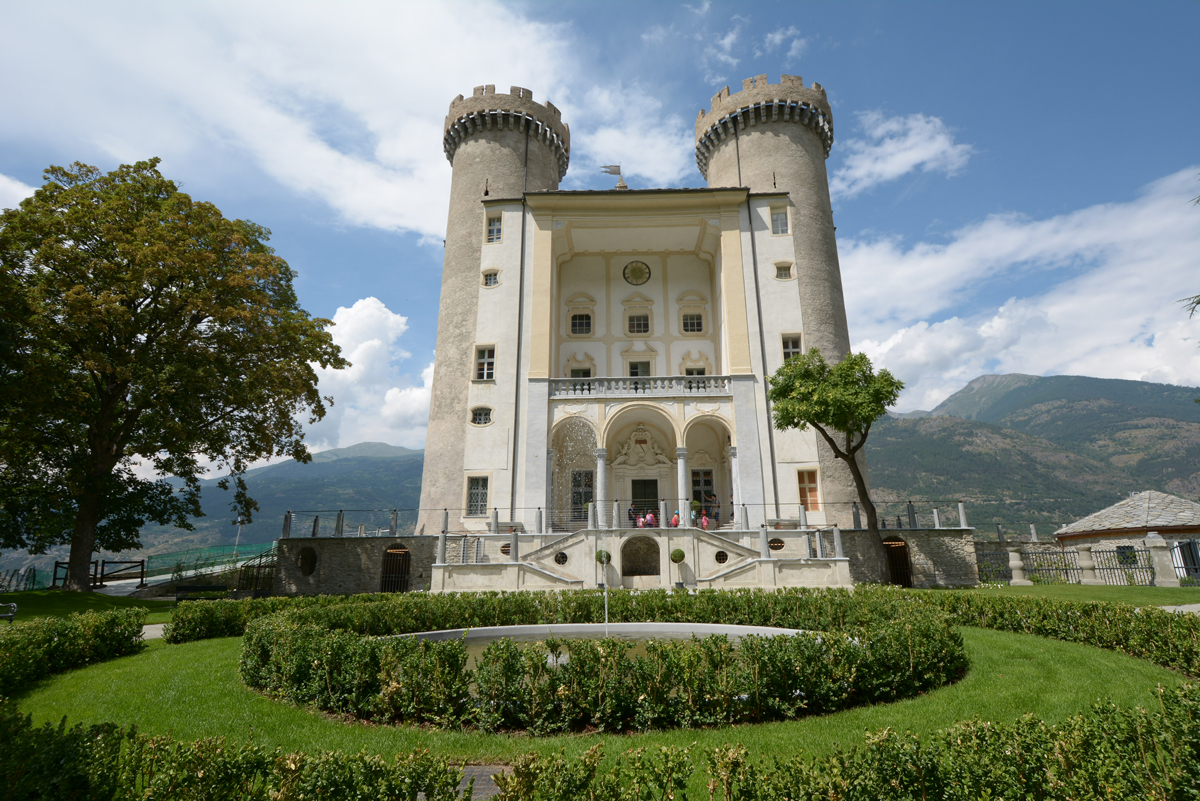
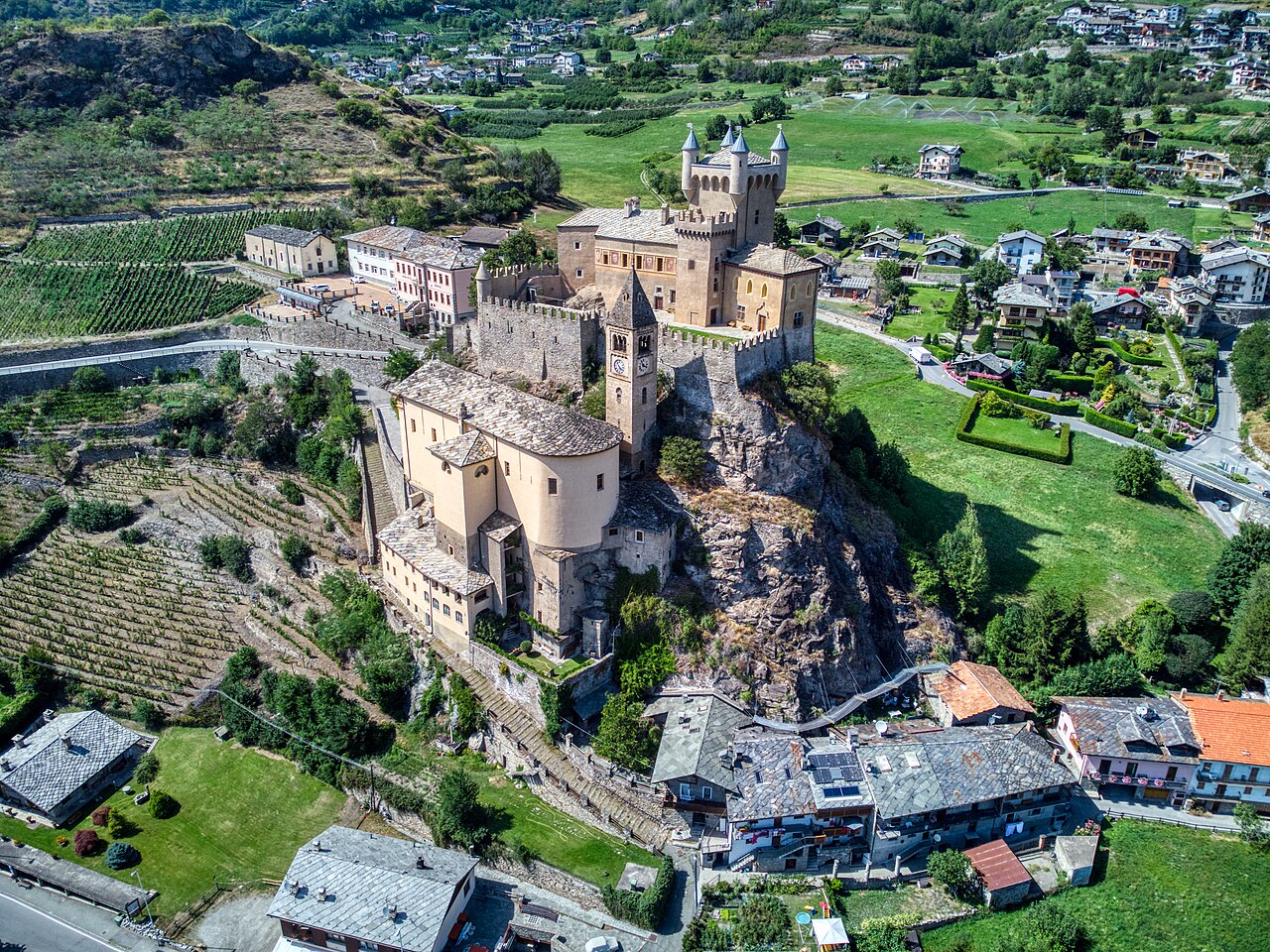
Sarre Royal Castle is a striking example of an 18th-century hill castle located in the municipality of Sarre, in the scenic region of Valle d'Aosta, Italy. Perched on a promontory overlooking the Aosta flatland and the national road to Mont Blanc, it commands impressive views and strategic prominence. The castle as it stands today was largely rebuilt in 1710 on the foundations of a medieval fortress originally mentioned in 1242. This site has a rich history intertwined with the noble families of the region and the House of Savoy, serving variously as a fortified residence, administrative center, and a royal hunting retreat.
Early history and medieval origins
The earliest known reference to the castle dates back to the 13th century, when it functioned as a fortified residence or watchtower within the feudal system of northern Italy. In 1242, it played a pivotal role during a meeting between Count Amadeus IV of Savoy and Godefroy I de Challant to coordinate a response against a local rebellion. The castle was subsequently granted to Jacques de Bard, establishing the line of the Counts of Sarre. Over the following centuries, ownership passed through several noble families, including the Quart, Montagny, Genève-Lullin, Leschaux, La Crête, Roncas, and Rapet families, reflecting its sustained importance in regional politics and governance.
18th-century reconstruction and architectural transformation
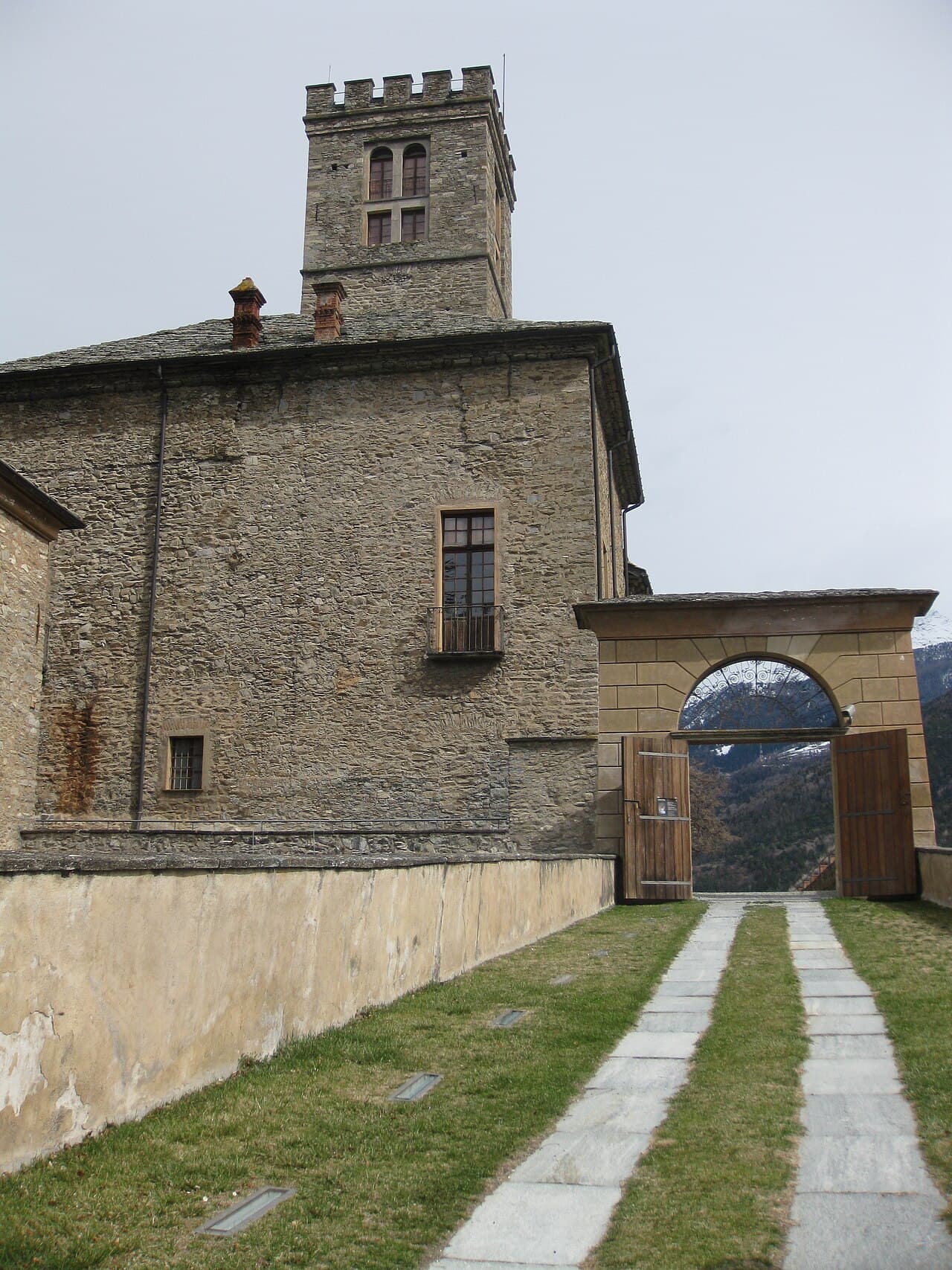
A major transformation occurred in 1708 when Jean-François Ferrod, a wealthy lawyer and industrialist from nearby Arvier, purchased the castle. Ferrod undertook a comprehensive rebuilding, preserving only the original medieval tower, which was subsequently raised and crenellated to enhance its prominence and defensive character. This reconstruction gave the castle its present 18th-century appearance, characterized by a long, rectangular stone structure with a central square tower rising above the roofline. The castle's stone façades are typical of the region, combining functional fortification elements with stylistic touches that reflect the early post-Renaissance period.
Architectural features and layout
The castle spans three floors beneath the central tower, which features battlements and distinctive cross-shaped windows that balance defensive utility with aesthetic appeal. The structure includes a small royal chapel with a single nave and a Baroque altar, serving the private worship needs of its royal residents. Behind the castle lies a large grassy courtyard bordered by walkways and flanked by stables constructed under the direction of King Victor Emmanuel II in the 19th century, emphasizing the castle’s function as a hunting lodge. Additional facilities such as a kennel, garage, and storage areas support the estate’s self-sufficiency during hunting seasons.
Royal ownership and hunting heritage
The castle's royal chapter began in 1869 when King Victor Emmanuel II of Italy acquired the property, adopting the title "Count of Sarre." The king extensively renovated the castle to serve as his alpine hunting residence. Modifications included raising the central tower, adding new stables, and modernizing the interior rooms. Victor Emmanuel II used the castle as a base for hunting expeditions into the alpine valleys of Cogne, Rhêmes, and Valsavarenche.
His successor, King Umberto I, continued to use Sarre Castle for hunting, particularly focusing on Alpine chamois in the royal hunting reserves near the future Gran Paradiso National Park. Umberto I commissioned elaborate interior decorations, including the famous Trophy Gallery adorned with thousands of chamois and wild goat horns, arranged in intricate patterns combined with floral motifs. This gallery remains one of the castle's most distinctive features, symbolizing the royal family's deep connection to hunting traditions.
Queen Maria José, wife of the last King Umberto II, also spent holidays at Sarre Castle. She took refuge here during World War II to avoid German capture and returned after the war. The castle remained in the possession of the House of Savoy until 1972.
Interior design and royal apartments
The castle's interiors were furnished under the supervision of the curator of the Royal Palace in Milan, who transferred furniture from other royal residences to create a cohesive royal ambiance. The Royal Apartment on the first floor features a blend of original furnishings and faithfully recreated textiles based on 1890 inventories. The rooms reflect the lifestyle of the Italian monarchy during the late 19th and early 20th centuries, with spaces adapted for comfort and ceremonial functions.
The second floor, once reserved for guests, showcases furnishings and artworks from the mid-20th century, reflecting the last significant period of royal occupancy. A collection of 19th and 20th-century Italian paintings enhances the museum-like atmosphere.
Restoration and current status
After passing to the Italian state in 1972, the castle was acquired by the regional authorities of Valle d'Aosta in 1989 who undertook extensive restoration efforts to preserve its historical and architectural heritage. Today, Sarre Royal Castle is a restored monument open to the public as a museum dedicated to the history of the House of Savoy and their alpine hunting traditions.
The castle’s museum exhibits include the permanent display of royal apartments, the Trophy Gallery, and collections of hunting trophies and period furnishings. Visitors can explore the castle’s architectural features, including the imposing central tower, the chapel, and the stables, gaining insight into the lifestyle of Italian royalty and the cultural significance of hunting in the region.
Frequently asked questions (FAQ)
- What is the historical significance of Sarre Royal Castle?
- Sarre Royal Castle, built in the 18th century, served as a residence for the Savoy family and played a crucial role in the region's history. Its architecture reflects the Baroque style and is a testament to the power and influence of the Savoy dynasty in Italy.
- When was Sarre Royal Castle built?
- The construction of Sarre Royal Castle began in 1710 and was completed in 1730. Over the years, it has undergone various renovations to preserve its stunning architecture and historical features.
- What are the opening hours for Sarre Royal Castle?
- Sarre Royal Castle is open to visitors from Tuesday to Sunday, 9:00 AM to 6:00 PM. It is closed on Mondays and certain public holidays, so it's best to check the official website for specific dates before planning your visit.
- Can I visit Sarre Royal Castle with children?
- Yes, Sarre Royal Castle is family-friendly and welcomes visitors of all ages. Children can explore the castle grounds and learn about its history through guided tours that are tailored to engage younger audiences.
- Is it possible to take guided tours of Sarre Royal Castle?
- Absolutely! Guided tours are available and provide an insightful experience into the castle's history and architecture. These tours are conducted in multiple languages and allow visitors to ask questions and learn more about the castle's fascinating past.
- What are the ticket prices for Sarre Royal Castle?
- Ticket prices for Sarre Royal Castle are typically around €8 for adults and €4 for children aged 6-18. Discounts may be available for students and seniors, so it's advisable to check for any special offers before your visit.
- When is the best time to visit Sarre Royal Castle?
- The best time to visit Sarre Royal Castle is during the spring and early autumn months when the weather is pleasant and the gardens are in full bloom. Additionally, visiting during weekdays can help you avoid the larger crowds often seen on weekends.
- How do I get to Sarre Royal Castle?
- Sarre Royal Castle is easily accessible by car or public transportation. If you're traveling by train, the nearest station is in Aosta, from which you can take a local bus or taxi to reach the castle.
- Are there nearby attractions to visit after exploring Sarre Royal Castle?
- Yes, after visiting Sarre Royal Castle, you can explore the nearby Fort Bard, a stunning fortress with impressive architecture and scenic views. The Aosta Valley also offers beautiful hiking trails and charming villages worth exploring.
Photo gallery

Information
Sources & official resources
Verify the information above using these authoritative references.
Loading map...
Visitor reviews
No reviews yet. Been here? Write the first review and help other travelers!
Write the first reviewVisited this castle? Share your experience
Your review helps other travelers and adds first-hand knowledge to our encyclopedia.