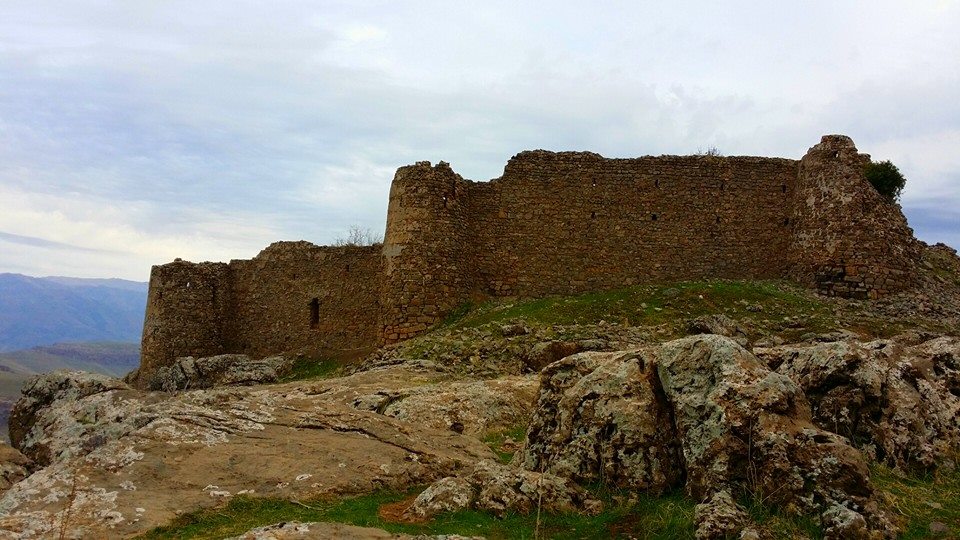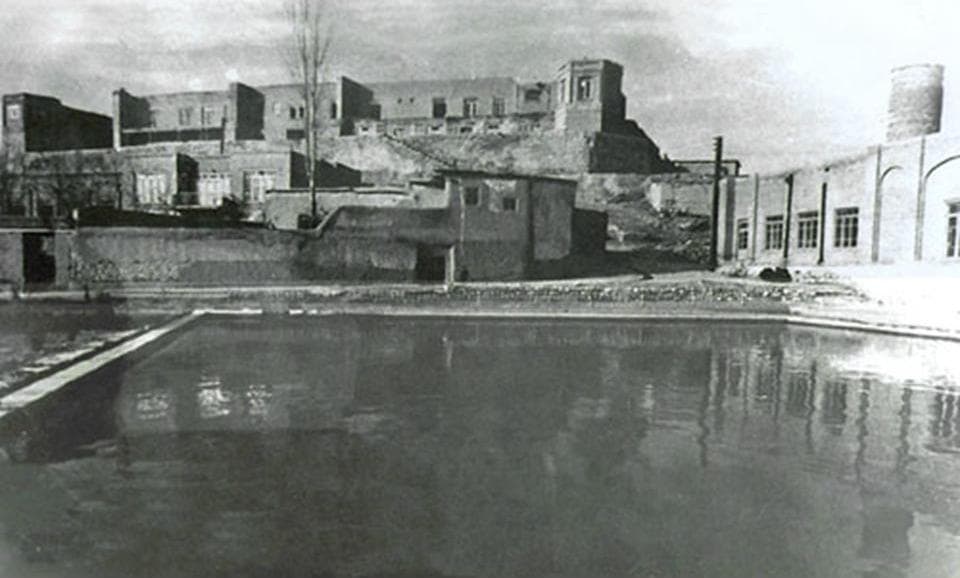
Sardar Castle was constructed in 1868 (1285 AH) by Sardaar Aziz Khaan Mukri near the large reservoir of Bukan in northwestern Iran. The castle's location on a prominent hill, measuring approximately 50 by 60 metres in diameter and rising about 13 metres high, provided a strategic vantage point overlooking the surrounding landscape. The site was chosen for its natural defensive advantages, typical of hill castles designed to oversee and control important water resources and trade routes in the region.
The castle's construction utilized 20×20 cm bricks bonded with gley mortar, along with timber supports, reflecting local building materials and techniques of the late 19th century. This masonry work contributed to the castle's robust structure, suitable for both defense and administrative functions. Although the castle's architectural style does not fall neatly into traditional medieval categories, it represents a modern period fortification with practical design elements adapted to its environment and purpose.
Architectural features and construction
The castle's main structure was compact, built atop the hill to maximize visibility and defensibility. The use of uniform bricks and gley mortar suggests a focus on durability and resistance to the local climate. Timber was likely used for roofing and internal frameworks, common in Iranian constructions of the era. Unfortunately, detailed records of the castle's layout, such as the presence of towers, battlements, or internal courtyards, are scarce due to its later destruction.
Historical usage and transformations
Following its initial role as a fortified residence or administrative center under Sardaar Aziz Khaan Mukri, Sardar Castle underwent several functional transformations throughout the 20th century. Between 1946 and 1973, the castle served as a police headquarters, then as a post office, and subsequently as a school. These changes reflect the shifting social and political landscape of the region and the adaptive reuse of historic buildings to meet contemporary needs.
Despite these adaptations, the castle's physical condition deteriorated over time. In 1983, the original structure was demolished and replaced by a new building that functioned as a Basij (Mobilization) station. This marked the end of Sardar Castle as a historical monument, erasing much of its physical presence and architectural heritage.
Cultural and regional significance
While no longer standing, Sardar Castle remains a significant historical site for the city of Bukan and the broader region of northwestern Iran. It symbolizes the legacy of local leadership under Sardaar Aziz Khaan Mukri and the strategic importance of the reservoir and surrounding area. The castle's history encapsulates a period of transition from traditional fortifications to modern administrative uses in Iranian history.
The site where the castle once stood continues to hold cultural memory and is a point of reference for studies of regional architecture and history in the late 19th and 20th centuries. Its story reflects the broader narrative of Iranian castles adapting to changing political and social realities over time.
Frequently asked questions (FAQ)
- What is the historical significance of Sardar Castle?
- Sardar Castle, located in Iran, is a remarkable example of Qajar architecture and serves as a symbol of the rich cultural heritage of the region. Built in the late 19th century, it reflects the artistic and architectural advancements of its time, making it a key historical site for visitors interested in Iran's past.
- When was Sardar Castle built?
- Sardar Castle was constructed between 1880 and 1886, during the reign of the Qajar dynasty. This period was notable for the flourishing of Persian arts and architecture, which is evident in the castle's intricate designs and decorative elements.
- Can I visit Sardar Castle year-round?
- Yes, Sardar Castle is open to visitors throughout the year. However, the best time to visit is during the spring and autumn months when the weather is mild and pleasant, making for an enjoyable exploration of the castle and its surroundings.
- What are the opening hours for Sardar Castle?
- Sardar Castle typically opens daily from 9 AM to 5 PM. It is advisable to check local listings or the castle's official website for any updates on special hours or closures, especially during holidays.
- Is there an entry fee to visit Sardar Castle?
- Yes, there is a nominal entry fee for visitors wishing to explore Sardar Castle. The ticket prices are relatively affordable, making it accessible for both local and international tourists.
- What are some nearby attractions to Sardar Castle?
- Near Sardar Castle, visitors can explore other historical sites such as the Golestan Palace and the National Museum of Iran. Additionally, the vibrant bazaars and local eateries nearby offer a great opportunity to experience the culture and cuisine of Iran.
- How do I get to Sardar Castle?
- Sardar Castle is located in the heart of the city and is easily accessible by public transportation, including buses and taxis. For those driving, there are parking facilities available nearby, making it convenient for visitors.
- Why is the architecture of Sardar Castle unique?
- The architecture of Sardar Castle is unique due to its blend of traditional Persian elements with European influences, showcasing a fusion of styles that was characteristic of the Qajar era. The intricate tile work, elaborate plasterwork, and grand entrance make it a stunning example of the period's architectural creativity.
- Is it possible to take guided tours at Sardar Castle?
- Yes, guided tours are available at Sardar Castle, offering visitors a deeper insight into its history and architectural features. These tours are often led by knowledgeable guides who can provide rich context and answer any questions you may have during your visit.
Photo gallery

Photo by اسماعیل خان فرخی•Public domain
Information
Loading map...
Visitor reviews
No reviews yet. Been here? Write the first review and help other travelers!
Write the first reviewVisited this castle? Share your experience
Your review helps other travelers and adds first-hand knowledge to our encyclopedia.