Santa Catalina Fortress
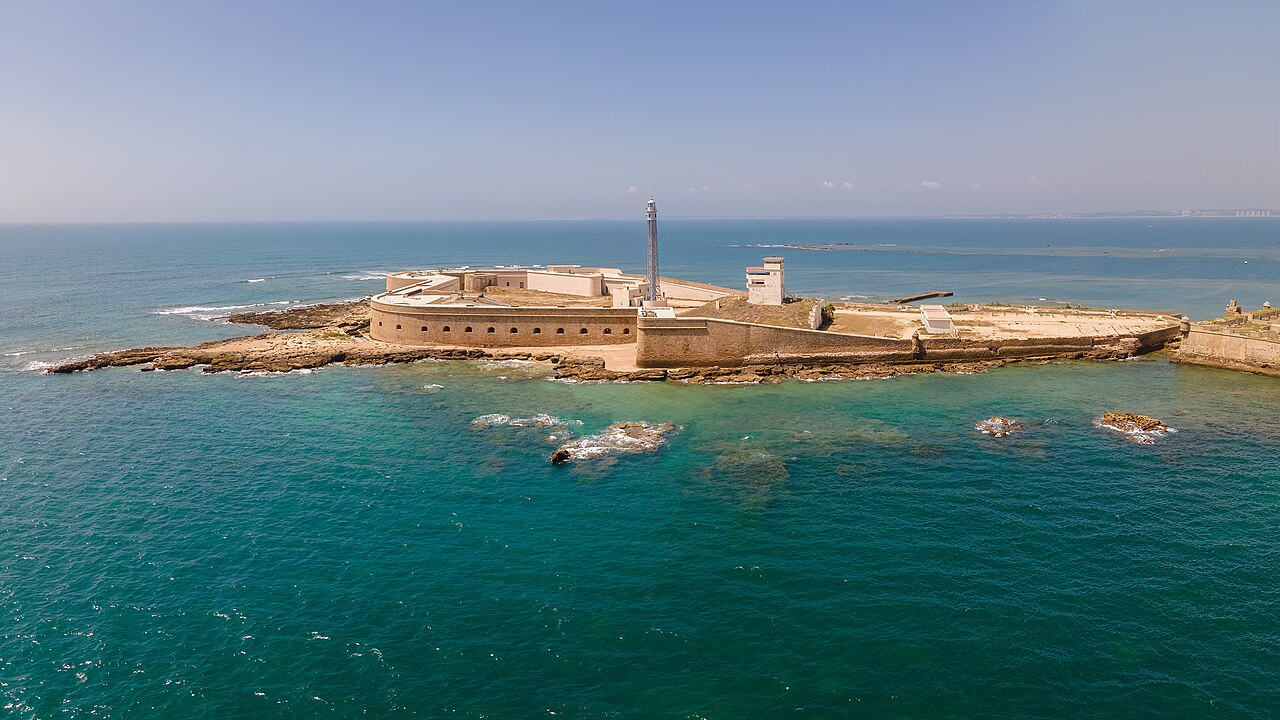
Santa Catalina Fortress is a prominent Renaissance military structure located in Cádiz, Spain. Built in the 17th century, it occupies a strategic position on a rocky outcrop that extends into the sea, offering commanding views over the surrounding waters and the adjacent La Caleta beach to the northwest. This location was chosen for its natural defensive advantages, protecting the city from naval threats.
Architectural design and features
The fortress is notable for its Italian-style star-shaped floor plan, a design characteristic of the Renaissance military architecture that emphasized angled bastions to better deflect artillery fire and provide overlapping fields of fire. This star fort design, also known as a trace italienne, was revolutionary in the 16th and 17th centuries, allowing defenders to cover all approaches with cannon and musket fire effectively.
Santa Catalina Fortress features robust stone walls and bastions that extend into the sea, integrating natural rock formations into its defenses. The fortress includes multiple bastions and curtain walls arranged to maximize defensive coverage. Its layout includes a central courtyard, surrounded by service buildings and defensive structures.
The design also includes moats and drawbridges that controlled access, making it difficult for attackers to breach the fortifications. The fortress’s position on the coast allowed for effective control of maritime traffic entering the bay of Cádiz.
Historical context and military role
Constructed during a period of heightened military tensions in the 17th century, the fortress was part of a broader network of coastal defenses protecting Cádiz, a crucial naval and commercial port for the Spanish Empire. Its primary function was to defend the city from enemy fleets, especially during conflicts with other European powers such as England and the Netherlands.
In addition to its defensive role, Santa Catalina Fortress served as a military prison for several centuries. The prison facilities were integrated within the fortress’s robust walls, providing secure confinement for prisoners of war and military detainees.
Preservation and current status
Today, the fortress is well-preserved and stands as a significant cultural and historical monument in Cádiz. It has undergone various conservation efforts to maintain its structural integrity and historical authenticity. The site is accessible to visitors and often hosts cultural events, exhibitions, and guided tours that highlight its architectural features and historical significance.
Santa Catalina Fortress remains an important symbol of Cádiz’s maritime heritage and its strategic military past, attracting scholars, tourists, and history enthusiasts interested in Renaissance fortifications and Spanish coastal defenses.
Architectural significance in Renaissance military engineering
The fortress exemplifies the transition from medieval castle designs to modern bastioned fortifications influenced by the development of gunpowder artillery. Its star-shaped layout is an adaptation of the trace italienne style, which spread across Europe during the Renaissance to counter the increasing power of cannons.
The angled bastions allowed defenders to cover each other's blind spots and provided platforms for heavy artillery, enhancing the fortress’s offensive and defensive capabilities. This design represented a major advancement in military architecture and influenced fortress construction throughout Spain and beyond.
Location and surroundings
Situated on the coast of Cádiz, the fortress overlooks the Atlantic Ocean and the Bay of Cádiz. Its proximity to La Caleta beach not only provided natural protection but also made it a landmark for sailors and fishermen. The surrounding area is rich in history, with Cádiz being one of the oldest continuously inhabited cities in Western Europe, adding layers of historical context to the fortress’s presence.
The fortress’s coastal position also allowed it to serve as a lookout point, monitoring maritime activity and signaling potential threats to the city.
Frequently asked questions (FAQ)
- How do I get to Santa Catalina Fortress?
- Santa Catalina Fortress is located in Cádiz, Spain, easily accessible by public transport or on foot from the city center. If you are driving, there are nearby parking facilities, but be aware that street parking can be limited. The fortress is situated along the coast, offering beautiful views of the sea.
- What is the historical significance of Santa Catalina Fortress?
- Santa Catalina Fortress was built in the late 17th century to defend the city of Cádiz from naval attacks. It played a crucial role during various military conflicts, including the War of Spanish Succession and the Napoleonic Wars. Today, it stands as a testament to the military architecture of the period and is a popular historical site for visitors.
- When was Santa Catalina Fortress constructed?
- Construction of Santa Catalina Fortress began in 1687 and was completed in 1706. The fortress was designed to enhance the city's coastal defenses and has since become an iconic landmark in Cádiz. Its design reflects the military architectural styles of the late Renaissance and Baroque periods.
- Can I visit Santa Catalina Fortress year-round?
- Yes, Santa Catalina Fortress is open to visitors throughout the year, though hours may vary by season. It's a good idea to check the official website for any special events or closures that might affect your visit. The fortress offers guided tours that provide insight into its rich history and architecture.
- Why is Santa Catalina Fortress a popular tourist attraction?
- Santa Catalina Fortress attracts visitors for its stunning coastal views, rich history, and impressive architecture. The fortress is not only a place to learn about the past but also a beautiful spot for photography and relaxation. Its location near other attractions in Cádiz makes it a must-visit destination.
- Is it possible to take guided tours of Santa Catalina Fortress?
- Yes, guided tours of Santa Catalina Fortress are available and provide an in-depth look at its history and architectural features. These tours are led by knowledgeable guides who can share fascinating stories and facts about the fortress. It's recommended to book in advance, especially during peak tourist seasons.
- What are the opening hours of Santa Catalina Fortress?
- Santa Catalina Fortress typically opens at 10 AM and closes at 8 PM during the summer months, while winter hours may vary slightly. It's advisable to check the fortress's official website for the most current information on opening hours and any special holiday schedules. Planning your visit around these hours will help you make the most of your experience.
- What are the ticket prices for Santa Catalina Fortress?
- Ticket prices for Santa Catalina Fortress are generally affordable, with discounts available for students and seniors. Admission fees help maintain the site and support preservation efforts. Be sure to check the official website for the latest information on ticket prices and any special promotions.
- What nearby attractions can I visit while at Santa Catalina Fortress?
- While visiting Santa Catalina Fortress, you can also explore other nearby attractions such as the Torre Tavira, the Cathedral of Cádiz, and the beautiful La Caleta Beach. The fortress is conveniently located within walking distance of these sites, making it easy to enjoy a full day of sightseeing. Consider taking a leisurely stroll through the charming streets of Cádiz to discover local shops and cafes.
Information
Loading map...
Visitor reviews
No reviews yet. Been here? Write the first review and help other travelers!
Write the first reviewVisited this castle? Share your experience
Your review helps other travelers and adds first-hand knowledge to our encyclopedia.