Arco de los Blancos
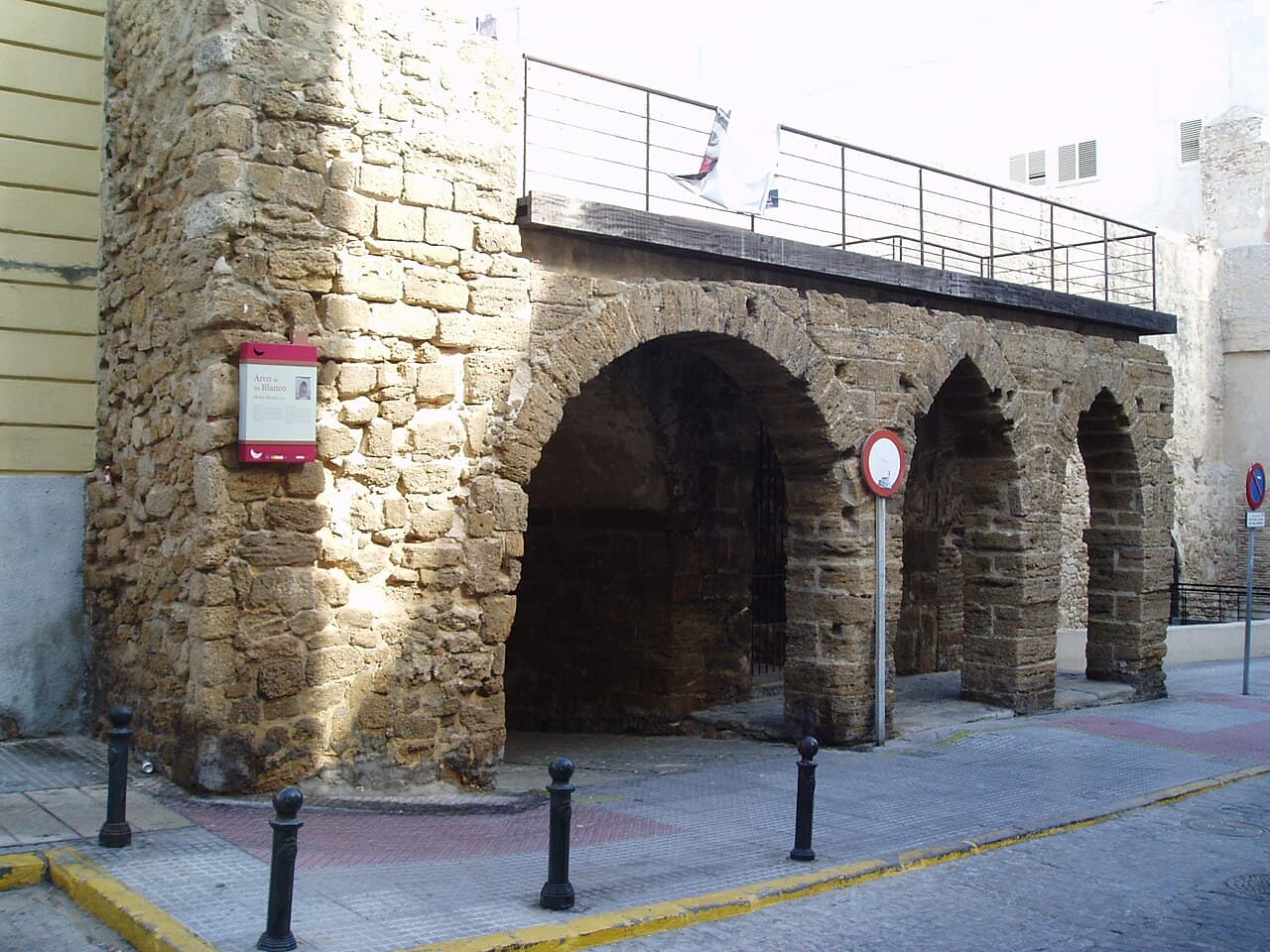
Arco de los Blancos is a significant architectural feature within the Castillo de la Villa in Cádiz, southern Spain. This archway forms part of the remains of a fortress built atop one of the most remarkable ancient Roman structures in the region, the Roman Theatre of Cádiz (Theatrum Balbi). The site has been officially recognized as a Bien de Interés Cultural, underscoring its cultural and historical importance.
The Roman theatre of Cádiz: origins and design
The Roman Theatre of Cádiz is an ancient monument dating back to the 1st century BC. It was among the largest theatres constructed during the Roman Empire, with a cavea (seating area) exceeding 120 meters in diameter. This vast theatre could accommodate approximately 10,000 spectators, highlighting its significance as a major entertainment venue in ancient Hispania.
The theatre's design followed typical Roman architectural principles, featuring a semicircular seating arrangement that sloped down toward the orchestra and stage area. The structure was constructed using local materials and Roman engineering techniques, which allowed for its impressive scale and durability. The theatre was prominently mentioned by classical authors such as Cicero and Strabo, indicating its prominence in the ancient world.
Transformation from theatre to fortress
By the 4th century AD, the Roman Theatre of Cádiz was abandoned, likely due to changing social and political conditions during the late Roman Empire. Centuries later, in the 13th century, the site underwent a dramatic transformation when King Alfonso X of Castile ordered the construction of a fortress over the ruins of the theatre. This fortress, known as the Castillo de la Villa, incorporated the remains of the Roman structure into its defensive walls and fortifications.
The fortress was built as a bastioned fortress, a style characterized by angular bastions designed to better withstand artillery attacks, although the exact details of the bastions at this site reflect adaptations to the pre-existing Roman foundations. The Arco de los Blancos is a notable surviving element from this fortress period, serving as an archway that connects different sections of the castle and offering insight into medieval military architecture layered upon Roman remains.
Archaeological discoveries and historical layers
Excavations at the site began in 1980, revealing not only the theatre but also multiple layers of occupation spanning centuries. Archaeologists uncovered remains from the taifa period, a time of Muslim rule in the Iberian Peninsula, as well as structures from the Almohad period, including houses that illustrate the urban fabric of medieval Cádiz.
Further discoveries included 17th-century pits and other artifacts that demonstrate the continuous use and transformation of the site over time. These findings provide a unique glimpse into the complex history of Cádiz, where Roman, Islamic, and Christian influences intersected.
Architectural significance and preservation
The Arco de los Blancos and the ruins of the Roman Theatre of Cádiz represent a rare example of architectural palimpsest, where multiple historical periods are visible in one location. The site is currently in a state of ruins, but ongoing preservation efforts aim to protect the remaining structures and promote public understanding of their historical context.
The theatre's large scale and the fortress's strategic adaptations highlight the evolving military and cultural priorities in Cádiz over two millennia. Visitors can observe the juxtaposition of Roman engineering with medieval fortification techniques, making the site a valuable resource for studying the architectural and historical development of southern Spain.
Visiting the Arco de los Blancos and Cádiz heritage
Today, the site attracts visitors interested in Roman history, medieval architecture, and the layered heritage of Cádiz. While the fortress is largely in ruins, the Arco de los Blancos remains a prominent feature that evokes the city's medieval past. The location within Cádiz, a city known for its rich history and coastal setting, adds to the appeal for cultural tourism.
Interpretive signage and guided tours often provide context for the archaeological findings and architectural features, enhancing the visitor experience. The site is accessible to the public, offering a tangible connection to the ancient and medieval history of the Iberian Peninsula.
Frequently asked questions (FAQ)
- What is the historical significance of Arco de los Blancos?
- Arco de los Blancos is part of the Castillo de la Villa fortress in Cádiz, built over the ruins of a large Roman theatre from the 1st century BC, reflecting centuries of architectural history.
- When was the Roman Theatre of Cádiz built and abandoned?
- The Roman Theatre of Cádiz was constructed in the 1st century BC and was abandoned by the 4th century AD as the Roman Empire declined.
- Can visitors explore the ruins of the Roman theatre and the fortress?
- Yes, visitors can explore the ruins of both the Roman Theatre and the Castillo de la Villa fortress, including the Arco de los Blancos archway, with guided tours available.
- What architectural styles are visible at the site?
- The site features Roman architectural elements from the theatre and medieval bastioned fortress structures from the 13th century, illustrating a blend of ancient and medieval design.
- Is the site accessible year-round?
- The site is generally open to the public year-round, though specific visiting hours may vary. It is advisable to check local information before planning a visit.
Photo gallery

Information
Current owner
State museum
Loading map...
Visitor reviews
No reviews yet. Been here? Write the first review and help other travelers!
Write the first reviewVisited this castle? Share your experience
Your review helps other travelers and adds first-hand knowledge to our encyclopedia.