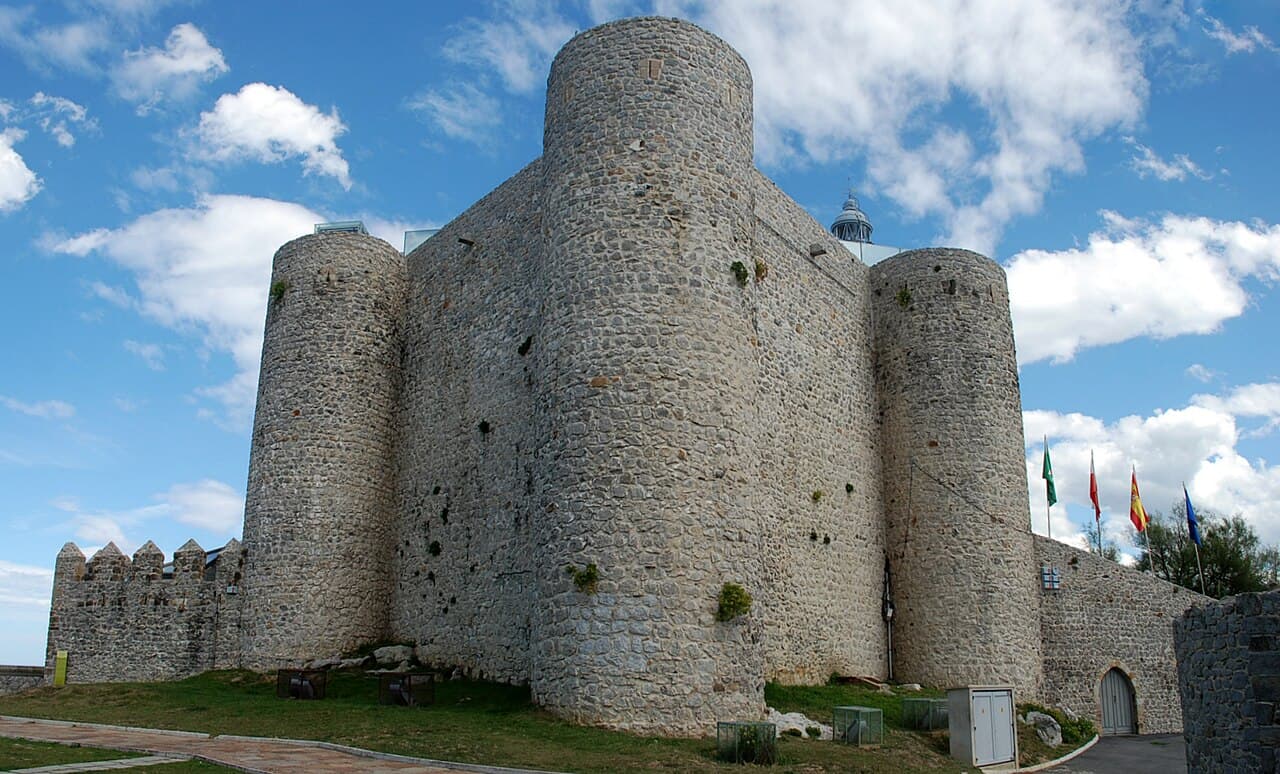
Santa Ana Castle
Santa Ana Castle in Castro Urdiales, Spain, is a notable example of high medieval military architecture strategically positioned on a rocky promontory overlooking the Cantabrian Sea. Constructed in the 13th century, the castle served as a defensive stronghold for the coastal town, guarding maritime approaches and controlling access to the settlement. Though abandoned as a military fortress by the 16th century, its imposing structure and historical significance have made it a landmark of the region.
Historical background and strategic importance
The origins of Santa Ana Castle are closely tied to the early development of Castro Urdiales, a town with roots dating back to Roman times but which saw significant growth during the medieval period. The castle was likely built to consolidate control over the area and protect the town from seaborne threats such as pirates and rival kingdoms. Its location on a hill castle site, approximately eight meters above sea level, allowed for commanding views of the coastline and early warning of approaching vessels.
Construction probably began in the late 12th or early 13th century, coinciding with the establishment of the town's fortified walls. Over subsequent centuries, the castle underwent modifications to adapt to changing military technologies and defensive requirements. By the 16th century, however, advances in artillery and shifts in political power rendered the castle obsolete, leading to its abandonment as a military installation.
Architectural features and layout
Santa Ana Castle is characterized by its pentagonal plan, a relatively uncommon shape that maximizes defensive coverage. The castle's most distinctive features are its five cylindrical corner towers, each rising to about 15 meters in height. These towers provided vantage points for surveillance and platforms for archers or artillery, protecting the castle from attacks on all sides.
The walls connecting the towers are constructed from large, irregular cyclopean stones bound with lime mortar, creating robust fortifications. Notably, the walls themselves lack openings, meaning that all defensive actions would have been conducted from the towers rather than the curtain walls. This design reflects a strategic choice prioritizing strong vertical defense points.
Within the castle's walls lies a rectangular courtyard measuring approximately 23 by 12 meters. Central to this courtyard is a vaulted hall about 17 by 7 meters in dimension, roofed with a barrel vault supported by four cylindrical pillars that also act as buttresses. One pillar extends into a triangular projection facing the town, adding architectural complexity and possibly serving structural or symbolic purposes.
Adjacent to the main structure is a lower crenellated defensive wall, which historically formed part of the outer fortifications protecting the castle. The castle and town were once enclosed by a larger city wall standing six to seven meters tall, though today only fragments remain, including some original battlements and merlons.
Transition from military fortress to maritime landmark
In the mid-19th century, the castle was repurposed to serve maritime navigation needs. A lighthouse was constructed within the castle grounds in 1853, replacing the former chapel space inside the main building. This lighthouse became an important aid to navigation along the northern Spanish coast, marking a significant shift from the castle's original military function to a civil maritime role.
The lighthouse's navigational machinery remains preserved within the castle, highlighting the adaptive reuse of the medieval structure. During the 20th century, restoration efforts led to the removal of the lighthouse keeper's house, which had been built inside the castle, restoring the visibility of the original medieval architecture.
Preservation and cultural significance
Today, Santa Ana Castle is recognized as a valuable cultural and historical monument. Its designation as part of the historic-artistic ensemble of Castro Urdiales in 1978 underscores its importance to the heritage of the region. The castle's well-preserved towers and walls offer insight into medieval defensive strategies and construction techniques.
The castle's location and architectural features make it a popular site for visitors interested in medieval history, military architecture, and coastal fortifications. Its integration with the lighthouse adds a unique layer to its story, illustrating the evolution of coastal defense and navigation over several centuries.
Visitor experience and access
The castle is accessible via a small gate on the sea-facing side, inviting exploration of its towers, courtyard, and vaulted hall. Visitors can appreciate the craftsmanship of the cyclopean stone walls and the strategic design of the pentagonal layout. The preserved lighthouse machinery offers an additional point of interest, connecting the medieval past with maritime history.
The surrounding town of Castro Urdiales complements the castle visit with its own historic streets and coastal charm, making the site part of a broader cultural itinerary in northern Spain.
Frequently asked questions (FAQ)
- How do I get to Santa Ana Castle in Castro Urdiales?
- Santa Ana Castle is located on a rocky hill in the town of Castro Urdiales, accessible by foot from the town center. It is near the coastline and well-signposted for visitors.
- What is the best time to visit Santa Ana Castle?
- The best time to visit Santa Ana Castle is during the spring and summer months when the weather is mild and the coastal views are clear. Early mornings or late afternoons offer pleasant lighting for photography.
- Can I visit the lighthouse inside Santa Ana Castle?
- Yes, the lighthouse built within Santa Ana Castle in 1853 is preserved and can be viewed by visitors. It highlights the castle's transition from military use to maritime navigation.
- Is Santa Ana Castle wheelchair accessible?
- Due to its medieval structure and rocky hill location, Santa Ana Castle has limited wheelchair accessibility. Visitors with mobility concerns should inquire locally about access options.
- Are there guided tours available at Santa Ana Castle?
- Guided tours are occasionally offered by the local tourism office, providing detailed historical and architectural insights. It is advisable to check in advance for tour availability.
- What are the opening hours and ticket prices for Santa Ana Castle?
- Opening hours and ticket prices vary seasonally and by events. Visitors should consult the official Castro Urdiales tourism website or local information centers for current details.
Photo gallery

Information
Sources & official resources
Verify the information above using these authoritative references.
Loading map...
Visitor reviews
No reviews yet. Been here? Write the first review and help other travelers!
Write the first reviewVisited this castle? Share your experience
Your review helps other travelers and adds first-hand knowledge to our encyclopedia.


