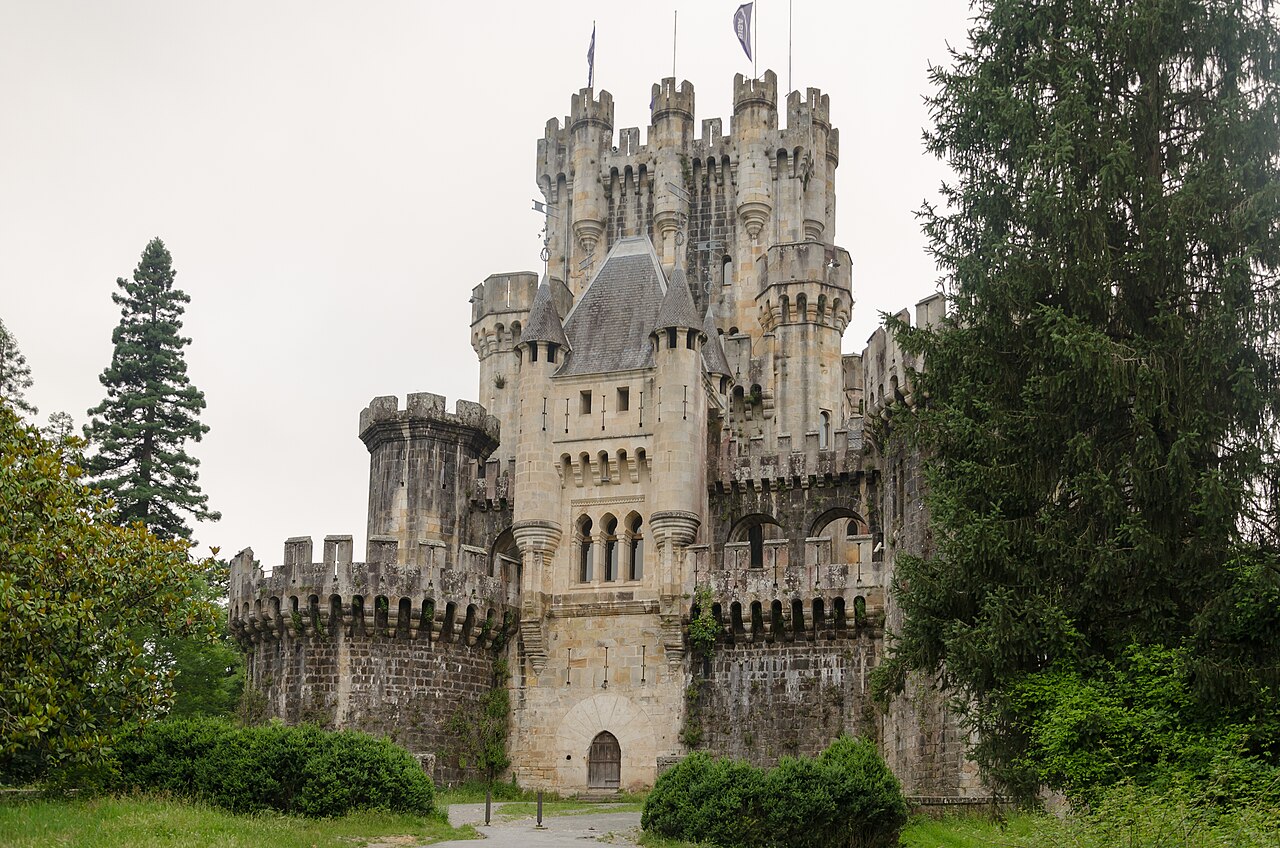
Martiartu Tower
Martiartu Tower stands as a remarkable example of medieval Basque fortification and noble residence, located in the municipality of Erandio, Spain. Constructed in the late 14th century by the influential Basque nobility, it was commissioned by Martin Ortiz de Martiartu, a descendant of Diego Perez de Martiartu Zaharra. The Martiartu family, through strategic marital alliances with the prominent Gomez de Butron and later the Zamudio families, consolidated their control over the surrounding Udondo valley from this commanding stronghold.
The tower's location on the southern slope of Mount Umbe afforded it a strategic vantage point, overseeing the valley below and serving both defensive and residential purposes. It was part of a larger complex that included the nearby San Antonio chapel, an ancient ironworking facility, and extensive family lands. This cluster of structures and estates reflected the economic power and social status of the Martiartu lineage during the late medieval period.
Historical context and family legacy
The Martiartu Tower's origins are deeply rooted in the turbulent feudal landscape of the 14th and 15th centuries in the Basque region. The family’s alliances through marriage with other noble houses such as the Gomez de Butron and Zamudio families were instrumental in maintaining and expanding their territorial influence. These alliances also reinforced the tower’s role as a symbol of power and a defensive bastion in a region marked by intermittent conflicts.
In 1472, the tower endured a significant setback when it was deliberately set on fire by adversaries, an event that underscores the ongoing rivalries and violence of the period. The damage necessitated extensive rebuilding efforts at the dawn of the 16th century. The reconstruction preserved substantial elements of the original Gothic structure, blending them with new masonry work executed in sandstone, which was typical of the era’s architectural practices.
The family's prominence is further commemorated by a funerary monument dedicated to Martin Ortiz de Martiartu and his wife, located outside the Church of Santa Maria in Erandio. This monument serves as a testament to the family's enduring legacy in the region. In modern times, ownership of the tower transferred to the Bilbao city council, despite its geographical location within Erandio. Recent plans announced in March 2023 by the municipality of Erandio aim to repurpose the restored tower for economic use, highlighting ongoing efforts to preserve and adapt this historic structure.
Architectural features and design
Martiartu Tower is a substantial hill castle built primarily of ashlar sandstone masonry. It is a square structure approximately 18 meters tall and 14 meters wide, with impressively thick walls measuring up to 2.4 meters at the base. The walls taper as they rise, a typical defensive feature to enhance stability and resistance to attack. The tower rests on a stepped foundation that adapts to the inclined terrain on its southern and western sides, demonstrating advanced medieval engineering to accommodate the natural landscape.
Defensive elements
The tower was originally equipped with four turrets, of which three remain, including a prominent northwest turret distinguished by a corbel carved with an animal figure. This decorative element adds a unique artistic touch to the otherwise austere defensive structure. The battlements crowning the tower are supported by two rows of corbels and feature a balustrade pierced with openings shaped to mimic crenellations, providing both protection and visibility for defenders.
Defensive apertures are varied and strategically placed. The south facade includes a double Gothic window, a large window, and three narrow arrow slits, all surmounted by battlements. The east side also features battlements, two arrow slits, and two windows, one of which is Gothic in style, allowing for surveillance and archery positions. The north wall is notably flat and devoid of openings, enhancing its defensive strength, while the west side contains a fortified keep with an arrow slit and a small window.
Entrances and internal layout
Access to the tower was through a pointed ogival arch doorway located on a raised platform, characteristic of Gothic architecture. A secondary ogival arch opening exists on the rear facade at ground level. Notably, the lower entrance archway has been sealed with brick and cement in later modifications, indicating changes in the tower’s use or security needs over time.
The interior of the tower is hollow, with remnants of medieval floor levels that divided the space into three stories. Rows of corbels and brackets on the upper floors once supported wooden floor joists, evidencing the tower’s residential function alongside its defensive role. The battlement parapet includes cylindrical turrets at the corners, resting on semicircular corbel shelves that diminish in size as they project outward, a sophisticated architectural detail enhancing both defense and aesthetics.
Associated structures and surrounding environment
Martiartu Tower is part of a small historic complex that includes the San Antonio chapel and several traditional Basque farmhouses known as Bolue, Martusarri, Gallorta, and Etxebarri. These buildings illustrate the tower’s historical relationship with its rural environment and the socio-economic network of the Martiartu family. The nearby ancient ironworking facility further highlights the economic activities that sustained the family’s wealth and influence.
The tower’s position on a hill not only provided military advantages but also symbolized the Martiartu family’s dominance over the Udondo valley. The complex as a whole offers valuable insights into the integration of defensive architecture, residential needs, and economic infrastructure in medieval Basque society.
Preservation and modern significance
Today, Martiartu Tower is recognized as an important cultural and historical monument within the Basque Country. Its well-preserved Gothic features and robust construction have allowed it to endure through centuries of political and social change. The transfer of ownership to the Bilbao city council and the recent plans by the Erandio municipality to repurpose the tower reflect contemporary efforts to maintain and revitalize this heritage site.
Preservation efforts have focused on maintaining the structural integrity of the sandstone masonry and restoring architectural details such as the turrets, battlements, and corbels. The tower’s adaptation for economic use aims to ensure its sustainable future, potentially integrating it into the region’s cultural tourism circuit and local economy.
Martiartu Tower exemplifies the architectural ingenuity and historical depth of medieval Basque fortifications. Its combination of defensive strength, residential comfort, and symbolic presence continues to attract interest from historians, architects, and visitors alike, making it a significant landmark in Spain’s rich medieval heritage.
Frequently asked questions (FAQ)
- How do I visit Martiartu Tower?
- Martiartu Tower is located in Erandio, Spain, and can be visited as part of local heritage tours. Check with the Bilbao city council or Erandio municipality for access details and any guided tours available.
- What is the historical significance of Martiartu Tower?
- Martiartu Tower served as a defensive stronghold and noble residence for the Basque Martiartu family from the late 14th century. It symbolizes medieval Basque feudal power and alliances with prominent noble families.
- When was Martiartu Tower built and rebuilt?
- The tower was originally built in the late 14th century and underwent significant rebuilding in the early 16th century after being damaged in 1472.
- Can I see original Gothic architectural features at Martiartu Tower?
- Yes, Martiartu Tower preserves many Gothic elements such as pointed ogival arch doorways, double Gothic windows, and battlements, reflecting its medieval origins.
- Is the tower accessible for visitors with mobility issues?
- Due to its historic structure and hillside location, accessibility may be limited. Visitors with mobility concerns should inquire locally about accommodations and access routes.
- What are the opening hours and ticket prices for Martiartu Tower?
- Currently, Martiartu Tower is managed by the Bilbao city council, and visiting hours or ticket prices may vary. It is advisable to check official local sources for the latest visitor information.
Information
Sources & official resources
Verify the information above using these authoritative references.
Loading map...
Visitor reviews
No reviews yet. Been here? Write the first review and help other travelers!
Write the first reviewVisited this castle? Share your experience
Your review helps other travelers and adds first-hand knowledge to our encyclopedia.