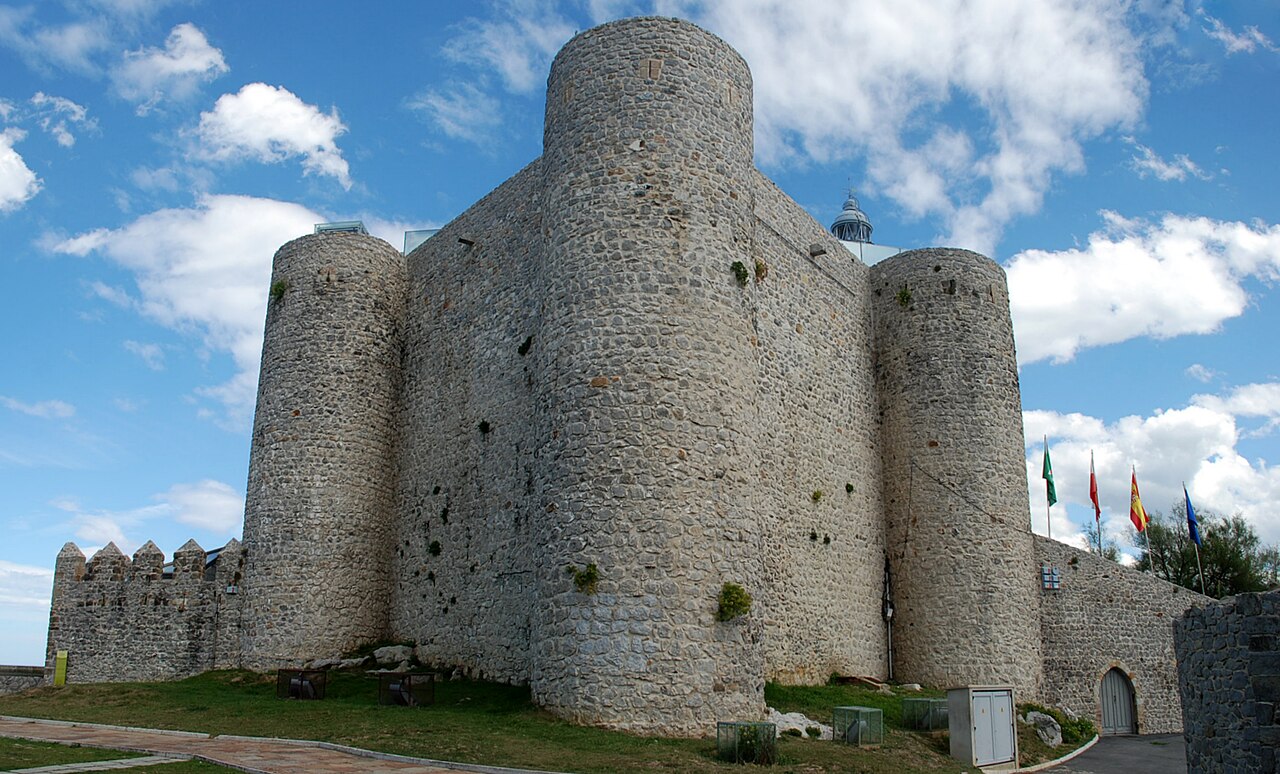
Muñatones Castle
Muñatones Castle stands as a remarkable example of late medieval hill castle architecture in the Basque Country, specifically located in the San Martín neighborhood of Muskiz, Spain. Constructed beginning in 1339, this fortress evolved over the 14th and 15th centuries amid the turbulent factional wars of Enkarterri. It embodies the feudal power and strategic military design of the Basque nobility during a period marked by regional conflict and social upheaval.
The castle was originally founded by Juan López de Salazar and his wife Inés de Muñatones at a site overlooking a once-active river port and near a crucial coastal road connecting Portugalete and Castro Urdiales. This location underscored its dual role as a defensive stronghold and a symbol of territorial control. Over time, the castle underwent significant expansions and fortifications, reflecting the ambitions and status of the Salazar family.
Historical development and noble lineage
The construction of Muñatones Castle spanned several decades, beginning in the early 14th century. The initial phase established a fortified tower and basic defensive walls, which were later reinforced by Juan Sánchez in the latter half of the 14th century. His efforts focused on strengthening the castle's defenses to withstand the frequent skirmishes and power struggles of the region.
The most transformative period came under Lope García de Salazar, the grandson of the founder, who between 1439 and 1446 undertook a comprehensive renovation. He expanded and raised the main tower, thickened the walls significantly, and relocated the principal entrance to improve both security and accessibility. This renovation not only enhanced the castle's defensive capabilities but also adapted it into a more comfortable noble residence, reflecting the evolving needs of the Basque aristocracy.
Further modifications were made by Juan Salazar near the end of the 15th century. He reconfigured upper residential floors, replacing an open terrace with a wooden chamber featuring a four-sloped roof, and added new buildings within the courtyard. Defensive structures were also bolstered with additional towers, bastions, and an expanded moat, reinforcing the castle's fortifications against emerging military threats.
Architectural features and defensive systems
The castle's core is a square tower constructed from a blend of finely cut ashlar stone and rubble masonry. The original tower walls were approximately 1.10 meters thick, later increased to about 2.80 meters during 15th-century renovations. Today, the tower rises between 20 and 25 meters tall, comprising two full floors and the start of a third, crowned by a crenellated terrace with a protective parapet and two corner turrets.
Uniquely, the tower's ground floor lacks any external entrance, illuminated only by three narrow arrow slits angled inward to maximize natural light rather than serve as defensive firing points. These windows are topped by lintels supported on corbels, a characteristic feature of Basque medieval military architecture.
The first floor served as the main living area and is notably tall, occupying nearly two-thirds of the tower's height. The original entrance here featured a pointed arch with a flattened barrel vault, later sealed and replaced by a doorway on a lateral wall, reflecting 15th-century architectural trends. Broad openings near the top of this floor improved interior lighting.
Surrounding the tower, Lope García de Salazar added palatial residential buildings supported by stone masonry walls. These structures included multiple levels, with lower floors designated for service and bedrooms, and an upper floor extending the attic space. The entire complex was enclosed by a large curtain wall originally about 10 meters high, now approximately 7.5 meters, built from irregular rubble stone. The wall featured a single pointed-arch entrance with preserved iron hinges and locking mechanisms.
The castle's defensive perimeter was further enhanced with a second outer wall, replacing an earlier earthwork rampart. This wall incorporated cylindrical towers, square bastions, and was protected by a surrounding moat. A barbican fortified the complex on three sides, adding an additional layer of defense.
Cultural significance and preservation
Muñatones Castle is not only an architectural landmark but also a cultural symbol of Basque nobility and medieval history. It was the birthplace of Don Lope García de Salazar, a notable nobleman and historian who authored the first known history of the Biscayan people, providing invaluable insight into the region's medieval life.
The castle was officially recognized for its historical and artistic value in the 20th century, designated a historic-artistic monument by the Spanish government in the 1940s and later declared a cultural asset by the Basque Government in 2001. Despite its proximity to the modern industrial landscape of the Petronor petrochemical complex, which incorporates the castle's battlements in its corporate logo, the castle remains under the care of the Provincial Council of Bizkaia.
Today, Muñatones Castle stands as one of the most architecturally complex and well-preserved medieval fortifications in the Basque Country, offering visitors a tangible connection to the region's feudal past and noble heritage. Its combination of military robustness and residential refinement illustrates the dual functions of medieval castles as both fortresses and noble homes.
Architectural details and unique characteristics
The castle's square tower is notable for its vertical emphasis and depth, a design more typical of urban fortifications than rural strongholds. The thickened walls and crenellated terrace with corner turrets provided both defense and vantage points for surveillance.
The absence of a ground-floor entrance and the use of narrow arrow slits for lighting rather than defense is an unusual feature among Basque towers, highlighting a design focus on security and comfort. The vaulted entrance on the first floor and the later relocation of the main doorway reflect evolving architectural trends and practical adaptations over time.
The residential buildings surrounding the tower illustrate a blend of defensive and domestic architecture, with multi-level stone structures that accommodated both living quarters and service areas. The robust curtain walls and outer defensive works, including the moat and barbican, demonstrate a comprehensive approach to medieval fortification in the region.
The chapel and renaissance palace
The castle was historically part of a larger complex that included the San Martín de Muñatones chapel and a Renaissance palace, the latter of which has been restored. These additional structures indicate the castle's role not only as a military fortress but also as a center of religious and cultural life for the local nobility.
Visitor information and accessibility
While Muñatones Castle is situated within a modern industrial area, it remains accessible to visitors interested in medieval architecture and Basque history. The castle's well-preserved structures provide valuable insight into the design and function of fortified noble residences during the late medieval period.
Frequently asked questions (FAQ)
- What is Muñatones Castle known for?
- Muñatones Castle is known for its impressive medieval architecture and significant historical value, dating back to the late 14th century. It serves as a fantastic example of the defensive structures built during the feudal period in Spain, and its unique design reflects the strategic importance of the region.
- When was Muñatones Castle built?
- Muñatones Castle was constructed in the late 14th century, around 1380. It was originally built as a fortress to protect the area from invasions and to assert the power of the local nobility.
- Can I visit Muñatones Castle?
- Yes, visitors can explore Muñatones Castle, as it is open to the public. It's advisable to check the opening hours and any specific visitor guidelines before planning your trip.
- What are the opening hours for Muñatones Castle?
- Muñatones Castle typically opens to visitors from Tuesday to Sunday, with varying hours depending on the season. Always verify the current hours before your visit, as they may change for special events or holidays.
- Is it possible to access Muñatones Castle with limited mobility?
- While Muñatones Castle has some accessible areas, the historical nature of the site may pose challenges for those with limited mobility. It's recommended to contact the site in advance to inquire about specific accessibility options.
- What is the best time to visit Muñatones Castle?
- The best time to visit Muñatones Castle is during the spring and early autumn months when the weather is mild and pleasant. Visiting during these seasons allows for a more enjoyable experience while exploring the castle and its surroundings.
- What are the ticket prices for Muñatones Castle?
- Ticket prices for Muñatones Castle are generally affordable, with discounts available for children and seniors. Check the official website or visitor center for the most up-to-date pricing information.
- Are there any nearby attractions to Muñatones Castle?
- Yes, there are several attractions near Muñatones Castle, including beautiful hiking trails and local museums that showcase the region's history. The picturesque town of Muskiz itself also offers charming streets and local eateries to enjoy.
Information
Website
Visit websiteSources & official resources
Verify the information above using these authoritative references.
Loading map...
Visitor reviews
No reviews yet. Been here? Write the first review and help other travelers!
Write the first reviewVisited this castle? Share your experience
Your review helps other travelers and adds first-hand knowledge to our encyclopedia.