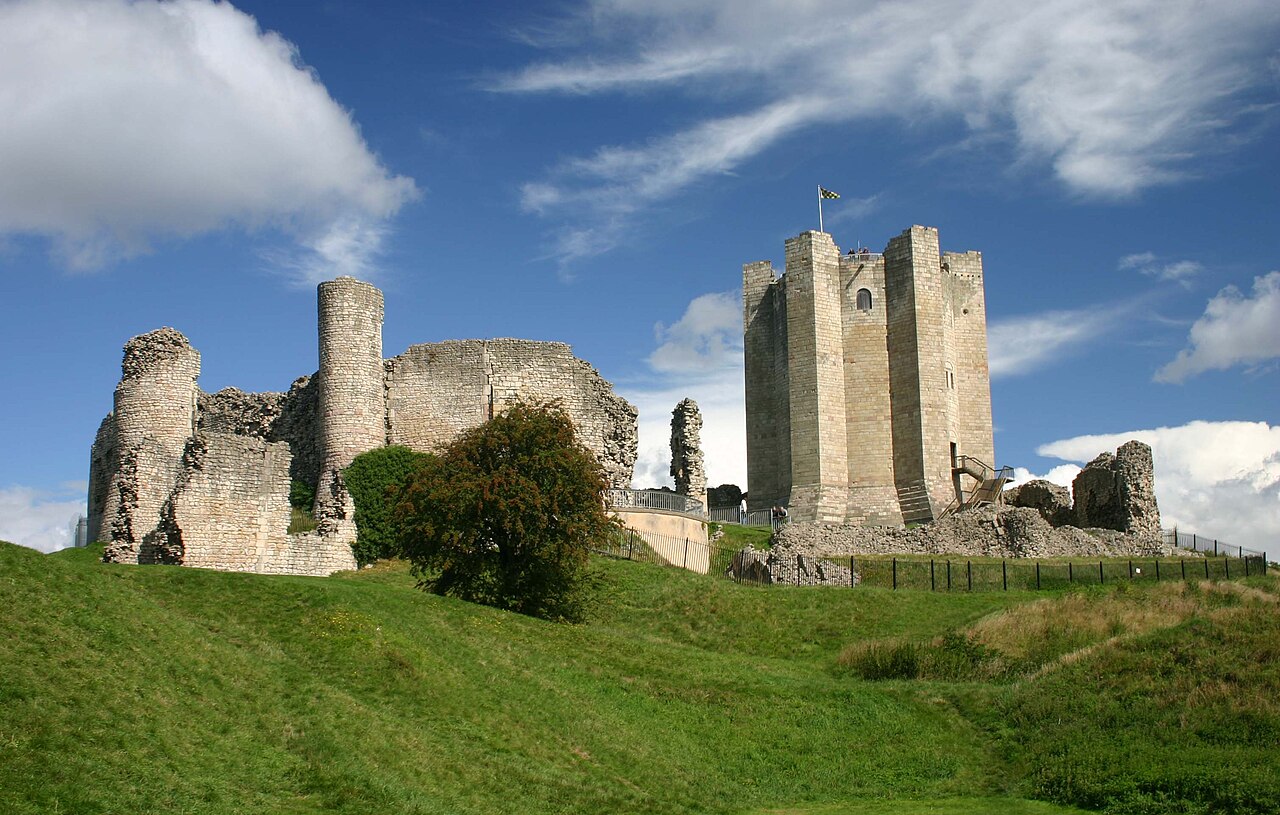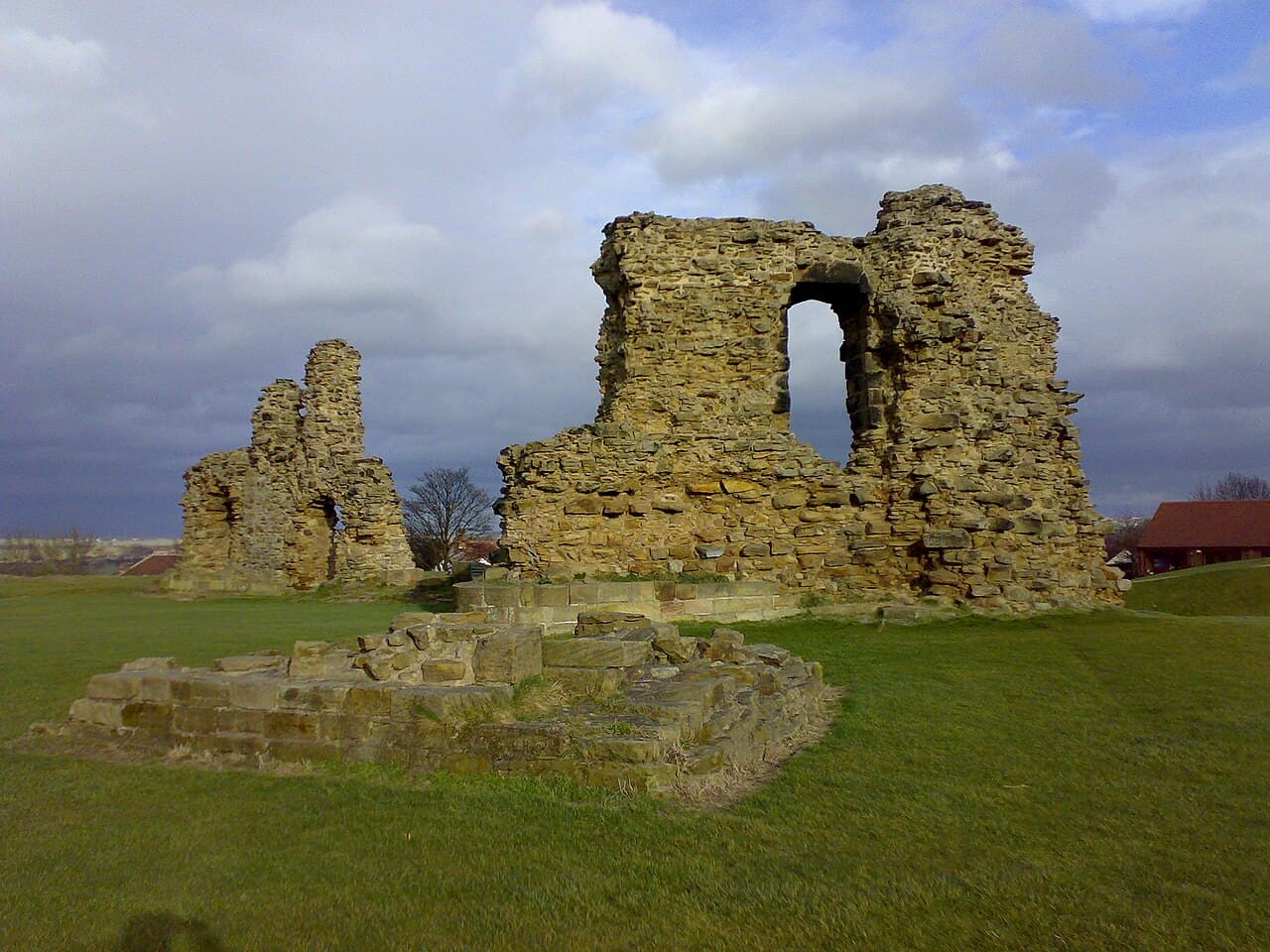
Sandal Castle stands as a remarkable testament to Norman military architecture and medieval history in Wakefield, England. Perched on the strategic sandstone ridge known as Oaks Rock, this hill castle features one of the best-preserved mottes in the country, offering visitors a vivid glimpse into England's feudal past. The castle's origins trace back to the early 12th century, with construction likely completed around 1130 by the de Warenne family, prominent Norman nobles who played a crucial role in English and Scottish affairs.
The initial fortification was a classic motte-and-bailey design, featuring a raised earth mound surrounded by a deep moat. Over the 13th century, the castle underwent significant transformation as stone replaced timber, elevating Sandal from a simple wooden stronghold to a formidable stone fortress. This evolution reflected the growing importance of the site and the wealth and influence of its owners. The castle's architecture includes a circular stone keep with four towers, a curtain wall enclosing a crescent-shaped bailey, and a complex barbican with defensive features such as a portcullis and drawbridge.
Early history and the de Warenne legacy
The land on which Sandal Castle sits was granted by King Henry I in 1107 to William de Warenne, 2nd Earl of Surrey. The de Warenne family established the initial timber fortification and maintained control for several generations. Their influence extended beyond Wakefield, with family members like John de Warenne, 6th Earl of Surrey, serving as military leaders in campaigns such as the Battle of Falkirk in 1298. The family's stewardship saw the castle's expansion and fortification, including the transition to stone construction during the 13th century, which significantly enhanced the castle's defensive capabilities.
Architectural developments in the 13th century
The 13th-century rebuilding introduced a circular stone keep at the heart of the castle, reinforced by four towers rising four stories high. Two of these towers formed the main gatehouse, controlling access to the fortress. The keep's design was sophisticated, featuring double walls with an inner space housing guardrooms, storerooms, and servant quarters on the ground floor. Above these were the main hall for gatherings and private apartments on the upper floors. Essential medieval amenities such as garderobes (toilets) were incorporated into the towers, emptying outside the walls to maintain hygiene.
The castle's curtain wall stood approximately 6 meters tall and included a walkway for defenders to patrol and defend the perimeter. This wall enclosed a crescent-shaped bailey measuring roughly 71 by 52 meters, which contained several key features, including a well and privy shafts. The defensive design was further strengthened by the addition of a barbican in the early 1270s, a three-story tower with its own moat, gate, and portcullis. The barbican's layout forced attackers to navigate a sharp right-angled turn, exposing them to defensive fire and slowing their advance.
Association with the house of york and the wars of the roses
In 1347, ownership passed from Edward III to his son Edmund of Langley, the first Duke of York, marking the castle's long association with the House of York. Despite this connection, the York family rarely resided at Sandal Castle, preferring to manage it through appointed constables and stewards. The castle's strategic importance, however, remained significant, especially during the turbulent period of the Wars of the Roses.
The battle of wakefield, 1460
Sandal Castle was the site of the pivotal Battle of Wakefield in December 1460, a major conflict in the Wars of the Roses. The battle resulted in the defeat and death of Richard Plantagenet, 3rd Duke of York, and his son Edmund, Earl of Rutland. This event was a critical turning point in the dynastic struggle between the houses of York and Lancaster, profoundly impacting English history. The castle's role as a military stronghold during this period underscores its strategic and symbolic importance.
Richard iii and the castle's final medieval phase
Following Richard III's accession to the throne in 1483, he ordered substantial repairs and improvements to Sandal Castle, aiming to establish it as a permanent northern residence. These enhancements included strengthening the castle's defenses and adapting it for more comfortable habitation. However, Richard's defeat and death at the Battle of Bosworth Field in 1485 abruptly ended these plans. Subsequently, the castle's prominence declined, and it gradually fell into disuse.
The english civil war and decline
During the English Civil War in the mid-17th century, Sandal Castle was held by Royalist forces. It endured at least three sieges by Parliamentarian troops in 1645. The garrison surrendered on October 1, 1645, after which Parliament ordered the castle to be rendered militarily unusable, a process known as slighting. This marked the beginning of the castle's long period of ruin and decay.
Archaeological discoveries and preservation efforts
Interest in Sandal Castle's history and archaeology began in earnest in 1893 with excavations by the Yorkshire Archaeological Society. A more extensive excavation project from 1964 to 1973 involved academic experts and local volunteers, uncovering evidence of human activity at the site dating back to the Mesolithic period, around 5,000 years ago. These findings highlight the site's long-standing significance beyond its medieval castle phase.
Today, Sandal Castle is protected as a Scheduled Monument and is listed as a Grade II* building, recognizing its exceptional cultural and historical value. Conservation efforts include the installation of a wooden walkway to protect the motte summit from erosion while allowing public access. A visitor center near the ruins provides educational resources and interpretation for visitors.
Architectural features and the castle's layout
The castle's location on Oaks Rock provided a natural defensive advantage, with the motte rising approximately 10 meters above the surrounding terrain. The moat encircling the motte is about 7 meters wide, emphasizing the defensive design. The stone keep, with its robust towers and double walls, was a formidable structure designed for both defense and residence.
The barbican, constructed in the 1270s, is a standout feature, with its three stories, moat, gate, and portcullis. The design forced attackers into a vulnerable position before reaching the keep. The castle's well, at 37 meters deep, ensured a reliable water supply, crucial during sieges. Additional wells and privy shafts within the bailey supported the daily needs of the castle's inhabitants.
Although much of the castle's stone was later repurposed for local buildings, the remaining earthworks, walls, and towers offer valuable insight into medieval fortification techniques. The castle's ruins, combined with archaeological findings, make Sandal Castle a significant site for understanding Norman and medieval military architecture in England.
Frequently asked questions (FAQ)
- What is the historical significance of Sandal Castle?
- Sandal Castle is a medieval fortress that played a crucial role in the Wars of the Roses, serving as a stronghold for the York family. Its strategic location and impressive architecture make it a key site for understanding English history during the 15th century.
- When was Sandal Castle built?
- Construction of Sandal Castle began in the late 12th century, with significant developments occurring throughout the 13th and 14th centuries. The castle was continually modified and expanded, reflecting the military and residential needs of its occupants over the centuries.
- Can I visit Sandal Castle year-round?
- Yes, Sandal Castle is open to visitors throughout the year, but it's advisable to check the specific opening hours as they may vary by season. Certain facilities may be limited during winter months, so planning ahead is recommended.
- What are the opening hours for Sandal Castle?
- Sandal Castle generally opens at 10 AM and closes at 5 PM from April to September, while the hours may vary in the off-peak months. Visitors should check the official website before their visit for the most current information on opening times.
- Is it possible to access Sandal Castle with a wheelchair?
- Sandal Castle has made efforts to improve accessibility; however, due to its historical nature, some areas may present challenges. It is recommended to contact the site in advance to inquire about specific accessibility options available for visitors with mobility needs.
- What are the ticket prices for Sandal Castle?
- Admission to Sandal Castle is typically very affordable, with concessions available for children, seniors, and families. It’s best to check the official website for the most accurate pricing and any special offers available at the time of your visit.
- When is the best time to visit Sandal Castle?
- The best time to visit Sandal Castle is during the spring and summer months when the weather is pleasant and the grounds are in full bloom. Additionally, this is when the castle hosts various events and activities that enhance the visitor experience.
- Are there any nearby attractions to Sandal Castle?
- Yes, Sandal Castle is located near several attractions, including the historic city of Wakefield and the beautiful Pugneys Country Park. Visitors can enjoy exploring the area’s rich cultural heritage and natural beauty, making it a great destination for a full day out.
Photo gallery

Information
Website
Visit websiteSources & official resources
Verify the information above using these authoritative references.
Loading map...
Visitor reviews
No reviews yet. Been here? Write the first review and help other travelers!
Write the first reviewVisited this castle? Share your experience
Your review helps other travelers and adds first-hand knowledge to our encyclopedia.