Stainborough Castle

Stainborough Castle: an 18th-century Gothic folly in South Yorkshire
South Yorkshire, England, United Kingdom
Post-Renaissance (17th–18th c.)
Restored

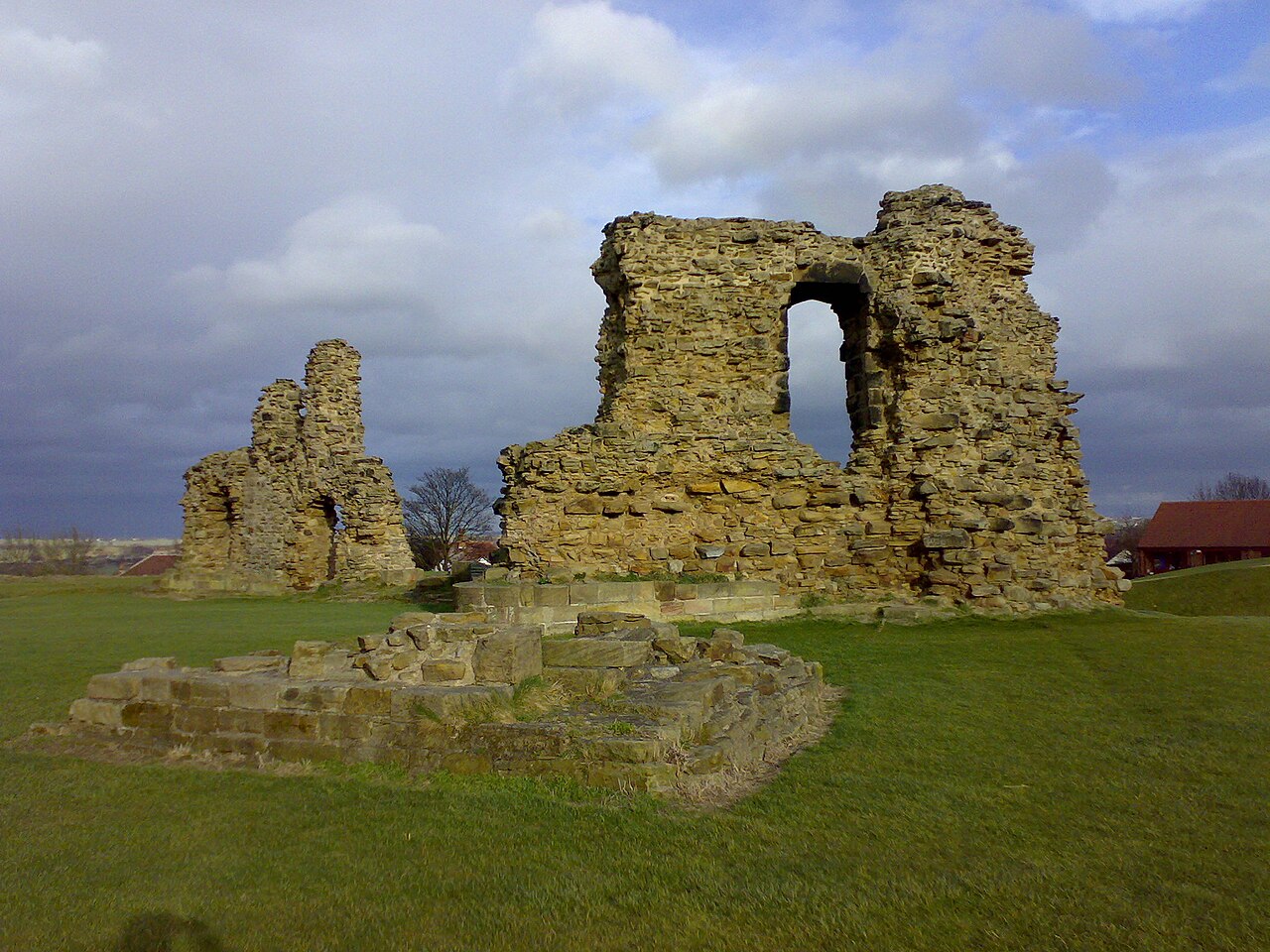
Stainborough Castle stands as a remarkable example of an early Gothic folly in England, completed in 1731. Nestled within the gardens of Wentworth Castle near Barnsley in South Yorkshire, this elaborate structure reflects the architectural tastes and social ambitions of the 18th-century English gentry. Originally constructed on the footprint of a 17th-century building by Sir Gervase Cutler, it was transformed under the direction of Thomas Wentworth, Baron Raby, who sought to rival the grandeur of the nearby Wentworth Woodhouse estate.

Origins and historical context

The genesis of Stainborough Castle is closely tied to the fortunes and rivalries of the Wentworth family. Thomas Wentworth, later the 1st Earl of Strafford, had expected to inherit the prestigious Wentworth Woodhouse mansion but was ultimately disappointed. In response, he purchased the nearby estate where Stainborough Castle now stands and embarked on an ambitious project to create a residence that could compete with the home of his distant relative, Thomas Watson. This rivalry inspired the castle’s scale and decorative style, which embodied the vanity and aspirations of the period’s aristocracy.

Architectural design and features

Stainborough Castle is notable for being one of the earliest examples of a Gothic revival structure in England, predating the widespread Gothic Revival movement by several decades. The castle’s design incorporates characteristic features such as pointed arches, battlements, towers, and ornamental stonework that evoke medieval Gothic architecture but serve primarily decorative rather than defensive purposes. The building’s layout and stylistic elements were intended to impress visitors and demonstrate the owner's taste and status rather than to provide military fortification.

Towers and views

The castle originally featured multiple towers, two of which suffered collapse due to subsidence caused by extensive open cast mining beneath the estate. The restoration efforts have stabilized the structure, and the main tower now offers expansive views stretching as far as the Ferrybridge power station and beyond on clear days. These vistas highlight the castle’s elevated position within the landscape and its role as a picturesque focal point within the gardens of Wentworth Castle.

Impact of mining and restoration

The 20th century brought significant challenges to Stainborough Castle when open cast mining operations undermined its foundations, leading to the collapse of two towers and extensive damage. This period marked one of the most precarious times for the estate’s survival. However, dedicated restoration efforts have since returned the castle to a stable and visually impressive state, preserving its historical and architectural significance for future generations. Today, it stands as a testament to the resilience of heritage architecture amid industrial impacts.

Stainborough Castle within Wentworth Castle estate

While Stainborough Castle is often overshadowed by the grandeur of the main Wentworth Castle mansion, it remains an integral part of the estate’s historical narrative and garden design. The folly’s placement in a secluded corner of the gardens creates a sense of discovery for visitors, offering a glimpse into the 18th-century aristocratic lifestyle and the era’s fascination with medieval romanticism. Its elaborate design and historical associations enrich the cultural landscape of the estate and contribute to its status as a heritage destination.

Connection to Wentworth Woodhouse

The rivalry that sparked the creation of Stainborough Castle is emblematic of the complex family dynamics and inheritance disputes that shaped much of the English aristocracy’s architectural patronage. Thomas Wentworth’s failure to inherit Wentworth Woodhouse and his subsequent investment in Stainborough Castle illustrate how architecture was used as a means of asserting social position and legacy during the Georgian era.

Visiting Stainborough Castle today

Today, visitors to the Wentworth Castle gardens can explore Stainborough Castle and appreciate its unique architectural character and historical context. The castle’s restoration has made it accessible and safe for public viewing, allowing guests to enjoy not only its design but also the panoramic views from the main tower. Its presence adds depth to the visitor experience, combining natural beauty with cultural heritage.

Visitor experience and accessibility

While the castle is tucked away in a garden corner, well-marked paths guide visitors to the folly. The site offers an evocative atmosphere that transports visitors to the 18th century, enriched by interpretive materials that explain the castle’s history and architectural significance. The surrounding gardens complement the visit with their historic landscaping and scenic vistas.

Frequently asked questions (FAQ)

When was Stainborough Castle built and by whom?
Stainborough Castle was completed in 1731 by Thomas Wentworth, Baron Raby, who later became the 1st Earl of Strafford.
What architectural style is Stainborough Castle?
Stainborough Castle is one of the earliest examples of Gothic revival architecture in England, featuring pointed arches, battlements, and ornamental stonework.
Can visitors access the towers of Stainborough Castle?
Yes, after restoration, visitors can access the main tower, which offers expansive views of the surrounding South Yorkshire landscape.
How did mining affect Stainborough Castle?
Open cast mining undermined the castle's foundations, causing the collapse of two towers, but restoration efforts have since stabilized and preserved the structure.
What is the relationship between Stainborough Castle and Wentworth Woodhouse?
Stainborough Castle was built by Thomas Wentworth after he failed to inherit Wentworth Woodhouse, intending to rival the grandeur of that estate.

Information

Hill Castle

Sources & official resources

Verify the information above using these authoritative references.

Loading map...

Visitor reviews

No reviews yet. Been here? Write the first review and help other travelers!

Write the first review

Visited this castle? Share your experience

Your review helps other travelers and adds first-hand knowledge to our encyclopedia.
Write a review

(5/5)

0/2000 characters

Your review will be visible after admin approval

Nearby castles

15.3 km
Sandal Castle — United Kingdom castle

Sandal Castle

Wakefield, United Kingdom

Sandal Castle stands as a remarkable testament to Norman military architecture and medieval history in Wakefield, England. Perched on the strategic sandstone ridge known as Oaks Rock, this hill castle features one of the best-preserved mottes in the country, offering visitors a vivid glimpse into England's feudal past. The castle's origins trace back to the early 12th century, with construction likely completed around 1130 by the de Warenne family, prominent Norman nobles who played a crucial role in English and Scottish affairs. The initial fortification was a classic motte-and-bailey design, featuring a raised earth mound surrounded by a deep moat. Over the 13th century, the castle underwent significant transformation as stone replaced timber, elevating Sandal from a simple wooden stronghold to a formidable stone fortress. This evolution reflected the growing importance of the site and the wealth and influence of its owners. The castle's architecture includes a circular stone keep with four towers, a curtain wall enclosing a crescent-shaped bailey, and a complex barbican with defensive features such as a portcullis and drawbridge. Early history and the de Warenne legacy The land on which Sandal Castle sits was granted by King Henry I in 1107 to William de Warenne, 2nd Earl of Surrey. The de Warenne family established the initial timber fortification and maintained control for several generations. Their influence extended beyond Wakefield, with family members like John de Warenne, 6th Earl of Surrey, serving as military leaders in campaigns such as the Battle of Falkirk in 1298. The family's stewardship saw the castle's expansion and fortification, including the transition to stone construction during the 13th century, which significantly enhanced the castle's defensive capabilities. Architectural developments in the 13th century The 13th-century rebuilding introduced a circular stone keep at the heart of the castle, reinforced by four towers rising four stories high. Two of these towers formed the main gatehouse, controlling access to the fortress. The keep's design was sophisticated, featuring double walls with an inner space housing guardrooms, storerooms, and servant quarters on the ground floor. Above these were the main hall for gatherings and private apartments on the upper floors. Essential medieval amenities such as garderobes (toilets) were incorporated into the towers, emptying outside the walls to maintain hygiene. The castle's curtain wall stood approximately 6 meters tall and included a walkway for defenders to patrol and defend the perimeter. This wall enclosed a crescent-shaped bailey measuring roughly 71 by 52 meters, which contained several key features, including a well and privy shafts. The defensive design was further strengthened by the addition of a barbican in the early 1270s, a three-story tower with its own moat, gate, and portcullis. The barbican's layout forced attackers to navigate a sharp right-angled turn, exposing them to defensive fire and slowing their advance. Association with the house of york and the wars of the roses In 1347, ownership passed from Edward III to his son Edmund of Langley, the first Duke of York, marking the castle's long association with the House of York. Despite this connection, the York family rarely resided at Sandal Castle, preferring to manage it through appointed constables and stewards. The castle's strategic importance, however, remained significant, especially during the turbulent period of the Wars of the Roses. The battle of wakefield, 1460 Sandal Castle was the site of the pivotal Battle of Wakefield in December 1460, a major conflict in the Wars of the Roses. The battle resulted in the defeat and death of Richard Plantagenet, 3rd Duke of York, and his son Edmund, Earl of Rutland. This event was a critical turning point in the dynastic struggle between the houses of York and Lancaster, profoundly impacting English history. The castle's role as a military stronghold during this period underscores its strategic and symbolic importance. Richard iii and the castle's final medieval phase Following Richard III's accession to the throne in 1483, he ordered substantial repairs and improvements to Sandal Castle, aiming to establish it as a permanent northern residence. These enhancements included strengthening the castle's defenses and adapting it for more comfortable habitation. However, Richard's defeat and death at the Battle of Bosworth Field in 1485 abruptly ended these plans. Subsequently, the castle's prominence declined, and it gradually fell into disuse. The english civil war and decline During the English Civil War in the mid-17th century, Sandal Castle was held by Royalist forces. It endured at least three sieges by Parliamentarian troops in 1645. The garrison surrendered on October 1, 1645, after which Parliament ordered the castle to be rendered militarily unusable, a process known as slighting. This marked the beginning of the castle's long period of ruin and decay. Archaeological discoveries and preservation efforts Interest in Sandal Castle's history and archaeology began in earnest in 1893 with excavations by the Yorkshire Archaeological Society. A more extensive excavation project from 1964 to 1973 involved academic experts and local volunteers, uncovering evidence of human activity at the site dating back to the Mesolithic period, around 5,000 years ago. These findings highlight the site's long-standing significance beyond its medieval castle phase. Today, Sandal Castle is protected as a Scheduled Monument and is listed as a Grade II* building, recognizing its exceptional cultural and historical value. Conservation efforts include the installation of a wooden walkway to protect the motte summit from erosion while allowing public access. A visitor center near the ruins provides educational resources and interpretation for visitors. Architectural features and the castle's layout The castle's location on Oaks Rock provided a natural defensive advantage, with the motte rising approximately 10 meters above the surrounding terrain. The moat encircling the motte is about 7 meters wide, emphasizing the defensive design. The stone keep, with its robust towers and double walls, was a formidable structure designed for both defense and residence. The barbican, constructed in the 1270s, is a standout feature, with its three stories, moat, gate, and portcullis. The design forced attackers into a vulnerable position before reaching the keep. The castle's well, at 37 meters deep, ensured a reliable water supply, crucial during sieges. Additional wells and privy shafts within the bailey supported the daily needs of the castle's inhabitants. Although much of the castle's stone was later repurposed for local buildings, the remaining earthworks, walls, and towers offer valuable insight into medieval fortification techniques. The castle's ruins, combined with archaeological findings, make Sandal Castle a significant site for understanding Norman and medieval military architecture in England.

Details
15.9 km
Sheffield Castle — United Kingdom castle

Sheffield Castle

, United Kingdom

Sheffield Castle was a significant medieval fortress located in Sheffield, England, at the strategic confluence of the River Sheaf and the River Don. The site likely hosted an earlier Anglo-Saxon long house before the construction of a motte and bailey castle in the century following the Norman Conquest of 1066. This initial wooden fortification was destroyed during the Second Barons' War in the mid-13th century. In 1270, construction began on a more durable stone castle on the same site, marking the transition from timber to masonry that was common in high medieval castle architecture. This stone castle featured typical defensive elements of the period, including thick curtain walls, towers, and possibly a gatehouse, although no detailed contemporary plans or drawings survive to confirm its precise layout. Medieval origins and architectural development The original motte and bailey design would have included a raised earthwork (motte) topped with a wooden keep, surrounded by a bailey enclosed by a palisade and ditch. This design was typical for early Norman castles, emphasizing rapid construction and strategic control. The destruction of this wooden castle during the Second Barons' War (1264–1267) led to the decision to rebuild in stone, reflecting the increasing importance of Sheffield as a regional center and the need for a more permanent fortress. The stone castle built from 1270 onward represented a significant upgrade, likely including a stone keep or donjon, curtain walls, and defensive towers. The castle's position on a hill overlooking the river confluence provided natural defensive advantages and control over local trade routes. Excavations in the 1920s uncovered the stone foundations of these structures, confirming the site's continuous military importance through the medieval period. Historical significance and notable events Sheffield Castle played a notable role in English history, particularly during the Tudor and Stuart periods. One of its most famous associations is with Mary, Queen of Scots, who was held prisoner there intermittently between 1570 and 1584 by George Talbot, 6th Earl of Shrewsbury. The castle was part of a network of estates used to securely detain Mary during her long captivity in England. During the English Civil War (1642–1651), Sheffield Castle was held by Royalist forces. In 1644, after a brief siege, it surrendered to the Parliamentarians. Following this, the castle was ordered to be demolished to prevent its future military use. This led to the castle's destruction and the loss of much of its above-ground structure. Archaeological investigations and preservation Despite its historical importance, no contemporary illustrations or architectural plans of Sheffield Castle survive. Archaeological excavations in the 1920s revealed the stone foundations of the 13th-century castle and traces of earlier buildings, providing valuable insights into its construction and layout. Further archaeological work was possible after the demolition of a 20th-century market built over the site in 2015. These investigations have helped to better understand the castle's footprint and architectural features, although much remains to be uncovered. Today, the site of Sheffield Castle is recognized for its historical and cultural significance. While only ruins remain, it offers a glimpse into medieval fortification techniques and the turbulent history of the region. Architectural features and castle type Classified as a hill castle, Sheffield Castle utilized its elevated position for defense and surveillance. The transition from a wooden motte and bailey to a stone fortress reflects broader trends in medieval castle construction, emphasizing durability and enhanced fortifications. The stone castle likely included key defensive elements such as a curtain wall enclosing the inner ward, towers for flanking defense, and a gatehouse controlling access. The proximity to the rivers would have provided natural moats or water defenses, supplementing the man-made fortifications. Cultural legacy and visitor information Although much of Sheffield Castle was demolished in the 17th century, its legacy endures in the city's history and archaeology. The site is of interest to historians, archaeologists, and visitors keen on medieval architecture and English history. Visitors to Sheffield can explore the castle's remains and learn about its role in significant historical events, including the imprisonment of Mary, Queen of Scots, and the English Civil War. The site is part of Sheffield's heritage landscape and contributes to understanding the city's medieval past.

High Medieval (11th–13th c.)
Details
16.2 km

Boston Castle

Rotherham, United Kingdom

Boston Castle in Rotherham, England, stands as a unique example of an 18th-century hunting lodge with deep historical connections to the American Revolution and the military ambitions of the third Earl of Effingham. Constructed in the late 1700s, the lodge was not a traditional defensive castle but rather a country retreat designed to serve as a hunting base for the Earl, who was a notable British officer and aristocrat of his time. The third Earl of Effingham and his military career The third Earl of Effingham, for whom Boston Castle was built, was a man of considerable military experience and complex political views. In 1775, he was actively serving as a British officer and had previously enhanced his military reputation by serving as a mercenary under Russian Empress Catherine the Great during the Russo-Turkish conflicts. This service abroad was part of his efforts to establish himself as a capable and recognized military leader. Despite his military background, the Earl held progressive views regarding the conflict brewing in the American colonies. He opposed the British government's decision to send troops to suppress the American Revolutionaries. His opposition was so strong that he spoke passionately against the war in the House of Lords in 1775. Ultimately, he resigned his commission rather than participate in what he saw as an unjust conflict against a people fighting for their rights. The origins of the name "Boston Castle" The name "Boston Castle" carries symbolic significance tied to the events of the American Revolution. While local lore often suggests the name references the Boston Tea Party, a famous protest against British taxation, the official explanation provided by Historic England connects the name to the Battle of Bunker Hill during the Siege of Boston in 1775. This battle was a pivotal moment in the conflict, where American militia forces, although eventually forced to retreat due to ammunition shortages, inflicted significant casualties on the British army, including many officers. The loss had a lasting impact on British military tactics throughout the remainder of the war. The Earl of Effingham's sympathy for the American cause is further reflected in his ban on serving tea at gatherings in the lodge, a symbolic gesture referencing the colonial boycott of British tea. Architectural and historical significance Unlike medieval castles built for defense, Boston Castle was designed as a hunting lodge, emphasizing leisure and status rather than military fortification. Its construction in the late 18th century places it within the post-medieval period, reflecting the architectural tastes and social customs of British nobility during that era. The lodge's design likely included features typical of hunting lodges of the period, such as comfortable living quarters, stables, and grounds suitable for hunting activities. Although not a fortress, its name and association with a noble military figure lend it a unique place in British heritage, blending aristocratic leisure with the turbulent political context of the American Revolutionary War. Legacy and cultural impact Boston Castle remains an intriguing historical site within Rotherham, celebrated for its connection to the Earl of Effingham and the American Revolution. Its story offers insight into the complex loyalties and political debates within Britain during the 18th century, highlighting how international events influenced local histories and identities. Today, the lodge is recognized not only for its architectural character but also as a symbol of dissent within the British aristocracy against imperial policies. The legend surrounding the ban on tea at the lodge continues to capture public imagination, linking the site to one of the most iconic acts of colonial resistance. Visiting Boston Castle Visitors to Boston Castle can explore the grounds and appreciate the historical context of the lodge. While it does not possess the imposing defensive structures of medieval castles, its charm lies in its rich narrative and connection to significant global events. The castle's location in Rotherham makes it accessible for those interested in British history, military heritage, and the transatlantic ties of the 18th century. Interpretive materials and local historical societies often provide additional information about the Earl of Effingham's life, the lodge's construction, and its symbolic role during a transformative period in British and American history.

Post-Renaissance (17th–18th c.)
Details