Pontefract Castle
Pontefract Castle stands as a remarkable example of Norman military architecture in England. Established shortly after the Norman Conquest of 1066, it occupies a strategic rocky outcrop overlooking the town of Pontefract. This hill castle was originally constructed around 1070 by Ilbert de Lacy, a Norman noble rewarded by William the Conqueror for his role in the invasion of England. Initially built in timber, the fortress was soon rebuilt in stone, reflecting its growing importance as a defensive stronghold and administrative center during the High medieval period.
The castle's early history is closely tied to the fortunes of the de Lacy family. Mentioned in the Domesday Book of 1086 as "Ilbert's Castle," it passed through various hands amid the political upheavals of the 12th century. King Henry I confiscated the castle from Robert de Lacy, but the family regained it under King John in 1199. The 12th and early 13th centuries saw significant architectural developments, including the construction of the castle's distinctive multilobate stone keep, or donjon, an innovative quatrefoil design that remains one of the few of its kind in England.
The castle's medieval significance and architectural evolution
In the early 14th century, Pontefract Castle became linked to the House of Lancaster through marriage. Thomas, Earl of Lancaster, a powerful nobleman, resided here until his execution in 1322 after his defeat at the Battle of Boroughbridge. His reputation as a martyr and his tomb at nearby Pontefract Priory added a layer of cultural and historical significance to the site.
The late 14th century brought further royal attention when John of Gaunt, son of King Edward III, made the castle his private residence, undertaking extensive improvements. Notably, in 1399, King Richard II was imprisoned here after being deposed by Henry Bolingbroke, who became King Henry IV. Richard II's death at the castle in early 1400 remains shrouded in mystery, adding to the site's dramatic history.
Architectural highlights
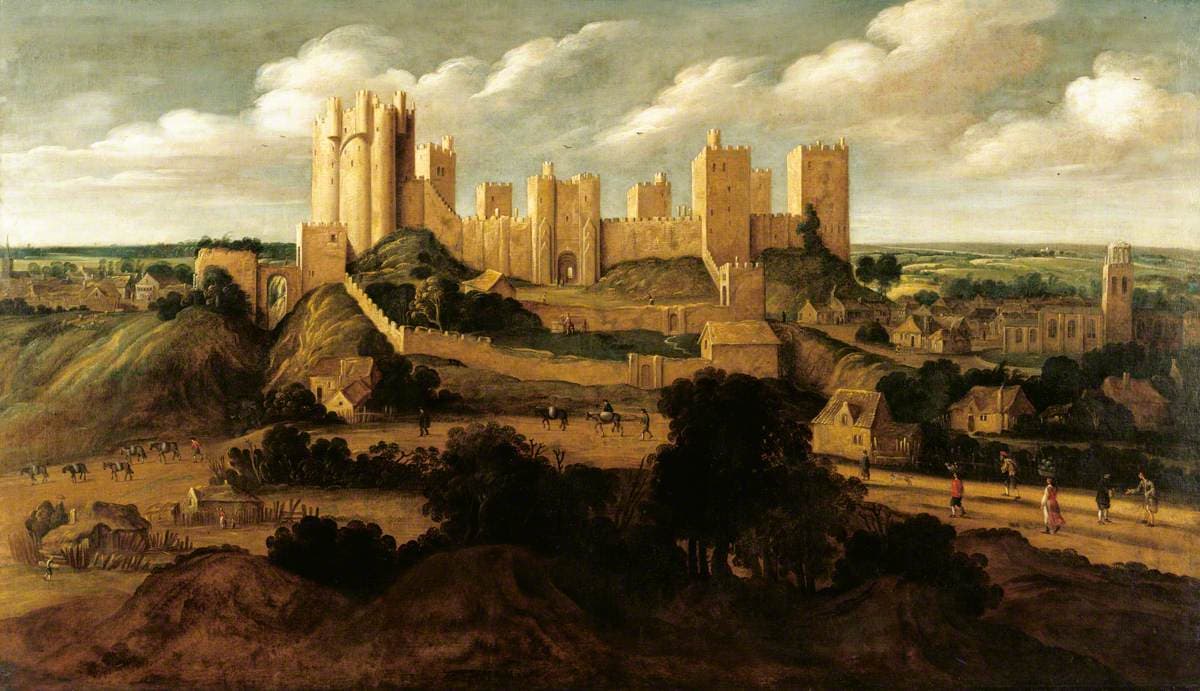
- The castle's multilobate donjon is a rare architectural feature, shaped as a quatrefoil with four rounded lobes, similar to Clifford's Tower in York and the Château d'Étampes in France.
- The Swillington Tower is a torre albarrana, a detached defensive tower connected to the main walls by a narrow bridge, a rare design in England influenced by Iberian fortifications.
- The Great Gate with its 14th-century semi-circular towers and dual barbicans exemplifies medieval defensive architecture.
- Rock-cut chambers within the inner bailey, likely the remains of the great hall, demonstrate adaptation to the natural landscape.
Later history and military significance
Pontefract Castle played a notable role during the Wars of the Roses and the Tudor period. In 1483, King Richard III ordered executions within the castle grounds, including Sir Richard Grey and Anthony Woodville, relatives of Elizabeth Woodville. During the 1536 Pilgrimage of Grace, a major Catholic uprising, the castle was surrendered to rebels by Thomas Darcy, who was later executed for treason. King Henry VIII visited in 1541, and later stories associate the castle with the alleged adultery of his fifth wife, Catherine Howard.
In January 1569, Mary, Queen of Scots, was briefly held prisoner at the castle during her movements through England. The castle's final major military role was during the English Civil War in the mid-17th century. It served as a Royalist stronghold and endured three sieges between 1644 and 1649. The castle suffered severe damage from artillery bombardment and undermining mining tactics, leading to the collapse of key structures such as the Piper Tower. Following the last siege, the garrison surrendered, and Parliament ordered the castle's demolition to prevent further military use.
Archaeological discoveries and preservation
Recent archaeological investigations have uncovered Civil War-era lead shot and mason's marks in the drawbridge pit, highlighting the castle's prolonged military importance. The original 11th-century underground cellars, once used for storing military supplies during the sieges, have survived intact and remain accessible to visitors, providing a direct connection to the castle's Norman origins.
Restoration work initiated in 2015 and completed by 2019 stabilized many parts of the ruins, removing Pontefract Castle from the national "Heritage At Risk" register. Excavations during this period revealed numerous mason's marks and Civil War artifacts, enriching understanding of the castle's construction and turbulent history.
Architectural remains and visitor experience
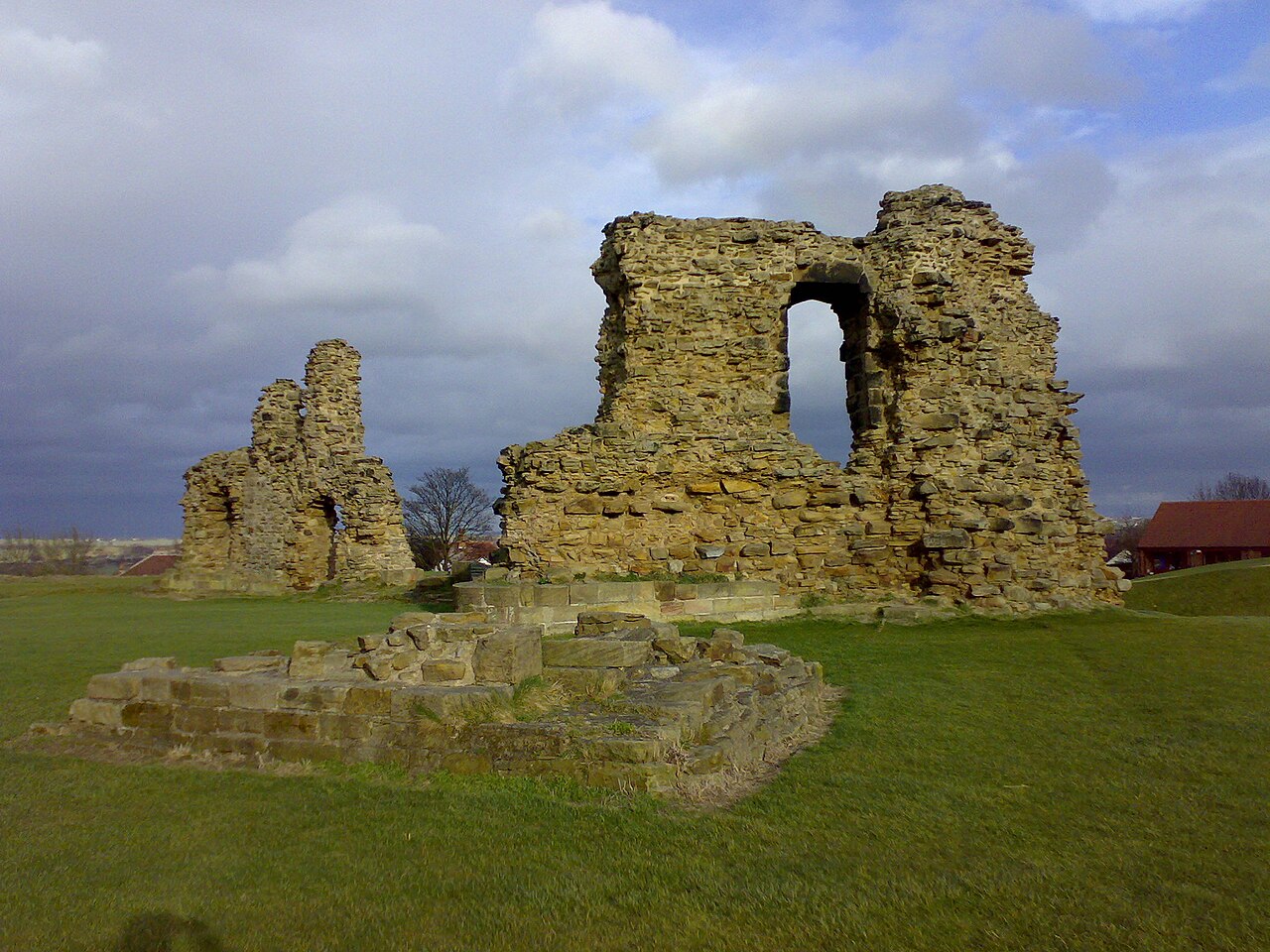
The castle's ruins occupy a commanding position above the town, with surviving curtain walls enclosing the inner and outer baileys. The Great Gate remains a focal point, flanked by imposing semi-circular towers and protected by inner and outer barbicans. The North Bailey gate is marked by the remains of a rectangular tower, guarding one of the main entrances.
Visitors can explore the foundations of the medieval chapel and the rock-cut chambers of the great hall, which illustrate the castle's adaptation to its natural rocky setting. The ruins of the Piper Tower stand as a somber reminder of the castle's destruction during the Civil War sieges.
Today, Pontefract Castle offers a rich historical and architectural experience, showcasing the evolution of Norman military architecture through the medieval and early modern periods. Its rare features, such as the multilobate donjon and the torre albarrana, make it a unique site of cultural heritage in England.
Frequently asked questions (FAQ)
- What is the historical significance of Pontefract Castle?
- Pontefract Castle is a site of great historical importance, known for its role in the English Civil War and its association with the Plantagenet kings. It served as a royal residence and was a key stronghold during various conflicts, making it a fascinating site for history enthusiasts.
- When was Pontefract Castle built?
- Pontefract Castle was originally constructed in the 11th century, with significant expansions and renovations occurring in the following centuries. Its strategic location made it an important fortification throughout its history.
- What are the opening hours for Pontefract Castle?
- Pontefract Castle is typically open to visitors from 10 AM to 5 PM during the summer months and from 10 AM to 4 PM during the winter months. However, it's advisable to check the official website for any changes or special opening hours.
- Can I visit Pontefract Castle with children?
- Yes, Pontefract Castle is a family-friendly site with plenty of open space for children to explore. There are also educational resources and activities available to engage younger visitors.
- Is it possible to access Pontefract Castle for those with mobility issues?
- Pontefract Castle strives to be accessible to all visitors. There are pathways and facilities designed to accommodate those with mobility challenges, although some areas may have limited access due to the castle's historic nature.
- What are the ticket prices for Pontefract Castle?
- Ticket prices for Pontefract Castle are generally affordable, with discounts available for children, seniors, and families. It's best to check the official website for the latest pricing information and any special offers.
- What is the best time to visit Pontefract Castle?
- The best time to visit Pontefract Castle is during the spring and summer months when the weather is pleasant and the gardens are in full bloom. Additionally, special events and guided tours are often held during this time, enhancing the visitor experience.
- Are there any nearby attractions to visit while at Pontefract Castle?
- Yes, there are several nearby attractions, including the Pontefract Museum and the scenic town centre, which offers shops and cafes. Additionally, the surrounding countryside provides opportunities for walks and exploring the natural beauty of the area.
Photo gallery

Public domain
Information
Website
Visit websiteSources & official resources
Verify the information above using these authoritative references.
Loading map...
Visitor reviews
No reviews yet. Been here? Write the first review and help other travelers!
Write the first reviewVisited this castle? Share your experience
Your review helps other travelers and adds first-hand knowledge to our encyclopedia.