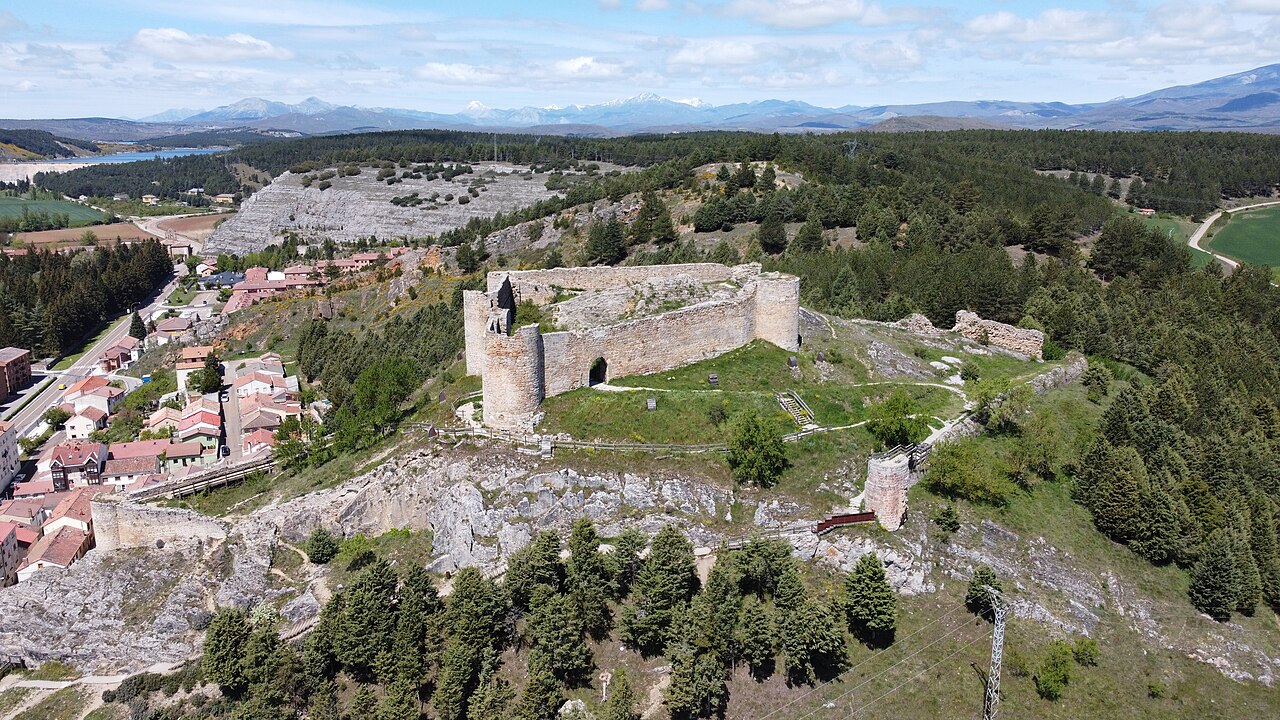
San Vicente Hermitage
The San Vicente Hermitage stands as a remarkable example of Visigothic religious architecture carved directly into the rock in Cervera de Pisuerga, Spain. Dating back to the 8th and 9th centuries, this hermitage reflects the spiritual and monastic traditions of the Visigothic civilization during a period of significant religious and cultural development in the region.
The historical significance of San Vicente Hermitage
Established during the Early Medieval period, the hermitage was part of a small monastic community dedicated to Christian worship and contemplation. The choice to carve the hermitage into the rock was both practical and symbolic, providing a secluded, protected environment for prayer and monastic living. This form of rock-cut architecture is characteristic of early medieval hermitages, emphasizing simplicity and integration with the natural landscape.
The hermitage's history spans many centuries, remaining in use until the 19th century, when it was eventually abandoned. Over time, the broader monastic complex surrounding the hermitage disappeared, leaving only the rock-carved features as evidence of its former religious prominence.
Architectural features and rock-cut techniques
The hermitage itself is a modest cave-like chamber hewn directly from the stone, illustrating the rock-cut construction techniques employed by the Visigoths. This method allowed the creation of a durable and contemplative space that harmonizes with the natural environment. The interior likely served as a chapel or solitary cell for hermits or monks.
The necropolis and anthropomorphic tombs
Adjacent to the hermitage is a necropolis carved into the rock, featuring anthropomorphic tombs shaped in the form of human figures. These tombs are a distinctive element of the site, reflecting the funerary customs of the period and the close relationship between worship and burial practices in early medieval Christian communities. The proximity of the necropolis to the hermitage underscores the spiritual significance of the location as both a place of worship and a sacred burial ground.
Preservation and current condition
Today, the San Vicente Hermitage remains an important archaeological and cultural site, with the rock-cut hermitage and tombs as its primary surviving elements. The rest of the monastic buildings have vanished over time, but the preserved rock-carved structures offer valuable insights into Visigothic religious life and early medieval monasticism.
The site is classified as a hill castle due to its elevated and strategic location carved into the landscape, although it does not conform to traditional castle fortifications. Its Early Medieval origins and rock-cut architectural style make it a unique example of religious architecture from this era in Spain.
Visiting San Vicente Hermitage
Visitors to the hermitage can explore the evocative rock-cut chamber and the nearby necropolis, gaining a tangible sense of the spiritual devotion and funerary traditions of the Visigothic period. The site's remote and elevated setting adds to its contemplative atmosphere, making it a significant destination for those interested in medieval history, archaeology, and religious heritage.
Efforts to preserve the site focus on maintaining the integrity of the rock-cut structures against natural erosion and human impact, ensuring that this remarkable example of early medieval religious architecture remains accessible for future generations.
Frequently asked questions (FAQ)
- When was San Vicente Hermitage built?
- San Vicente Hermitage was established between the 8th and 9th centuries during the Early Medieval period by the Visigothic civilization.
- What is unique about the tombs at San Vicente Hermitage?
- The necropolis adjacent to the hermitage features anthropomorphic tombs carved into the rock, shaped in the form of human figures, reflecting early medieval funerary customs.
- Can visitors access the interior of the hermitage?
- Yes, visitors can explore the rock-cut chamber of the hermitage, which provides insight into the monastic life and religious practices of the Visigoths.
- Why was the hermitage carved into the rock?
- The rock-cut construction provided a secluded and protected environment for prayer and contemplation, typical of early medieval hermitages seeking solitude and harmony with nature.
- Is San Vicente Hermitage easily accessible?
- The hermitage is located in a hill area near Cervera de Pisuerga, and while it is accessible, visitors should be prepared for a modest hike and uneven terrain around the site.
Information
Website
Visit websiteSources & official resources
Verify the information above using these authoritative references.
Loading map...
Visitor reviews
No reviews yet. Been here? Write the first review and help other travelers!
Write the first reviewVisited this castle? Share your experience
Your review helps other travelers and adds first-hand knowledge to our encyclopedia.