Rebolledo de la Torre Castle

Rebolledo de la Torre castle
Rebolledo de la Torre, Spain
Late Medieval (14th–15th c.)

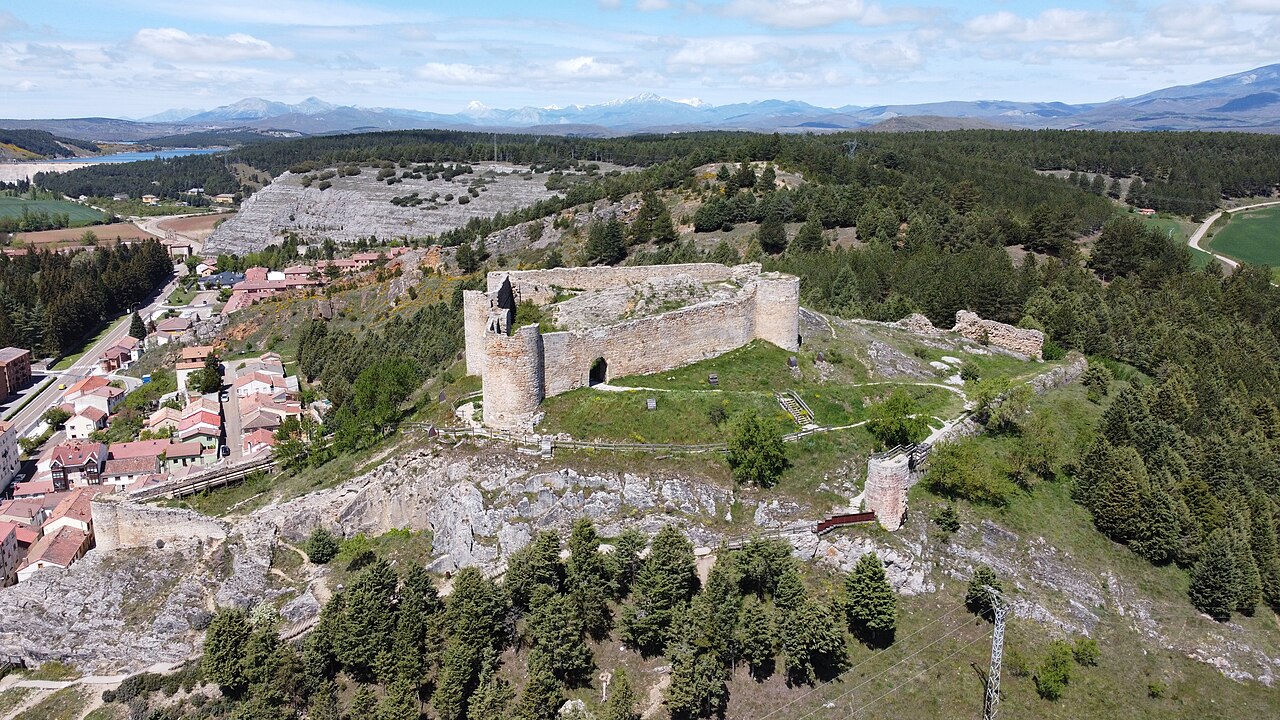
Rebolledo de la Torre castle is a late-medieval fortress situated on a prominent hilltop in the municipality of Rebolledo de la Torre, Spain. Its strategic location near a Romanesque church highlights the typical medieval practice of combining religious and military architecture in close proximity. The castle's design features an irregular polygonal floor plan, which is relatively uncommon compared to the more standard rectangular or circular layouts seen in many contemporary fortifications.

Architectural features and layout

The castle primarily consists of a stone tower and an enclosing fence or curtain wall that defines the perimeter of the defensive enclosure. The polygonal shape of the castle's footprint suggests adaptation to the natural contours of the hill, maximizing defensive capabilities by eliminating blind spots and allowing defenders to cover all approaches effectively. The tower likely served as a keep or donjon, the last line of defense and a residence for the lord or garrison commander.

The walls are constructed of local stone, typical of 14th-century military architecture in the region, with battlements or crenellations providing cover for archers and lookouts. The irregular shape also hints at possible expansions or modifications made over time to strengthen the castle's defenses or accommodate changing military needs.

Historical context and significance

Built in the 14th century, Rebolledo de la Torre castle was part of the network of fortifications erected during the late-medieval period in Castile, a time marked by frequent conflicts, including internal noble disputes and border skirmishes. Castles like this one played crucial roles in asserting control over territories, protecting local populations, and serving as administrative centers.

The castle's proximity to the Romanesque church suggests that it was integrated into the local community's social and spiritual life, possibly providing refuge to villagers during times of siege or unrest. While not a large fortress, its defensive features and strategic position made it a valuable stronghold in the region.

Preservation and current condition

Today, Rebolledo de la Torre castle remains partially preserved, with the tower and some sections of the fence still standing. The ruins provide insight into the construction techniques and defensive strategies of the period. Although the castle is not extensively restored, it retains enough structural elements to convey its original form and function.

Visitors to the site can appreciate the castle's historical ambiance and its commanding views over the surrounding landscape, which would have been essential for surveillance and defense. The nearby Romanesque church also adds cultural value to the visit, offering a glimpse into the medieval heritage of the area.

Architectural style and influences

The castle's design reflects the late-medieval military architecture characteristic of northern Spain, with influences from both Romanesque and early Gothic styles evident in its structural elements. The use of an irregular polygonal plan demonstrates a pragmatic approach to fortress design, prioritizing adaptability to terrain over strict geometric symmetry.

The stone masonry exhibits the robustness typical of the era, with thick walls intended to withstand siege weaponry. Defensive features such as narrow windows or arrow slits would have been incorporated to enable defenders to repel attackers while minimizing exposure.

Visiting information and cultural importance

While not a major tourist attraction, Rebolledo de la Torre castle holds local cultural significance as a symbol of medieval heritage and feudal history in the region. Its proximity to the Romanesque church makes it a point of interest for visitors exploring historical architecture in the area.

Access to the castle site is generally open to the public, allowing visitors to explore the remains and enjoy panoramic views. The site offers opportunities for photography, historical study, and appreciation of medieval military architecture in a rural Spanish context.

Frequently asked questions (FAQ)

How do I get to Rebolledo de la Torre Castle?
Rebolledo de la Torre Castle is located in the quaint village of Rebolledo de la Torre, Spain. You can reach it by car or public transport from nearby cities, with parking available nearby for visitors. For those using public transport, check local bus services that connect to the village.
What is the historical significance of Rebolledo de la Torre Castle?
Rebolledo de la Torre Castle dates back to the medieval period and served as a defensive structure during various conflicts. Its architecture reflects the historical influences of the region, showcasing the strategic importance of the castle in protecting local inhabitants. Today, it stands as a testament to the rich history of the area.
When was Rebolledo de la Torre Castle built?
The castle was constructed in the 14th century, during a time when many fortifications were built across Spain to defend against invasions. Over the centuries, it has undergone various modifications, yet it retains much of its original charm and historical features. The castle's age adds to its allure as a historical site.
Can I visit Rebolledo de la Torre Castle?
Yes, visitors are welcome to explore Rebolledo de la Torre Castle. The site offers guided tours that provide insights into its history and architecture. Make sure to check the castle's official website for any specific visiting guidelines or requirements.
Why is Rebolledo de la Torre Castle an important architectural site?
The castle is an excellent example of medieval military architecture, featuring robust stone walls and strategic design elements. Its construction showcases the engineering techniques of the time, making it a valuable site for those interested in historical architecture. Additionally, it provides a glimpse into the lifestyle and defensive strategies of the era.
Is it possible to access all areas of Rebolledo de la Torre Castle?
While some areas of the castle are accessible to visitors, certain sections may have restrictions due to preservation efforts. The main grounds and key areas of interest are open to the public, allowing for an enjoyable exploration experience. Always check with the staff upon arrival for the best routes to take.
What are the opening hours for Rebolledo de la Torre Castle?
Rebolledo de la Torre Castle typically opens from 10 AM to 6 PM, but hours may vary depending on the season. It's advisable to confirm current opening times on the official website before planning your visit. Special events may also affect regular hours, so checking in advance is a good idea.
What is the best time to visit Rebolledo de la Torre Castle?
The best time to visit is during the spring and fall months when the weather is mild and comfortable for exploring. These seasons also see fewer crowds, allowing for a more enjoyable experience. Summer can be quite hot, while winter may bring colder temperatures.
Are there nearby attractions to visit along with Rebolledo de la Torre Castle?
Yes, the area surrounding Rebolledo de la Torre offers several attractions, including beautiful natural parks and other historical sites. Visitors can explore the charming village itself or venture to nearby towns that boast rich cultural heritage. Combining your visit with local attractions enhances the overall experience.
What are the ticket prices for Rebolledo de la Torre Castle?
Ticket prices for Rebolledo de la Torre Castle are typically reasonable, with discounts available for students and seniors. Children often enjoy free admission, making it a great family outing. It's recommended to check the official website for the most current pricing and any special promotions.

Loading map...

Visitor reviews

No reviews yet. Been here? Write the first review and help other travelers!

Write the first review

Visited this castle? Share your experience

Your review helps other travelers and adds first-hand knowledge to our encyclopedia.
Write a review

(5/5)

0/2000 characters

Your review will be visible after admin approval

Nearby castles

12.3 km
Aguilar de Campoo Castle — Spain castle

Aguilar de Campoo Castle

Aguilar de Campoo, Spain

Aguilar de Campoo Castle stands as a significant example of medieval military architecture in northern Spain. Situated on a strategic hilltop in the town of Aguilar de Campoo, this hill castle was originally established in the 12th century, during the High Medieval period. The castle occupies a site with a long history of fortification, built atop earlier Celt-Iberian vernacular structures that reflect the area's ancient defensive importance. Early origins and strategic location The site of Aguilar de Campoo Castle was first fortified in pre-Roman times by Celt-Iberian peoples, who constructed vernacular fortifications adapted to the local terrain. This early use of the hill for defense highlights its commanding view over the surrounding landscape, including key routes through the region. In the 12th century, during the consolidation of Christian kingdoms in northern Spain, the castle was constructed as a stone fortress to secure the area against Muslim forces and rival lords. Medieval construction and architectural features The castle underwent several phases of construction and modification, with the most prominent development occurring in the 15th century when the Manrique family rebuilt and expanded the fortress. This reconstruction incorporated the existing medieval walls and adapted the structure to evolving military needs. The castle's design includes thick defensive walls, towers positioned for optimal surveillance and defense, and a keep that served as the last refuge during sieges. The layout reflects typical High Medieval military architecture with a focus on defense and control of the surrounding territory. The walls are constructed of local stone, with battlements and arrow slits allowing defenders to repel attackers effectively. The castle's elevated position on the hill enhances its defensive capabilities, providing clear sightlines for early warning of approaching enemies. The Manrique family's influence The Manrique family, prominent nobles in the region, played a crucial role in the castle's history. Their 15th-century renovations modernized the fortress to meet the demands of late medieval warfare, including the introduction of artillery. The family's coat of arms and heraldic symbols are believed to have been displayed prominently within the castle, emphasizing their authority and status. Historical significance and role in regional defense Throughout the Middle Ages, Aguilar de Campoo Castle served as a key defensive stronghold in the Kingdom of Castile. Its position allowed control over important trade and military routes in the region, making it a focal point in conflicts between Christian and Muslim forces as well as internal disputes among nobility. The castle's fortifications were tested during various military campaigns, and its resilience contributed to the stability of the surrounding territory. Over time, as warfare evolved and the political landscape changed, the castle's military importance declined, leading to periods of neglect and partial ruin. Architectural legacy and current condition Today, Aguilar de Campoo Castle is recognized for its historical and architectural value. While some sections remain in ruins, significant portions of the medieval walls and towers are partially preserved, offering visitors insight into the castle's original defensive capabilities. Archaeological studies have helped uncover the layers of construction, revealing the castle's evolution from a Celt-Iberian fortification to a medieval stronghold. The castle is an important cultural landmark in the region, attracting historians, architects, and tourists interested in Spain's medieval heritage. Preservation efforts aim to maintain the site's integrity while facilitating public access and education about its role in regional history. Visiting Aguilar de Campoo Castle The castle is accessible to visitors interested in exploring its ruins and learning about its historical context. Informational signage and guided tours provide details on the architectural features and historical events associated with the site. The surrounding town of Aguilar de Campoo offers additional attractions, including Romanesque churches and local museums that complement the castle experience. Architectural characteristics and style Aguilar de Campoo Castle exemplifies High Medieval military architecture with elements characteristic of northern Spain's defensive structures. Its robust stone walls, battlements, and strategically placed towers reflect the practical needs of fortification during the period. While the castle does not exhibit ornate stylistic flourishes, its functional design and adaptation to the hilltop terrain demonstrate the ingenuity of medieval castle builders. Construction materials and techniques The castle's construction utilized locally sourced stone, shaped and assembled to create thick defensive walls capable of withstanding sieges. Mortar was used to bind the stones, and the builders incorporated natural rock formations into the foundation to enhance stability. The use of arrow slits and battlements allowed defenders to maximize offensive capabilities while minimizing exposure.

High Medieval (11th–13th c.)
Details
24.5 km

Ermitage rupestre de Campo de Ebro

Valderredible, Spain

The Ermitage rupestre de Campo de Ebro is a remarkable example of early medieval rock-cut architecture located in the municipality of Valderredible, in northern Spain. This hermitage stands as a testament to the religious and cultural transformations that took place on the Iberian Peninsula during the Early Middle Ages. Originally carved into the natural rock between the 6th and 10th centuries, the site reflects the transition from pagan practices to Christianity under the influence of the Visigoths, a Germanic people who ruled much of Spain during this period. Historical context and origins The hermitage likely began as a pagan sanctuary, carved directly from the rock to serve early religious purposes tied to pre-Christian beliefs. With the Christianization of the region in the 6th century, the Visigoths transformed the site into a small church dedicated to Christian worship, marking a significant cultural shift. This change aligns with broader historical patterns of religious conversion and the establishment of Christian institutions across the Iberian Peninsula during the Visigothic era. Architectural features and layout The rock-cut hermitage is characterized by its simplicity and functional design. It consists of a single rectangular nave ending in a quadrangular apse, all carved out of the natural stone bedrock. This technique of rock-cut architecture required considerable skill and knowledge of the stone's properties. The absence of additional construction materials emphasizes the ingenuity of its creators in utilizing the existing landscape to form a sacred space. The layout supports early Christian liturgical functions, with the nave serving as the main assembly area for worshippers and the apse likely housing the altar. Despite its modest size and lack of elaborate decoration or inscriptions, the hermitage's design is a clear reflection of early medieval ecclesiastical architecture adapted to local conditions. Later uses and preservation In the early 20th century, the hermitage was repurposed as a school to serve the educational needs of the local community, demonstrating its continued importance beyond its original religious function. During the Spanish Civil War in the 1930s, the site provided refuge to nearby residents, highlighting its role as a place of safety during turbulent times. The hermitage was officially recognized in 1985 as a Bien de Interés Cultural, a designation that underscores its cultural and historical significance within Spain. Preservation efforts have focused on maintaining the integrity of the rock-cut structure, ensuring that its form and historical value endure for future generations. Significance and cultural heritage The Ermitage rupestre de Campo de Ebro offers valuable insight into the religious practices and architectural methods of the Visigothic period in Spain. Its rock-cut design is a rare and evocative example of how early medieval communities adapted their spiritual spaces to the natural environment. The hermitage's survival through centuries of change, including shifts in religious practice, educational use, and wartime refuge, marks it as an important cultural landmark. Though modest and lacking in ornate features, the hermitage's enduring presence provides a tangible connection to the early medieval history of the region. It stands as a unique witness to the Christianization process and the resilience of local communities in preserving their heritage through diverse historical phases.

Early Medieval (5th–10th c.)
Details
28.6 km

San Vicente Hermitage

Cervera de Pisuerga, Spain

The San Vicente Hermitage stands as a remarkable example of Visigothic religious architecture carved directly into the rock in Cervera de Pisuerga, Spain. Dating back to the 8th and 9th centuries, this hermitage reflects the spiritual and monastic traditions of the Visigothic civilization during a period of significant religious and cultural development in the region. The historical significance of San Vicente Hermitage Established during the Early Medieval period, the hermitage was part of a small monastic community dedicated to Christian worship and contemplation. The choice to carve the hermitage into the rock was both practical and symbolic, providing a secluded, protected environment for prayer and monastic living. This form of rock-cut architecture is characteristic of early medieval hermitages, emphasizing simplicity and integration with the natural landscape. The hermitage's history spans many centuries, remaining in use until the 19th century, when it was eventually abandoned. Over time, the broader monastic complex surrounding the hermitage disappeared, leaving only the rock-carved features as evidence of its former religious prominence. Architectural features and rock-cut techniques The hermitage itself is a modest cave-like chamber hewn directly from the stone, illustrating the rock-cut construction techniques employed by the Visigoths. This method allowed the creation of a durable and contemplative space that harmonizes with the natural environment. The interior likely served as a chapel or solitary cell for hermits or monks. The necropolis and anthropomorphic tombs Adjacent to the hermitage is a necropolis carved into the rock, featuring anthropomorphic tombs shaped in the form of human figures. These tombs are a distinctive element of the site, reflecting the funerary customs of the period and the close relationship between worship and burial practices in early medieval Christian communities. The proximity of the necropolis to the hermitage underscores the spiritual significance of the location as both a place of worship and a sacred burial ground. Preservation and current condition Today, the San Vicente Hermitage remains an important archaeological and cultural site, with the rock-cut hermitage and tombs as its primary surviving elements. The rest of the monastic buildings have vanished over time, but the preserved rock-carved structures offer valuable insights into Visigothic religious life and early medieval monasticism. The site is classified as a hill castle due to its elevated and strategic location carved into the landscape, although it does not conform to traditional castle fortifications. Its Early Medieval origins and rock-cut architectural style make it a unique example of religious architecture from this era in Spain. Visiting San Vicente Hermitage Visitors to the hermitage can explore the evocative rock-cut chamber and the nearby necropolis, gaining a tangible sense of the spiritual devotion and funerary traditions of the Visigothic period. The site's remote and elevated setting adds to its contemplative atmosphere, making it a significant destination for those interested in medieval history, archaeology, and religious heritage. Efforts to preserve the site focus on maintaining the integrity of the rock-cut structures against natural erosion and human impact, ensuring that this remarkable example of early medieval religious architecture remains accessible for future generations.

Early Medieval (5th–10th c.)
Details

