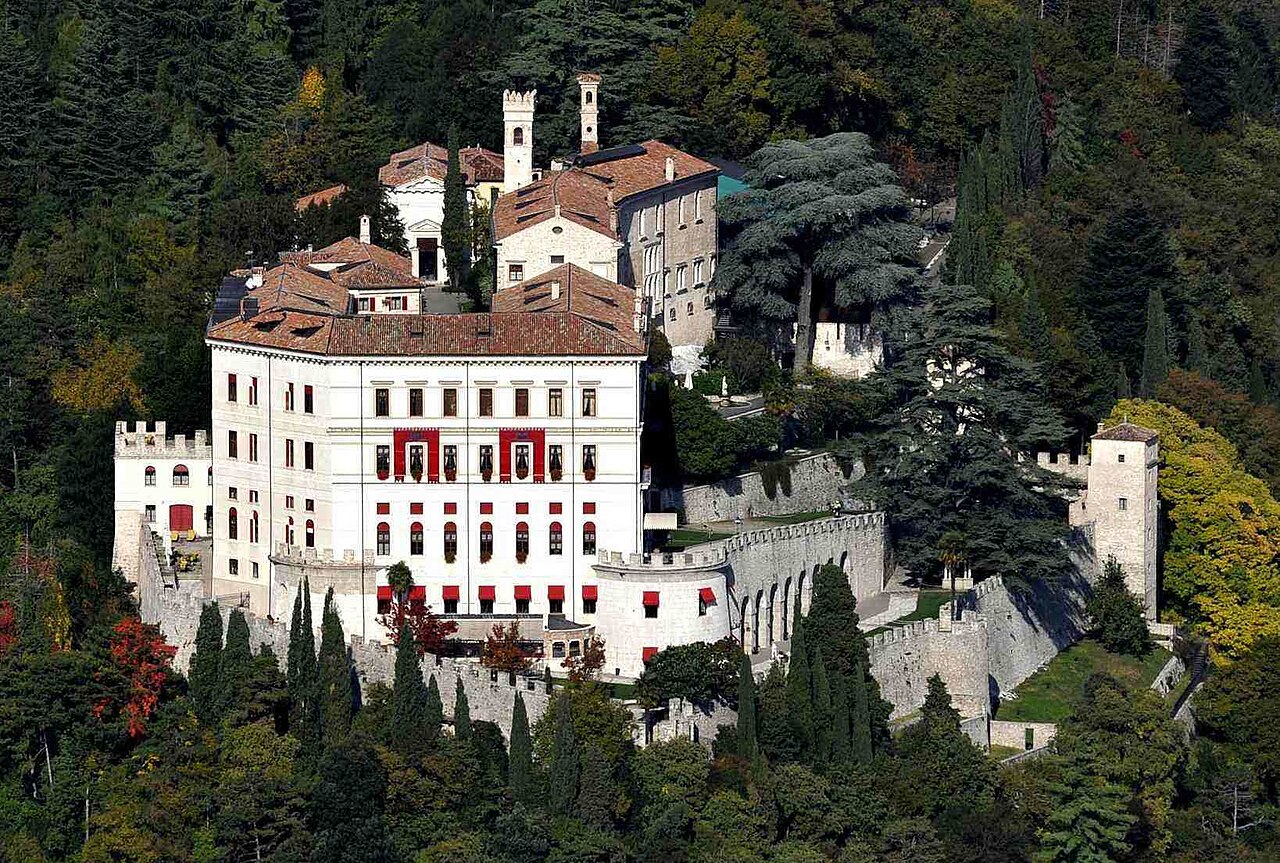
San Salvatore Castle
San Salvatore Castle is one of the largest and most historically significant castles in northern Italy, situated in the town of Susegana. Perched atop the prominent San Salvatore hill, the castle offers commanding views of the surrounding landscape, including the vital trade routes along the Piave River. Its origins trace back to the late 13th century, when the city of Treviso granted the hill to the influential Collalto family in 1245. This grant laid the foundation for the construction of the castle, which was built between the late 13th and early 14th centuries, marking the rise of the Collalto family as local lords with significant territorial control.
In 1312, the castle's strategic and political importance was solidified when Emperor Henry VII granted the Collalto family full jurisdiction over the counties of Collalto and San Salvatore. This imperial recognition effectively created a principality that maintained considerable autonomy, even while under the broader influence of Treviso and later the Venetian Republic. The castle served as a crucial military stronghold overseeing nearby settlements and key trade routes, playing a significant role in regional disputes among neighboring cities such as Treviso, Padua, and Venice.
Medieval origins and strategic importance
The castle's initial design reflects its primary function as a hill castle built for defense and control. Its location on elevated terrain provided natural advantages for surveillance and protection. The original fortifications included a robust crenellated defensive wall constructed from local stone, designed to withstand sieges and attacks common in the high medieval period. A prominent served as both a lookout and a final refuge during conflicts, embodying the military architecture of the era.
Throughout the 14th and 15th centuries, the castle was actively involved in the turbulent political landscape of northern Italy. The Collalto family fortified their position by maintaining control over the castle and its surrounding lands, which included fertile fields where they planted vineyards, contributing to the local economy and demonstrating the castle's role beyond mere military use.
Renaissance transformation and artistic embellishments
By the 16th century, following the War of the League of Cambrai, the castle's military significance diminished as regional conflicts subsided. This period marked a transformation of San Salvatore from a fortress into a noble residence reflecting Renaissance architectural and artistic tastes. The Collalto family undertook significant renovations, including the construction of the Palazzo Odoardo within the castle grounds. This palace incorporated elements typical of urban Renaissance palaces, blending defensive features with refined domestic architecture.
The castle's chapel, dedicated to Santa Croce, was richly decorated with frescoes by renowned artists such as Tommaso da Modena and Pordenone. These artworks highlighted the family's patronage of the arts and added a cultural dimension to the castle's function. The private oratory housed within the castle was an intimate space for worship and reflection, adorned with elaborate frescoes that underscored the religious devotion and artistic sophistication of the Collalto family during this era.
World war i devastation and restoration efforts
The castle's strategic location near the Piave front made it a focal point during World War I. Following the Battle of Caporetto in 1917, Susegana fell under Austro-German occupation, and the castle was used by occupying forces. This military use made it a target for Italian artillery, which bombarded the structure heavily, causing severe damage. Key features, including the private oratory and its precious frescoes, were destroyed, and a fire consumed the Collalto family archives, complicating historical research on the site.
Restoration efforts began in 1943 and continued until 1951, focusing on stabilizing the ruins and preserving the castle's essential architectural elements. The restoration preserved the main tower, defensive walls, Palazzo Odoardo, and the church of Santa Croce, while securing the remnants of other buildings within the complex. These efforts ensured the survival of the castle as a cultural and historical monument for future generations.
Architectural features and layout
The castle complex exemplifies a blend of medieval fortification and Renaissance residential architecture. The crenellated walls and towers reflect its defensive origins, while the Palazzo Odoardo and decorated chapel illustrate its evolution into a noble estate. The layout includes a large courtyard enclosed by curtain walls, which served both defensive and social functions.
The castle's position on a hilltop not only provided military advantages but also symbolized the Collalto family's dominance in the region. The surrounding vineyards and agricultural lands were integral to the estate's economy and lifestyle, linking the castle's role as both a fortress and a center of aristocratic life.
Current use and cultural significance
Today, San Salvatore Castle stands as a testament to the layered history of northern Italy, reflecting centuries of military, political, and artistic developments. The castle is well preserved following mid-20th-century restorations and serves as a venue for cultural events, exhibitions, and public gatherings. Its rich history and architectural grandeur attract visitors interested in medieval fortifications, Renaissance art, and Italian heritage.
The castle's integration of military and residential elements, combined with its artistic treasures and historical importance, make it a unique landmark in the Veneto region. It continues to embody the legacy of the Collalto family and the broader historical narratives of northern Italy.
Frequently asked questions (FAQ)
- What is the historical significance of San Salvatore Castle?
- San Salvatore Castle, located in Susegana, Italy, dates back to the 10th century and played a crucial role in the defense of the region during various historical conflicts. It is a remarkable example of medieval military architecture and has been recognized for its strategic importance in controlling trade routes in the area.
- When was San Salvatore Castle built?
- The construction of San Salvatore Castle began in the 10th century, with significant expansions and renovations occurring over the following centuries. Its architecture reflects various styles that evolved through the medieval period, making it a fascinating site for history enthusiasts.
- Is it possible to visit San Salvatore Castle?
- Yes, San Salvatore Castle is open to visitors, allowing them to explore its rich history and stunning architecture. Guided tours are often available, providing insights into the castle's past and its role in local history.
- What are the opening hours for San Salvatore Castle?
- San Salvatore Castle typically opens to the public from 9 AM to 6 PM during the high season, with varying hours in the off-season. It is advisable to check the official website or contact the castle directly for the most current hours before planning your visit.
- Can I purchase tickets in advance for San Salvatore Castle?
- Yes, tickets for San Salvatore Castle can often be purchased in advance online, which is recommended during peak tourist seasons. This ensures you secure your spot and can avoid long lines on the day of your visit.
- What is the best time to visit San Salvatore Castle?
- The best time to visit San Salvatore Castle is during the spring and early autumn when the weather is mild, and the surrounding landscapes are particularly beautiful. These seasons also tend to have fewer crowds, allowing for a more enjoyable experience.
- Are there any nearby attractions to San Salvatore Castle?
- Yes, nearby attractions include the charming town of Susegana, with its quaint streets and local restaurants, as well as the scenic Prosecco wine region. Visitors can also explore other historical sites in the area, making for a well-rounded trip.
- Is San Salvatore Castle accessible for individuals with disabilities?
- San Salvatore Castle has made efforts to improve accessibility for all visitors, but certain areas may still present challenges due to the castle's historic architecture. It is advisable to contact the castle in advance to inquire about specific accessibility options available during your visit.
Information
Website
Visit websiteSources & official resources
Verify the information above using these authoritative references.
Loading map...
Visitor reviews
No reviews yet. Been here? Write the first review and help other travelers!
Write the first reviewVisited this castle? Share your experience
Your review helps other travelers and adds first-hand knowledge to our encyclopedia.