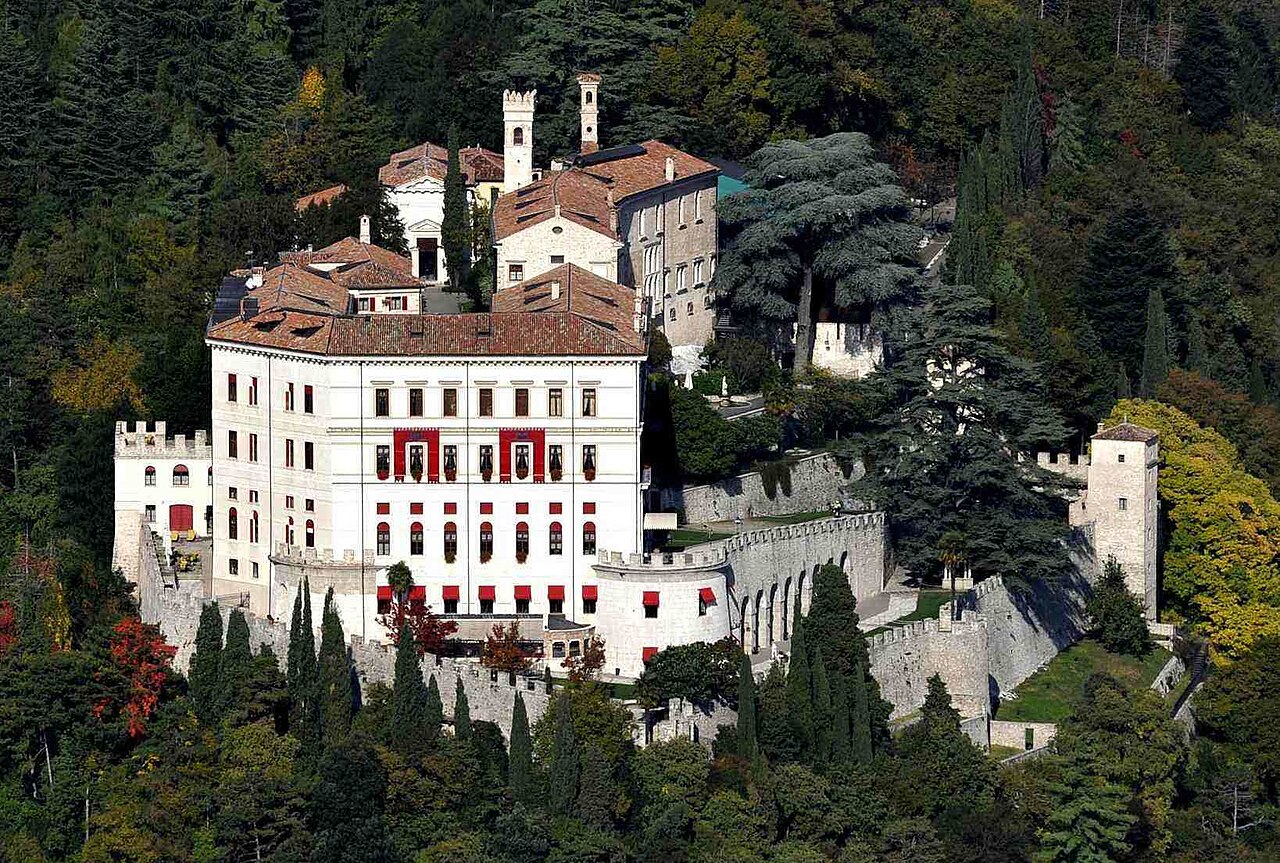
Castel Brando
Castel Brando, formerly known as Castrum Costae, is a remarkable medieval hill castle perched on a dolomite limestone outcrop at an elevation of 370 meters (1,210 feet) above sea level. It overlooks the picturesque villages of Cison di Valmarino and Valmareno in the Veneto region of Northern Italy. This fortress boasts a rich history spanning from its origins in the Roman era to its evolution into a noble residence reflecting Venetian Renaissance and Gothic architectural styles.
The castle's strategic location was chosen to guard vital communication routes, notably the Via Claudia Augusta, which connected Northern Italy to regions beyond the Alps. Originally constructed during the Roman period around 46 AD, Castel Brando served as a defensive stronghold known as Castrum Costae. Its Roman foundations, including a large bread oven, baths, and aqueduct pipes fed by natural springs, remain visible to this day, underscoring the site's long-standing military and logistical importance.
Early history and medieval transformation
During the European Migration Period, the fortress retained its defensive significance against barbarian invasions. In the early Middle Ages, likely in the first half of the 10th century amid Hungarian incursions, the original Roman castrum was rebuilt and fortified. From 962 AD, the castle became a feudal seat under the bishops of Ceneda, integrating it into the medieval ecclesiastical and feudal system.
Between 1233 and 1335, the castle came under the control of the influential Da Camino family. They undertook significant expansion works, adding distinctive Guelph-Ghibelline battlements and a central tower, which enhanced the castle's defensive capabilities. The birth of Gherardo III da Camino in 1240 at Castel Brando marks an important historical milestone, as he was a notable medieval figure and lord of the region.
Venetian rule and brandolini ownership
Following Da Camino rule, the castle passed to the Republic of Venice, which granted the fief to various notable figures including Marin Faliero, Giovanni Brandolino, and Erasmo da Narni ("Gattamelata"). From 1436 onwards, the Brandolini family, Counts of Forlì, took possession of Castel Brando. Over the subsequent centuries, particularly from the 16th to the 18th centuries, the Brandolinis transformed the fortress from a purely military installation into an elegant noble residence.
This transformation included the addition of architectural elements characteristic of the Venetian Renaissance and Venetian Gothic styles, such as double and triple mullioned windows. The castle's defensive walls were softened with more refined aesthetic features, reflecting the changing role of castles from fortresses to stately homes.
Architectural features and artistic heritage
The castle's layout preserves the original Roman castrum structure, with clear evidence of its military origins. The medieval expansions by the Da Camino family introduced the characteristic battlements and central tower, which remain prominent features. The Brandolini renovations added Renaissance flourishes and improved living quarters, including an innovative heating system for its time.
In the 18th century, architect Ottavio Scotti designed an extension on the southern side of the castle, which included the Church of San Martino chapel. This chapel is adorned with frescoes by Egidio Dall’Oglio, adding significant artistic and cultural value to the site.
Roman remains and medieval fortifications
Visitors to Castel Brando can observe the remains of the Roman bakery with its large bread oven measuring three meters in diameter, Roman baths, and aqueduct systems that still function today, fed by three natural springs. These features highlight the advanced engineering and strategic importance of the site during the Roman era.
The medieval fortifications include the imposing Guelph-Ghibelline battlements and the tall central tower, which were key defensive elements during the turbulent Middle Ages. These structures illustrate the castle’s role in regional power struggles and defense against external threats.
Modern history and current use
During World War I, Castel Brando was occupied by Austrian forces and repurposed as a military hospital, leading to the temporary displacement of the Brandolini family. In the 20th century, the castle underwent restoration and was acquired in 1959 by the Salesian fathers, who used it as a monastery and spiritual center.
Since 1997, the castle has been owned by a private company that has converted it into a 4-star hotel, museum, and theatre. The castle also gained international attention when it hosted the first G8 Agriculture Ministers’ Meeting in 2009. Visitors today can reach the castle via a funicular railway from the village below, providing convenient access to explore its rich history and architectural splendor.
Visitor experience and cultural significance
Castel Brando offers a unique blend of historical layers visible in its architecture, from Roman foundations to medieval battlements and Renaissance decorative elements. The museum housed within the castle presents artifacts and exhibits that narrate its extensive past. The theatre hosts cultural events, enhancing the castle’s role as a living monument.
The castle's location provides stunning panoramic views of the surrounding Veneto countryside, making it a favored destination for history enthusiasts and tourists alike. Its preservation and adaptive reuse demonstrate a successful example of maintaining cultural heritage while providing modern amenities.
Frequently asked questions (FAQ)
- How do I get to Castel Brando?
- Castel Brando is located in Cison di Valmarino, Italy, and can be easily reached by car or public transport. If you are driving, follow the signs from major highways, and there is parking available nearby. For public transport, you can take a train to the nearest station and then a bus or taxi to reach the castle.
- What is the historical significance of Castel Brando?
- Castel Brando dates back to the Middle Ages and has played a crucial role in the region's history, serving as a defensive fortress and residence for noble families. Its strategic location has made it a key site during various historical events, including conflicts in the region. Today, it stands as a symbol of the rich cultural heritage of the area.
- When was Castel Brando built?
- The construction of Castel Brando began in the 11th century, and it has undergone several renovations and expansions throughout the centuries. Its architecture reflects various styles, showcasing the evolution of building techniques over time. The castle’s long history adds to its charm and appeal for visitors.
- Can I explore the interior of Castel Brando?
- Yes, visitors can explore the interior of Castel Brando during designated hours. Guided tours are available, providing insights into the castle's history, architecture, and the lives of those who once lived there. Be sure to check the schedule in advance, as some areas may be restricted during special events.
- Why is Castel Brando considered an architectural gem?
- Castel Brando is considered an architectural gem due to its unique blend of medieval and Renaissance styles, characterized by its stone walls, towers, and ornate details. The castle's design not only served defensive purposes but also reflects the artistic trends of its time. Its picturesque setting on a hilltop adds to its visual appeal, making it a favorite among photographers and history enthusiasts.
- Is it possible to hold events at Castel Brando?
- Yes, Castel Brando offers facilities for hosting various events, including weddings, corporate gatherings, and cultural activities. The stunning backdrop of the castle and its surroundings provides a memorable setting for any occasion. It is advisable to contact the castle's management for availability and specific arrangements.
- What are the opening hours for Castel Brando?
- Castel Brando typically opens to visitors from 10 AM to 6 PM, but hours may vary based on the season or special events. It is recommended to check the official website or contact the castle directly for the most current information before your visit. Planning ahead ensures you make the most of your experience at this historic site.
- What are the ticket prices for visiting Castel Brando?
- Ticket prices for Castel Brando vary, with discounts available for students, seniors, and children. Generally, adult tickets are reasonably priced, making it accessible for most visitors. Group rates may also apply, so it’s worth inquiring if you are visiting with a larger party.
- When is the best time to visit Castel Brando?
- The best time to visit Castel Brando is during the spring and fall when the weather is mild and pleasant, ideal for exploring the castle and its surroundings. Additionally, these seasons often feature fewer tourists, allowing for a more intimate experience. Summer can be hot, while winter may limit accessibility due to weather conditions.
- Are there nearby attractions to visit after Castel Brando?
- Yes, there are several nearby attractions to explore after visiting Castel Brando, including the picturesque village of Cison di Valmarino and the beautiful Prosecco vineyards. The surrounding area offers hiking trails and nature parks, perfect for outdoor enthusiasts. Don't miss the opportunity to sample local wines and cuisine in the charming eateries nearby.
Information
Website
Visit websiteSources & official resources
Verify the information above using these authoritative references.
Loading map...
Visitor reviews
No reviews yet. Been here? Write the first review and help other travelers!
Write the first reviewVisited this castle? Share your experience
Your review helps other travelers and adds first-hand knowledge to our encyclopedia.