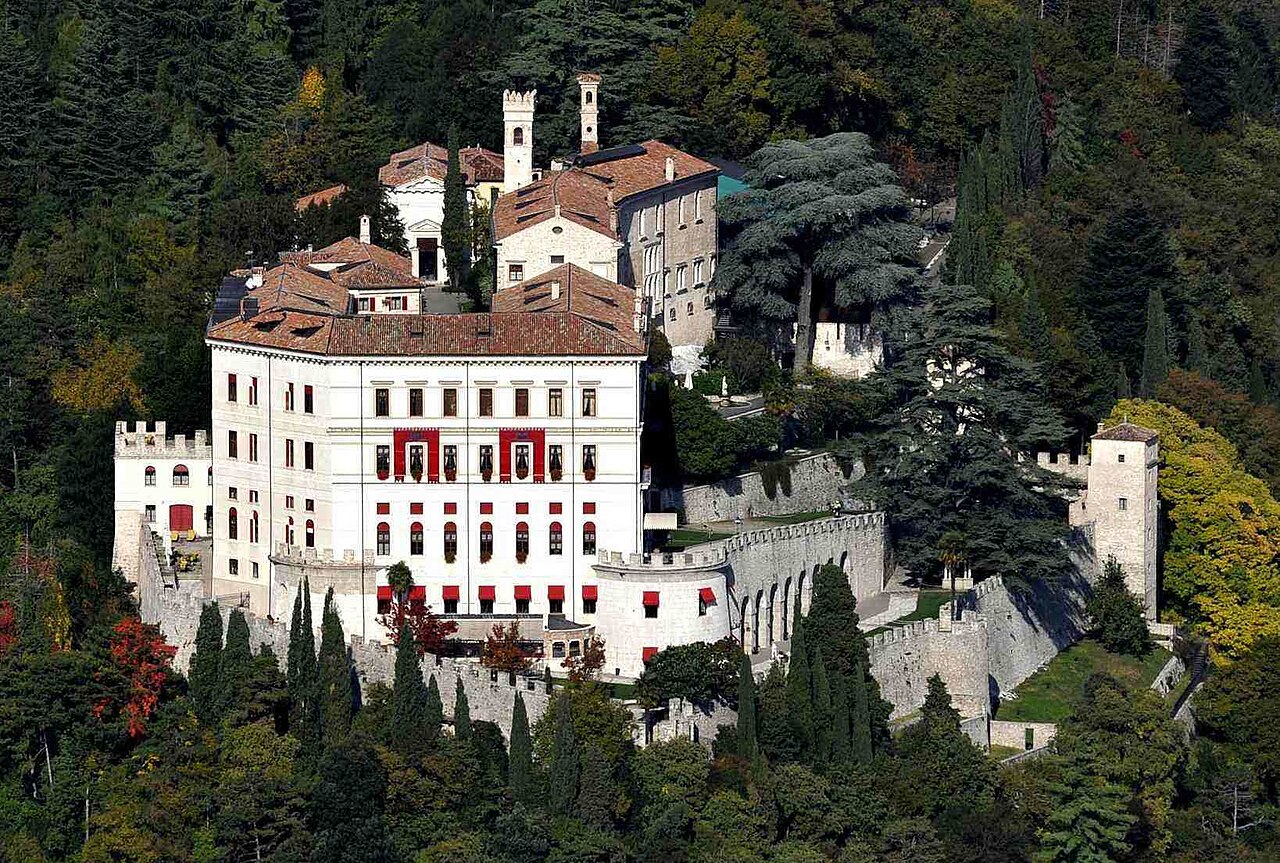
Conegliano Castle
Conegliano Castle stands as a prominent symbol of medieval fortification in the Veneto region of Italy. Perched strategically on the summit of Colle di Giano, this historic fortress dominates the town of Conegliano and offers commanding views over the surrounding landscape, including the Veneto plain, Venice lagoon, Friuli plain, morainic hills of Treviso, and the Prealps. Its elevated position was chosen for defensive advantages, typical of high medieval hilltop fortresses that served both military and administrative functions.
The earliest documented references to the castle date back to the 12th century, although archaeological and artistic evidence suggests its origins lie in the 11th century. Originally, the castle was part of a fortified settlement model prevalent in the region, which included a walled enclosure atop the hill and a village spreading along the nearby Monticano river. This design mirrored other contemporary fortifications in towns such as Bassano and Marostica, combining natural topography with man-made defenses.
Architectural features and historical development
The original structure of Conegliano Castle included a smaller walled area fortified with multiple towers and protected by moats. Within this inner enclosure were key civic buildings such as the prison, town hall, and the palace of the local authority, reflecting the castle’s dual role as a military stronghold and administrative center. Over time, much of the castle was lost or dismantled, leaving only the main tower of the Guard—a prominent symbol of the town—and fragments of the ancient walls and the bell tower of the old cathedral.
The remaining main tower is a testament to the castle’s medieval heritage and serves as a landmark visible from the surrounding flatlands. Its robust construction and elevated position exemplify typical high medieval military architecture designed for surveillance and defense.
The civic museum and cultural significance
Since 1946, the interior of the main tower has housed the Civic Museum of Conegliano, which is arranged across several floors. The museum’s art gallery on the ground floor showcases precious works of art, including the notable painting "S. Francesco di Paola" (1750) by Giambattista Pittoni, alongside masterpieces by Palma il Giovane and Pordenone. These works highlight the rich artistic heritage of the Veneto region and its connection to Venetian Renaissance and Baroque art traditions.
Upper floors of the museum exhibit Roman artifacts discovered in the Conegliano area, providing insights into the region’s ancient history and continuity of settlement. The top floor is dedicated to historical figures associated with Conegliano, offering visitors a comprehensive understanding of the town’s cultural and political evolution.
One of the museum’s unique features is a detailed 1:72 scale model of the castle as it appeared during the time of the Serenissima Republic of Venice, created by Ennio Tiveron from Treviso. This model allows visitors to visualize the castle’s former extent and fortifications, enriching the historical narrative presented within the museum.
Strategic importance and landscape views
The castle’s location atop Colle di Giano was chosen for its strategic vantage point, enabling control over the surrounding territory and communication with other fortifications in the region. From the castle’s elevated position, visitors can enjoy breathtaking panoramic views stretching from the Veneto plain to the Venice lagoon, encompassing the Friuli plain, the morainic hills of Treviso, and the distant Prealps. This commanding outlook underscores the castle’s historical role in regional defense and territorial administration.
The castle within the medieval urban fabric
Conegliano’s castle was integral to the town’s medieval urban structure. The fortified hilltop area was complemented by the village below, which developed along the Monticano river at the hill’s base. This dual settlement pattern, combining a defensible citadel with a riverside village, was characteristic of medieval towns in northeastern Italy and reflected the socio-political organization of the time.
The castle’s fortifications, including walls, towers, and moats, created a secure environment for governance and justice, housing the prison and administrative offices. Although much of the original fortification has not survived, the remaining structures and museum collections offer valuable insights into the medieval life and governance of Conegliano.
Preservation and visitor experience
Today, Conegliano Castle is partially preserved, with key elements such as the main tower and sections of walls maintained for public access. The Civic Museum within the castle provides an educational and cultural experience, combining art, archaeology, and local history. Visitors can explore the museum’s diverse collections and then ascend to the tower’s top floor to enjoy the spectacular views that once served strategic military purposes.
The castle is a cultural landmark that connects the present-day town with its medieval past, offering a tangible link to the region’s historical and architectural heritage. Its combination of military architecture, civic functions, and museum exhibits makes it a significant destination for those interested in medieval fortifications and Venetian history.
Frequently asked questions (FAQ)
- How do I get to Conegliano Castle?
- Conegliano Castle is located in the historic town of Conegliano, Italy, and can be reached easily by car or public transport. The nearest train station is Conegliano, from where you can take a short bus ride or enjoy a scenic walk to the castle.
- What is the historical significance of Conegliano Castle?
- Conegliano Castle dates back to the 13th century and played a crucial role in the defense of the region during various conflicts. It is an important symbol of the town's history and reflects the medieval architecture of the time.
- When was Conegliano Castle built?
- Construction of Conegliano Castle began in the early 1200s, with significant expansions and restorations occurring over the centuries. It served as a stronghold for the local nobility and has witnessed numerous historical events.
- Is it possible to explore the interior of Conegliano Castle?
- Yes, visitors can explore certain areas of Conegliano Castle, including its towers and walls, which offer stunning views of the surrounding landscape. However, some sections may be restricted due to preservation efforts.
- What are the opening hours for Conegliano Castle?
- Conegliano Castle is typically open to visitors from 9 AM to 6 PM, but it's advisable to check the official website for any seasonal changes or special events that might affect these hours. Guided tours may be available at specific times.
- Can I purchase tickets in advance for Conegliano Castle?
- Yes, tickets for Conegliano Castle can often be purchased in advance through the official website or at local tourist information centers. This is recommended during peak tourist seasons to avoid long wait times.
- What is the best time to visit Conegliano Castle?
- The best time to visit Conegliano Castle is during the spring and fall when the weather is mild and the surrounding scenery is particularly beautiful. Summer can be quite busy, while winter may have limited access due to weather conditions.
- Are there any nearby attractions to Conegliano Castle?
- Yes, nearby attractions include the picturesque town of Conegliano itself, with its charming streets, wine cellars, and local restaurants. Additionally, you can visit the Prosecco vineyards and other historical sites in the region.
- Is Conegliano Castle accessible for visitors with disabilities?
- While some areas of Conegliano Castle may be challenging to access due to its historical structure, efforts have been made to accommodate visitors with disabilities. It is recommended to contact the castle administration for specific accessibility options before your visit.
Information
Loading map...
Visitor reviews
No reviews yet. Been here? Write the first review and help other travelers!
Write the first reviewVisited this castle? Share your experience
Your review helps other travelers and adds first-hand knowledge to our encyclopedia.