San Romualdo Castle

San Romualdo Castle in San Fernando, Spain
San Fernando, Spain
High Medieval (11th–13th c.)
Partially Preserved

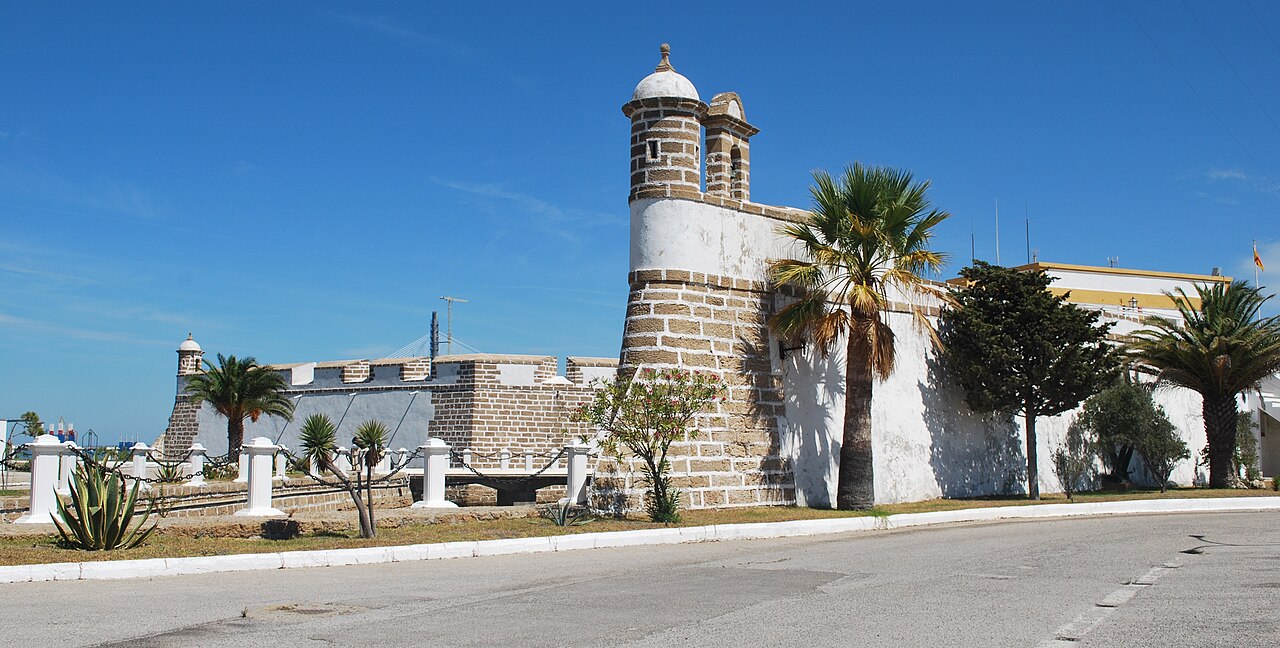
San Romualdo Castle is a notable example of medieval architecture located in San Fernando, Spain. Although the exact origins and construction date remain uncertain, historical records first mention the castle in 1268, situating its origin firmly within the 13th century and the high medieval period. This castle is distinguished by its Mudéjar architectural style, a unique blend of Islamic and Christian design elements that was prevalent in the Iberian Peninsula during the Middle Ages.

Architectural style and construction

The Mudéjar style of San Romualdo Castle reflects the cultural coexistence in medieval Spain, characterized by the use of brick, horseshoe arches, and ornamental tilework. Unlike typical stone castles of the period, this style integrates intricate decorative patterns and geometric designs, which are evident in the castle's remaining walls and structural elements. The castle's dual function as both a fortress and a convent influenced its design, blending defensive features with religious architectural elements.

Defensive features

The castle's strategic location near the town center, positioned between the town hall and the Zuazo Bridge, suggests its importance in controlling local access routes and defending against potential invaders. While much of the original fortifications have not survived intact, historical accounts and remaining structures indicate the presence of defensive walls, battlements, and possibly towers designed to oversee the surrounding area.

Religious function

As a convent, the castle would have included chapels and living quarters for religious occupants. This duality of purpose is rare and adds to the castle's historical significance, illustrating the multifunctional use of medieval buildings in Spain.

Historical significance and preservation

San Romualdo Castle was officially declared a historic monument by Spanish authorities in 1931, recognizing its cultural and architectural value. This designation has helped preserve the site and promote its historical importance within the region of Andalusia. The castle's proximity to important civic landmarks like the town hall and the Zuazo Bridge further emphasizes its role in the historical urban fabric of San Fernando.

Role in local history

Throughout its history, the castle likely served as a military stronghold and religious center, reflecting the complex social and political dynamics of medieval Spain. Its location in San Fernando, an area with a rich history of maritime and military activity, underscores its strategic importance.

Current condition and access

Today, San Romualdo Castle remains partially preserved, allowing visitors to appreciate its architectural features and historical context. It is easily accessible from the town center, making it a popular site for those interested in medieval Spanish architecture and history.

Architectural details and materials

The castle's construction primarily utilizes brickwork typical of the Mudéjar style, which contrasts with the stone commonly used in other contemporary fortresses. This choice of material not only reflects the stylistic preferences of the period but also the availability of resources in the region.

Decorative elements such as intricate tile patterns and horseshoe arches highlight the Islamic artistic influence, while the overall fortress layout adheres to Christian defensive needs. These combined features make San Romualdo Castle a significant example of cultural synthesis in medieval Spanish architecture.

Visiting San Romualdo Castle

Visitors to San Romualdo Castle can explore its historical remains and enjoy its location near other important landmarks in San Fernando. The castle's accessibility and status as a protected monument make it an essential stop for those interested in the high medieval period and the Mudéjar architectural heritage of Spain.

Frequently asked questions (FAQ)

How do I get to San Romualdo Castle?
San Romualdo Castle is located in San Fernando, Spain, and is easily accessible by both public transport and car. If you're traveling by public transport, you can take a bus or train to San Fernando and then enjoy a short walk to the castle. There are also parking facilities nearby if you prefer to drive.
What is the historical significance of San Romualdo Castle?
San Romualdo Castle dates back to the 18th century and played a crucial role in the defense of the local area during various conflicts. It is known for its strategic location and historical architecture, reflecting the military designs of its time. The castle stands as a testament to the region's rich history and cultural heritage.
Can I enter San Romualdo Castle?
Yes, visitors are welcome to explore San Romualdo Castle. The castle is open to the public, allowing guests to learn about its history and architecture. Guided tours are often available, providing deeper insights into the castle's past and significance.
When is the best time to visit San Romualdo Castle?
The best time to visit San Romualdo Castle is during the spring and fall months when the weather is mild and pleasant. This allows for a comfortable exploration of the castle grounds and its surroundings. Additionally, visiting during off-peak seasons can help avoid crowds and enhance your experience.
What are the opening hours for San Romualdo Castle?
San Romualdo Castle typically opens from 10 AM to 6 PM, although hours may vary during holidays or special events. It is advisable to check the official website or contact local tourism offices for the most up-to-date information before your visit. Arriving early can also provide you with more time to explore the castle.
Is San Romualdo Castle accessible for people with disabilities?
San Romualdo Castle strives to be accessible to all visitors, including those with mobility challenges. There are pathways and facilities designed to accommodate individuals with disabilities. However, it is recommended to inquire ahead of your visit to ensure a comfortable experience.
What are the ticket prices for visiting San Romualdo Castle?
Ticket prices for San Romualdo Castle are generally quite affordable, with discounts available for children, seniors, and groups. Children under a certain age may enter for free, making it a great family-friendly destination. Check the official website for the latest pricing and any special offers.
What nearby attractions should I visit while in San Fernando?
While visiting San Romualdo Castle, you can also explore other attractions in San Fernando, such as the nearby Parque Natural Bahía de Cádiz and the historic Church of San Fernando. The area is rich in culture and history, providing plenty of options for a full day of exploration. Don't forget to try local cuisine at nearby restaurants for a complete experience.

Information

Hill Castle

Loading map...

Visitor reviews

No reviews yet. Been here? Write the first review and help other travelers!

Write the first review

Visited this castle? Share your experience

Your review helps other travelers and adds first-hand knowledge to our encyclopedia.

Write a review

(5/5)

0/2000 characters

Your review will be visible after admin approval

Nearby castles

7.3 km

Castillo de Matagorda

Puerto Real, Spain

The Castillo de Matagorda is a significant historic coastal fortification located in Puerto Real, Spain, strategically positioned to guard the entrance to the Bay of Cádiz. Constructed in the late 17th century, this fort was part of a comprehensive Spanish defense system designed to protect one of the most important naval bays in southern Spain from maritime threats and naval incursions. Construction of the fort began in 1691 under the supervision of Cristóbal de Rojas, a renowned Spanish military engineer known for his expertise in fortification design during the Baroque period. Although Rojas died before the fort's completion, his plans guided the fortification's development, ensuring it fulfilled its role within a network of coastal defenses. Castillo de Matagorda was designed to operate in conjunction with nearby fortifications such as the Castillo de San Lorenzo del Puntal and the Fuerte de San Luis, creating overlapping fields of fire that effectively controlled naval access to the bay. Architectural design and military features The fort exhibits a rectangular layout typical of late 17th-century coastal artillery forts. Its robust masonry construction reflects the military architectural standards of the period, emphasizing durability and resistance to cannon fire. The walls were thick and angled to deflect incoming artillery, while the fort's artillery emplacements were oriented toward the bay, providing a commanding field of fire to deter enemy ships. The design includes bastions and gun platforms that allowed defenders to cover multiple angles of approach. This configuration was essential for the fort's role in the broader defensive system, enabling it to work in concert with neighboring forts to create a crossfire zone. The fort's strategic placement on a hill overlooking the bay enhanced its surveillance capabilities and defensive effectiveness. Historical significance and military engagements During the Napoleonic Wars in the early 19th century, Castillo de Matagorda played a pivotal role in the conflict between French forces and the allied British-Spanish armies. In 1810, British troops captured the fort as part of their campaign to expel the French from southern Spain. However, the French soon retook the position, forcing the British to withdraw. Before abandoning the fort, British forces deliberately set fire to the structure and disabled artillery pieces they could not remove to reduce its military utility. This siege is also notable for the heroic actions of Agnes Reston, who became known as the "Heroine of Matagorda". Reston served as a nurse during the siege, tending to wounded soldiers and actively participating in the fort's defense by transporting ammunition and reinforcing vulnerable areas with sandbags. Her bravery is commemorated as an example of civilian contribution to military efforts during wartime. Later history and current condition Following the Napoleonic Wars, there were attempts in the 19th century to rearm and restore the fort's defensive capabilities, but these efforts were never fully realized. Over time, Castillo de Matagorda fell into disuse and gradually became a ruin. Today, its remains are located within the grounds of the modern Astilleros de Puerto Real shipyards, blending historical heritage with industrial development. The surviving ruins provide valuable insight into the fort's original structure and military function. Visitors can observe the basic rectangular plan, remnants of the thick masonry walls, and the orientation of the artillery positions toward the bay. Although no decorative elements or inscriptions have been found, the fort's remains clearly communicate its purpose as a coastal defense installation. Preservation and archaeological significance The site has not undergone significant restoration focused on ornamental features; instead, preservation efforts aim to maintain the structural integrity of the remaining fortifications. This approach respects the fort's historical authenticity and allows for educational opportunities related to Spain's coastal defense history. Despite the lack of extensive archaeological finds such as tools or pottery, the Castillo de Matagorda remains an important cultural landmark. It stands as a testament to the military engineering of the Baroque era and Spain's strategic maritime defenses during a turbulent period of European history. The fort’s role within the bay of cádiz defense system The fort's location opposite the Castillo de San Lorenzo del Puntal was a deliberate choice, creating a crossfire zone that controlled naval passage into the bay. This defensive strategy exemplifies the military engineering principles of the time, emphasizing interlocking fields of fire and mutual support among fortifications. Alongside the Fuerte de San Luis, these forts formed a triad that protected the vital naval and commercial hub of Cádiz. The bay was of immense importance due to its role as a naval base and gateway to the Atlantic, making the defense system critical for Spanish sovereignty and maritime security. Strategic importance during the 17th and 18th centuries During the late 17th and 18th centuries, Spain faced numerous naval threats from rival European powers. The construction of Castillo de Matagorda and its counterparts was part of a broader initiative to modernize coastal defenses, incorporating advances in artillery and fortification design to meet evolving military challenges. The fort's artillery was positioned to engage enemy ships before they could approach the harbor, protecting both military vessels and commercial shipping. This defensive posture contributed significantly to the security and prosperity of Cádiz and the surrounding region. Visitor experience and accessibility While Castillo de Matagorda is located within an industrial area, its remains are accessible to visitors interested in military history and coastal fortifications. The site offers a unique opportunity to explore a well-preserved example of late 17th-century Spanish military architecture in a setting that contrasts historical heritage with modern industry. Visitors can appreciate the fort's scale, layout, and strategic placement overlooking the bay. Informational signage and guided tours may be available to provide context about the fort's construction, historical role, and significance within the Bay of Cádiz defense network.

Post-Renaissance (17th–18th c.)
Details
7.7 km
San Lorenzo del Puntal Fortress — Spain castle

San Lorenzo del Puntal Fortress

Cádiz, Spain

San Lorenzo del Puntal fortress is a prominent Renaissance military structure located in Cádiz, Spain, constructed initially in 1587 to protect the strategic access to the inner bay of Cádiz. This fortress exemplifies the evolution of coastal defense architecture during the late 16th and early 17th centuries, reflecting Spain's efforts to secure its vital naval facilities against foreign incursions. Early history and strategic importance The origins of the Castillo de San Lorenzo de Puntales trace back to 1554 when the Spanish military engineer Juan Bautista Calvi proposed fortifying the vulnerable Puntal area, a narrow strip of land critical for controlling landward approaches to Cádiz's harbor. By 1587, a modest artillery tower was erected, equipped with five cannons, marking the beginning of the fortress's role in the defense system of Cádiz. The fortress's strategic significance was underscored during the 1596 Anglo-Dutch assault on Cádiz, led by the Earl of Essex. Despite its initial fortifications, the castle was overrun and destroyed in this raid, highlighting the need for more robust defenses. Reconstruction and architectural advancements Following the destruction, King Philip II initiated a comprehensive fortification program for Cádiz starting in 1598. The current form of the castle began under the direction of the skilled engineer Cristóbal de Rojas, who also worked on the nearby Castillo de Santa Catalina. His designs incorporated Renaissance military architectural principles, emphasizing angular bastions and improved artillery placements. The reconstruction was continued by Alonso de Vandelvira, who introduced innovative use of concrete to enhance the fortress's resistance to cannon fire, marking a significant development over traditional stone masonry. This use of concrete was pioneering for the time and contributed to the castle's durability. In the early 18th century, further enhancements were made under the guidance of the Marquis of Verboon, who reinforced the landward defenses and added an artillery battery to control maritime approaches more effectively. Architectural features and layout The fortress features an oval layout with two semi-bastions having angled flanks, designed to maximize defensive coverage and reduce blind spots. It is surrounded by water-filled moats and imposing curtain walls, with access controlled by a drawbridge that could isolate the castle from attackers. Facing the bay, the Barleta battery was a crucial artillery position originally mounting up to fourteen cannons and several mortars. This battery worked in coordination with the Castillo de Matagorda across the bay to guard the entrance to the inner harbor and the naval arsenal at Carraca. Inside the fortress, functional buildings supported the garrison's needs, including powder magazines, storage rooms, barracks, a chapel, a guardhouse, workshops, and kitchens. These structures were utilitarian, emphasizing practicality over decoration. Later history and preservation The fortress suffered damage during the Peninsular War in the early 19th century but was rebuilt in 1863, which shaped much of its current appearance. Since then, it has remained largely intact, preserving its 19th-century restored form. Today, San Lorenzo del Puntal fortress is owned by the Spanish Ministry of Defense and continues to serve as a naval facility, limiting public access. Despite modern intrusions such as the high-voltage electricity towers installed in the mid-20th century, the castle retains its historical character and military significance. Recognized for its cultural value, the fortress has been protected under Spanish heritage laws and was declared a culturally significant site by the Junta de Andalucía in 1993. Significance in military architecture The castle represents an important example of Renaissance military engineering in Spain, showcasing the transition from medieval fortifications to modern bastioned forts designed to withstand artillery warfare. The innovative use of concrete and the strategic design of bastions and artillery batteries reflect changing military tactics and technology in the late 16th and early 17th centuries. Its coordinated defense with other fortifications around Cádiz harbor illustrates the integrated approach to coastal defense during Spain's imperial period, emphasizing control over key maritime routes and naval assets.

Renaissance (15th–17th c.)
Details
10.1 km
Castle of Sancti Petri — Spain castle

Castle of Sancti Petri

San Fernando, Spain

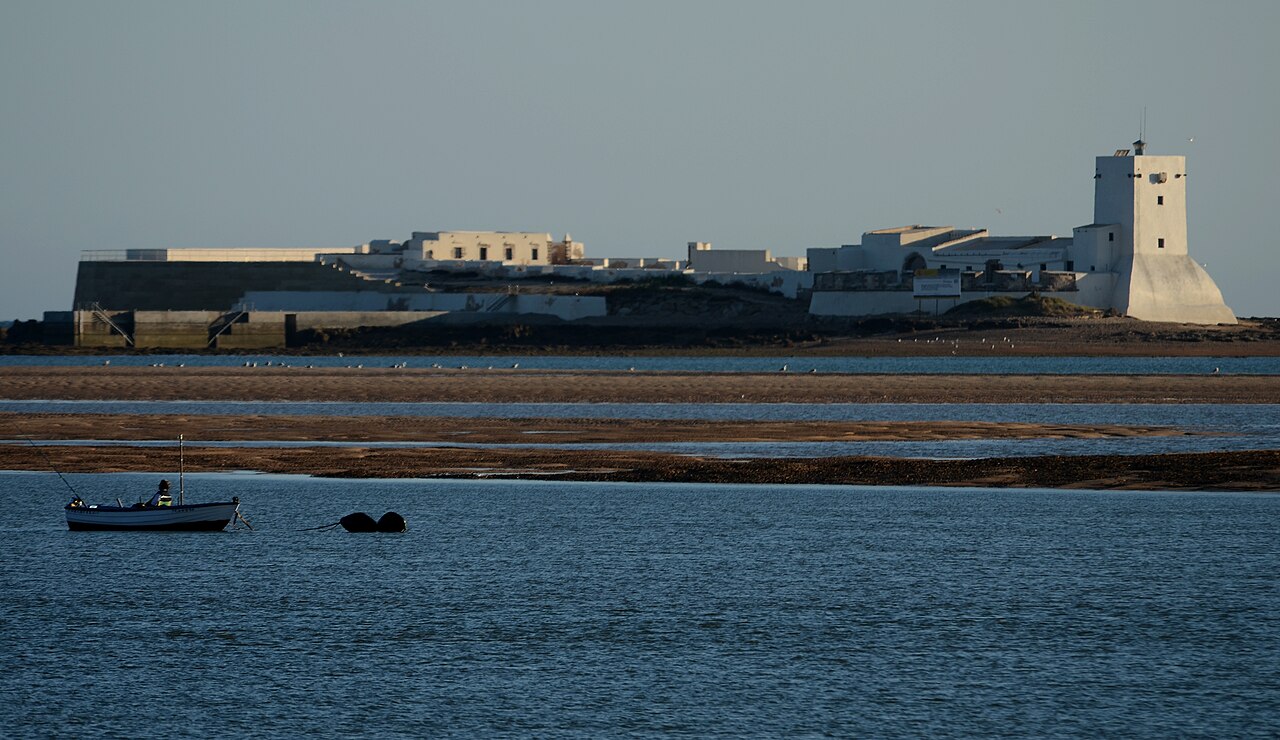
The Castle of Sancti Petri is a remarkable historic fortress located on the small island of Sancti Petri, within the municipality of San Fernando in the Province of Cádiz, Andalusia, southwestern Spain. This coastal stronghold played a significant role in maritime defense, guarding the Caño de Sancti Petri inlet, an important channel leading to the vital port city of Cádiz. The castle's strategic position on the island allowed it to serve as a key military outpost across several centuries, evolving through various phases of construction and adaptation. The origins of the site date back to antiquity, with the island first settled by the Phoenicians in the 1st century BC. They established a temple dedicated to their god Melqart, a deity associated with the sea and navigation. Later, the Romans re-dedicated this temple to Hercules, underscoring the island's longstanding cultural and religious significance. Although the current castle structure does not directly incorporate remains of this ancient sanctuary, the location's historical importance is deeply rooted in these early civilizations. The existing castle's oldest surviving element is the watchtower (atalaya), constructed in 1610 during the early modern period. This tower reflects the military architectural style of the Spanish kingdom at the time and was part of a broader coastal surveillance system initiated under King Philip II in the 16th century. The system aimed to detect and warn against incursions by Berber pirates and other maritime threats, making the watchtower a crucial early warning post. Architectural evolution and fortification The castle underwent significant expansion in the 18th century, when substantial defensive walls and batteries were added to reinforce the fortification. These additions were designed to prevent hostile landings by European naval powers such as the British, French, and Dutch, who posed threats during various conflicts of the era. The fortification's irregular layout centers around the original watchtower, with walls primarily extending along a north-south axis and featuring a semicircular battery on the eastern side to cover the approaches by sea. The walls and batteries were constructed using ostionera stone, a local marine limestone quarried from nearby reefs. This material provided both durability and a harmonious integration with the island's natural environment. The walls vary in height and thickness according to their defensive role, focusing on artillery fire to control naval access through the channel rather than serving as a strong barrier against land assaults on the islet itself. The watchtower and artillery features The watchtower is characterized by its truncated trapezoidal base and thick masonry walls, which were built without formal foundations but designed to withstand artillery bombardment. At the tower's upper corners, remnants of machicolations survive—these projecting stone structures were used to mount early artillery pieces such as bombards. The tower's summit was later modified to accommodate an electric lighthouse installed in 1918, featuring a glazed dome that protects the optical equipment and a geodetic vertex used for precise surveying. Historical significance and military engagements The Castle of Sancti Petri was part of a network of coastal defenses, including batteries at Punta del Boquerón and other strategic points around the inlet. This system was crucial for controlling maritime traffic and defending the coastline against foreign naval powers during the 17th and 18th centuries. The castle saw active military use during the Peninsular War (1808-1814), when it was bombarded by French forces between 1810 and 1812. Prior to this, in 1809, the fortress served as a prison for political detainees. It also played a role during the French blockade of 1823, highlighting its continued strategic importance into the 19th century. 20th-century adaptations and preservation efforts In the 20th century, the castle's watchtower was adapted for navigational purposes with the installation of an electric lighthouse in 1918. This modernization enhanced maritime safety in the surrounding waters, integrating the historic military structure into contemporary coastal infrastructure. Despite its historical value, the castle suffered significant deterioration due to natural erosion and neglect over the years. In response, the municipalities of San Fernando and Chiclana de la Frontera funded a major rehabilitation program. A substantial restoration project was completed in 2010, supported by the Spanish Ministry of Environment, which included the construction of a concrete pier and reconstruction of parts of the southern sector. While these efforts helped preserve the structure, some interventions altered original construction techniques and damaged historical inscriptions. Cultural heritage and current status The castle is officially recognized as a Bien de Interés Cultural monument, a designation that provides legal protection under Spanish heritage laws. It was declared a Cultural Monument by decree in 1949 and is acknowledged by Andalusian authorities as a site of special historic and architectural significance. The islet itself was subject to a territorial dispute that was resolved in 2005, confirming administration by the municipality of San Fernando. Today, the castle stands as a preserved historic site, reflecting layers of military architecture from the 17th century watchtower to the 18th century fortifications and 20th century lighthouse adaptations. Visitors to the castle can observe its irregular layout centered on the watchtower, the thick stone walls, and the remains of defensive batteries. The site includes a cistern with an 18th-century inscription, underscoring the extensive construction activity during that period. Although no formal archaeological excavations have been conducted, the castle's surviving elements offer valuable insights into its military evolution and the broader history of coastal defense in Andalusia.

High Medieval (11th–13th c.)
Details