Castillo de Matagorda
The Castillo de Matagorda is a significant historic coastal fortification located in Puerto Real, Spain, strategically positioned to guard the entrance to the Bay of Cádiz. Constructed in the late 17th century, this fort was part of a comprehensive Spanish defense system designed to protect one of the most important naval bays in southern Spain from maritime threats and naval incursions.
Construction of the fort began in 1691 under the supervision of Cristóbal de Rojas, a renowned Spanish military engineer known for his expertise in fortification design during the Baroque period. Although Rojas died before the fort's completion, his plans guided the fortification's development, ensuring it fulfilled its role within a network of coastal defenses. Castillo de Matagorda was designed to operate in conjunction with nearby fortifications such as the Castillo de San Lorenzo del Puntal and the Fuerte de San Luis, creating overlapping fields of fire that effectively controlled naval access to the bay.
Architectural design and military features
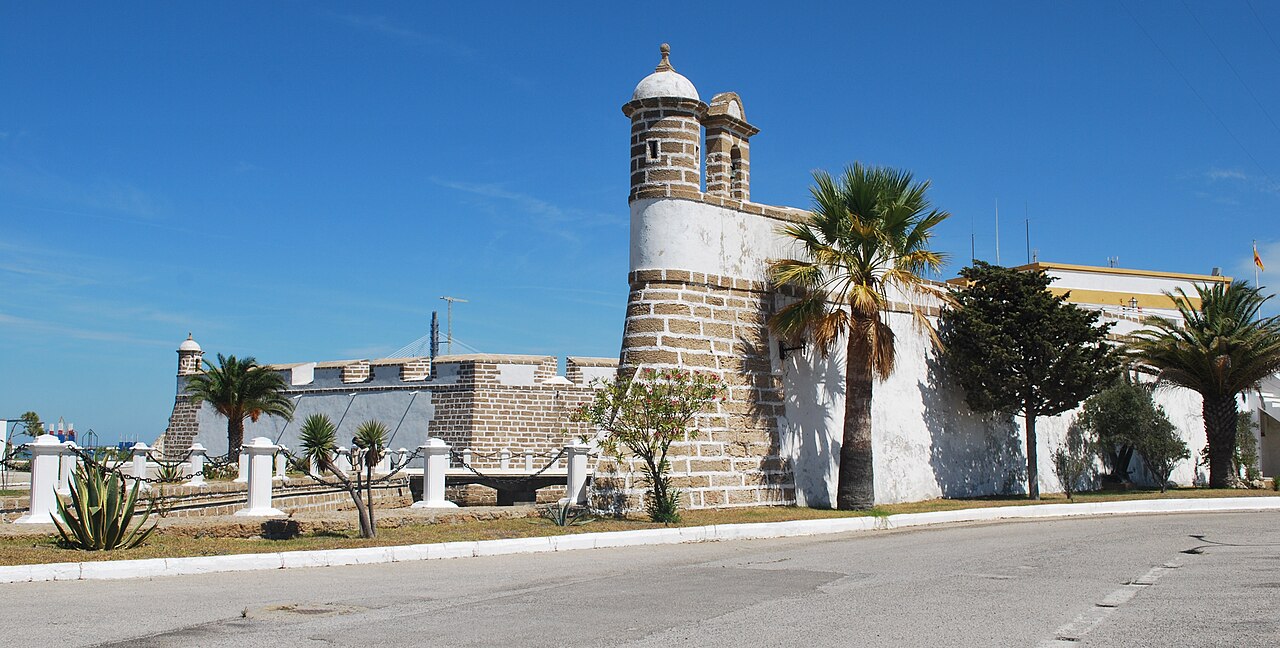
The fort exhibits a rectangular layout typical of late 17th-century coastal artillery forts. Its robust masonry construction reflects the military architectural standards of the period, emphasizing durability and resistance to cannon fire. The walls were thick and angled to deflect incoming artillery, while the fort's artillery emplacements were oriented toward the bay, providing a commanding field of fire to deter enemy ships.
The design includes bastions and gun platforms that allowed defenders to cover multiple angles of approach. This configuration was essential for the fort's role in the broader defensive system, enabling it to work in concert with neighboring forts to create a crossfire zone. The fort's strategic placement on a hill overlooking the bay enhanced its surveillance capabilities and defensive effectiveness.
Historical significance and military engagements
During the Napoleonic Wars in the early 19th century, Castillo de Matagorda played a pivotal role in the conflict between French forces and the allied British-Spanish armies. In 1810, British troops captured the fort as part of their campaign to expel the French from southern Spain. However, the French soon retook the position, forcing the British to withdraw. Before abandoning the fort, British forces deliberately set fire to the structure and disabled artillery pieces they could not remove to reduce its military utility.
This siege is also notable for the heroic actions of Agnes Reston, who became known as the "Heroine of Matagorda". Reston served as a nurse during the siege, tending to wounded soldiers and actively participating in the fort's defense by transporting ammunition and reinforcing vulnerable areas with sandbags. Her bravery is commemorated as an example of civilian contribution to military efforts during wartime.
Later history and current condition
Following the Napoleonic Wars, there were attempts in the 19th century to rearm and restore the fort's defensive capabilities, but these efforts were never fully realized. Over time, Castillo de Matagorda fell into disuse and gradually became a ruin. Today, its remains are located within the grounds of the modern Astilleros de Puerto Real shipyards, blending historical heritage with industrial development.
The surviving ruins provide valuable insight into the fort's original structure and military function. Visitors can observe the basic rectangular plan, remnants of the thick masonry walls, and the orientation of the artillery positions toward the bay. Although no decorative elements or inscriptions have been found, the fort's remains clearly communicate its purpose as a coastal defense installation.
Preservation and archaeological significance
The site has not undergone significant restoration focused on ornamental features; instead, preservation efforts aim to maintain the structural integrity of the remaining fortifications. This approach respects the fort's historical authenticity and allows for educational opportunities related to Spain's coastal defense history.
Despite the lack of extensive archaeological finds such as tools or pottery, the Castillo de Matagorda remains an important cultural landmark. It stands as a testament to the military engineering of the Baroque era and Spain's strategic maritime defenses during a turbulent period of European history.
The fort’s role within the bay of cádiz defense system
The fort's location opposite the Castillo de San Lorenzo del Puntal was a deliberate choice, creating a crossfire zone that controlled naval passage into the bay. This defensive strategy exemplifies the military engineering principles of the time, emphasizing interlocking fields of fire and mutual support among fortifications.
Alongside the Fuerte de San Luis, these forts formed a triad that protected the vital naval and commercial hub of Cádiz. The bay was of immense importance due to its role as a naval base and gateway to the Atlantic, making the defense system critical for Spanish sovereignty and maritime security.
Strategic importance during the 17th and 18th centuries
During the late 17th and 18th centuries, Spain faced numerous naval threats from rival European powers. The construction of Castillo de Matagorda and its counterparts was part of a broader initiative to modernize coastal defenses, incorporating advances in artillery and fortification design to meet evolving military challenges.
The fort's artillery was positioned to engage enemy ships before they could approach the harbor, protecting both military vessels and commercial shipping. This defensive posture contributed significantly to the security and prosperity of Cádiz and the surrounding region.
Visitor experience and accessibility
While Castillo de Matagorda is located within an industrial area, its remains are accessible to visitors interested in military history and coastal fortifications. The site offers a unique opportunity to explore a well-preserved example of late 17th-century Spanish military architecture in a setting that contrasts historical heritage with modern industry.
Visitors can appreciate the fort's scale, layout, and strategic placement overlooking the bay. Informational signage and guided tours may be available to provide context about the fort's construction, historical role, and significance within the Bay of Cádiz defense network.
Frequently asked questions (FAQ)
- What is the historical significance of Castillo de Matagorda?
- Castillo de Matagorda, built in the 18th century, played a vital role in defending the coast of Spain against invasions. Its strategic position allowed it to oversee the entrance to the Bay of Cádiz and protect the nearby port of Puerto Real, making it an important military structure during its time.
- When was Castillo de Matagorda constructed?
- Construction of Castillo de Matagorda began in 1743 and was completed in 1760. The castle was part of a series of fortifications designed to strengthen Spain’s coastal defenses during a period of heightened maritime conflict.
- What are the opening hours for Castillo de Matagorda?
- Castillo de Matagorda is open to visitors from 10 AM to 6 PM daily, with extended hours during the summer months. It’s advisable to check for any seasonal changes or special closures before planning your visit.
- Is it possible to access the castle with mobility aids?
- Yes, Castillo de Matagorda has made efforts to improve accessibility for all visitors. Ramps and designated pathways are available, though some areas may still present challenges due to the castle's historical architecture.
- Can I purchase tickets online for Castillo de Matagorda?
- Yes, tickets for Castillo de Matagorda can be purchased online through their official website. Buying tickets in advance is recommended to avoid long queues during peak visiting hours.
- What is the best time to visit Castillo de Matagorda?
- The best time to visit Castillo de Matagorda is during the spring and early fall when the weather is mild and pleasant. These seasons not only enhance your experience but also help you avoid the summer crowds.
- Are there any nearby attractions to explore after visiting Castillo de Matagorda?
- Yes, nearby attractions include the charming town of Puerto Real and the stunning beaches of the Costa de la Luz. Additionally, the city of Cádiz is just a short drive away, offering rich history and vibrant culture to explore.
- What architectural style is Castillo de Matagorda?
- Castillo de Matagorda is primarily built in the Baroque architectural style, characterized by its robust structure and intricate design details. Its construction reflects the military architecture of the 18th century, designed for both functionality and aesthetic appeal.
Information
Loading map...
Visitor reviews
No reviews yet. Been here? Write the first review and help other travelers!
Write the first reviewVisited this castle? Share your experience
Your review helps other travelers and adds first-hand knowledge to our encyclopedia.