Castle of Sancti Petri
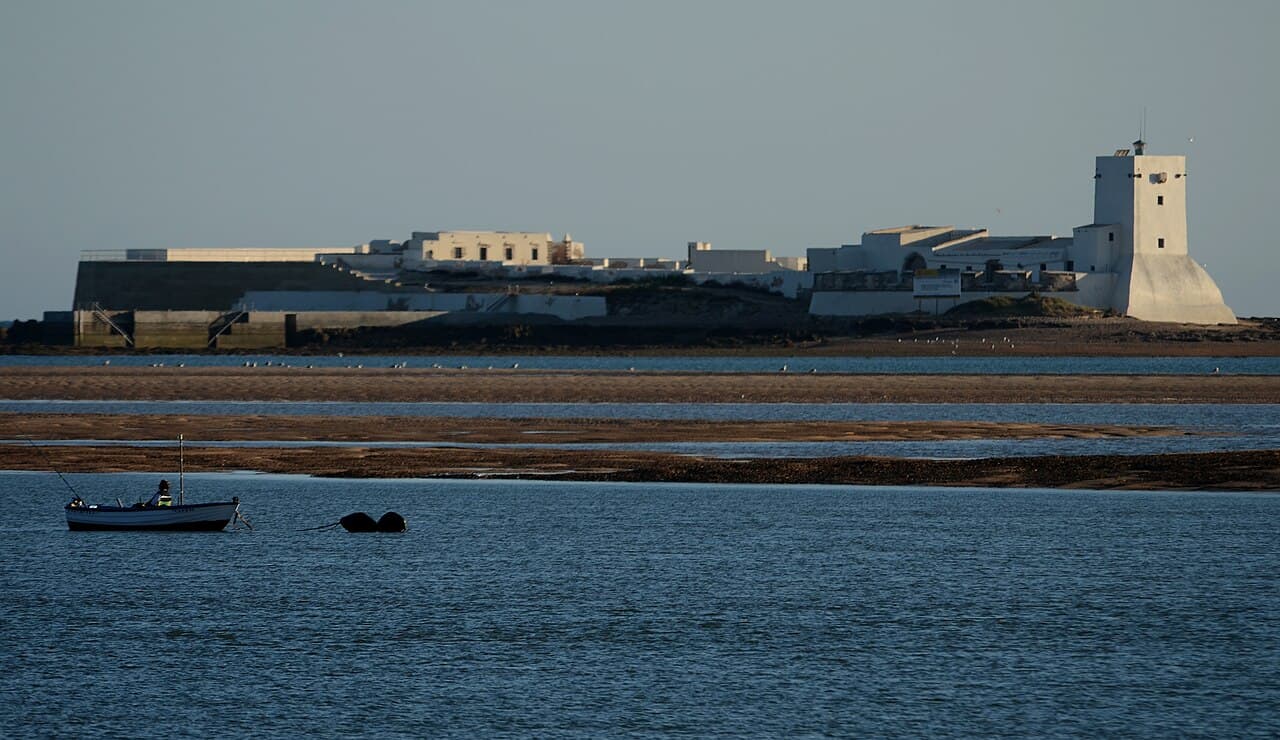
The Castle of Sancti Petri is a remarkable historic fortress located on the small island of Sancti Petri, within the municipality of San Fernando in the Province of Cádiz, Andalusia, southwestern Spain. This coastal stronghold played a significant role in maritime defense, guarding the Caño de Sancti Petri inlet, an important channel leading to the vital port city of Cádiz. The castle's strategic position on the island allowed it to serve as a key military outpost across several centuries, evolving through various phases of construction and adaptation.
The origins of the site date back to antiquity, with the island first settled by the Phoenicians in the 1st century BC. They established a temple dedicated to their god Melqart, a deity associated with the sea and navigation. Later, the Romans re-dedicated this temple to Hercules, underscoring the island's longstanding cultural and religious significance. Although the current castle structure does not directly incorporate remains of this ancient sanctuary, the location's historical importance is deeply rooted in these early civilizations.
The existing castle's oldest surviving element is the watchtower (atalaya), constructed in 1610 during the early modern period. This tower reflects the military architectural style of the Spanish kingdom at the time and was part of a broader coastal surveillance system initiated under King Philip II in the 16th century. The system aimed to detect and warn against incursions by Berber pirates and other maritime threats, making the watchtower a crucial early warning post.
Architectural evolution and fortification
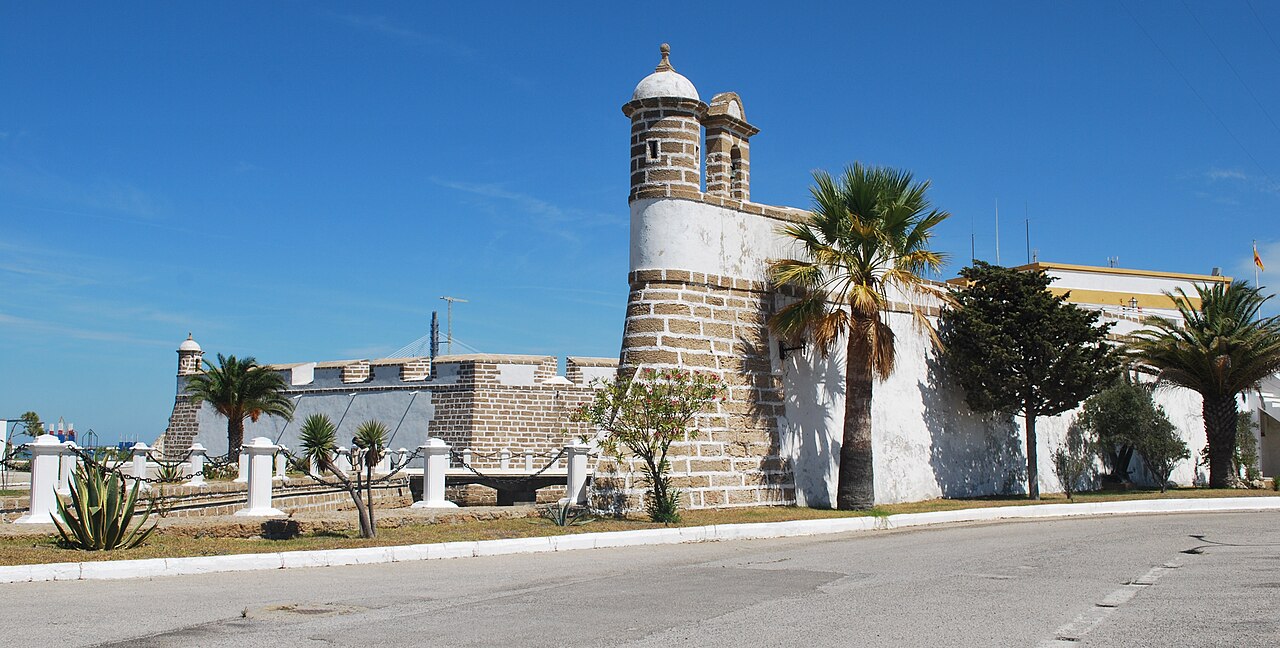
The castle underwent significant expansion in the 18th century, when substantial defensive walls and batteries were added to reinforce the fortification. These additions were designed to prevent hostile landings by European naval powers such as the British, French, and Dutch, who posed threats during various conflicts of the era. The fortification's irregular layout centers around the original watchtower, with walls primarily extending along a north-south axis and featuring a semicircular battery on the eastern side to cover the approaches by sea.
The walls and batteries were constructed using ostionera stone, a local marine limestone quarried from nearby reefs. This material provided both durability and a harmonious integration with the island's natural environment. The walls vary in height and thickness according to their defensive role, focusing on artillery fire to control naval access through the channel rather than serving as a strong barrier against land assaults on the islet itself.
The watchtower and artillery features
The watchtower is characterized by its truncated trapezoidal base and thick masonry walls, which were built without formal foundations but designed to withstand artillery bombardment. At the tower's upper corners, remnants of machicolations survive—these projecting stone structures were used to mount early artillery pieces such as bombards. The tower's summit was later modified to accommodate an electric lighthouse installed in 1918, featuring a glazed dome that protects the optical equipment and a geodetic vertex used for precise surveying.
Historical significance and military engagements
The Castle of Sancti Petri was part of a network of coastal defenses, including batteries at Punta del Boquerón and other strategic points around the inlet. This system was crucial for controlling maritime traffic and defending the coastline against foreign naval powers during the 17th and 18th centuries.
The castle saw active military use during the Peninsular War (1808-1814), when it was bombarded by French forces between 1810 and 1812. Prior to this, in 1809, the fortress served as a prison for political detainees. It also played a role during the French blockade of 1823, highlighting its continued strategic importance into the 19th century.
20th-century adaptations and preservation efforts
In the 20th century, the castle's watchtower was adapted for navigational purposes with the installation of an electric lighthouse in 1918. This modernization enhanced maritime safety in the surrounding waters, integrating the historic military structure into contemporary coastal infrastructure.
Despite its historical value, the castle suffered significant deterioration due to natural erosion and neglect over the years. In response, the municipalities of San Fernando and Chiclana de la Frontera funded a major rehabilitation program. A substantial restoration project was completed in 2010, supported by the Spanish Ministry of Environment, which included the construction of a concrete pier and reconstruction of parts of the southern sector. While these efforts helped preserve the structure, some interventions altered original construction techniques and damaged historical inscriptions.
Cultural heritage and current status
The castle is officially recognized as a Bien de Interés Cultural monument, a designation that provides legal protection under Spanish heritage laws. It was declared a Cultural Monument by decree in 1949 and is acknowledged by Andalusian authorities as a site of special historic and architectural significance.
The islet itself was subject to a territorial dispute that was resolved in 2005, confirming administration by the municipality of San Fernando. Today, the castle stands as a preserved historic site, reflecting layers of military architecture from the 17th century watchtower to the 18th century fortifications and 20th century lighthouse adaptations.
Visitors to the castle can observe its irregular layout centered on the watchtower, the thick stone walls, and the remains of defensive batteries. The site includes a cistern with an 18th-century inscription, underscoring the extensive construction activity during that period. Although no formal archaeological excavations have been conducted, the castle's surviving elements offer valuable insights into its military evolution and the broader history of coastal defense in Andalusia.
Frequently asked questions (FAQ)
- What is the historical significance of the Castle of Sancti Petri?
- The Castle of Sancti Petri dates back to the 17th century and played a crucial role in the defense of the region against pirates and invading forces. It is an important cultural landmark that reflects Spain's military architecture and maritime history.
- When was the Castle of Sancti Petri built?
- Construction of the Castle of Sancti Petri began in 1705 and was completed in 1720. Originally designed to protect the bay of Cádiz, it has witnessed numerous historical events over the centuries.
- Can I visit the Castle of Sancti Petri?
- Yes, visitors can access the Castle of Sancti Petri by taking a boat from the nearby beach. The journey offers a scenic view of the surrounding waters and the castle itself.
- What are the opening hours for the Castle of Sancti Petri?
- The Castle of Sancti Petri is generally open to visitors from 10 AM to 6 PM, though hours may vary depending on the season. It is recommended to check the official website for the most current information before planning your visit.
- Is it possible to take guided tours of the castle?
- Yes, guided tours are available and provide a deeper insight into the castle's history and architecture. These tours are typically offered in multiple languages and can enhance your overall experience.
- What is the best time to visit the Castle of Sancti Petri?
- The best time to visit is during the spring and early autumn when the weather is mild and pleasant. Visiting during these seasons allows you to enjoy both the castle and the surrounding natural beauty.
- Are there any nearby attractions to explore after visiting the castle?
- Yes, nearby attractions include the beautiful beaches of San Fernando and the historic city of Cádiz, which is known for its vibrant culture and architecture. Exploring these areas can easily fill a day of sightseeing.
- How much does it cost to enter the Castle of Sancti Petri?
- The entrance fee to the Castle of Sancti Petri is typically modest, making it an affordable option for visitors. Discounts may be available for students and seniors, so be sure to inquire upon arrival.
- Is the Castle of Sancti Petri accessible for people with disabilities?
- While efforts have been made to improve accessibility, some areas of the castle may present challenges for visitors with mobility issues. It is advisable to contact the castle administration in advance for specific accessibility options and accommodations.
Photo gallery

Information
Loading map...
Visitor reviews
No reviews yet. Been here? Write the first review and help other travelers!
Write the first reviewVisited this castle? Share your experience
Your review helps other travelers and adds first-hand knowledge to our encyclopedia.