San Miguel Castle
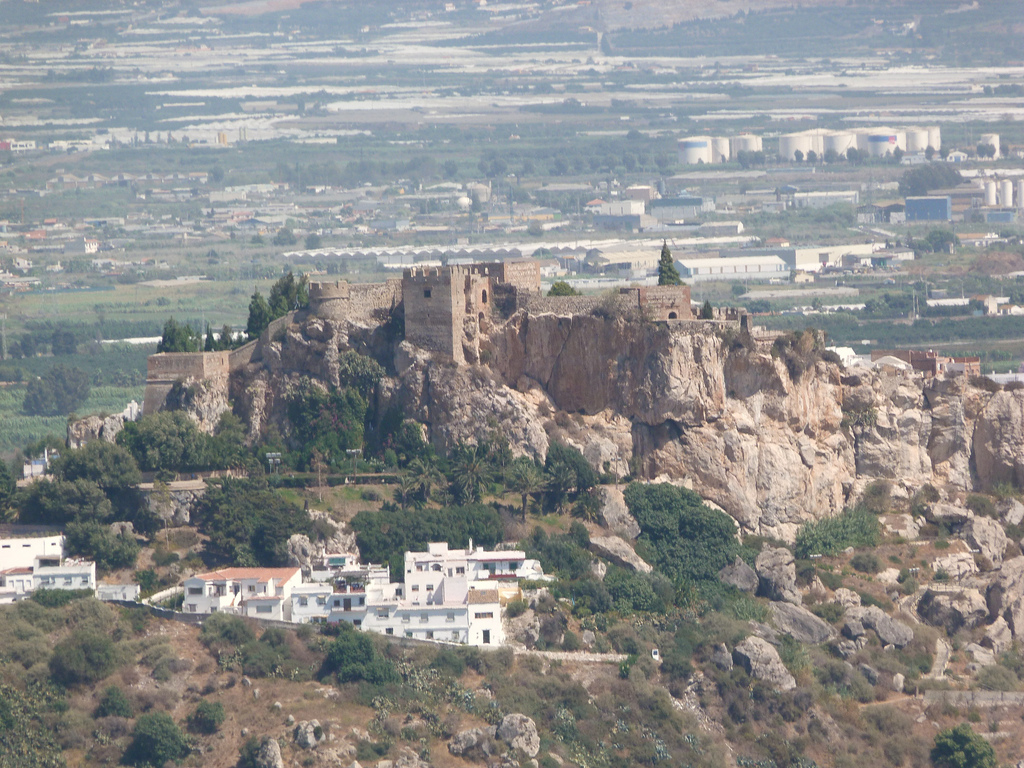
San Miguel Castle stands prominently on a small hill overlooking the coastal town of Almuñécar in the province of Granada, Spain. This hill castle is a significant historic and architectural landmark, bounded by the remains of the town's original defensive walls. Its strategic location atop a difficult-to-access elevation provided a commanding view over the surrounding area, including the Mediterranean coastline, making it a vital military stronghold throughout various periods.
Ancient origins and Roman foundations
The earliest fortifications at the site of San Miguel Castle date back to the 1st century BCE, during the Roman period. Initially, the site served as a fortified outpost, part of the defensive network protecting the Roman settlements along the southern Iberian coast. The original walls from this era laid the groundwork for later expansions and modifications. Although much of the Roman structure no longer survives, archaeological evidence confirms the castle's long-standing military importance.
The Moorish expansion and medieval fortifications
During the Moorish occupation of the Iberian Peninsula, which began in the early 8th century and lasted several centuries, San Miguel Castle underwent significant enlargement and reinforcement. The Moors expanded the fortress extensively, constructing up to 40 towers and adding three main gates to the complex. These additions enhanced the castle's defensive capabilities, adapting it to the military technologies and siege tactics of the medieval period.
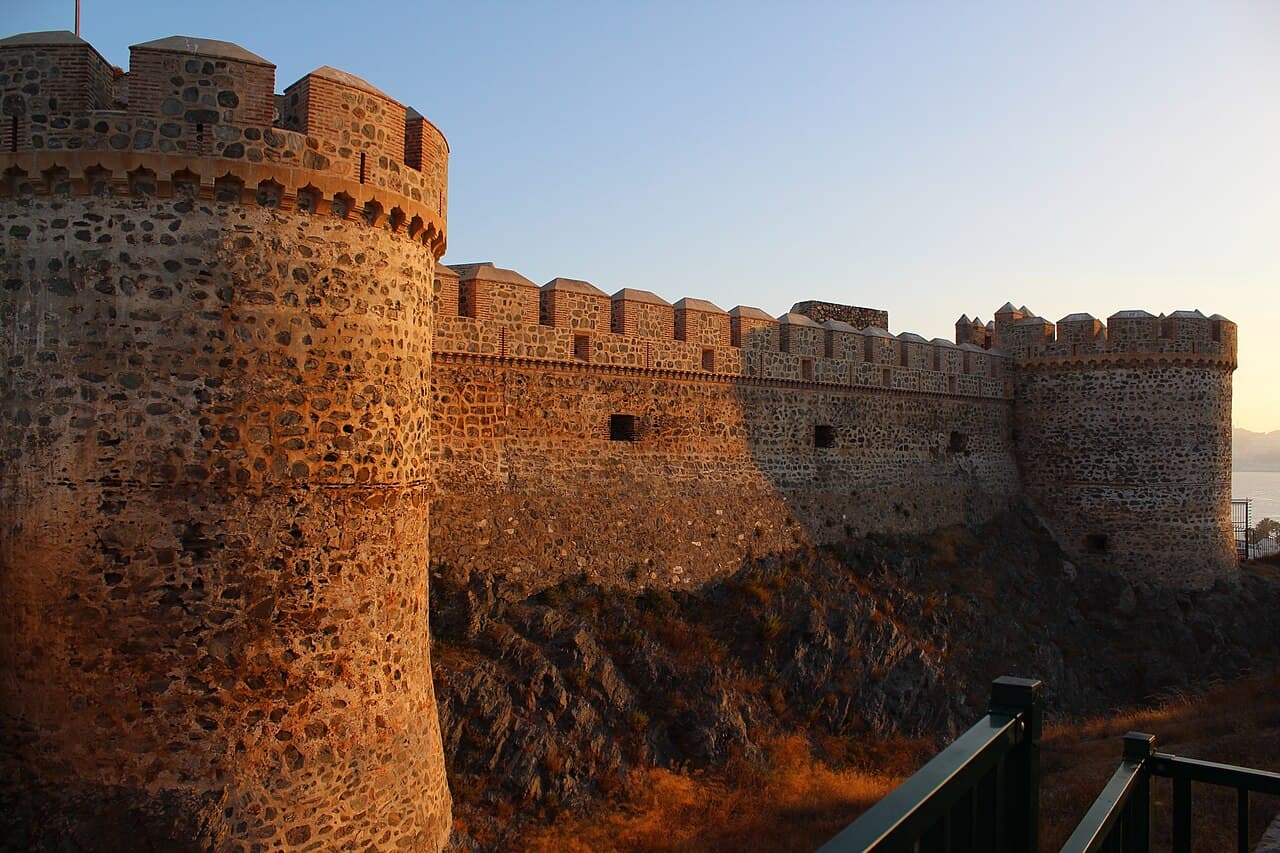
The castle's walls were reinforced with battlements, some of which feature distinctive pyramid-shaped merlons, a characteristic defensive architectural element designed to provide cover for archers and defenders. The incorporation of a wide moat and a drawbridge further strengthened the castle's defenses, controlling access and deterring attackers.
Christian reconquest and Renaissance modifications
Following the Reconquista, when the Catholic Monarchs regained control of the region, San Miguel Castle saw additional modifications. At the end of the reign of King Ferdinand in the 16th century, new fortifications were added, including the construction of a prominent front entrance flanked by four round towers. The moat and drawbridge were also enhanced during this period to meet evolving military needs.
These Renaissance-era improvements reflected advances in artillery and siege warfare, emphasizing stronger, more resilient fortifications. The castle's role shifted from purely military to also serving as a symbol of Christian authority in the newly reconquered territory.
Later history and decline
During the Peninsular War (1808–1814), part of the wider conflict known as the War of Independence against Napoleonic France, San Miguel Castle suffered damage from bombardments by British troops allied with Spanish forces. This conflict marked a turning point in the castle's military relevance.
In the years following the war, the castle fell into partial ruin. The keep, which was located within the inner courtyard, was demolished, and the fortress gradually lost its defensive function. The ruins were repurposed as a Christian cemetery, reflecting changing social and cultural uses of the site.
Architectural features and current condition
Today, San Miguel Castle is recognized for its complex layering of historical periods visible in its architecture. The surviving walls and towers exhibit a mixture of Roman foundations, Moorish military engineering, and Renaissance fortifications. The castle's battlements with pyramid-shaped merlons remain a distinctive feature, alongside the moat and drawbridge that hint at its former defensive strength.
Although the keep has been lost, the remaining structures provide valuable insight into the castle's evolution over centuries. The castle grounds include a small museum that presents artifacts and information about the site's history, enhancing visitor understanding.
Heritage status and visitor information
San Miguel Castle was declared a Bien de Interés Cultural monument in 1993, recognizing its cultural and historical significance in Spain. This designation helps protect the site and promotes its preservation as part of the national heritage.
Visitors to the castle can explore the ruins, enjoy panoramic views of Almuñécar and the Mediterranean, and learn about the site's extensive history through the on-site museum. The castle's elevated position and challenging access reflect its original defensive purpose, offering a tangible connection to the military architecture of the High Medieval period and earlier.
Frequently asked questions (FAQ)
- What is the historical significance of San Miguel Castle?
- San Miguel Castle has origins dating back to the 1st century BCE and was expanded during the Moorish occupation and Christian Reconquista, reflecting centuries of military architecture.
- Can visitors access the castle easily?
- The castle is located on a small hill with difficult access, reflecting its original defensive purpose. Visitors should be prepared for a steep climb.
- What architectural features are notable at San Miguel Castle?
- Notable features include the remains of Roman foundations, Moorish towers and gates, pyramid-shaped battlements, a wide moat, and a drawbridge.
- Is there a museum at San Miguel Castle?
- Yes, there is a small museum within the castle grounds that displays artifacts and information about the castle's history.
- When was San Miguel Castle declared a cultural monument?
- It was declared a Bien de Interés Cultural monument in 1993, recognizing its cultural and historical importance.
Photo gallery

Information
Loading map...
Visitor reviews
No reviews yet. Been here? Write the first review and help other travelers!
Write the first reviewVisited this castle? Share your experience
Your review helps other travelers and adds first-hand knowledge to our encyclopedia.