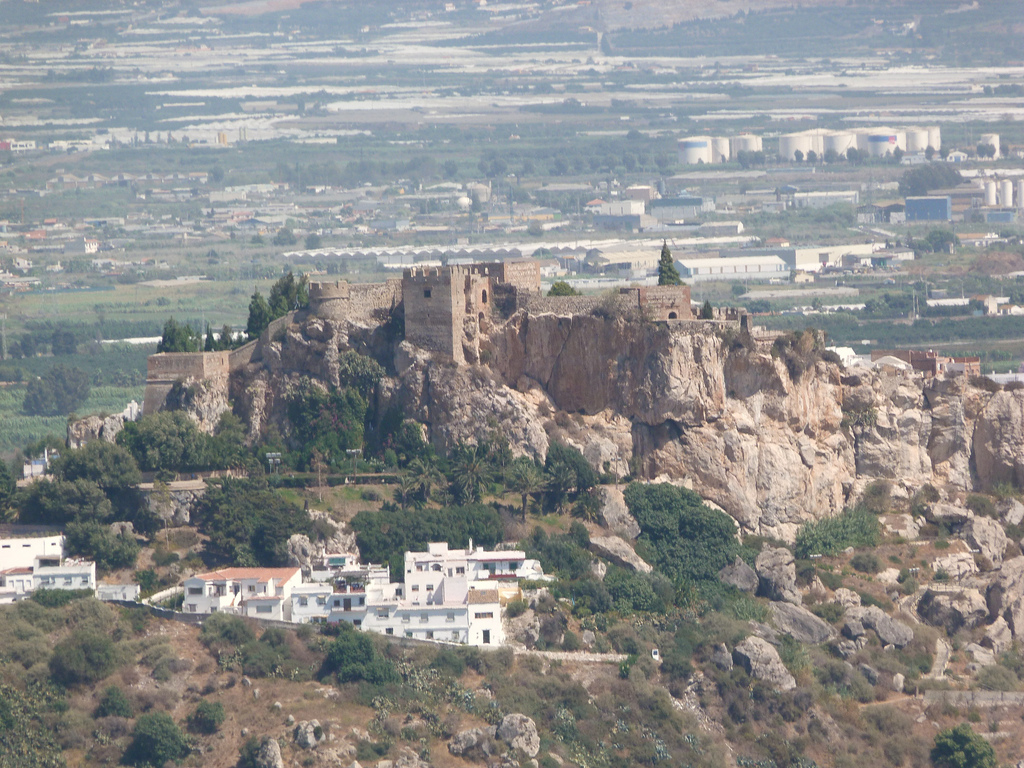
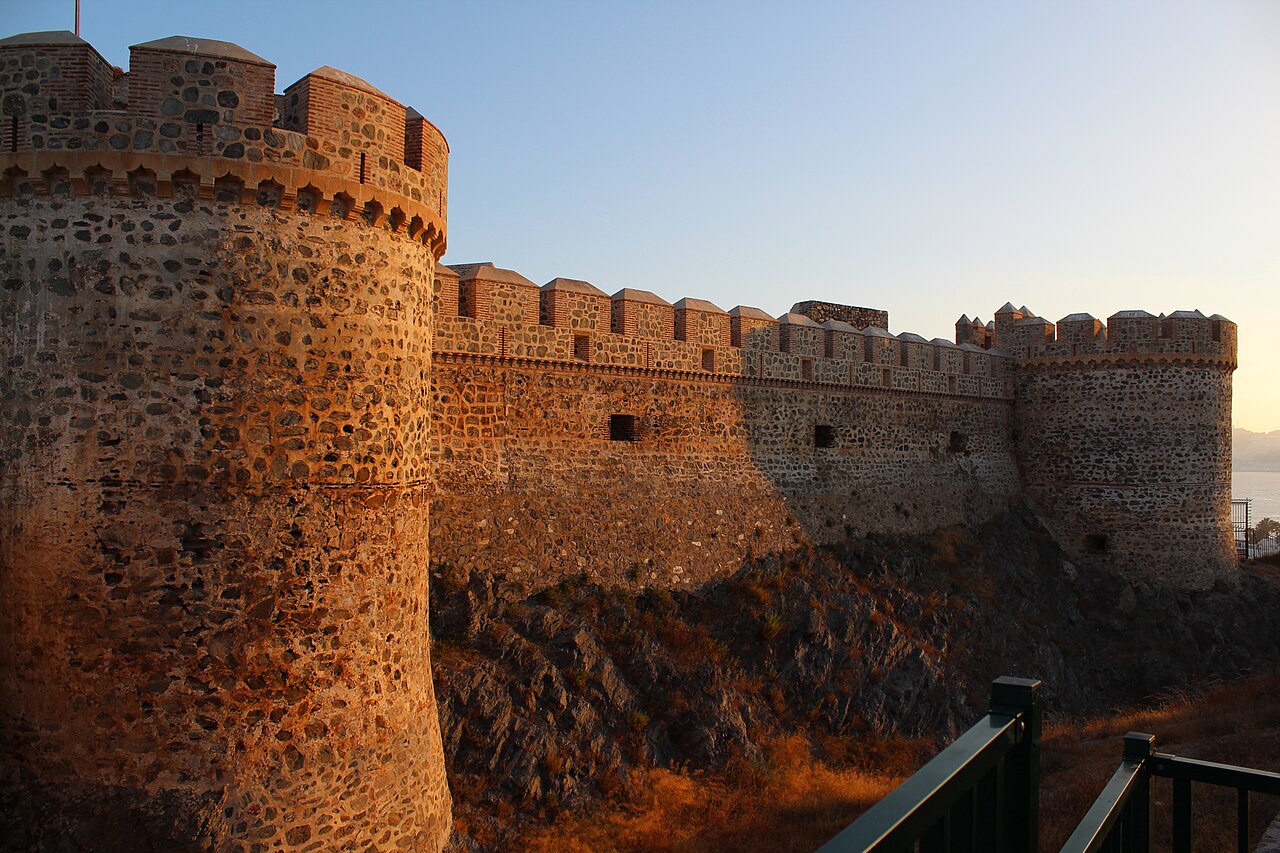
Carchuna Fort stands as a significant example of late 18th-century military architecture on the southern coast of Spain. Located near the coastline in the municipality of Motril, within the historic Kingdom of Granada, this hill castle was constructed under the reign of King Carlos III as part of a strategic initiative to protect Spain’s vulnerable southern shores from the persistent threat of pirate incursions. Built between 1777 and 1783, it formed a crucial link in a network of coastal fortifications designed to secure maritime trade routes and local settlements against seaborne attacks.
The fort’s design reflects the military engineering principles of the late 18th century, emphasizing both defense and sustainability. Its rectangular layout is punctuated by a distinctive horseshoe-shaped northern face, flanked by two semicircular towers at the northeast and northwest corners. These towers provided elevated vantage points for spotting approaching enemies and coordinating defensive measures. The southern side of the fort features a large semicircular artillery battery, positioned lower than the main structure to maximize the range and effectiveness of its cannons over the coastline, deterring pirate ships and other hostile vessels.
Architectural features and construction
The fort’s walls are constructed from masonry—a combination of stone and brick bonded with lime mortar—a typical building method of the period that ensured durability and resistance to artillery fire. The parapets are finished with brick molding and incorporate elongated loopholes, narrow vertical slits designed to enable defenders to fire muskets or small cannons while remaining protected behind the walls. This defensive design illustrates the adaptation of traditional fortification techniques to the evolving requirements of late 18th-century warfare.
Inside the fort, a spacious central courtyard organizes the internal layout. Surrounding this courtyard are various rooms and living quarters for the garrison, all topped with vaulted brick ceilings that enhance structural integrity and provide architectural interest. A notable feature within the courtyard is the alberca, a water reservoir located on the right side, which was essential for collecting rainwater and storing supplies to sustain the fort’s occupants during sieges or extended periods of isolation.
Access between different parts of the fort is carefully planned. A staircase in the southeast corner leads up to a large terrace, likely serving as an observation platform or additional defensive position. Movement to the artillery battery on the southern side is facilitated by a covered passageway situated between the staircase and the water reservoir, allowing safe and efficient transfer of personnel and ammunition.
Historical significance and military use
Originally built to defend the southern coast of Spain against piracy, Carchuna Fort played a vital role in the Kingdom of Granada’s coastal defense system. The fort’s strategic position near Motril allowed it to monitor and control maritime activity in the region, contributing to the security of local communities and trade routes.
Its military relevance extended beyond the 18th century. During the Spanish Civil War in the 1930s, the fort was repurposed by Francoist forces as a prison for Republican fighters. In May 1938, it became the site of a notable military operation when Republican forces, including the 55th Mixed Brigade and the XIV Guerrilla Army Corps with international fighters, launched a successful assault on the fort. This action liberated around 300 prisoners, many from Asturias, marking one of the most significant special forces operations of the conflict.
Preservation and cultural heritage
Recognizing its historical and cultural importance, Carchuna Fort was declared a protected cultural heritage site (Bien de Interés Cultural) in 1985. This status safeguards the fort as a valuable monument reflecting Spain’s coastal defense history and its role in 20th-century military events.
Today, the remains of the fort offer insight into its original defensive purpose and architectural design. The preservation of its walls, towers, artillery battery, courtyard, and internal facilities allows visitors and scholars to study the evolution of military fortifications and the historical context of Spain’s coastal security efforts.
Structural layout and defensive elements
The fort’s rectangular form is a practical design that maximizes internal space while facilitating defense. The horseshoe-shaped northern face and semicircular towers enhance the fort’s ability to cover multiple angles of approach, a critical feature for coastal defense installations. The semicircular artillery battery on the southern side was specifically designed to provide a broad field of fire over the sea, deterring enemy ships from approaching the shore.
Interior features and garrison life
The vaulted ceilings inside the living quarters not only strengthened the buildings but also reflected the architectural styles of the period. The presence of the alberca within the courtyard highlights the importance of self-sufficiency in fort design, ensuring a reliable water supply during sieges. The terrace and covered passageways demonstrate thoughtful planning for both surveillance and operational efficiency within the fort.
Frequently asked questions (FAQ)
- How do I get to Carchuna Fort?
- Carchuna Fort is located near the coastal town of Carchuna in Spain. You can reach the fort by car, and there is available parking nearby. Public transport options may be limited, so checking local bus routes or considering a taxi might be worthwhile.
- What is the historical significance of Carchuna Fort?
- Carchuna Fort was built in the 16th century as a defensive structure to protect the coastline from pirate attacks. It played a crucial role in the region's military history, reflecting the strategic importance of coastal fortifications during that era. Today, it stands as a testament to Spain's rich architectural heritage.
- When was Carchuna Fort constructed?
- Carchuna Fort was constructed in the year 1560, during a time when the Spanish Crown was focused on fortifying its coastal defenses. The fort has undergone various renovations over the centuries, preserving its historical architecture and significance. It remains an important landmark for visitors interested in Spain's military history.
- Can I enter Carchuna Fort?
- Yes, visitors can enter Carchuna Fort and explore its historical grounds. However, access may vary based on restoration work or special events, so it is advisable to check ahead for any restrictions. Guided tours may also be available to enhance your experience.
- Why is Carchuna Fort considered an architectural gem?
- Carchuna Fort is noted for its unique Renaissance architectural style and strategic design. Its thick stone walls and impressive towers showcase the defensive techniques of the time. The fort's layout and construction materials reflect the fusion of military function and aesthetic appeal, making it a significant site for architecture enthusiasts.
- Is it possible to visit Carchuna Fort year-round?
- Yes, Carchuna Fort is open for visitors throughout the year, but opening hours may vary by season. It is recommended to visit during the spring and fall for milder weather and fewer crowds. Always check the official website or local tourist information for the most up-to-date visiting hours.
- What are the ticket prices for visiting Carchuna Fort?
- Entry to Carchuna Fort is generally affordable, with ticket prices typically ranging from €3 to €5 for adults. Discounts may be available for children, students, and seniors, making it accessible for families and groups. Check for any special days or events when entry might be free or discounted.
- What is the best time to visit Carchuna Fort?
- The best time to visit Carchuna Fort is during the spring (April to June) and fall (September to November) when the weather is pleasant and the crowds are smaller. Visiting during these seasons allows for comfortable exploration of the fort and its surroundings. Summer can be hot, while winter may bring cooler temperatures, so plan accordingly.
- Are there any nearby attractions to Carchuna Fort?
- Yes, there are several nearby attractions worth visiting, including the beautiful beaches of Carchuna and the charming village itself. Additionally, the historical town of Almuñécar is a short drive away and offers rich history and cultural experiences. Exploring these areas can enhance your visit to the fort.
Information
Website
Visit websiteSources & official resources
Verify the information above using these authoritative references.
Loading map...
Visitor reviews
No reviews yet. Been here? Write the first review and help other travelers!
Write the first reviewVisited this castle? Share your experience
Your review helps other travelers and adds first-hand knowledge to our encyclopedia.